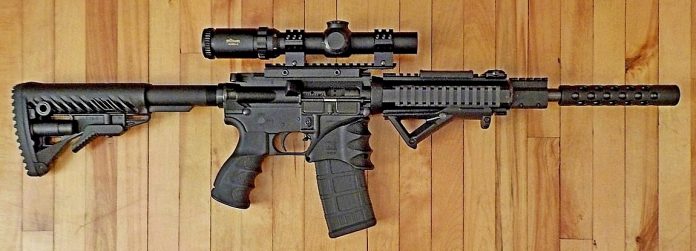
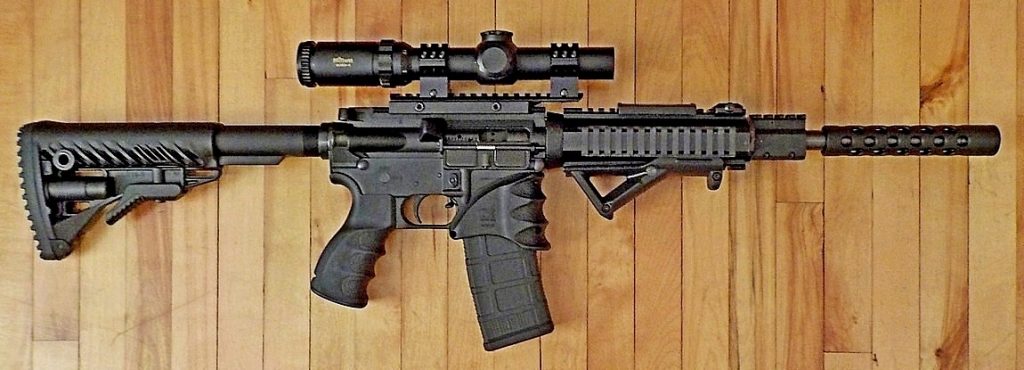
Which is curious: the AR-15 engenders a certain kind of confidence among those who have never fired one, customized one or tried to explain one correctly. It thus creates a category of popular knowledge which would seem to propagate more quickly than anything in a handbook: authoritative assertions about what the letters mean, how the rifle works, what it is “for” and what the law does or does not say.
The haze needs to clear-not as a result of some branding exercise, but because of basic technical literacy regarding one of the most common modular rifle platforms in this country-where misunderstandings are apt to bring about unsafe assumptions or sloppy conversations, or the wrong paperwork.
1. AR stands for assault rifle
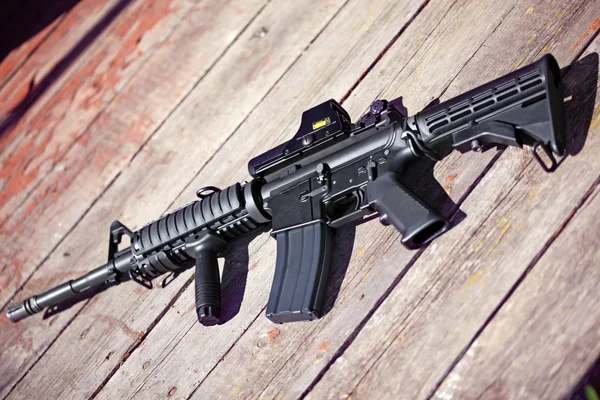
The “AR” in the AR-15 quite literally means “ArmaLite Rifle,” after the company that originated that design line. It is about lineage in engineering responsible for developing the ArmaLite AR-15 rifle and not about the descriptor of function. Confusion abounds because the rifle silhouette echoes the military-pattern carbines, but letters are not capability labels and never functioned as such.
2. The civilian AR-15 is a machine gun
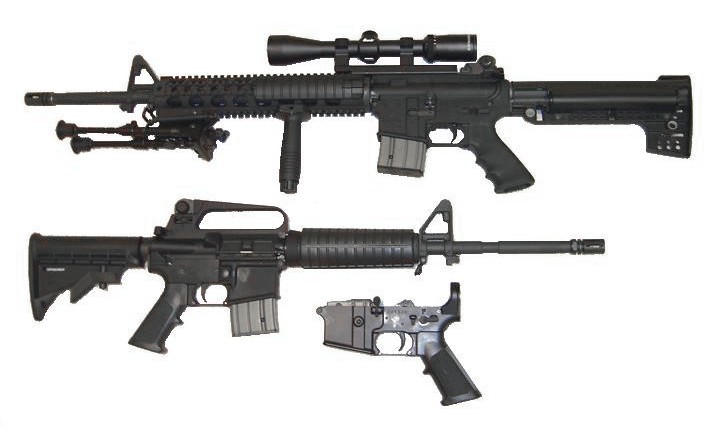
The civilian AR-15 shoots once for each pull of the trigger. Fully continuous fire is possible only from a different fire-control setup and other components, not part of the configuration in a typical AR-15. That is a mechanical difference, not semantic at all. That is fundamentally why the platform can look so familiar to people that have seen select-fire rifles but operate at the trigger in such a different way.
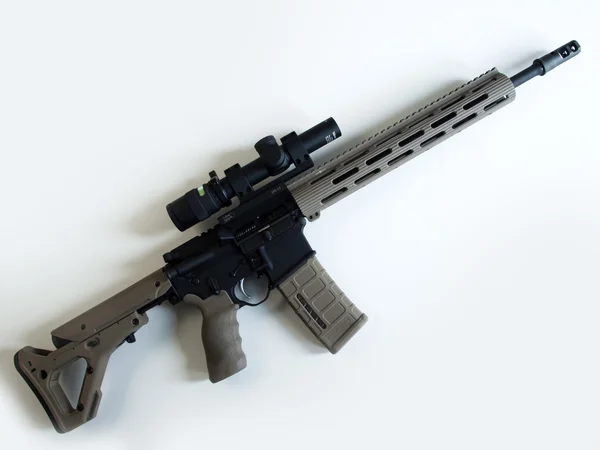
3. The AR-15 is “military-only” in design
Military adoption is inextricably linked to the reputation of related designs, but civilian AR-15s have perennially been sold as a semi-automatic rifle with wide-ranging applications outside of military use. That speaks to modular architecture: Receivers, uppers, barrels, and optics can be mixed and matched for use in several capacities. The same flexibility makes it common in target shooting, competition, and hunting contexts where ergonomics and repeatability matter more than the origin story.
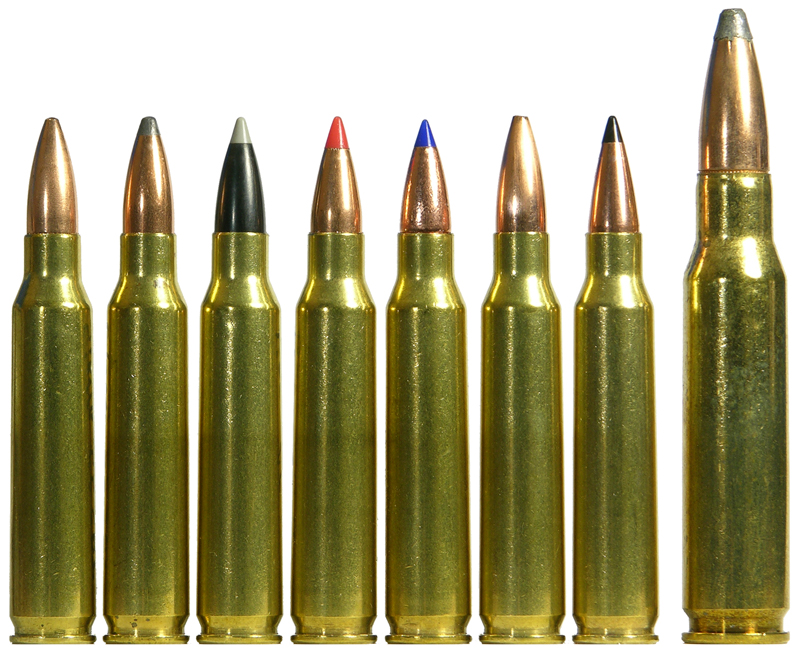
4. The AR-15 is singularly “too powerful” when measured against other rifles
Most common AR-15 chamberings: .223 The Intermediate cartridges include the Remington and 5.56×45mm-. Ballistically, that puts them below many traditional hunting rounds often treated as “normal” rifle ammunition.
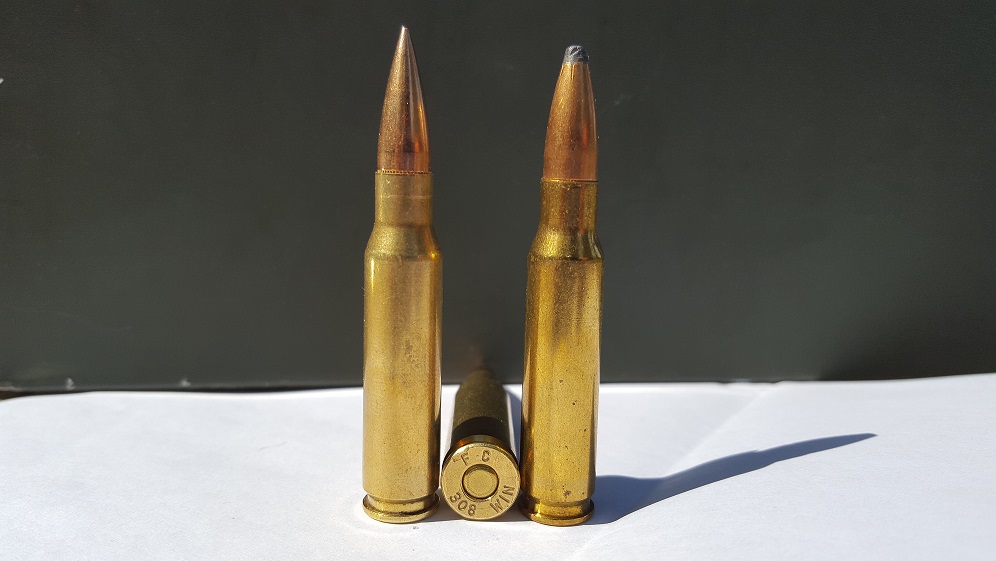
The common comparison cited puts a 55-grain .223 load at about 1,280 foot-pounds of muzzle energy versus 2,600+ foot-pounds for a 150-grain .308-class load. Popularity of the platform tracks more closely with controllability and accuracy than raw energy.
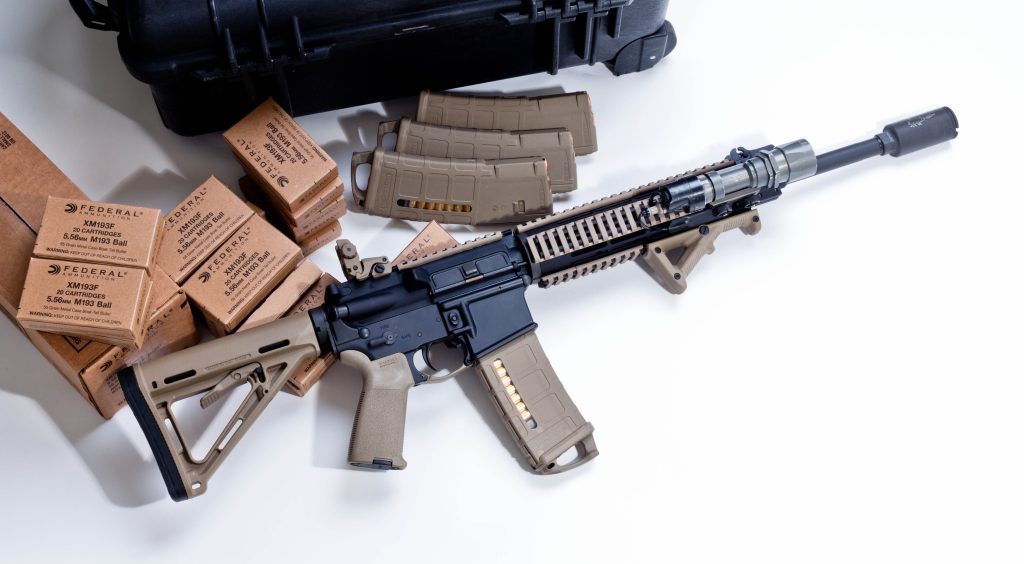
5. An AR-15 is inherently useless in home defense
Home-defense arguments often reduce to slogans-“too big,” “too much penetration,” “not practical”-without consideration of what people can actually control: recoil management, sighting systems and handling in confined spaces. The AR-style layout is built around a straight-line recoil path and parts that move in line with the bore, a design approach associated with a very symmetric design that allows straight line movement of operating components. That does not substitute for training but it does help explain why some users find the platform manageable, especially with modern optics and adjustable stocks.
6. “Anyone can build one” safely with no skills
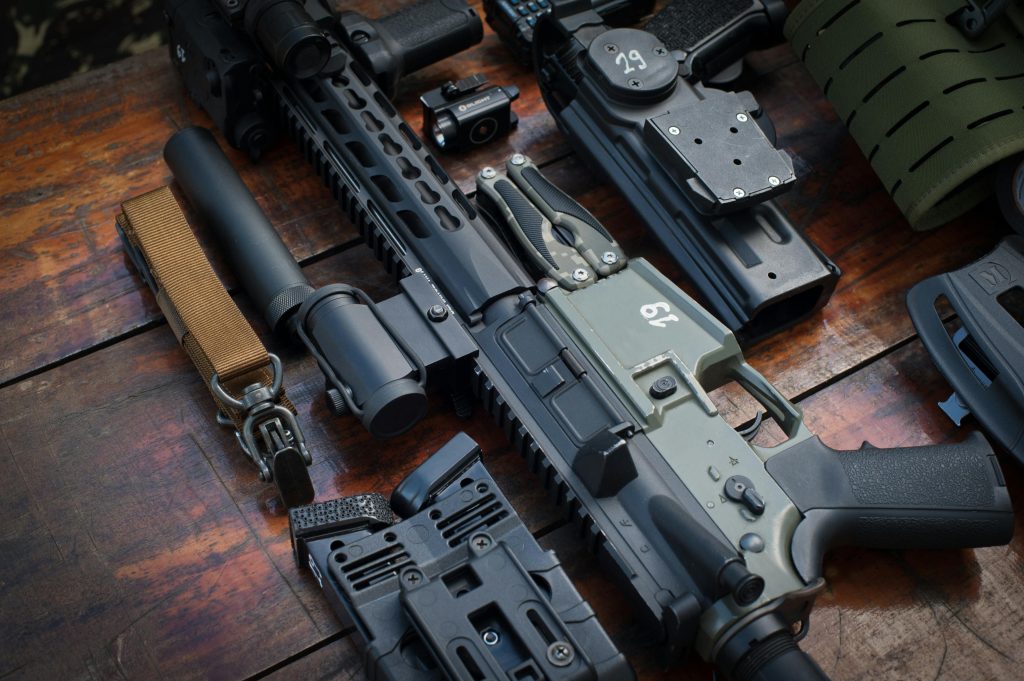
While modularity does make parts replacement and maintenance more approachable, it doesn’t eradicate mechanical tolerances. Safe assembly involves proper torque alignment, and compatibility across the gas system and bolt group. Small mistakes can create reliability problems or unsafe conditions, and “it fit” is not the same as “it is within spec.” The ease of the platform is real but is often overstated in ways that tend to mislead first-time builders.

7. AR-style pistols and braces are always illegal-or always legal
Most of the regulation of the AR-adjacent configurations is discussed in terms of a single national rule, while reality is a mix of federal definitions and state restrictions. One recurring flashpoint has been the stabilizing braces; federal guidance has shifted and litigation has followed. Nationally in the United States, Final Rule 2021R-08F was set aside and has not been enforced, but that status does not remove state and local constraints that might still apply depending on location and configuration.
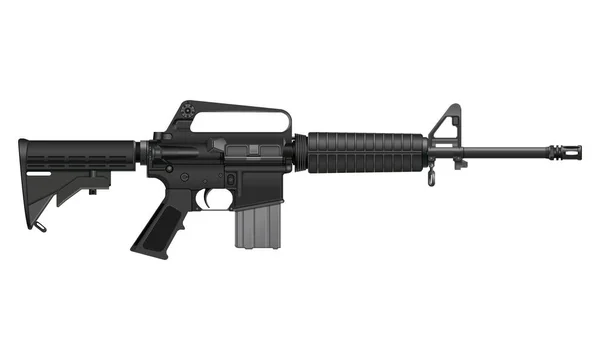
All of the following myths about the AR-15 participate in a pattern: taking some sort of visual cue or a nickname or headline-friendly label and mistaking it for a technical description. The details that really matter to the platform are very often small, not mystical or self-explanatory: precisely how the trigger group works, what a cartridge actually delivers, and to which configuration which definitions apply. Probably the most useful habit for readers trying to discuss the rifle without drifting into caricature is simple: to treat the AR-15 as a machine first and a symbol second.


