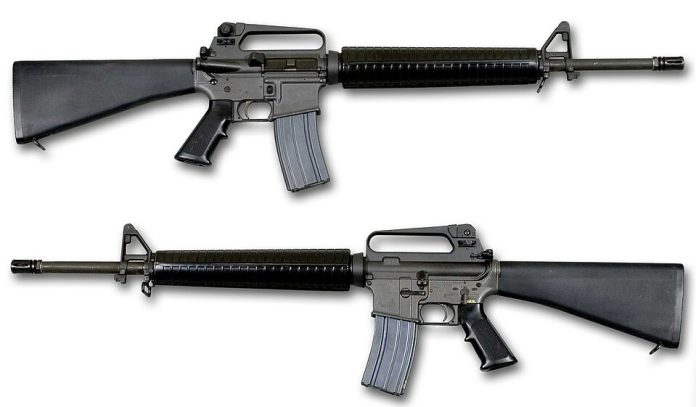
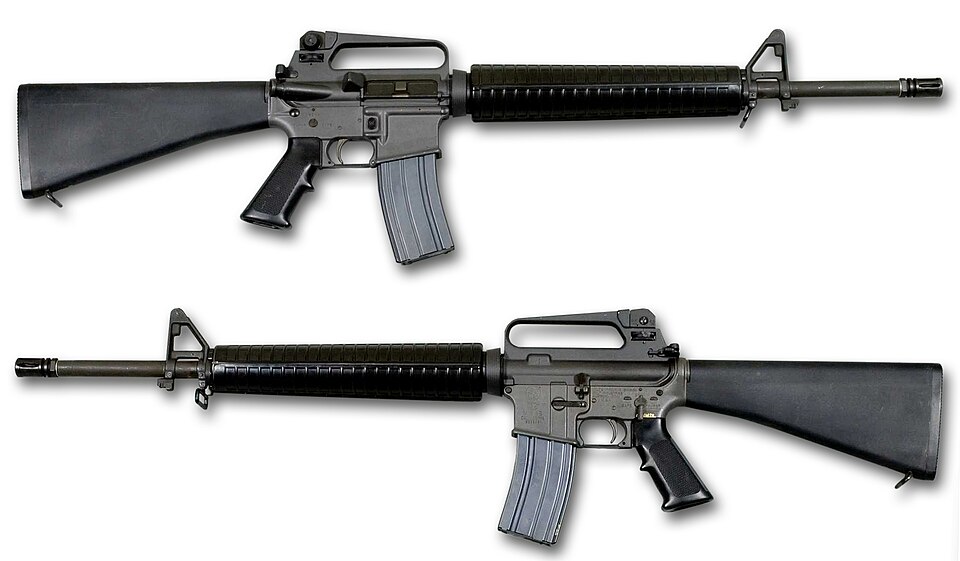
Over the past 50 years the most identifiable rifles of the Marine Corps have not been about style but rather hard necessities: the ability to move faster, to see more and to put rounds where they count. Through-line is also similar, despite the change in materials, optics and ergonomics.
It is what National Museum of the Marine Corps Arms and Armor Curator Jonathan Bernstein described as the most important item the Marines have always done, precision marksmanship. Such focus determined the rifles that would remain, those that would be upgraded and those that would continually reappear in niche functions.
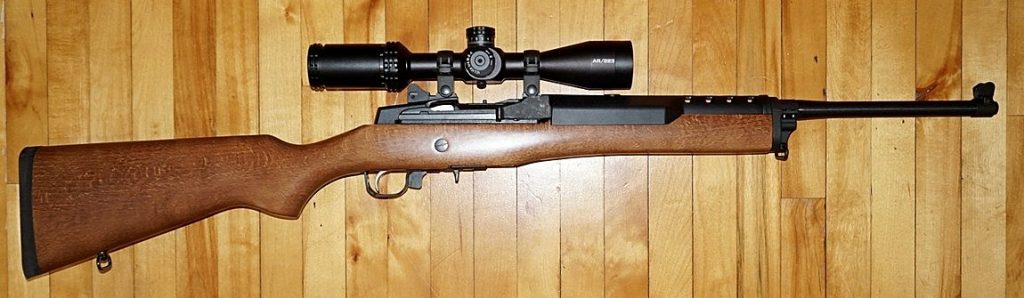
1. M14
The M14, released in 1959, was the final significant development in the history of the traditional U.S. battle rifles; it was a combination of a 7.62×51mm NATO cartridge and an overall-power, general-use concept. In the industry, it was found the size and wood furniture might turn into a liability in damp conditions, as the stocks tended to go wayward and crossing rough ground was not forgiving. Nevertheless, the accuracy and authority of the platform at range made it not really fade out of the Marine use.
What the M14 became when its era as a standard rifle was over was the basis of precision-oriented variants that sustained 7.62mm semi-auto capability alive within the units that had a need to reach without necessarily leaping all the way to a dedicated bolt gun.
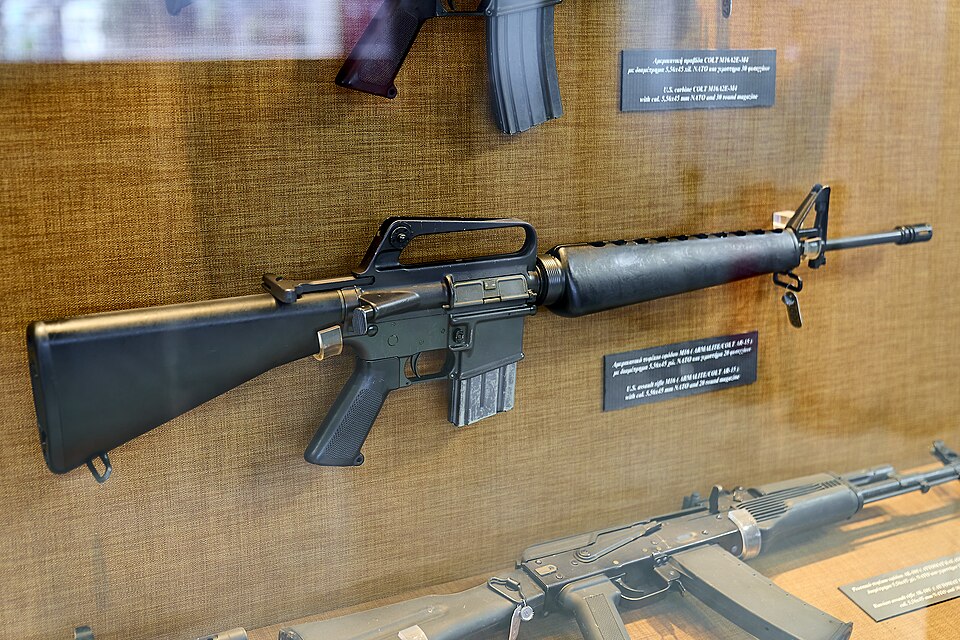
2. M16 (and the early AR-15 pathway)
The emergence of the M16 within the Vietnam-era force was not merely a switch of caliber, nor a switch of industrial and ergonomic manner to aluminum receivers and polymer furniture. Prior to the title of the M16 being set in stone, early tests of the AR-15 had been associated with the name Project Agile, wherein a lightweight low-recoil weapon would be useful in the conditions of carried rounds and rapid manipulation.
After the Marines took over the M16 in 1969, the cartridge 5.56×45mm and high cyclic rate of the rifle promoted a doctrine of appreciating controlled volume and follow up shots. The initial reliability issues were an element of the platform myth, yet the lesson in the long run was more significant: the Corps had sworn a family of guns built on modularity, training, and marksmanship, and not necessarily brute force.
3. M40
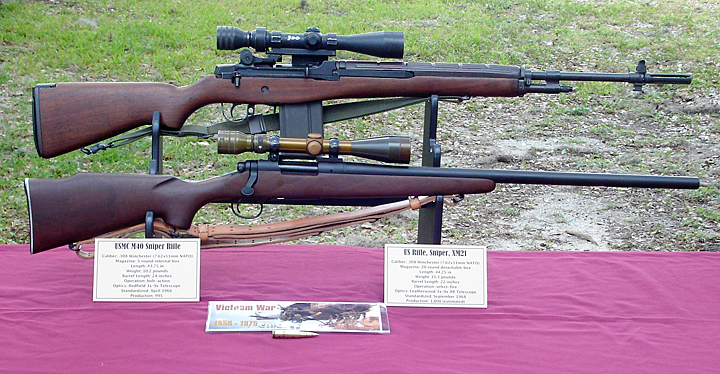
Launched in 1966 and based on the Remington Model 700 action, the M40 became the first purpose-built sniper gun in the Marine Corps as well as a strong indicator that accuracy at long range was now an official requirement, no longer a specialty. It was chambered in 7.62x 51 mm NATO and provided a consistent and rough tool to Scout Snipers and could be reconfigured and updated in successive versions.
Gradually, the M40 series grew up to become a systemtwo barrels, stocks, integration of the optics, the knowledge of the armorerinstead of a single rifle. Its legacy is not so much specific configuration but the professionalization and standardization of sniper employment by the Corps around a consistent package of precision.
4. Barrett M82
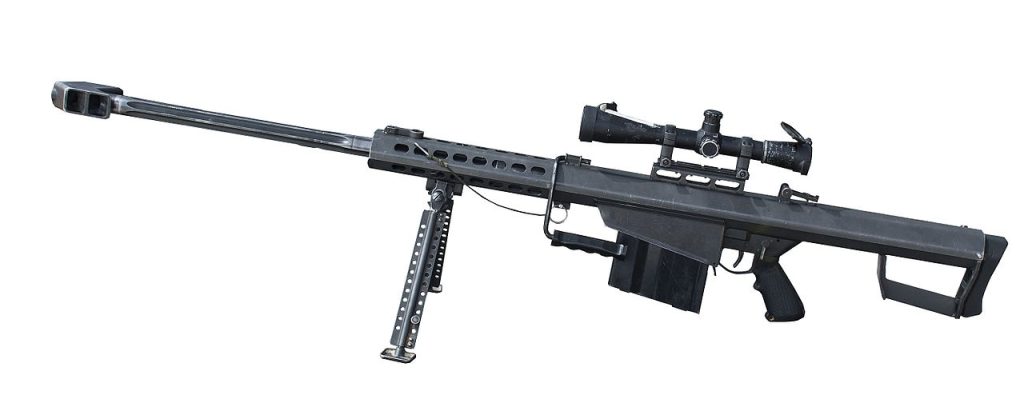
When Marines started to use Barrett M82 in early 1990s, it propelled the notion of sniper rifle in another level. The semi-automatic action and the .50 BMG cartridge provided Marines a portable anti-materiel solution capable of shooting through light vehicles and hardened positions and yet allowing them to follow up quickly as they used a 10-round magazine.
The tradeoffs were inevitable size, weight and signature. But its tactical usefulness was equally apparent-this was a rifle designed to be run in a problem set in which a barrier defeat and standoff were a more important factor than concealment, and where a single well-made hit could make the difference between what a small group could accomplish.
5. M4 Carbine
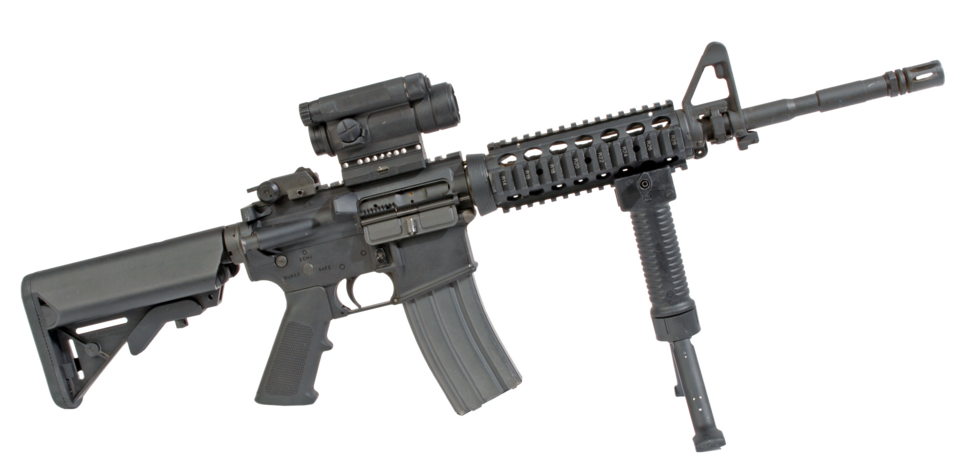
In 1994 the M4 was adopted and improved the 5.56mm package of the M3 to fit cramped terrain, vehicle tasks, and close-quarters operations. It had significant parts and handbook of arms with M16 family, but it added a collapsible stock and a 14.5-inch barrel that made it to move more rapidly in narrow settings.
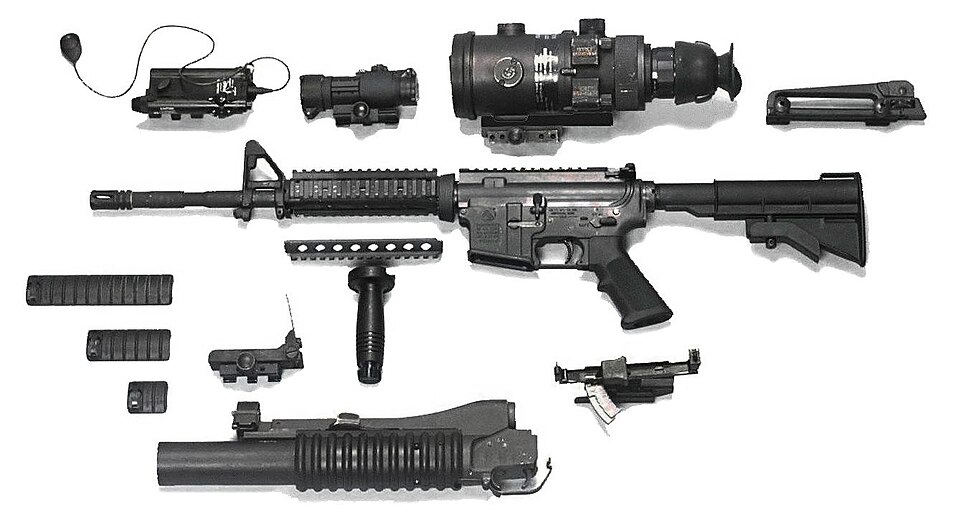
A similar compromise was also in marine usage: short barrels can shorten the effective range of compact rifles, though at close range they are quite effective. As time went on, the flexibility of the platform, rails, optics, lights, lasers and mission-specific configurations, allowed the platform to stay up to date as the Corps found alternative solutions to accuracy and range.
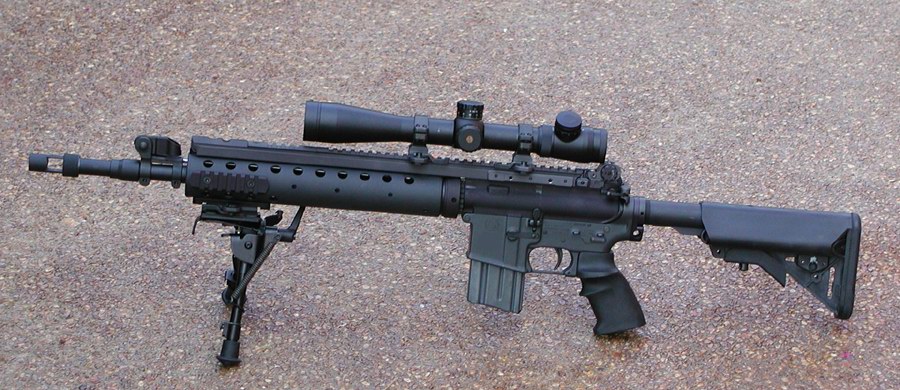
6. Mk12 Special Purpose Rifle
The Mk12 Special Purpose Rifle was created to fill the void between a standard carbine and a specific sniper rifle; appearing in the early 2000s, it is a special purpose marksman rifle that has legitimate precision marksman credibility. Chambered in 5.56x45mm, it combined a match grade barrel and free-float handguard with quality optics to increase the maximum range of practical engagement without the weight compromise of heavier sniper platforms.
In actuality, it provided small units with a medium to shoot distances that were far beyond the normal carbine ranges and not lose semi-automatic velocity. The cultural effect of Mk12 was wider: it reinforced the concept that squads and platoons have to be functional, and not functional in bulk.
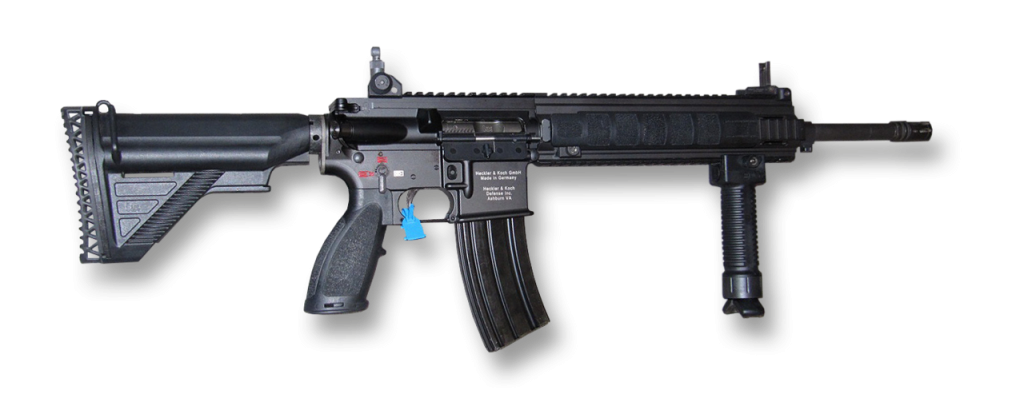
7. M27 Infantry Automatic Rifle
The M27 was originally an idea of an automatic rifle based on the HK416, aimed at modernizing the way in which fireteams would provide a controlled amount of automatic fire. The logic of the program was based on portability, less maintenance load, and precision-of moving the emphasis of a belt-fed volume towards a more accurate and more sustainable hits. The Marine Corps declared in December 2017 that it would arm all individuals of an infantry group with the M27, and the rifle finally supplanted the M16A4 and the majority of the footprint of the M4A1 at the squad degree.
The engineering history of the M27 lies in its operating system and construction decisions: a short-stroke piston action, a free-floating barrel, and a design which emphasizes optics as the default and not the option. This platform had even given birth to an offshoot known as a marksman, as an indication of the rapidity at which it was in effect becoming more than an automatic rifle.
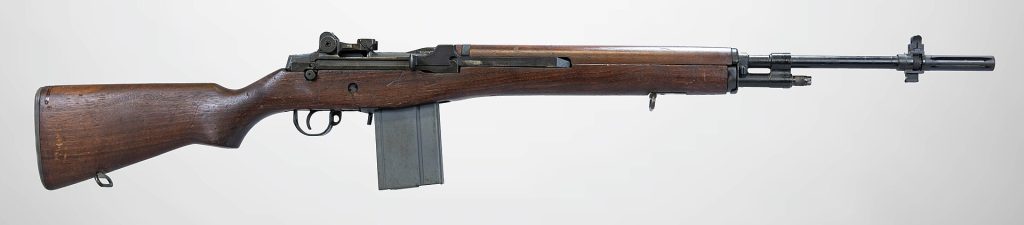
8. M14 Designated Marker Rifle (DMR)
The fact that the Marine Corps has chosen to redesign old M14s into a precision semi-auto is just one echo of the same theme: when a platform has a real capability advantage, it is redesigned instead of taking it off the shelf. Since 1989 the Precision Weapons Section of Marine Corps Base Quantico has been refurbishing rifles into the DMR configuration to include parts like a match-grade stainless barrel and updated stock geometry.
The system has been tested and is known to be accurate to a distance of 1,000 yards in ideal circumstances, and it is set to 7.62x51mm NATO and typically matched with match ammunition. The reach was packed in a semi-auto form, which is why the M14 reappeared in specialized service many years after it had ceased normal issue.
Put side by side, these rifles map a clear Marine Corps trajectory: from heavy, wood-and-steel power to lighter modular systems, then back toward precision-heavy solutions that keep squads relevant at longer distances. The constant is not any single model. It is the institutional insistence that Marines must shoot well—then adapt the rifle around that requirement as optics, materials, and small-unit tactics evolve.


