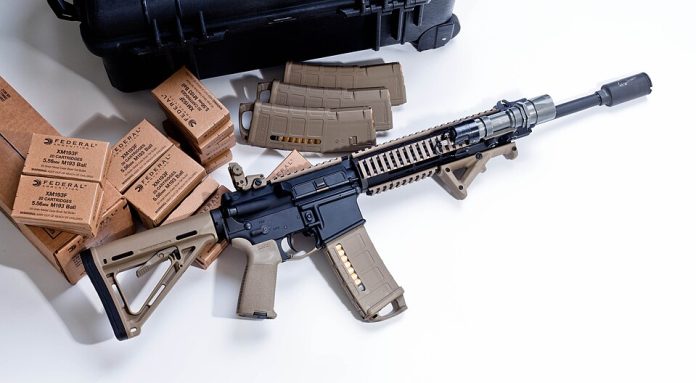
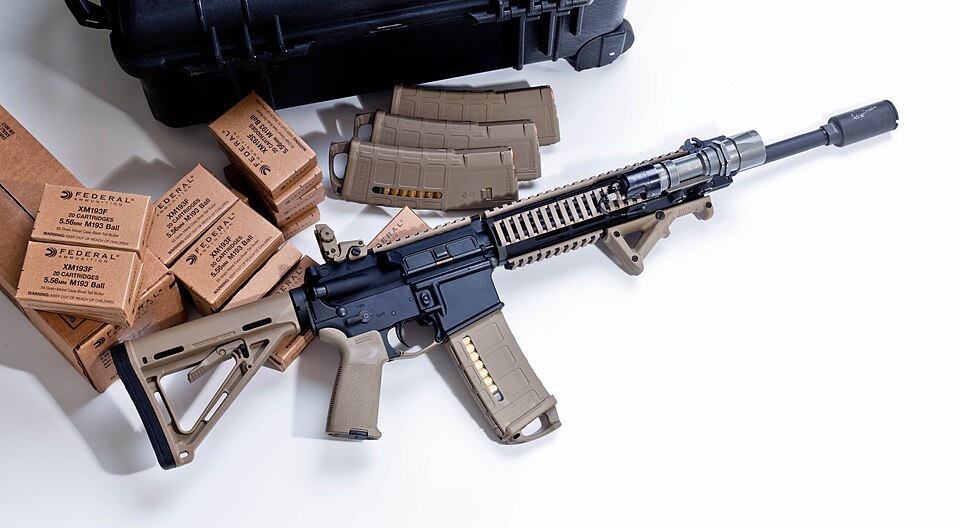
Can three letters really cause this much confusion?
The AR-15 sits at the intersection of engineering, ergonomics, and culture, which makes it a magnet for sloppy terminology and overheated assumptions. The result is a rifle that gets described as everything from “automatic” to “banned everywhere,” even though the platform’s real story is mostly about design choices: modular construction, intermediate cartridges, and a fire-control system built around semi-automatic operation.
Clearing the air matters because the AR-15 is discussed in technical spaces and non-technical ones alike. When basic terms like “assault rifle,” “automatic,” or even “AR” get misused, the conversation stops being about mechanics and starts being about vibes.
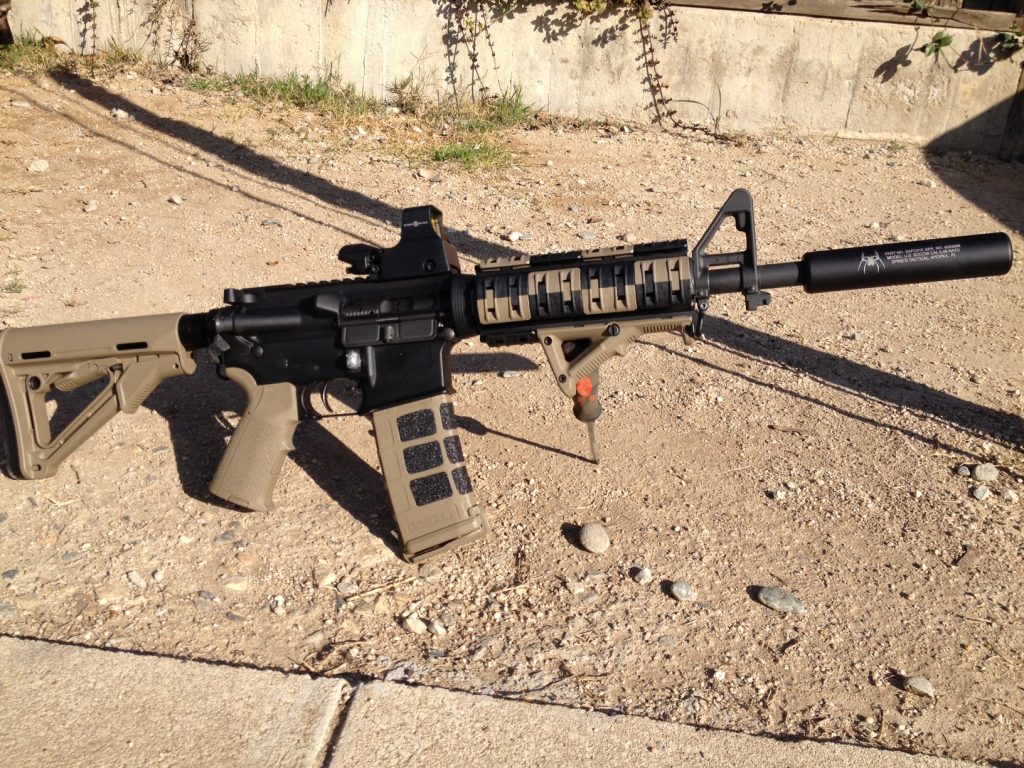
1. “AR” means “assault rifle”
The “AR” in AR-15 traces to ArmaLite, the company that originated the design lineage before the pattern spread far beyond one brand name. Conflating “AR” with “assault rifle” also muddies a more technical distinction: “assault rifle” is commonly used to describe a service rifle with select-fire capability, not a civilian semi-automatic.

2. Civilian AR-15s are built to fire full-auto
A standard civilian AR-15 fires one round per trigger press. Fully automatic fire requires additional, controlled components not present in typical civilian rifles, and U.S. federal law treats machine guns as a separate category under the National Firearms Act of 1934. Mechanically, the difference is not cosmetic; it lives in the fire-control parts and how the system is allowed to cycle.

3. The AR-15 is “military-only” by design
The platform has military relatives, but the civilian ecosystem grew around sporting use: target shooting, competition, and various hunting roles. The engineering hook is modularity uppers, barrels, handguards, optics, and stocks can be configured around different handling needs and accuracy goals without turning the rifle into a different operating system.

4. The AR-15 is “too powerful” compared with hunting rifles
Much of the AR-15 conversation skips past cartridges. The platform is most commonly chambered in .223 Remington / 5.56 NATO, widely considered intermediate rifle ammunition.

By typical muzzle-energy comparisons, these loads sit well below many traditional big-game cartridges such as .308 Winchester or .30-06 Springfield, which is one reason the AR-15 is often described as controllable rather than punishing.

5. The AR-15 is automatically “bad” for home defense because it’s a rifle
“Rifle” is a category, not a floor plan. Handling in confined spaces depends on overall length, balance, sighting setup, and user training. Shorter configurations and modern optics can change how the platform behaves indoors, and patrol-style carbines have long been used in law-enforcement contexts specifically because a shoulder-fired platform can offer steadier aiming than many handguns.
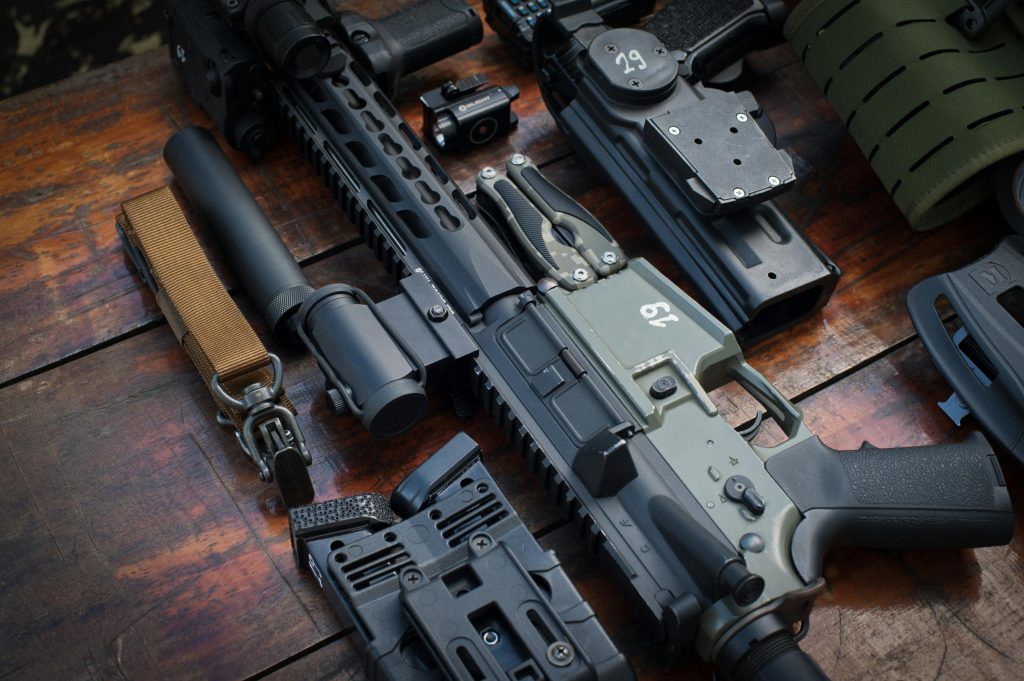
6. Building one is as simple as snapping parts together
The AR-15’s modularity makes it serviceable, but “modular” does not mean “tool-free” or “skill-free.” Safe assembly involves correct torque, proper alignment in the gas system, and attention to compatibility across parts. Mistakes show up as malfunctions at best and unsafe pressures at worst, which is why careful adherence to manufacturer specs matters.

7. AR-15 ownership is banned nationwide
No federal blanket prohibition bans AR-15 ownership across the U.S., but state and local rules can be strict and highly specific. Some jurisdictions regulate by named models; others regulate by feature tests such as detachable magazine capability paired with certain furniture or muzzle devices. California, for example, defines assault weapons in part through a features-based test for semiautomatic, centerfire rifles, which is why compliant configurations can look noticeably different from “free-state” setups.

The AR-15 is often treated like a single, fixed object, but it is better understood as a pattern: a common operating system expressed through many configurations. That reality is exactly why myths stick people argue about a label while the hardware sits in plain sight. Getting the basics right does not require agreement about what the platform should represent. It only requires using the correct words for the correct mechanics.


