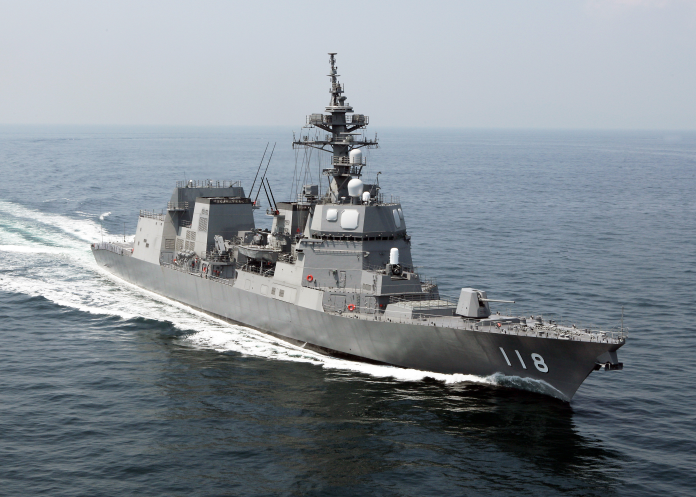
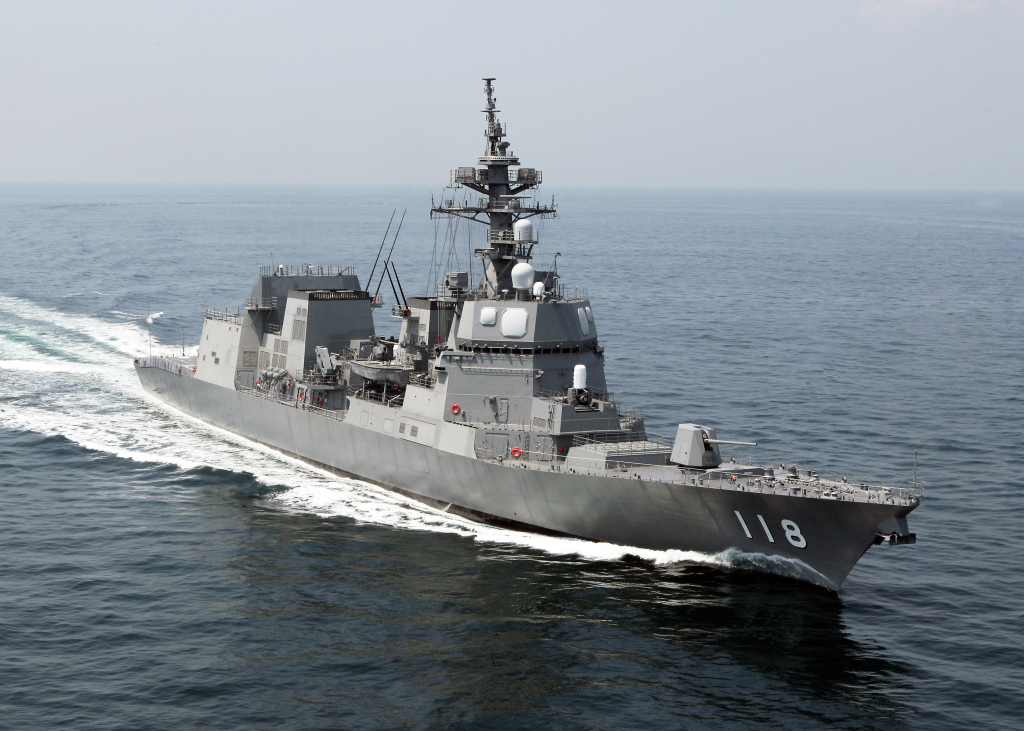
American strength is back in the world,” stated Secretary of War Pete Hegseth in the inaugural ceremony for two large projects completed by the United States Navy. The Trump-class Battleships and FF(X) Frigates mark a large shift in the nation’s naval acquisitions program. The criteria are quite strict. However, for designing and building new frigates, the firm of Huntington Ingallis Industries (HII) has managed to establish leadership and become, in the near future, a potential firm for constructing the battleship.
The case for designing two different ships (frigates and battleships) has come about due to technological improvements and the challenges under which the American ship-building sector has to operate. As far as the military and military fans, along with investors, these projects represent a preview of what the future of the United States’ naval dominance might hold and what reality looks like in terms of taking “what-ifs” and making them “boiled steel that floats on the surface of the water.”
1. HII’s Stock Jumps on Frigate Contract Award
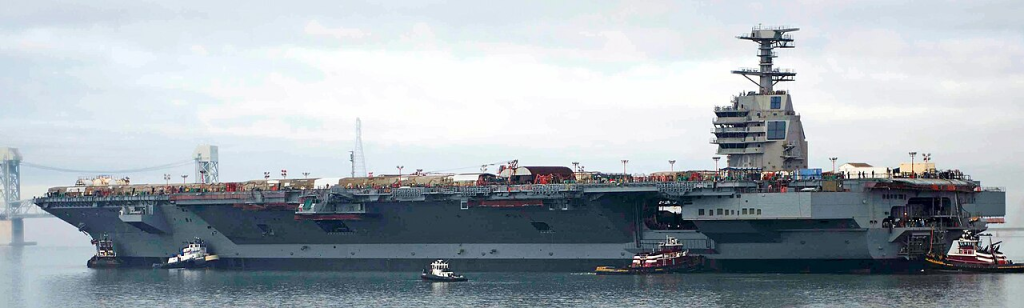
Shares of Huntington Ingalls Industries jumped by over 5% to a record high of above $350 after being awarded a contract by the Navy for building the FF(X) frigates by its Ingalls Shipbuilding division. This stock has risen by a whopping 87% so far this year, which proves the extent to which investors are optimistic about the new Company. In fact, the design of the frigates draws upon the successful production of the Heritage-Class National Security Cutter, which has already been deployed by the Coast Guard. This, according to Secretary of the Navy John Phelan, was an important criterion. The first hull is expected to be launched by 2028, and a competitive procurement plan for follow-on has been drawn up to mean that a few yards would be involved. The procurement plan is expected to ensure that problems of delay and cost overrun are avoided, seen in the canceled Constellation-class program.
2. Design and Capabilities of the FF(X) Frigate
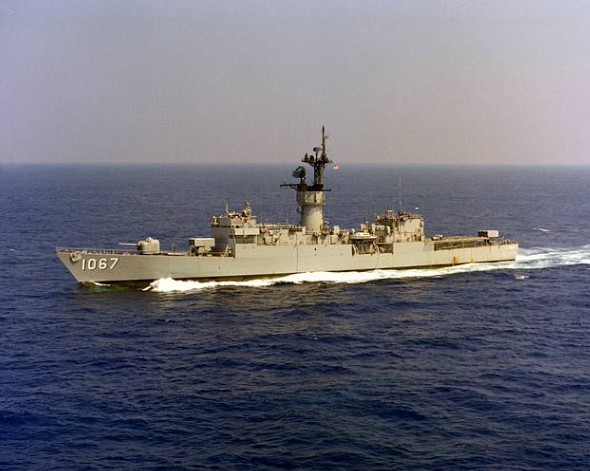
The FF(X) is expected to be an agile vessel that is smaller and focuses on surface warfare with the ability to accommodate modular payloads and control remotely operated drones. Designs have expected an overall length of 420 feet, a beam of 54 feet, with expected displacements of 4,500 long tons. While there is no information available yet on the details of the Vertical Launch Systems in terms of exact location and size onboard the FF(X), it is expected to feature angled deck missile launchers with an ample provision of 16 Naval Strike Missiles, an Mk 49 RAM launcher, and an anti-submarine gun that is 57mm bow-mounted. The modularity of the frigate is intended to foster flexibility, which would make way for further modernization, such as what is being done by the Arleigh Burke Destroyer in phases, concept by concept. The Navy insists that the design, being American, does not need any supply chains from other countries, nor does it lack an already-established logistics chain.
3. Trump-Class Battleships: Specifications and Armament
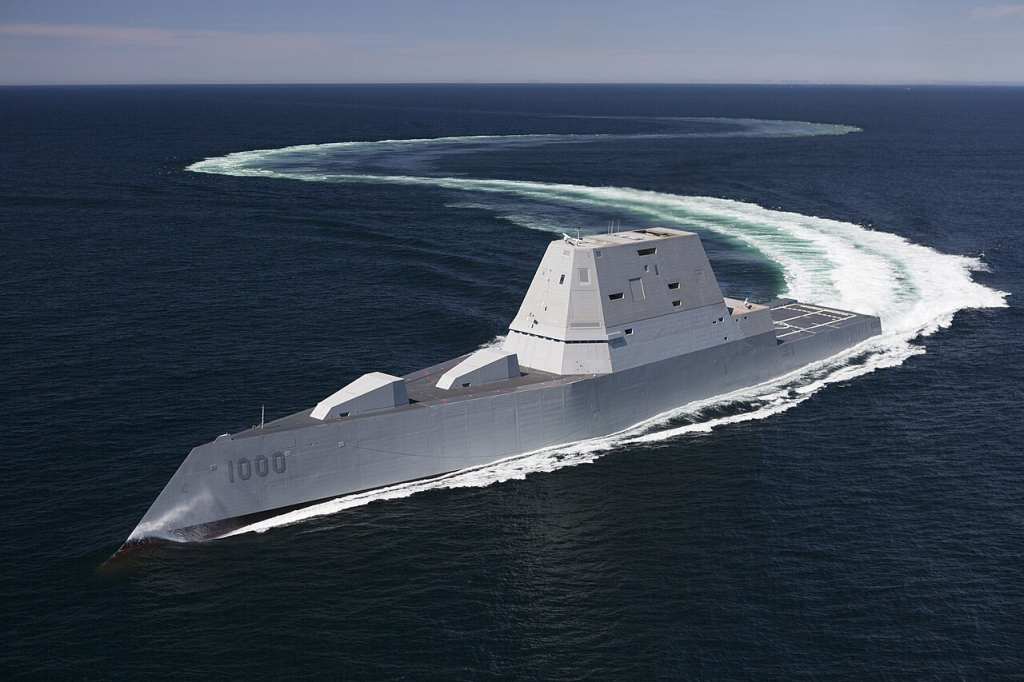
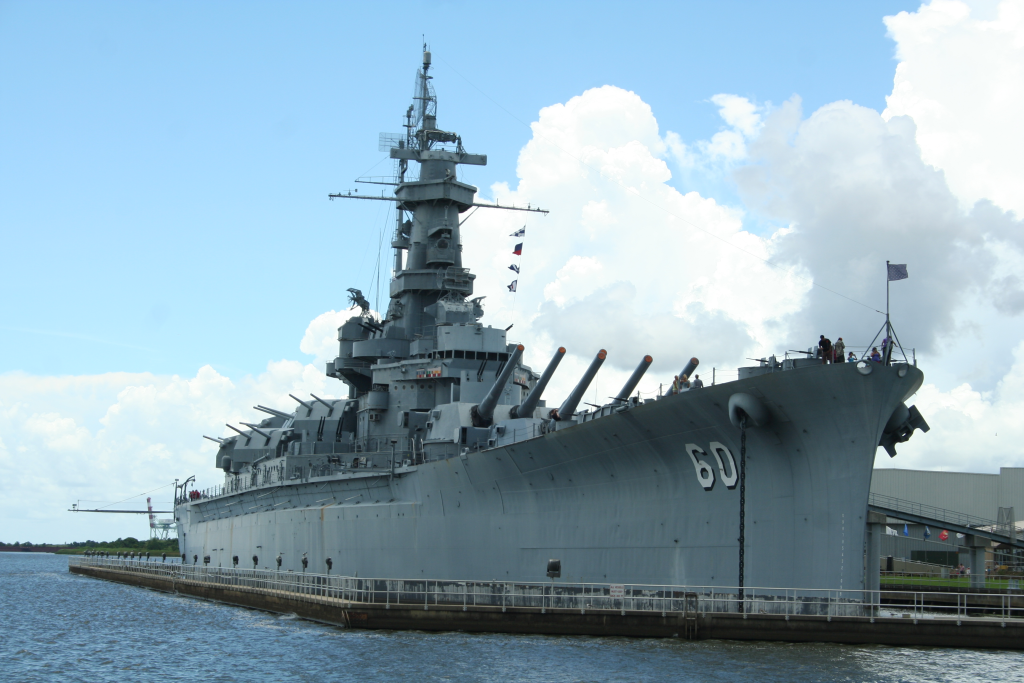
The Trump-class or BBG(X) is to be 840 to 880 feet in length and 105 to 115 feet in width and 35,000 tons in displacement. They are intended to be equipped with 128 Mk 41 VLS missile systems and an additional 12-cell VLS for carrying IRCPS hypersonic missiles. They would carry weaponry including nuclear-armed sea-launched cruise missiles, 32 megajoule electromagnetic railgun, 5-inch guns, direct energy guns in 300 to 600 kW power range, and various anti-drone systems. Its capabilities in command and control will also be greatly enhanced by the use of such robust command and control capabilities as the AN/SPY-6(V)1 radar system and the SEWIP Block III electronic warfare capabilities. In addition, the configuration will feature flight deck and a hangar that can support V-22 Ospreys or Future Vertical Lift aircraft.
4. Industrial Base Strain and Workforce Issues
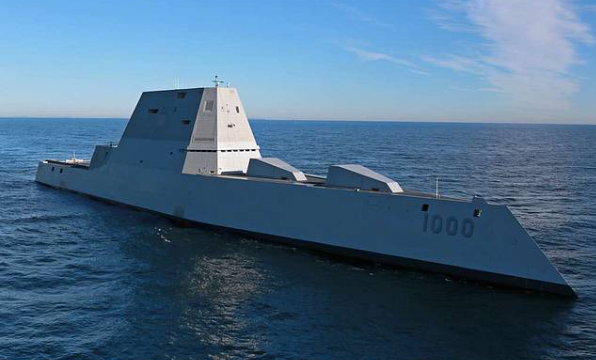
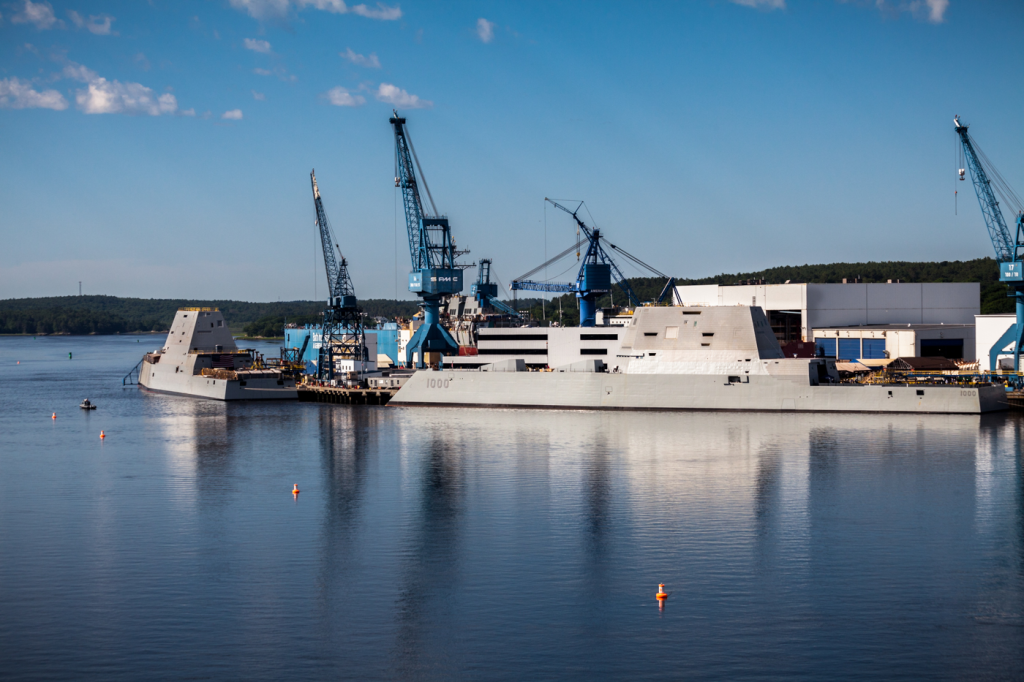
The American shipyards are already overstretched, including their major projects like the Ford carriers and Zumwalt destroyers, because they are late. The navy secretary, Phelan, has confirmed that these projects, despite their efficiency, are months late since they exceed the estimated cost by a substantial amount. The dock capacity needed for large ships, including the Trump-class ships, is the same as for the assault ships, so a new or renovated shipyard is needed.
Manpower recruitment is another bottleneck. According to an analyst, until salaries are equal in the least stressful retail/logistics fields, it will be difficult to lure people into shipyards. A country-level training program is required for shipfitters, electricians, and system technicians so that production commitments can be met.
5. Foreign Partnerships Bolstering U.S. Shipbuilding
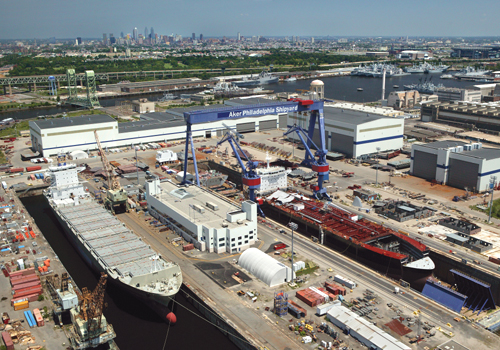
The government is making use of foreign technology assistance in accelerating the building up of local capacity. The South Korean conglomerate Hanwha Group has already invested $5 billion in enhancing the Hanwha Philly Shipyard. The company aims to increase the output capacity from 1 to 1.5 to 20 units within a year. The co-produced ships in Geoje by Hanwha Ocean would fill the capacity gaps.
The Italian firm Fincantieri Marinette Marine is still active, although there have been layoffs as a result of the reduction of Constellation-class vessels. The country of Finland participates in a collaboration project concerning the construction of icebreakers that will amount to a price of 6.1 billion dollars, of which seven vessels will be built by the U.S. yards.
6. The Strategic Role of the Great Lakes Region
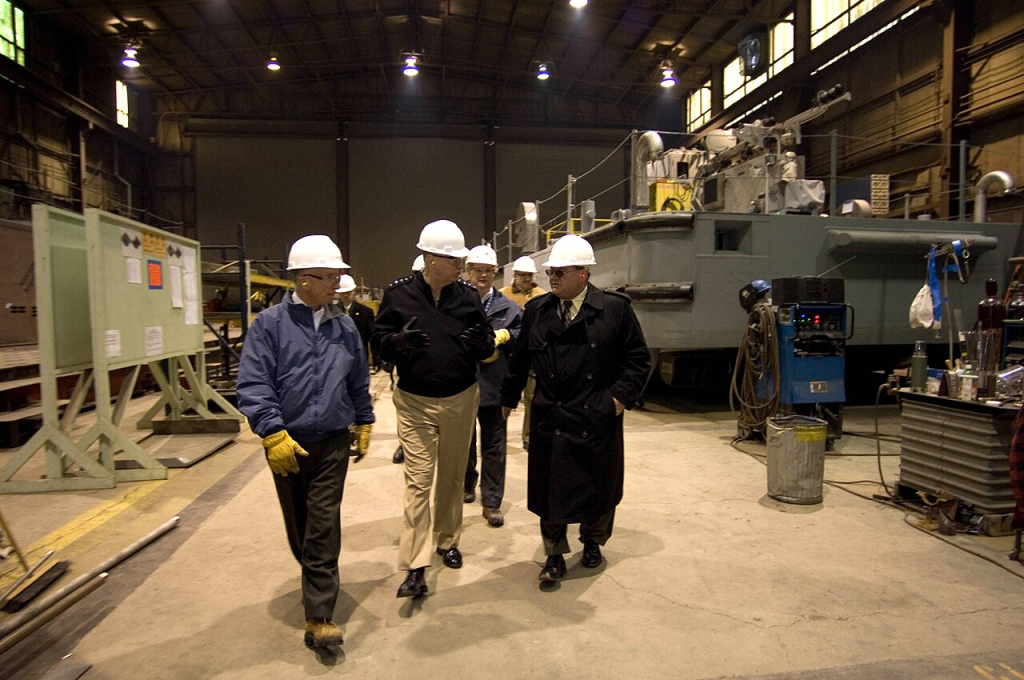
The inland yards in the Great Lakes area have untapped capacity in the building of small navy ships, so that coastal yards can then deal with larger battle-ready ships. The fact that yards such as Fincantieri Marinette Marine are in existence demonstrates that warships of a complex level can indeed be built in an inland area, utilizing the highly trained but non-at-risk labor force. This geographic diversification plan is also intended to be in compliance with the “Restoring America’s Maritime Dominance” executive order. There is also a need for a distributed infrastructure capability for modern shipbuilding.
7. Cost Uncertainty & Program Risks
The estimated unit cost for the Trump program ranges between $5 billion to $15 billion, which exceeded by a significant amount the construction cost of an Arleigh Burke destroyer at $2 billion. The risk associated with the possibility of the program being reduced to truncated form and thus reduced potency, as has happened with the Zumwalt program, which reduced the original plan to 32 to just three units to the cost of over $10 billion each, could also exist here. The long construction lead times, as indicated, are to begin only by the early 2030s, and thus the program has to survive a number of administrations. Should there be a change, there could be a trimming or even a scrapping of the program itself.
8. Operational Relevance in Modern Conflict Operational
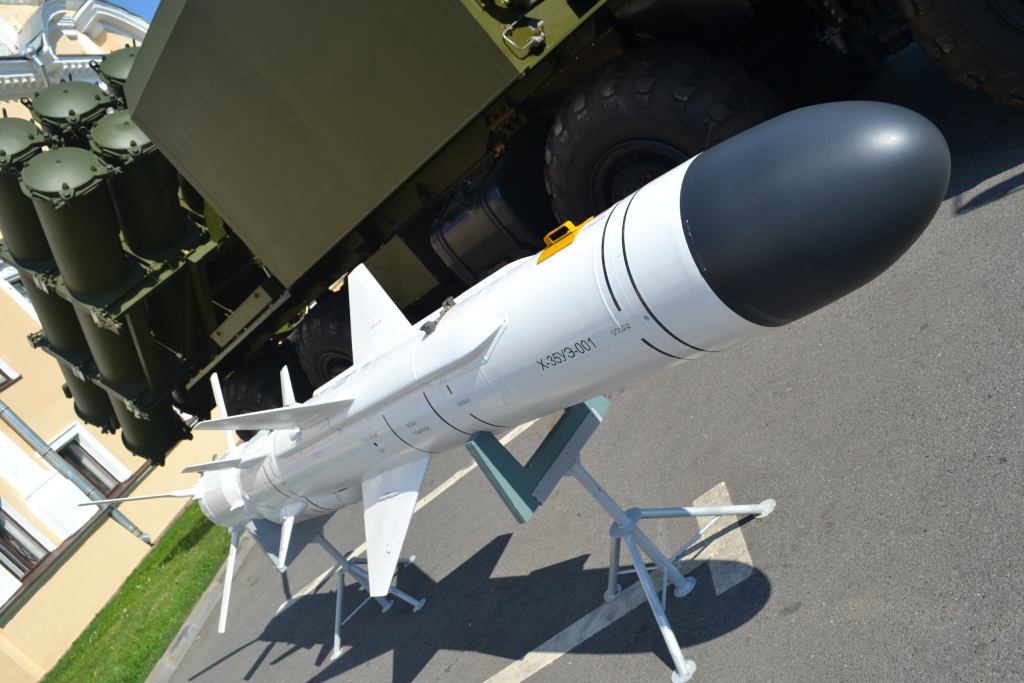
Some observers question whether emphasizing the power of gun platforms is the best course given the principle of “distributed lethality.” Their principal adversaries, including the Chinese, also have anti-ship ballistic missiles with DF-26 capabilities that can attack larger platforms from a reliable distance. However, drones and unmanned platforms also come into play with respect to survival. Analysts have proposed that Trump submarines’ large VLS capacity could compensate for the upcoming shortage of missile launch capacity that would come with withdrawals because of plans to withdraw because of plans that would see the retirement of Ticonderoga cruisers and Ohio SSGN submarines, though imbalances would stay.
9. Investor and Industry Outlook Investors
The winning of a frigate construction contract by HII is a promise of future profitable expansion, with a long-term potential with respect to the battleship program, though concentration on US models and multi-yard strategies may well give a diversified look to industry-wide contracts. The future would certainly be interesting with respect to what happens with contracts awarded, design completion, along with reaching the initial production milestones. Such projects certainly have high risks that also have reward potential, with respect to the intersection between approved weapon integration needs and the expansion needs with respect to the country’s base industrials.
The parallel pursuit by the navy regarding its FF(X) frigates and Trump battleships represents the separation between ambitions that may seem plausible and what may be reality with respect to executing modern weapon purchase plans.” Successful plans with respect to these projects would depend upon a responsible handling with respect to said plans, industry rebirth, along with changes with respect to designs that address any future dangers. Industry stakeholders would see these plans as an exciting opportunity that also could rewrite US sea power.


