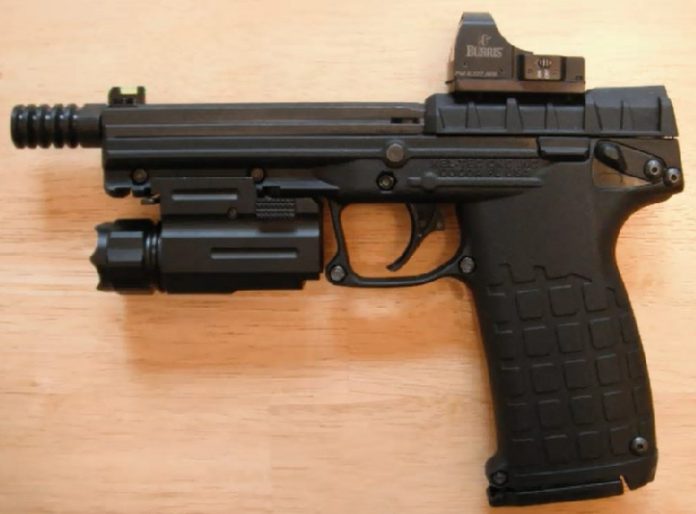
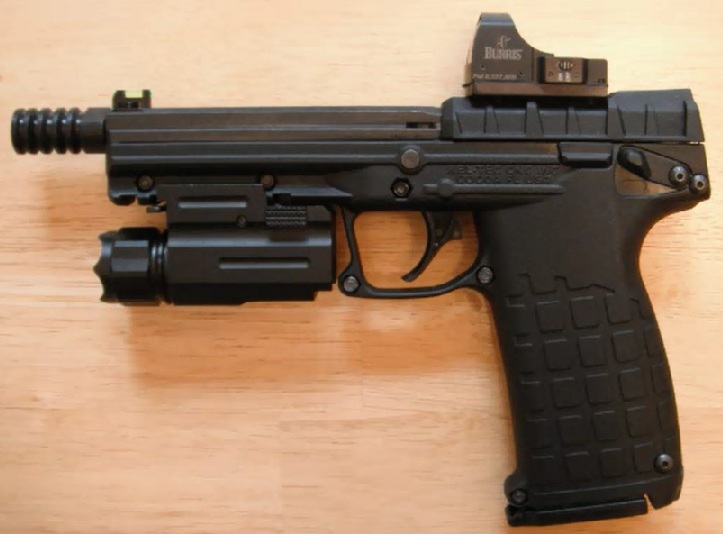
The duty pistol has not been replaced so much as reconfigured. What used to be a handgun built around fixed iron sights is now increasingly treated as a platform for an optic, with the slide cut, sight height, screw placement, and even agency training standards built around that assumption.
That change reaches far beyond adding a small window on top of a slide. Red dot optics have pushed manufacturers toward new mounting systems, forced closer attention to durability and recoil management, and turned sighting equipment into part of the pistol’s architecture instead of an accessory. The result is a different kind of service sidearm, and a different set of demands for the people who carry one.
1. Factory optic cuts have become part of the pistol’s baseline design
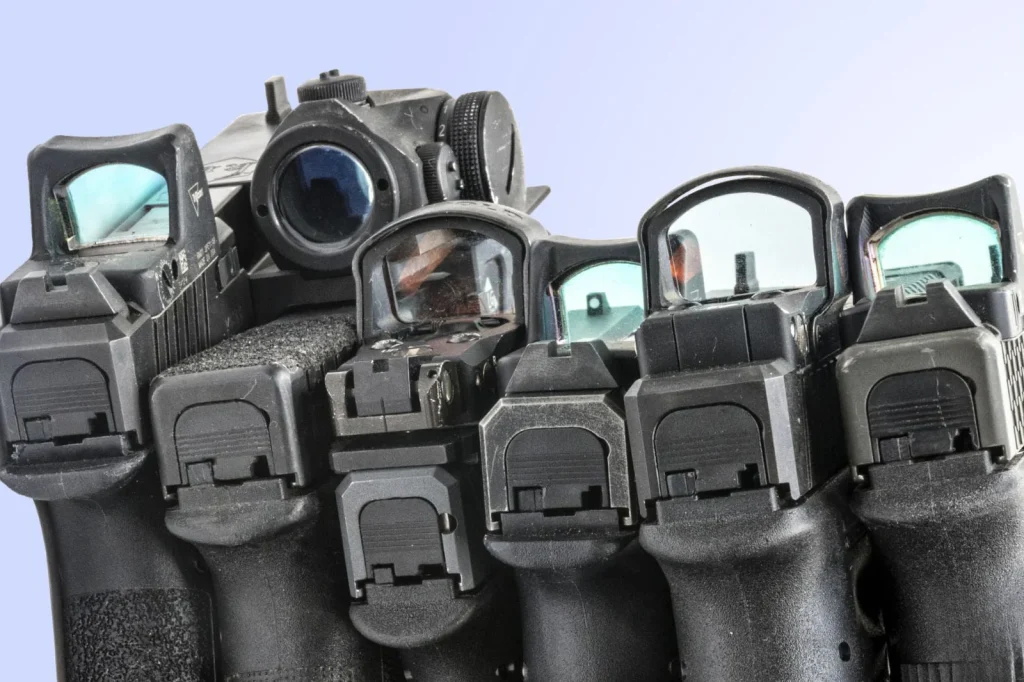
The most visible change is also the most structural: optic cuts are no longer unusual. Slides are now commonly machined at the factory so an optic can be mounted without custom milling, a shift that moved red dots from specialist setups into mainstream duty configurations. As factory-cut slides became common, manufacturers stopped treating the mount as an aftermarket convenience and started engineering the top end around it from the beginning. That affects slide geometry, internal clearances, backup sight height, and how low an optic can sit over the bore. It also changes procurement logic. An agency choosing a sidearm today is often choosing a mounting ecosystem at the same time.
2. Micro red dots made reciprocating-slide optics practical
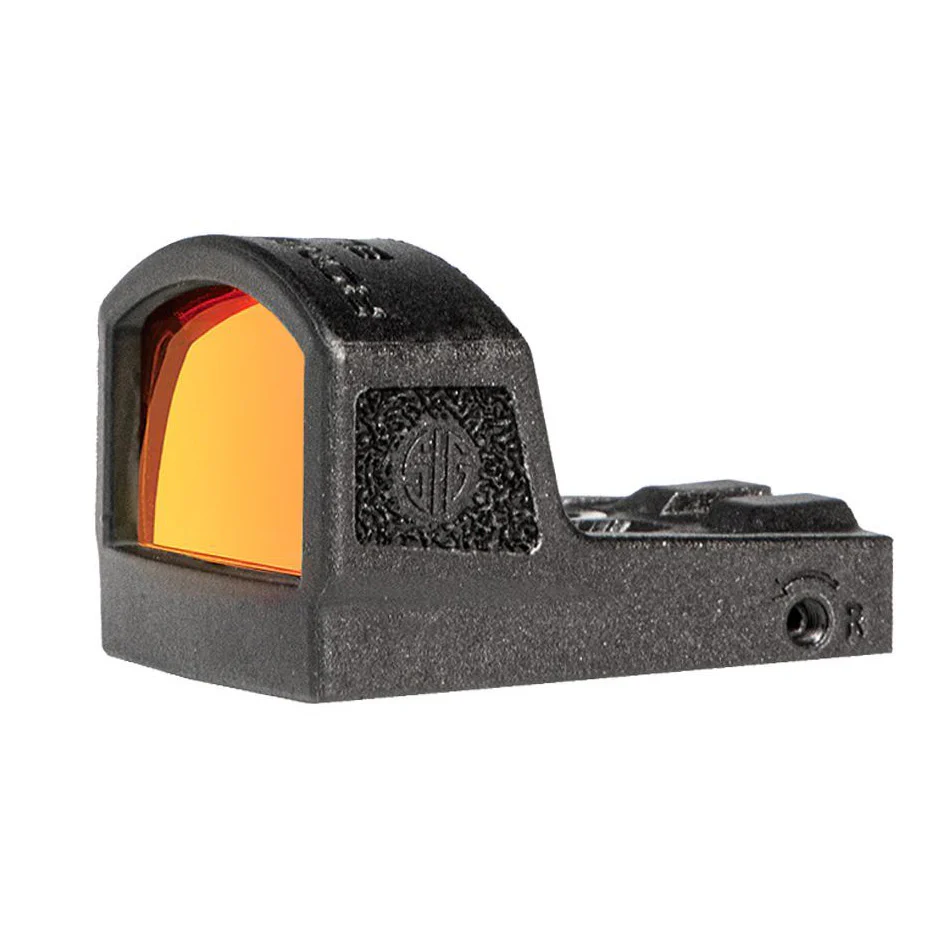
Early handgun optics were too bulky and too fragile for broad duty use. The turning point came when miniaturized reflex sights became light enough and durable enough to survive the violent movement of a reciprocating pistol slide, making direct slide mounting realistic for hard use. That engineering shift matters because every ounce on the slide changes the operating envelope of the pistol. Smaller optics reduced that penalty while preserving durability, which opened the door for mass adoption. Once that happened, the red dot stopped being a competition-only experiment and became part of the modern duty-pistol design brief.
3. Mounting systems are now driving slide engineering
The real redesign is happening at the interface between optic and slide. Footprints, recoil lugs, screw placement, and pocket depth now shape how pistols are built. The broader market has consolidated around familiar standards like RMR and RMSc footprints, but manufacturers are also pushing proprietary systems that promise lower mounting height or stronger lockup. This has created a split between modular plate-based approaches and more integrated direct-mount concepts. Plate systems offer flexibility across multiple optics, while direct mounting usually lowers the optic and removes one extra set of fasteners. Both approaches reflect the same reality: the top of the slide is now a precision interface, not just a flat surface with iron sights attached.
4. New lockup concepts are trying to solve the weak point in pistol optics
The mount has become one of the most scrutinized parts of the entire system. A red dot can be durable on its own and still fail if the interface shifts, loosens, or loses zero under recoil. That is why newer concepts emphasize multiple contact surfaces rather than relying only on screws. A prominent example is Glock’s A-CUT mounting system, introduced with Aimpoint in 2025. It uses front engagement and rear securement to better manage recoil forces. Safariland’s 2026 guide also describes Glock’s deeper-cut ORS approach, where the optic screws directly into the slide while a shim plate provides support and recoil lugs. The common theme is clear: the industry is trying to reduce movement, lower the optic, and make the connection more repeatable over time.
5. Backup iron sights have changed from primary system to support structure
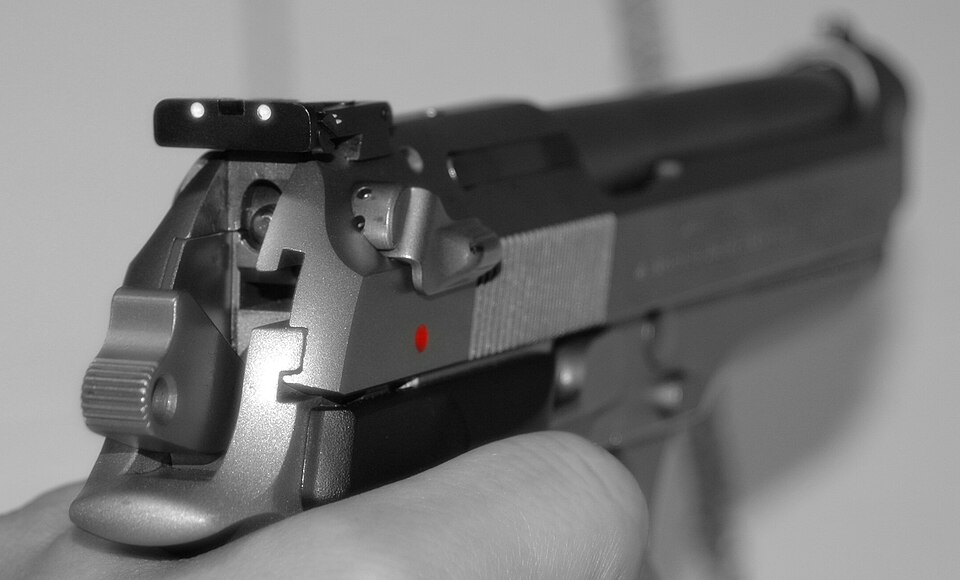
Red dot pistols have not eliminated irons, but they have changed their job. Taller backup sights are now often specified so they remain visible through the optic window, usually in the lower portion rather than in a full co-witness arrangement. According to pistol optic co-witnessing guidance, many setups place the irons in the bottom third or bottom fourth of the window, and some combinations require unusually tall front sights just to make them visible. That means the iron sight package is no longer setting the pistol’s visual architecture by itself. It is being sized and placed around the optic, often as a contingency layer rather than the main aiming method.
6. Enclosed emitters are changing what “duty grade” means
One of the strongest currents in duty optics is the move toward enclosed emitters. Open-emitter designs can work well, but exposure to water, lint, mud, sweat, and debris has kept agencies and instructors focused on environmental reliability. In that context, enclosed optics are increasingly treated as operational hardware rather than a premium feature. Aimpoint’s 2025 COA launch highlighted that shift with an enclosed design, a listed 50,000 hours of constant operation, and recoil testing tied to 40,000 rounds of 9mm. The larger point is not one brand or model. It is that duty pistols are now expected to host optics that stay functional through weather, impact, vehicle carry, and prolonged training use.

7. Training doctrine now uses the red dot as both sight and diagnostic tool
The red dot has changed handgun instruction because it makes shooter input more visible. Iron sights require alignment across multiple focal planes, while a pistol dot allows target-focused shooting. That visual difference affects everything from draw stroke to trigger press. Instructors can see dot movement during presentation, recoil, and trigger break, which makes errors easier to diagnose.

A wandering dot can reveal grip inconsistency, poor visual discipline, or disruption during the press in a way that is often harder to catch with irons alone. This has turned the optic into a training aid as much as a sighting system, which helps explain why agencies increasingly tie equipment choices to updated coaching methods rather than legacy qualification habits.
8. The new duty pistol is really an optical system host
Once optics, plates, footprints, screws, recoil bosses, backup sights, and holster fit all begin influencing one another, the pistol stops being a standalone object. It becomes the center of a sighting system. That is the deeper redesign behind the red dot era. Classic iron-sight duty pistols still exist, and many remain fully serviceable.
But the design center has moved. The modern duty handgun is increasingly expected to arrive ready for an optic, accommodate evolving mounting standards, and support a training program built around target-focused shooting. From slide machining to instructor feedback, the red dot has become part of the pistol’s core architecture rather than an accessory added after the fact.


