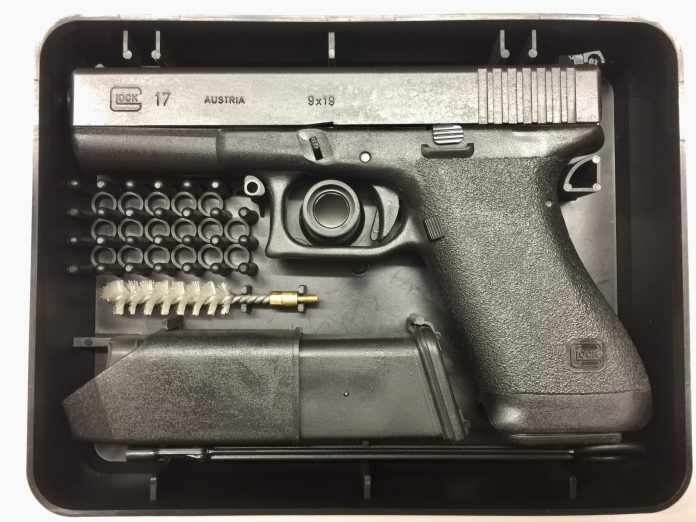
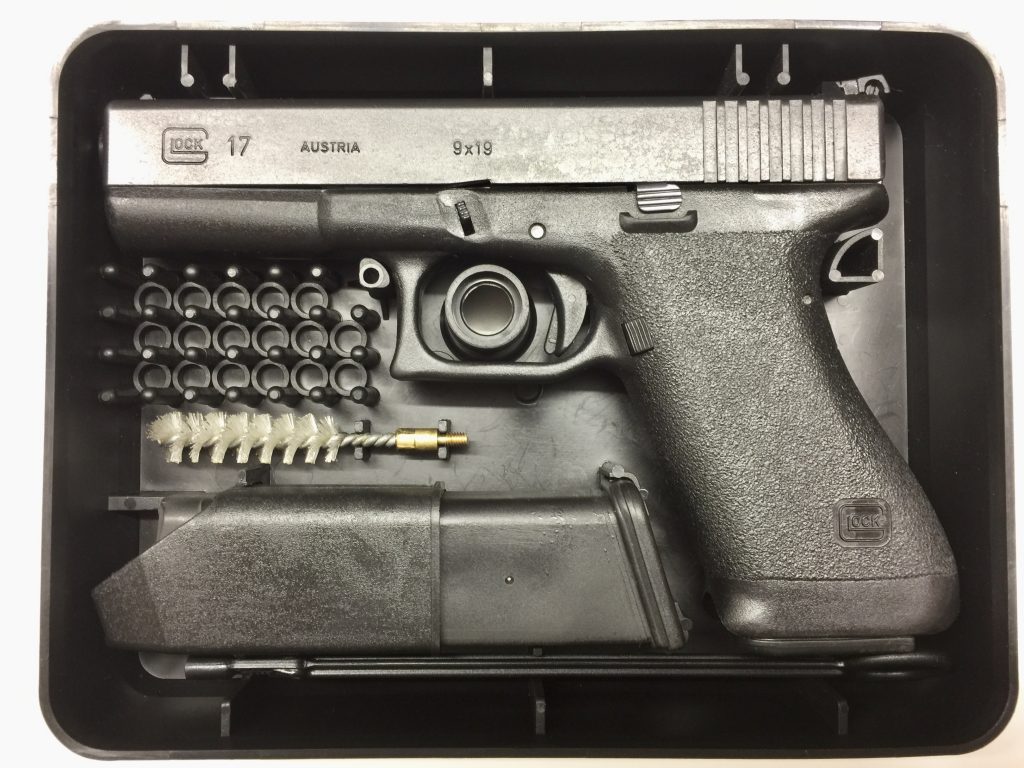
Glock’s latest catalog reduction is less about a single discontinued pistol than a broader reset of the company’s commercial lineup. The list reaches across generations, calibers, and optics-ready variants, suggesting a manufacturer narrowing its focus around the models and features most likely to define the next phase of its handgun platform.
That makes the move notable beyond collector interest. A trimmed portfolio affects aftermarket compatibility, agency standardization, caliber survival, and the role of optics-ready slides at a time when pistol design is being shaped by both user demand and scrutiny over conversion vulnerabilities.
1. The cuts reach far beyond one aging generation
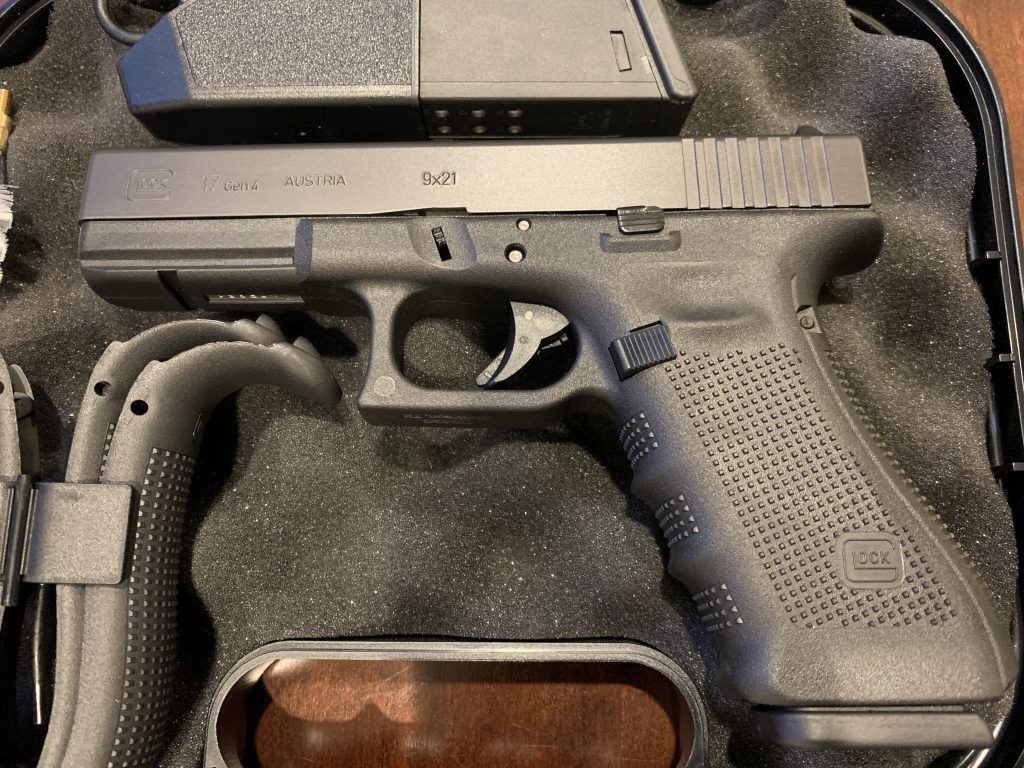
The discontinued roster is broad, covering full-size, compact, subcompact, long-slide, and MOS variants. According to the published list of discontinued models, the affected lineup includes versions of the G17, G20, G21, G22, G27, G29, G30, G31, G32, G33, G34, G35, G37, G40 MOS, and G41 MOS. That breadth matters because it shows Glock is not merely retiring slow sellers at the margins. The company appears to be reducing overlap across frame sizes and generations, while preserving a path for support on guns already in circulation.
2. MOS models are being trimmed even as optics become central
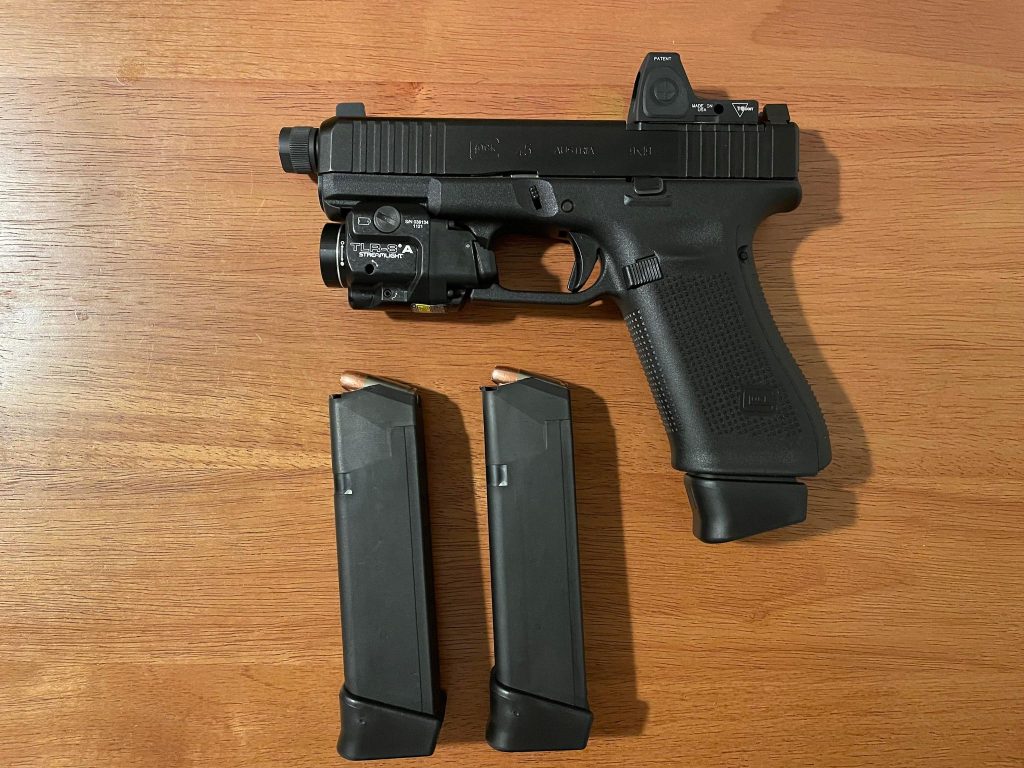
Some of the most interesting deletions are optics-ready guns. The G17 MOS, G19 MOS, G22 MOS, G34 MOS, G35 MOS, G40 MOS, and G41 MOS all appear on the discontinuation list in at least one generation, even though Glock’s own Modular Optic System has been positioned as a simpler way to mount popular red-dot sights. That does not signal a retreat from pistol optics. It points instead to consolidation. Glock has spent years normalizing red-dot use by emphasizing faster sight acquisition, easier target transitions, and broader adoption among competitive, defensive, and range shooters. Cutting legacy MOS variants while preparing newer pistol lines is consistent with a company trying to standardize how optic-ready slides are offered rather than abandoning the concept.

3. Legacy calibers are again under pressure
The discontinuation list hits several models associated with less common Glock chamberings, especially .357 SIG and .45 GAP. That is significant because both cartridges once filled clear niches inside the Glock ecosystem: .357 SIG for high-velocity performance and .45 GAP for .45-caliber ballistics in a smaller grip frame. In practice, both lost ground as 9mm and improved .45 ACP platforms became easier to support. The commercial challenge is familiar: lower-volume calibers tend to suffer first when manufacturers streamline inventories, and they become even harder to sustain when users want simple magazine, parts, and ammunition commonality across fleets and households.
4. The .45 GAP story explains how a technical solution can lose relevance
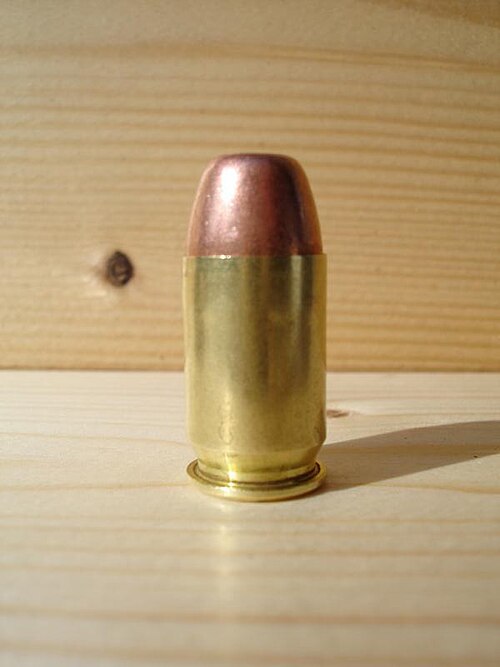
The .45 GAP was introduced as a packaging answer to a real ergonomic complaint. As the cartridge’s original design goal, it allowed .45-caliber performance in a 9mm-size frame, addressing the large grip circumference that made the G21 difficult for some users to manage. For a time, that idea had institutional traction. State police agencies adopted it, and users reported strong practical results. The problem was not terminal performance. The problem was that the rest of the market moved. Slimmer .45 ACP pistols arrived, Glock improved the ergonomics of its own .45 ACP offerings, and ammunition demand favored mainstream calibers during shortage cycles. Once 9mm regained momentum with better bullet design and higher capacity, the .45 GAP’s original advantage became harder to defend inside a broad catalog.

5. User culture kept niche Glock calibers alive longer than sales likely did
Enthusiast communities show that discontinued or declining chamberings rarely disappear just because they become commercially inconvenient. In owner discussions, .45 GAP and .357 SIG Glock pistols continue to attract dedicated users who praise accuracy, controllability, and distinctive handling traits, with some even running red-dot-equipped G38 and G39 pistols or caliber-converted .357 SIG builds. That loyalty is real, but it also reveals the divide between enthusiast value and factory logic. A pistol can remain respected by committed owners and still fail the modern test of large-scale manufacturing efficiency.

6. Conversion concerns have become impossible for the industry to ignore
The most consequential detail may be the one Glock has not foregrounded publicly. Industry reporting tied the overhaul to growing concern that pistols with cruciform trigger systems can be illegally altered with auto sear devices often referred to as “switches,” with belief that the changes are tied to conversion concerns surrounding those modifications.

This is the engineering shadow over the whole product reset. Whether the answer is internal redesign, component revision, or platform segmentation, the pressure is no longer limited to law enforcement evidence rooms or legal filings. It now affects how mainstream handgun makers think about future-proofing mechanical systems that were once judged mainly on reliability, simplicity, and ease of maintenance.
7. A new series suggests Glock is preparing a cleaner architecture
The same reporting indicated that shipments would transition toward a new V-series family, with talk of internal slide and trigger updates and a note that current Glock Performance triggers would not function in those pistols. Even without a full factory roadmap, that implies a more substantial refresh than a cosmetic relabeling exercise. When a manufacturer narrows dozens of SKUs at once, it usually means the replacement strategy depends on compatibility boundaries. That can affect armorers, aftermarket makers, and long-time Glock owners as much as first-time buyers.
The larger pattern is clear. Glock is pruning older branches while protecting service support for guns already in circulation, tightening its optics-ready offerings, and moving away from models tied to shrinking caliber niches or older internal configurations. For handgun design, the interesting part is not the discontinuation list itself. It is what the list reveals: modern pistols are now being shaped as much by optics integration, platform simplification, and conversion resistance as by the old debates over caliber and frame size.


