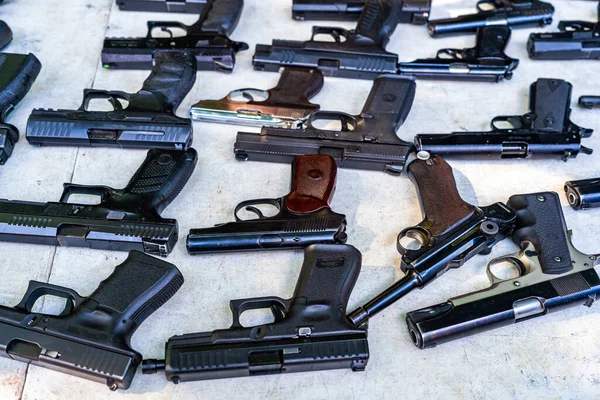
The 9mm handgun became more than a chambering. Over more than a century, it turned into the common language of military sidearms, police pistols, concealed-carry guns, and competition handguns. What makes certain models endure is not novelty alone. The handguns below stayed relevant because they altered magazine capacity, materials, handling, maintenance expectations, or the way institutions judged reliability.
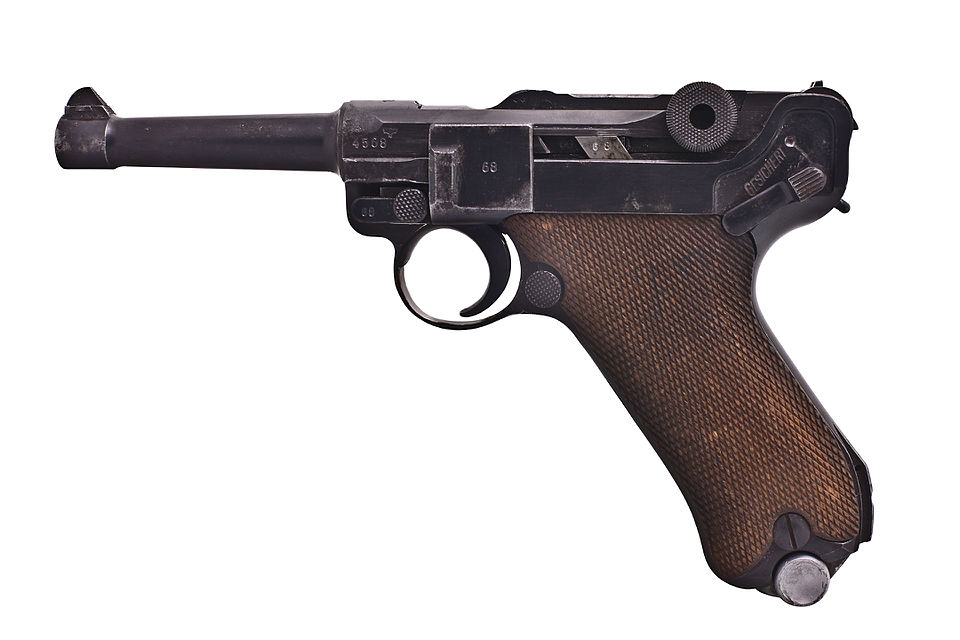
1. Luger P08
The Luger belongs on any serious 9mm list because the pistol and cartridge history are inseparable. The design helped introduce the 9×19mm Parabellum cartridge to military service in the early 20th century, giving the round its lasting global identity. Its toggle-lock action and steep grip angle made it visually unmistakable, and its silhouette remains one of the most recognizable in firearms history. It also set a pattern later service pistols would reject: high mechanical distinctiveness paired with manufacturing complexity. The Luger became iconic not because it was the end point of pistol development, but because it established the starting point for the modern 9mm era.
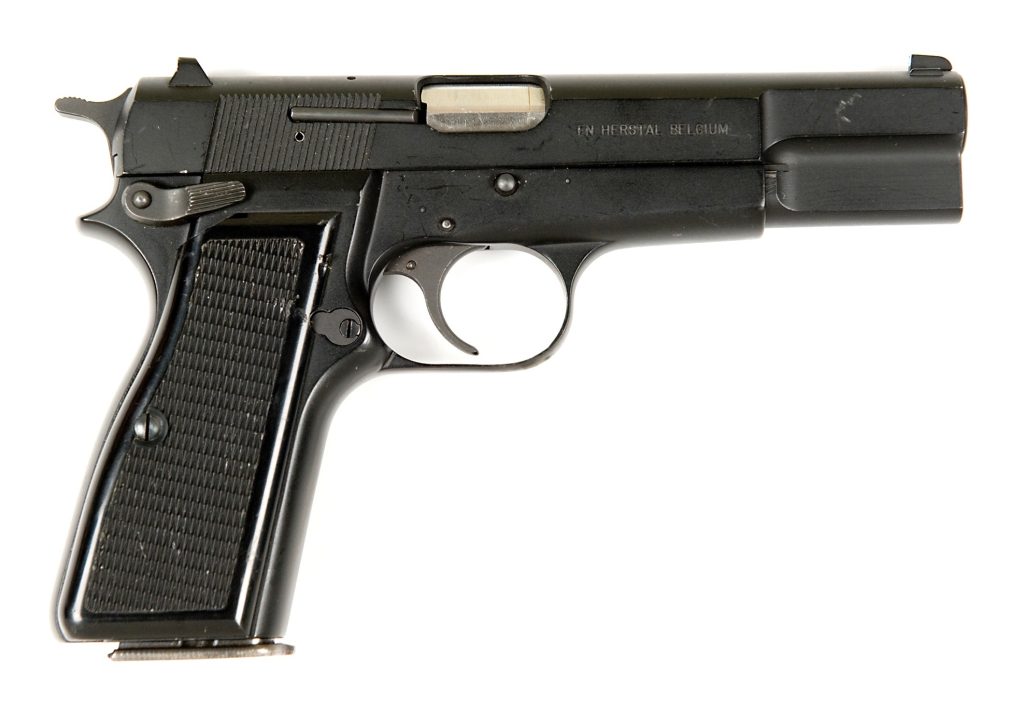
2. Browning Hi-Power
The Browning Hi-Power changed expectations by making double-stack capacity central to the service pistol conversation. Completed by Dieudonné Saive from John Browning’s work, it became the pistol many historians view as the original “wonder nine.” Its significance goes beyond age. The Hi-Power was adopted by over 50 armies and 93 countries, a level of institutional reach few handguns can match. It combined a slim-feeling grip with a then-remarkable magazine capacity, creating a template later designers would refine rather than replace outright. Even today, many shooters still judge a full-size steel 9mm by how close it comes to the Hi-Power’s balance and pointability.
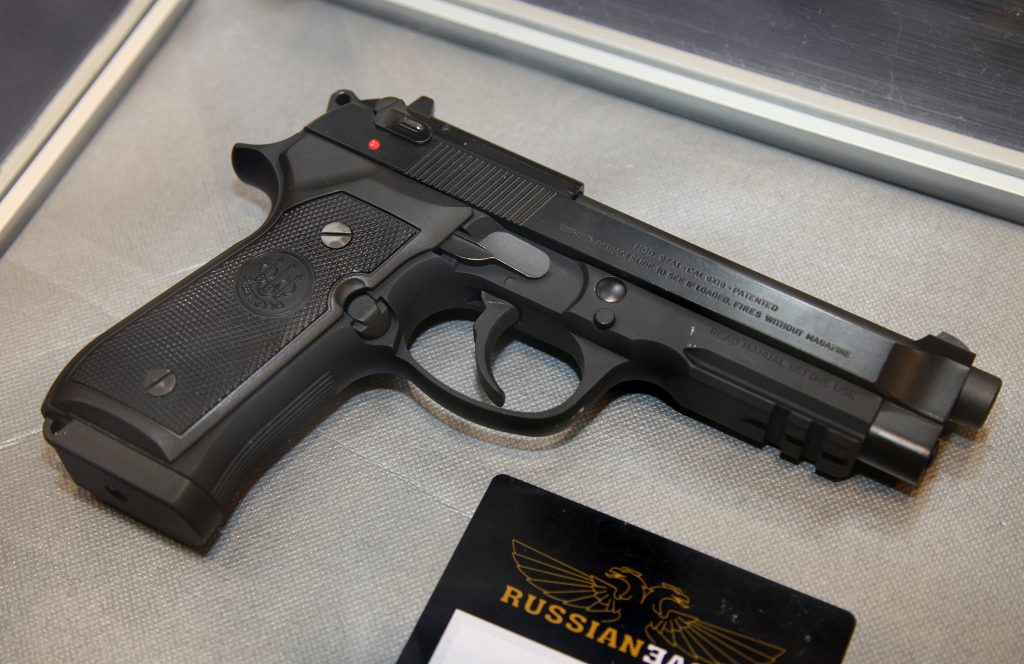
3. Beretta 92/M9
The Beretta 92 became a defining service pistol because it translated military procurement, large-scale testing, and long-term field use into one platform. Its open-slide profile, alloy frame, and double-action/single-action operation gave it a very different character from both older steel single-actions and later striker-fired guns. Its adoption story mattered almost as much as its shooting characteristics. In U.S. trials, the Beretta achieved 2,000 mean rounds between failure in early testing and later won the XM9 competition that made it the M9. The pistol’s reputation was shaped by both praise and controversy, but its long service life proved how much institutions valued shootability, capacity, and NATO standardization in a 9mm sidearm.
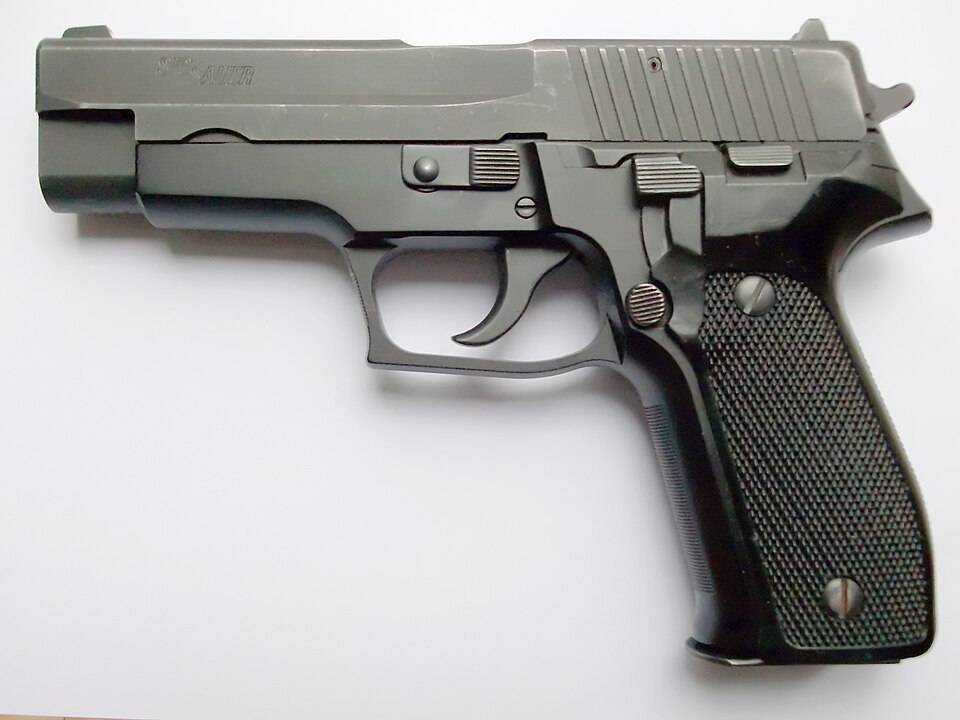
4. SIG Sauer P226
The P226 became legendary by nearly winning the U.S. military contract and then building a separate reputation in specialized service. It delivered a robust metal-frame design, a decocker instead of a manual safety, and a reputation for durability under punishing training schedules. Its fame hardened when it became closely associated with maritime special operations. The pistol was pushed through environmental and endurance testing, including thirty-thousand-round endurance tests during evaluation for SEAL use. That history gave the P226 a status beyond simple specifications: it became a benchmark for what a hard-use 9mm service pistol should feel like.
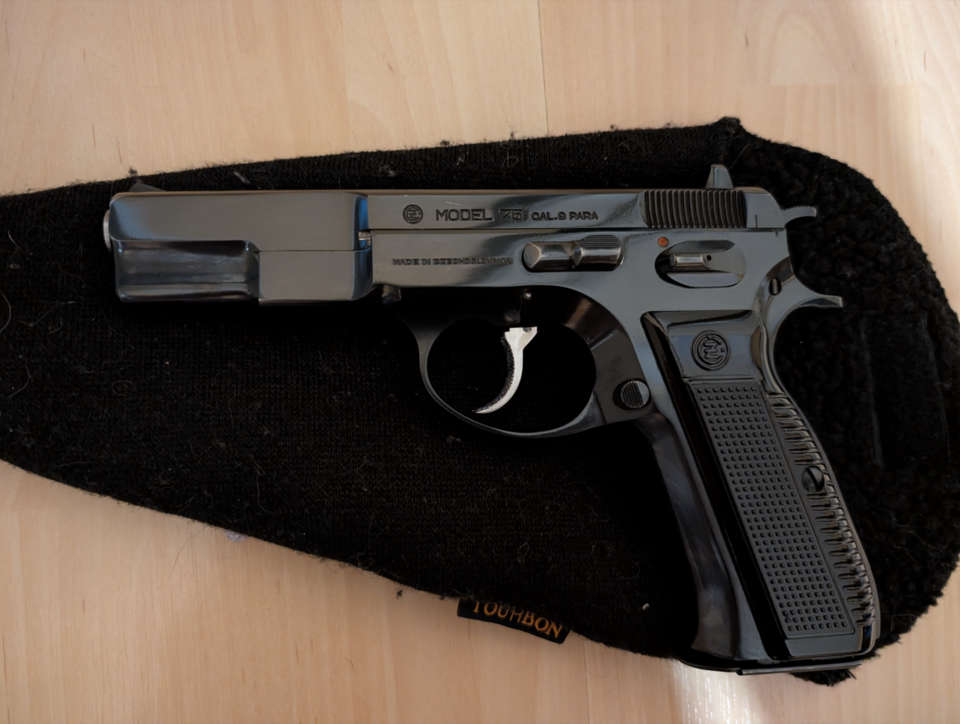
5. CZ 75
The CZ 75 earned its place by combining a double-stack magazine with ergonomics that felt unusually refined for a fighting pistol. Its internal slide-rail arrangement produced a low-profile slide and a distinct recoil impulse, while its grip shape helped build a cult following among professionals and enthusiasts alike. Unlike some famous pistols, the CZ 75 did not dominate because of one contract or one movie. It endured because it offered reliability, accuracy, and a natural pointing quality that made it influential across clones, competition derivatives, and later steel-frame 9mm designs.
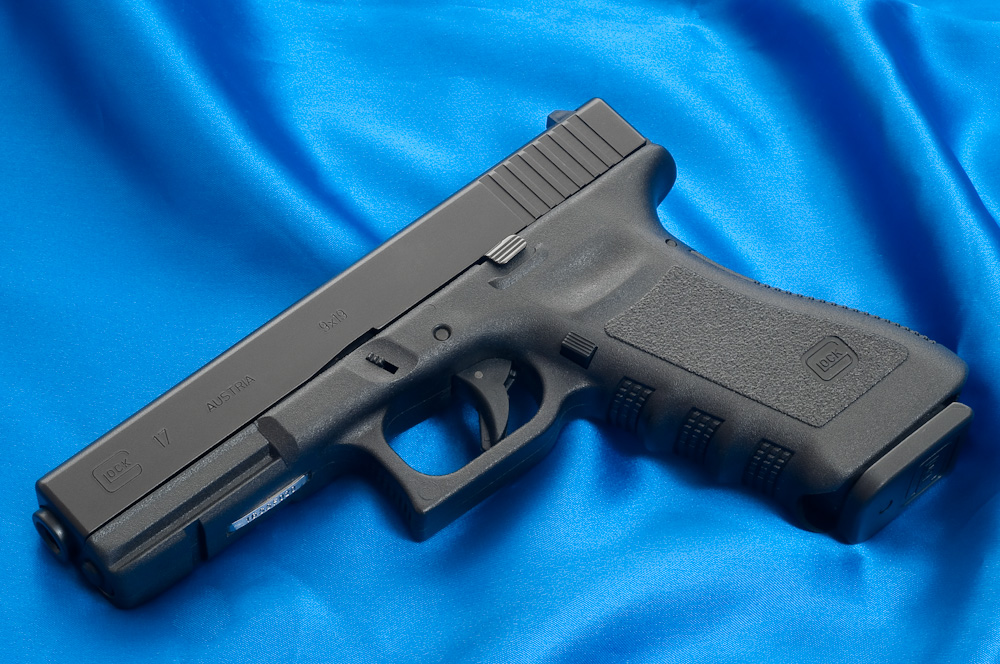
6. Glock 17
The Glock 17 reset the market. It was not the first polymer-framed pistol, but it was the design that made polymer impossible to dismiss. With a striker-fired system, high capacity, and a famously low parts count, it pushed duty pistols toward a new standard of simplicity. Its development story explains the impact. The original G17 used just 34 parts, survived extreme military testing, and grew into one of the most widely issued handgun families in the world. By late 2023, more than 23 million Glock pistols of all generations were reported in circulation worldwide. That scale turned the G17 from a successful product into an industry-wide design language.
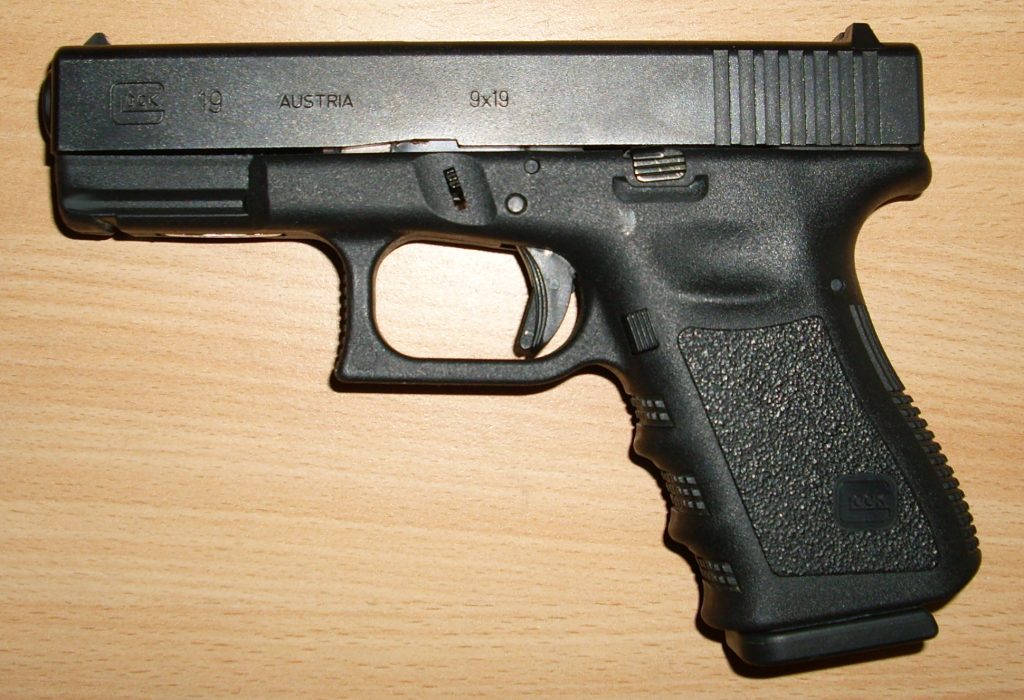
7. Glock 19
If the Glock 17 made polymer mainstream, the Glock 19 made the format universal. It hit the middle ground between full-size duty gun and compact carry pistol so effectively that agencies, private citizens, and specialized units all found reasons to adopt it. Its importance is practical rather than ceremonial. Magazine compatibility with larger Glock models, broad accessory support, and compact dimensions created a pistol that could move between roles without drama. That flexibility made the Glock 19 one of the clearest examples of the modern “do-everything” 9mm.
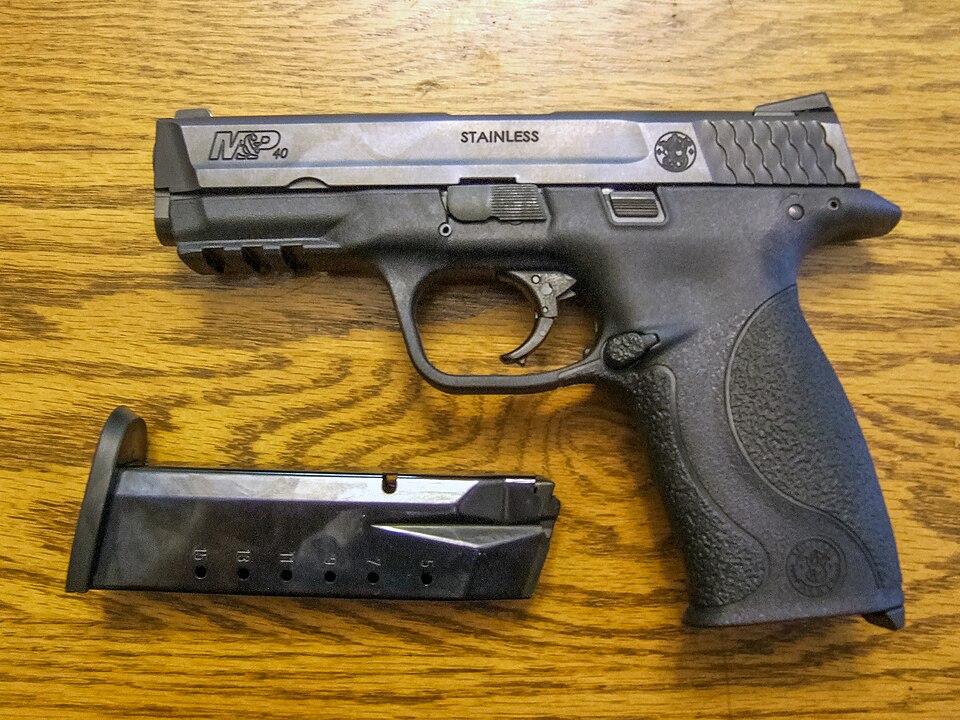
8. Smith & Wesson M&P Shield
The Shield represents a different kind of icon: the single-stack and slim-profile carry pistol that helped normalize everyday concealed carry for a far broader audience. It was compact without becoming difficult to manage, and it arrived as demand surged for thinner 9mm handguns. Its influence came from fit and practicality. Even years after introduction, it was widely noted as one of the easiest sub-compact 9mm pistols to hold and shoot well. That made it less of a niche backup gun and more of a mainstream personal-defense template.
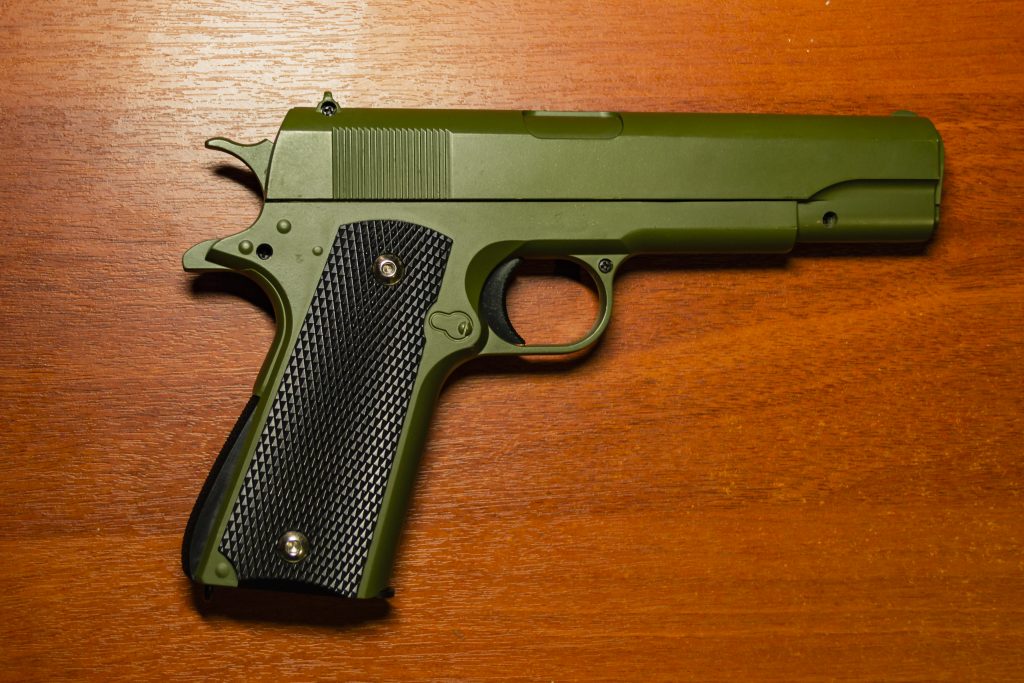
9. Colt 1911 in 9mm
The 1911 was never born as a 9mm, but its 9mm variants show how strong the platform’s ergonomics and trigger geometry remain. In this chambering, the design keeps its familiar profile while offering lighter recoil and higher practical capacity than its traditional .45 form. That matters because the 9mm 1911 bridges generations of handgun design. It lets one of the most copied pistol architectures in history operate in the cartridge that came to dominate modern service and defensive use, proving how adaptable the old Browning layout still is.
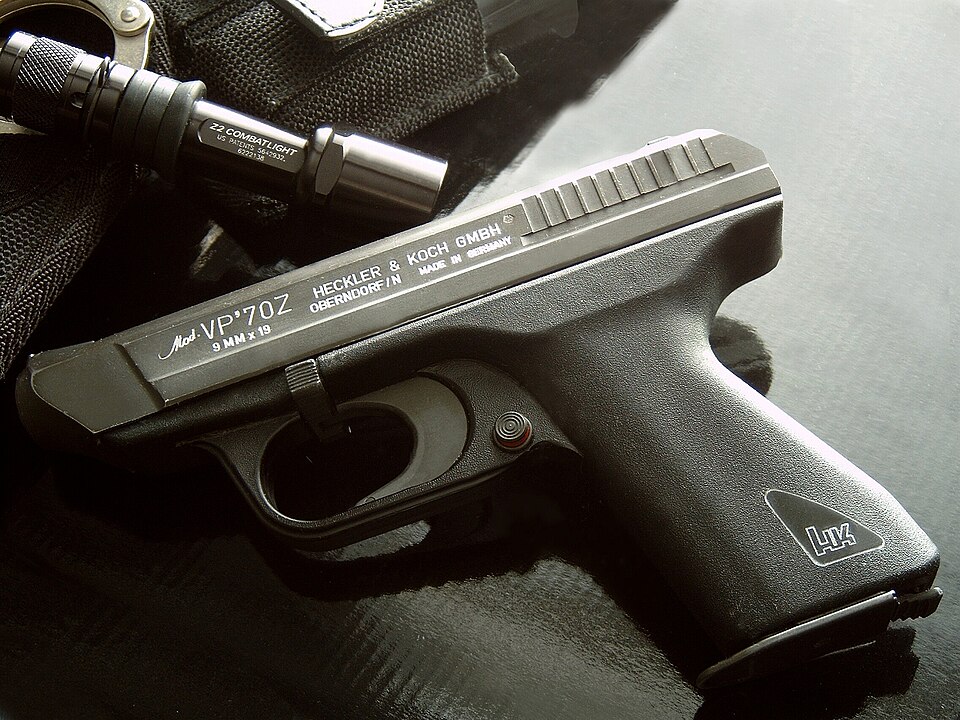
10. Heckler & Koch VP70
The VP70 deserves mention because it arrived before the market was ready for what it represented. Its polymer frame made it a technical outlier long before polymer became the rule, and that alone gives it an outsized place in handgun history. It was not loved for its trigger or ergonomics, and it never became a mainstream duty favorite. Still, its presence matters. The VP70 showed that radical material changes could be applied to a service pistol, clearing conceptual ground for the polymer revolution that followed.
These pistols do not all represent the same idea of excellence. Some were refined steel classics, some were institutional workhorses, and some changed the market simply by proving a new format could survive hard use. Together, they explain why 9mm became dominant. The cartridge benefited from manageable recoil, evolving ammunition, and broad institutional adoption, but it was these handgun platforms that turned those advantages into lasting design history.


