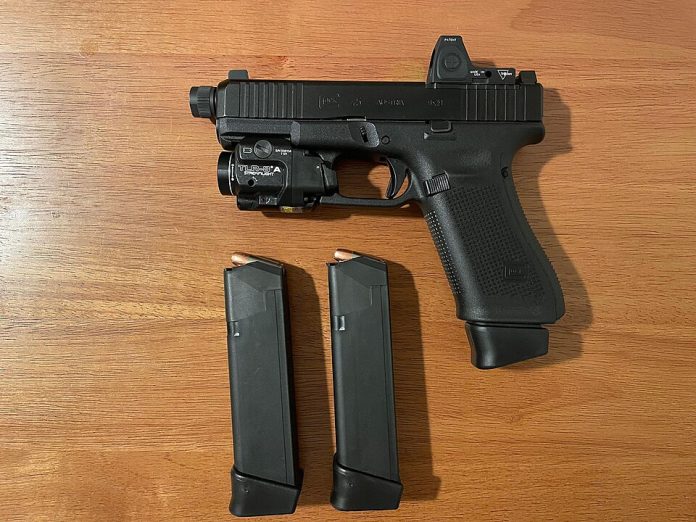
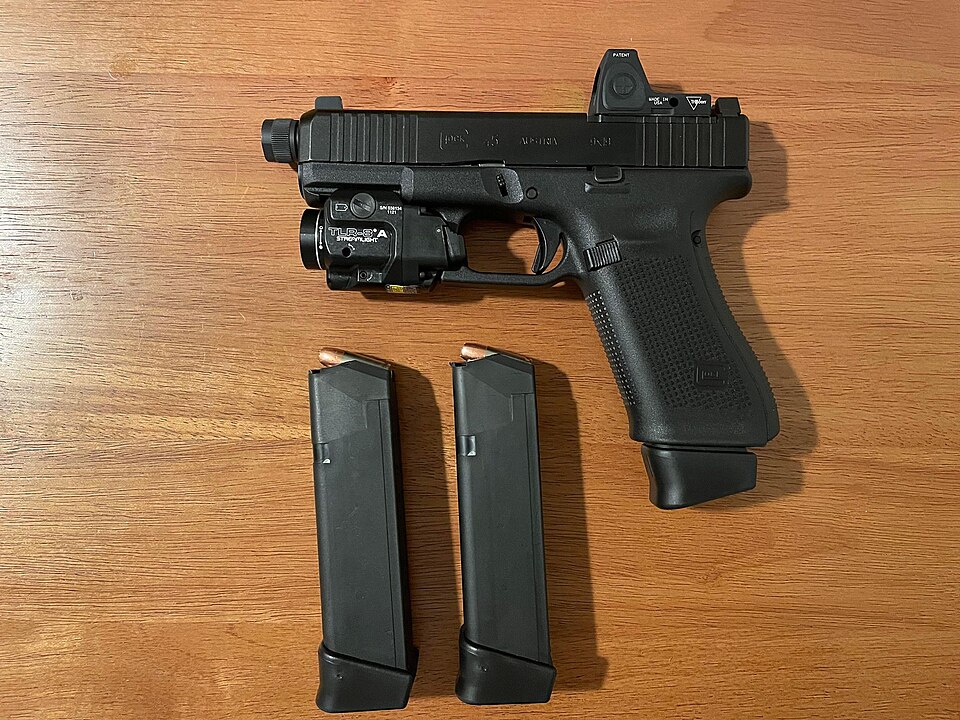
Glock’s model numbers are not a map to caliber or mission. They are mostly a record of release order, which is why a Glock 40 is not a .40 S&W and a Glock 45 is not a .45 ACP. For anyone trying to sort the lineup, the more useful approach is to look at size, capacity, slide length, and how each frame is meant to be carried or shot.
That matters because Glock has spent decades keeping the manual of arms remarkably consistent while changing dimensions for different jobs. A full-size duty pistol, a compact do-everything handgun, a deep-concealment subcompact, a slimline carry model, an optics-ready variant, and a rimfire trainer can all feel closely related while serving very different roles.
1. Glock 17: Full-Size Duty and Home Defense
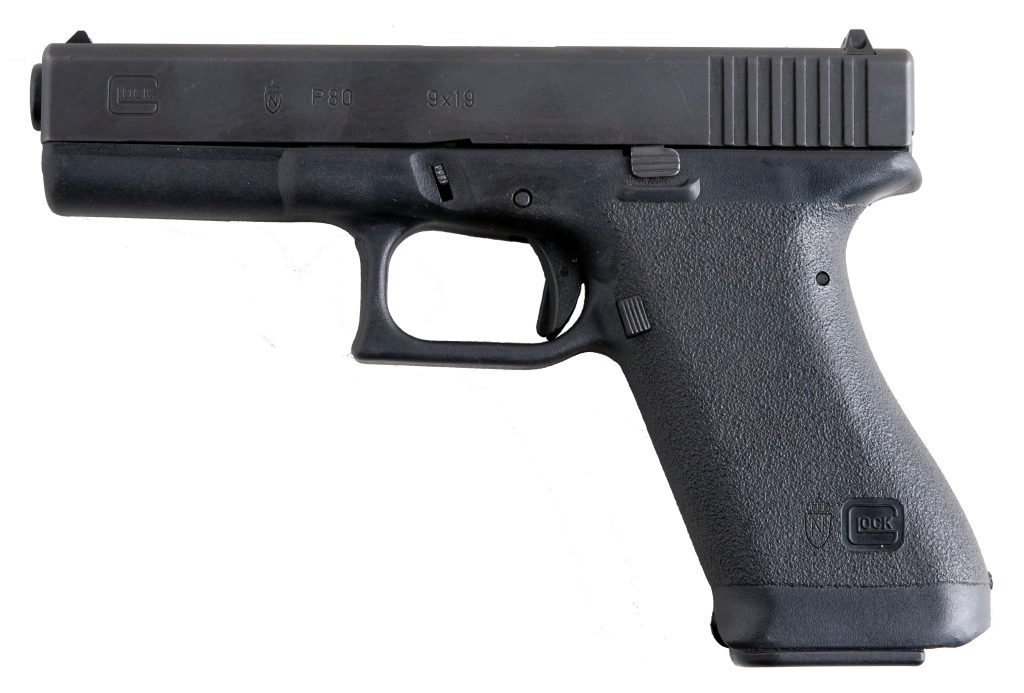
The Glock 17 is the original template, introduced in 1986 in America after establishing itself in Europe. It remains the full-size 9mm in the family, with a 4.49-inch barrel and a standard 17-round magazine. Its larger grip, longer slide, and fuller sight radius make it easier to control than smaller models, especially during rapid fire.
That basic geometry explains its role. The G17 is built for duty carry, open carry, range use, and home defense, where concealment matters less than control and shootability. Reference material repeatedly points to the same tradeoff: the gun is easier to run well than smaller siblings, but harder to hide under ordinary clothing. In practical terms, it is the service pistol of the lineup.
2. Glock 19: The Compact Generalist
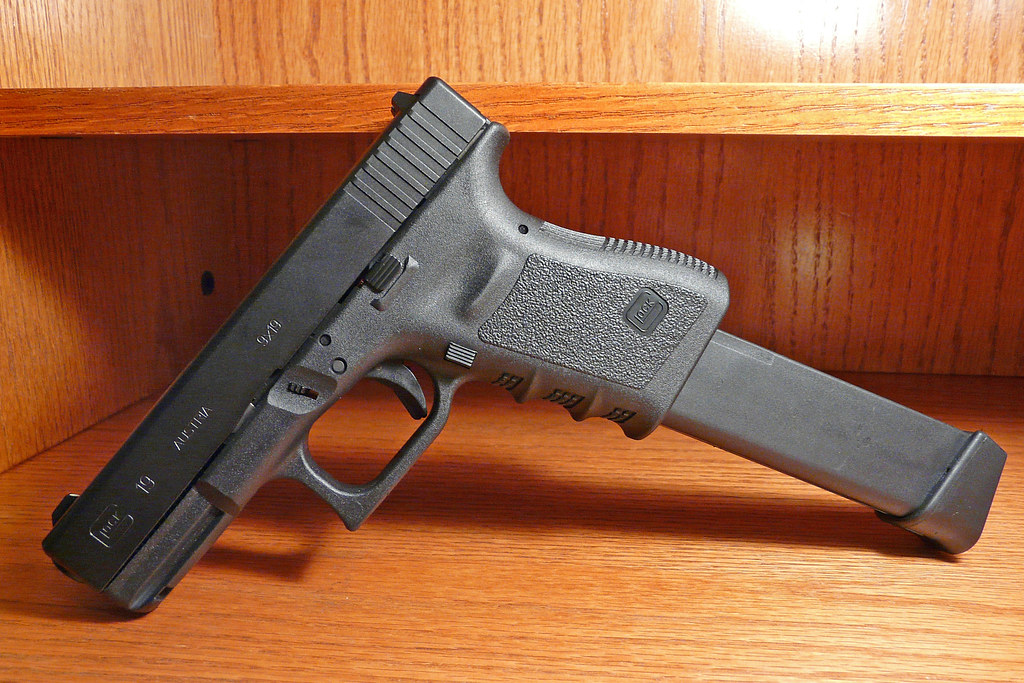
The Glock 19 sits in the middle, and that middle position is exactly why it became so influential. With a 4.02-inch barrel, 15-round magazine, and dimensions that allow most shooters to get a full firing grip, it splits the difference between a duty gun and a carry gun better than almost anything else in the catalog.
Its core purpose is versatility. The G19 is large enough to shoot comfortably, small enough to conceal with a proper holster, and heavy enough to keep recoil manageable without feeling burdensome. Several references describe it as the “Goldilocks” Glock because it avoids the stubby grip penalties of a subcompact and the concealment penalties of a full-size pistol. In plain language, this is the model built for users who want one handgun to cover the broadest range of tasks.
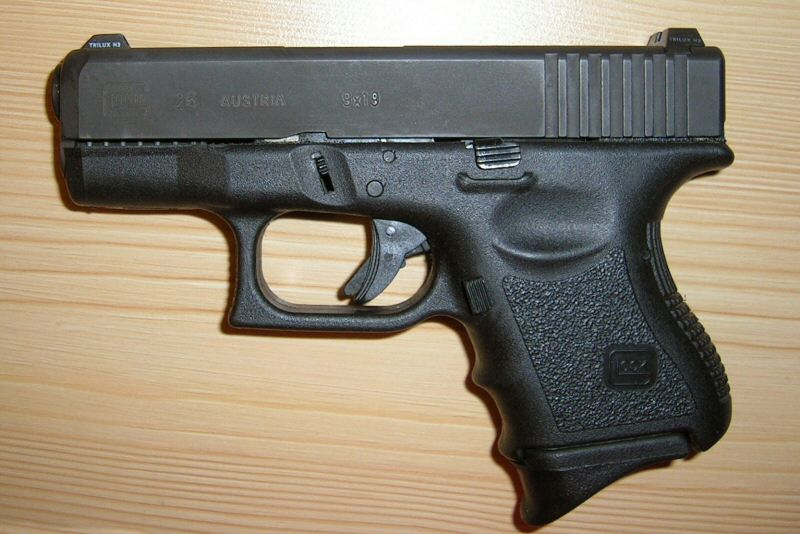
3. Glock 26: Subcompact Concealment With Magazine Flexibility
The Glock 26 takes the double-stack 9mm formula and shortens it into a true subcompact. Its 3.43-inch barrel and 10-round magazine put it squarely in the deep-concealment category, but the design keeps one major full-size Glock advantage: it can accept larger double-stack 9mm magazines from models such as the Glock 19 and 17.
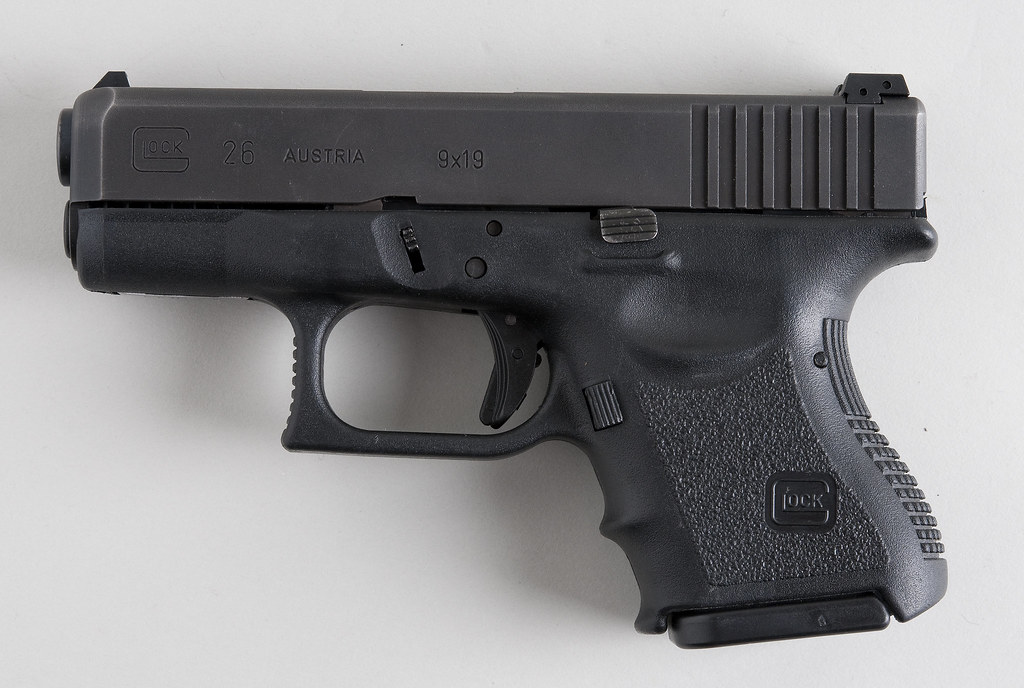
That gives the G26 a very specific mission. It is built for users who prioritize a short grip and easy concealment but still want compatibility with the wider Glock magazine ecosystem. The compromise is equally clear. The abbreviated grip can leave the little finger hanging, which affects comfort and practical control for some shooters. As a result, the G26 is less of a do-it-all pistol and more of a specialized carry tool for people who value concealment first.
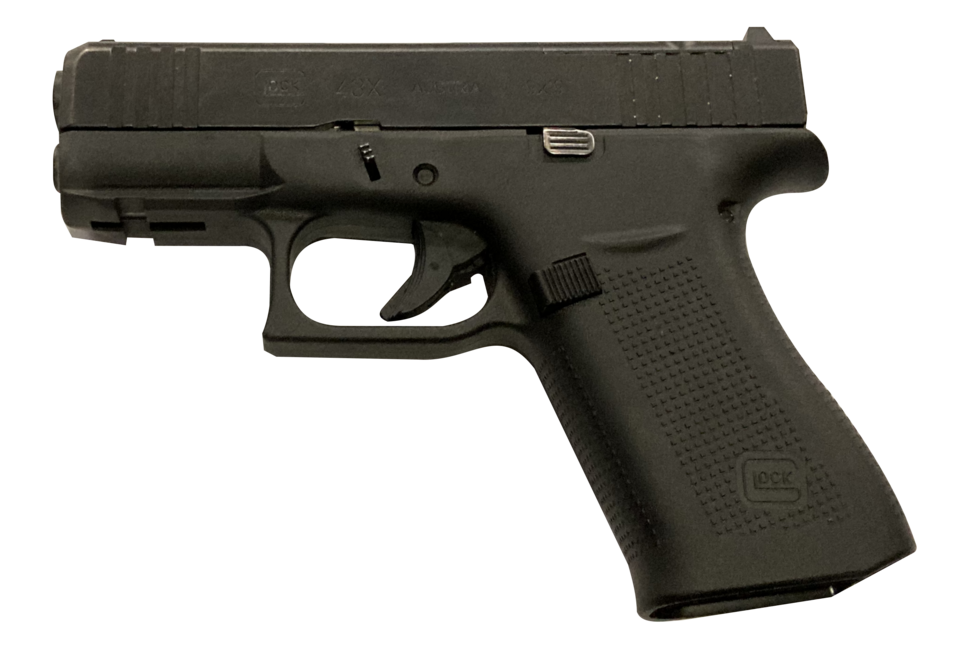
4. Glock 43X: Slimline Everyday Carry
The Glock 43X was built to answer a different concealment problem. Instead of shortening everything, Glock made the pistol slim. The result is a narrow 9mm with a 10-round magazine, a width of about 1.10 inches, and a longer grip that gives most shooters a full hand purchase. Its job is straightforward: inside-the-waistband carry with less bulk than a double-stack gun. The references make a sharp distinction between the 26 and 43X here. The 26 is shorter and thicker; the 43X is taller in the grip but easier to flatten against the body. For many shooters, that makes the 43X a better choice for daily concealed carry because it trades some magazine compatibility for improved comfort and a more secure grip.
5. Glock MOS Models: Pistols Built Around Red-Dot Use
Glock’s MOS line is not a separate family of missions so much as a different equipment interface. According to Glock, the Modular Optic System was developed to simplify mounting popular optical sights. Standard MOS pistols use adapter plates, while slimline MOS models use slide cuts designed for specific micro-optics.
This matters because optic-ready guns serve shooters who want faster dot acquisition, easier target transitions, and a factory-supported path to slide-mounted optics. In models such as the Glock 34 MOS, that feature set aligns naturally with competition and performance-oriented shooting. In slimline models like the 43X MOS, it supports carry guns that can use micro red dots without custom slide work. The underlying pistol still determines the role, but MOS models are built for shooters who intend to run optics from the start.
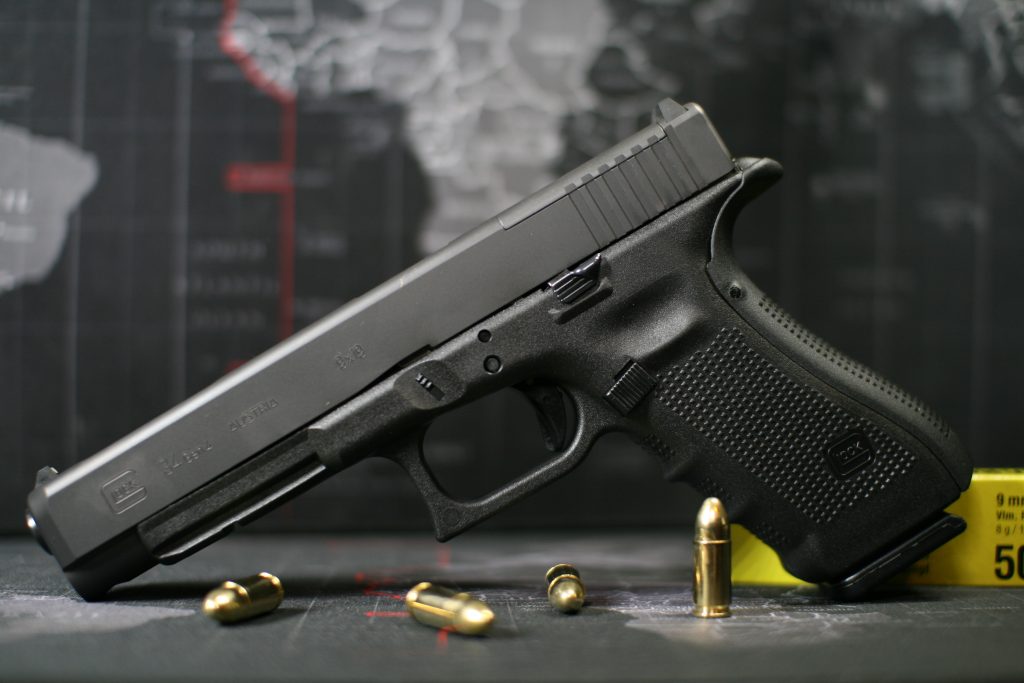
6. Glock 34: Competition and Precision-Oriented 9mm
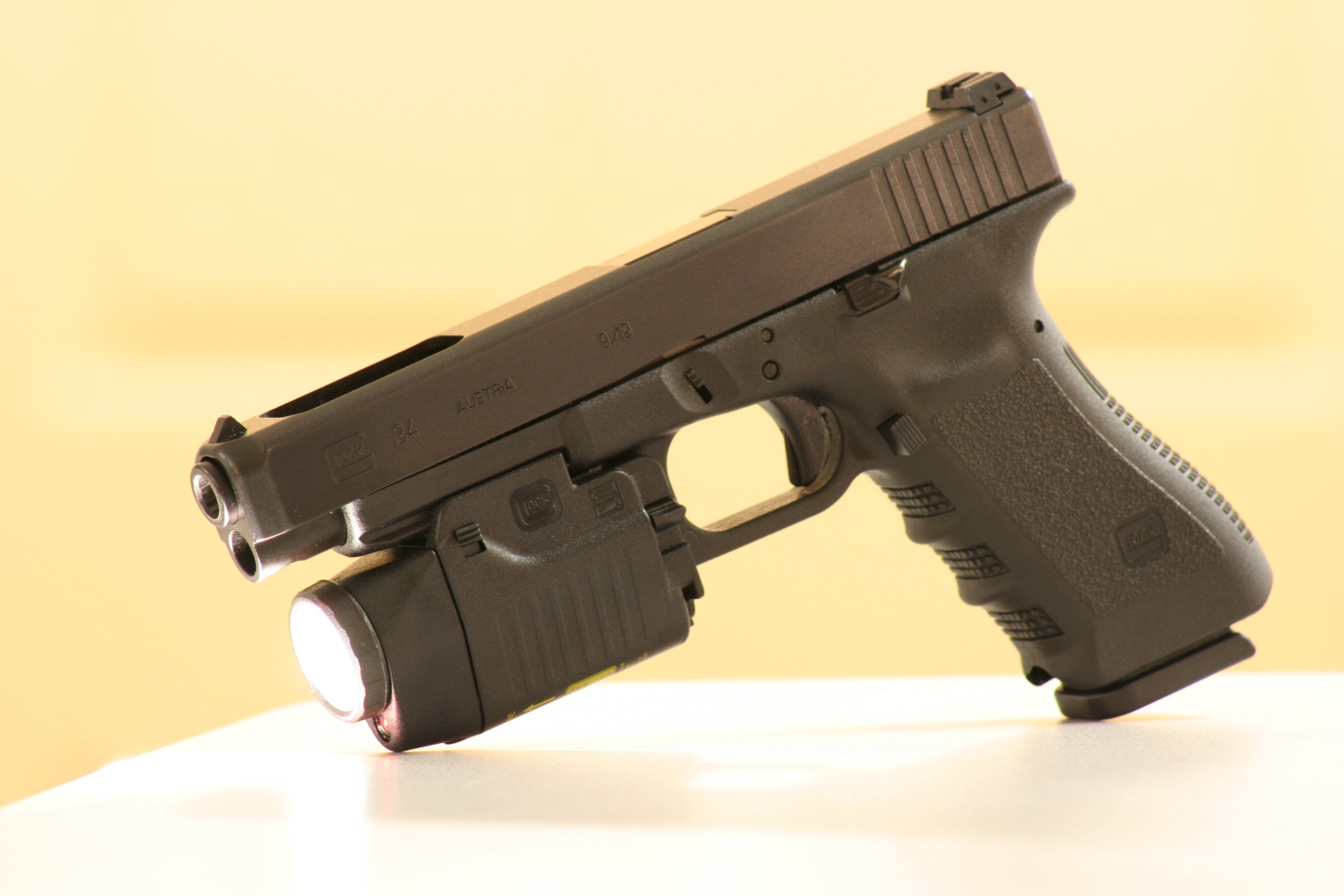
The Glock 34 is the long-slide member of the 9mm family, developed as a competition-ready pistol based on the G17. Its 5.32-inch barrel, extended sight radius, and longer slide make it easier to shoot accurately and smoothly than the standard service model. That makes its purpose narrower but very clear. The G34 is built for competition, training, and range work where sight radius, balance, and control matter more than concealment. Some users stretch it into duty or defensive roles, but the design’s real advantage appears when speed and precision are measured on a timer or over longer strings of fire. It is the Glock for shooters who want a performance-biased 9mm without leaving the platform.
7. Glock 44: Low-Recoil Training and Skill Repetition
The Glock 44 occupies a different niche entirely. Chambered in .22 LR, it was designed to mimic the size and controls of the Glock 19 while using a much lighter slide to function with rimfire ammunition. The result is a pistol intended for repetition, familiarization, and lower-recoil practice rather than centerfire defensive use.
That role is practical. A rimfire Glock lets shooters rehearse grip, trigger work, presentation, reloads, and holster use with a gun that closely mirrors a centerfire model. The references also underline the usual rimfire limitation: ammunition sensitivity is more pronounced than in centerfire pistols. Even so, the G44 is built as a trainer first, not as a substitute for the core defensive 9mm line.
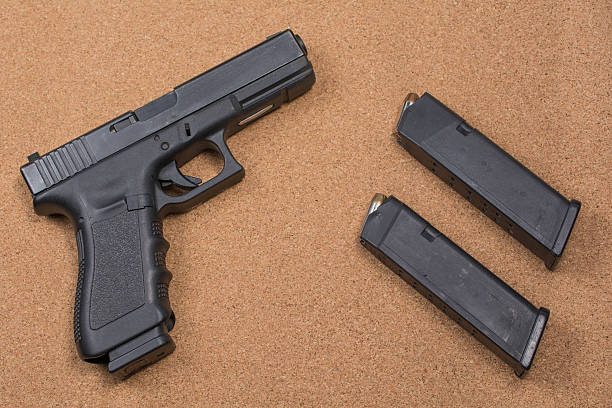
Decoded this way, Glock’s catalog is less confusing than it first appears. The numbers matter less than the format: full-size for duty, compact for all-around use, subcompact for concealment, slimline for flatter carry, MOS for optics, long-slide for competition, and rimfire for training. Once that pattern is clear, each model stops looking like a minor variation and starts reading like a tool with a specific engineering brief behind it.


