
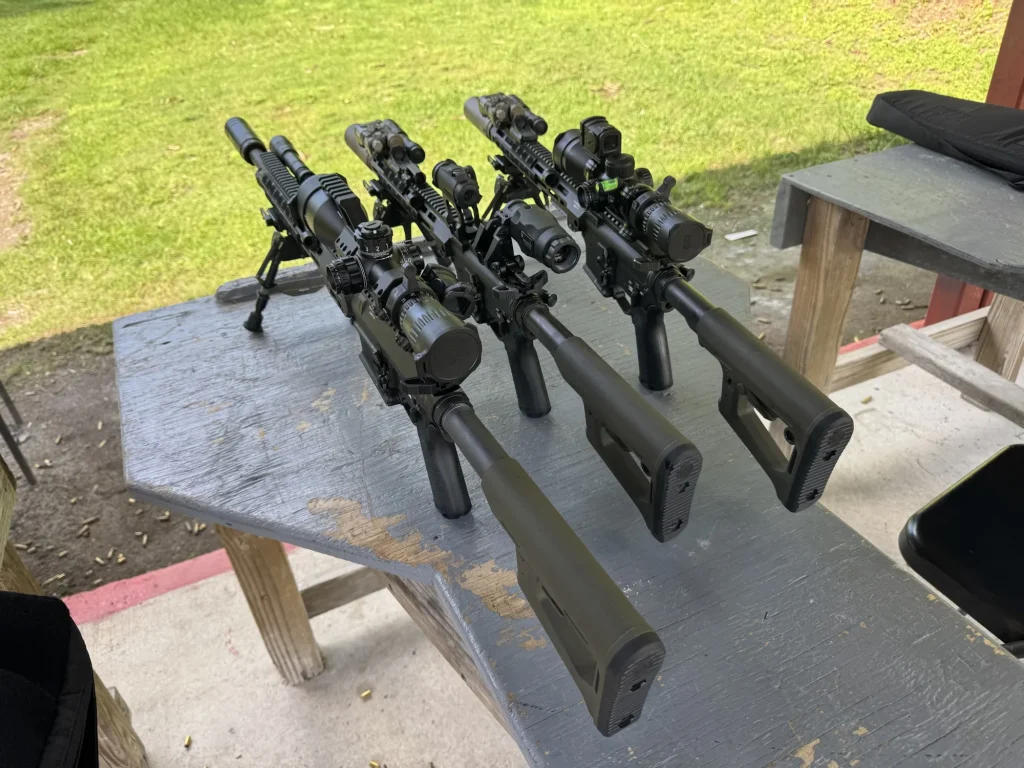
Some firearms age into collectibles. Others keep showing up in holsters, safes, and design meetings because their core mechanics never stopped making sense. The models below are not important only because they are famous. They still matter because each one locked in a solution that later guns kept borrowing: better triggers, simpler controls, stronger feeding, lighter materials, or a layout that lets a shooter run the gun without fighting the machine.
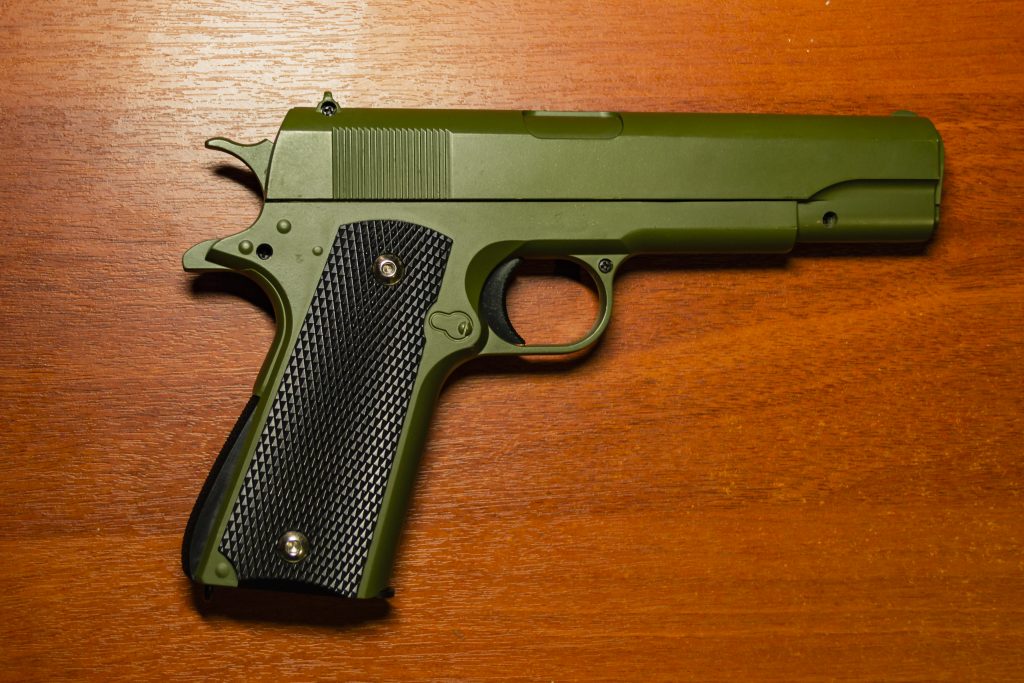
1. Colt 1911
The 1911 remains one of the clearest examples of a handgun whose appeal is mechanical before it is sentimental. Its single-action trigger, grip angle, and manual layout create a direct relationship between sights, hands, and break. That formula still attracts competitive shooters and serious pistol users more than a century after adoption.
Its staying power was visible from the start. During U.S. military trials, one Browning-designed pistol reportedly completed 6,000 rounds in two days with no failures, a result that helped secure its place in service. The platform then went on to serve for decades, and its long life mattered because it turned a successful military sidearm into a durable pattern for later handguns. Even now, the 1911’s influence can be seen in modern safeties, trigger expectations, and the continuing demand for pistols built around clean, deliberate control rather than maximum gadget count.
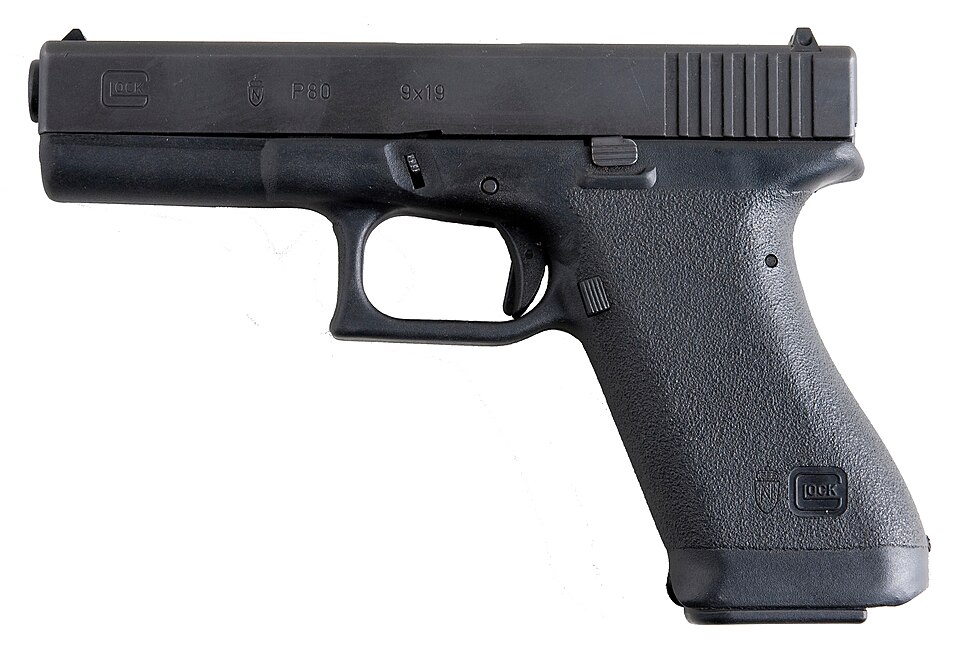
2. Glock’s Polymer-Framed Pistols
Glock did not simply introduce another service pistol. It normalized a different manufacturing logic for handguns. Polymer frames reduced weight and resisted corrosion, while a striker-fired system with a consistent trigger pull made the gun easier to operate across large organizations.
The original Glock 17 became famous partly because it was remarkably simple, using just 34 separate parts. That simplicity shaped reliability, maintenance, and cost-efficient scaling for police and military users. The basic idea has proven durable enough that later generations mostly refined ergonomics, optics compatibility, and ambidextrous handling rather than replacing the underlying concept. That is usually the mark of a true standard.
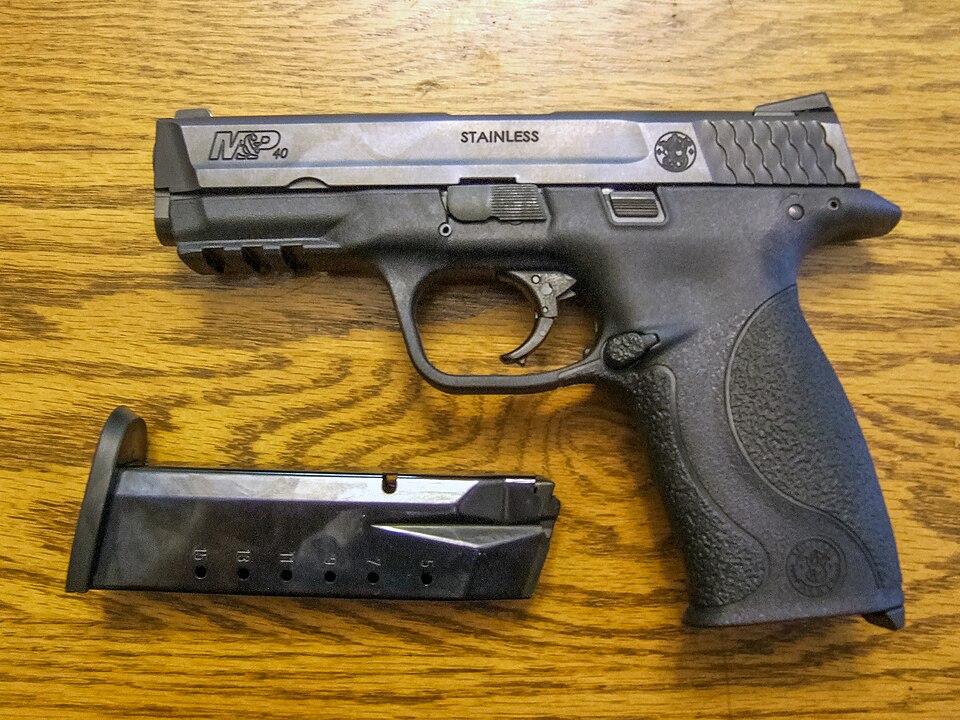
3. Smith & Wesson and Colt Double-Action Revolvers
Before high-capacity semiautomatics dominated duty use, the double-action revolver defined what shooters meant by a smooth action and dependable lockup. Models such as the Smith & Wesson Model 10 and Colt Python still hold attention because they represent a level of mechanical timing and trigger refinement that modern shooters immediately recognize.
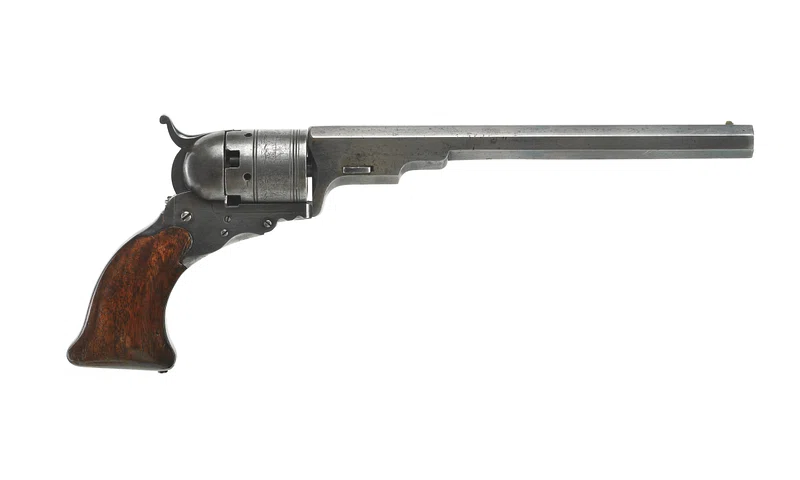
The Python, in particular, became shorthand for careful fitting. Former Colt Custom Shop superintendent Al De John described that approach plainly: “We had to hone all the parts, including inside the sideplates.” That statement explains why well-made revolvers still command respect. Their value as design landmarks lies in the feel of the mechanism itself, where precision work is obvious every time the trigger cycles.
4. AR-15
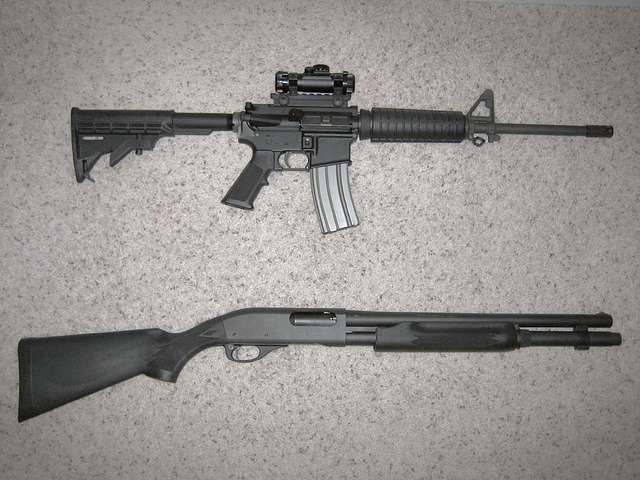
The AR-15 changed expectations by turning a rifle into a system. Instead of one fixed configuration, the platform encouraged owners and armorers to swap uppers, barrels, optics, stocks, and controls to suit different jobs. That modularity is now one of the defining assumptions of modern rifle design.
Its engineering mattered just as much. Early AR development leaned on aluminum alloys, synthetic furniture, and a lightweight layout that separated it from older service rifles built around steel and wood. The result was not only a lighter rifle but a platform easier to configure, repair, and evolve. By 2020, more than 20 million AR-15-type rifles had been sold to the American public, which helps explain why the platform’s ergonomics and parts architecture now influence so many newer rifles.

5. AK-47
The AK-47 became iconic for the opposite reason. Where the AR-15 represents modular precision, the AK stands for rugged tolerance. Loose clearances, a long-stroke gas system, and straightforward maintenance made it famous for functioning in dirt, mud, and neglect.
That identity turned it into one of the most widespread firearm families ever made. It has been described as the standard infantry weapon for 106 countries, with vast numbers produced in multiple variants. Its influence extends beyond copies of the rifle itself. The AK remains a case study in engineering for abuse tolerance, showing how deliberate simplicity can outperform elegance when maintenance conditions are poor and reliability is the dominant requirement.
6. Mauser 98
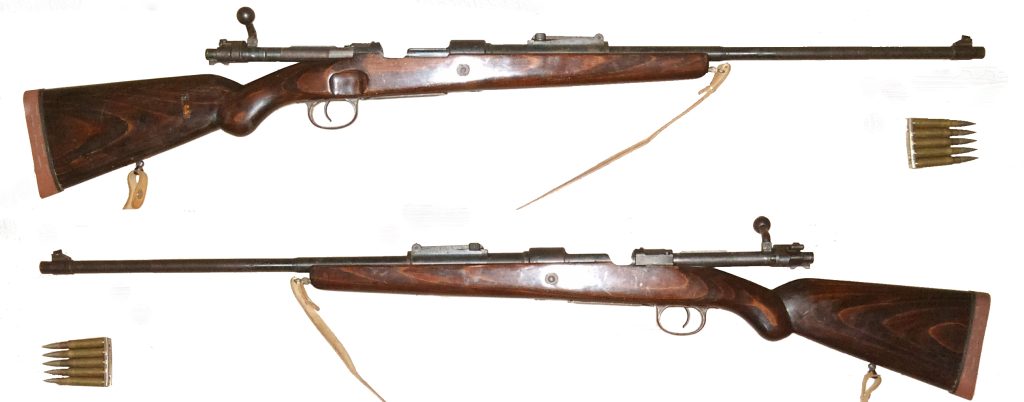
The Mauser 98 still matters because later bolt-action rifles kept borrowing its answers to feeding and extraction. Its controlled-round-feed system, massive claw extractor, and strong locking arrangement established a benchmark for reliability under stress, especially when a rifle is worked from awkward positions or cycled aggressively.
This is not a minor footnote in gun design. It is one of the central arguments in bolt-gun engineering. Controlled-round feed captures the cartridge early and keeps it under control through the cycle, reducing the chance of a loose round causing trouble in bad conditions. That is why so many dangerous-game rifles and premium bolt guns still trace their logic back to the Mauser pattern.
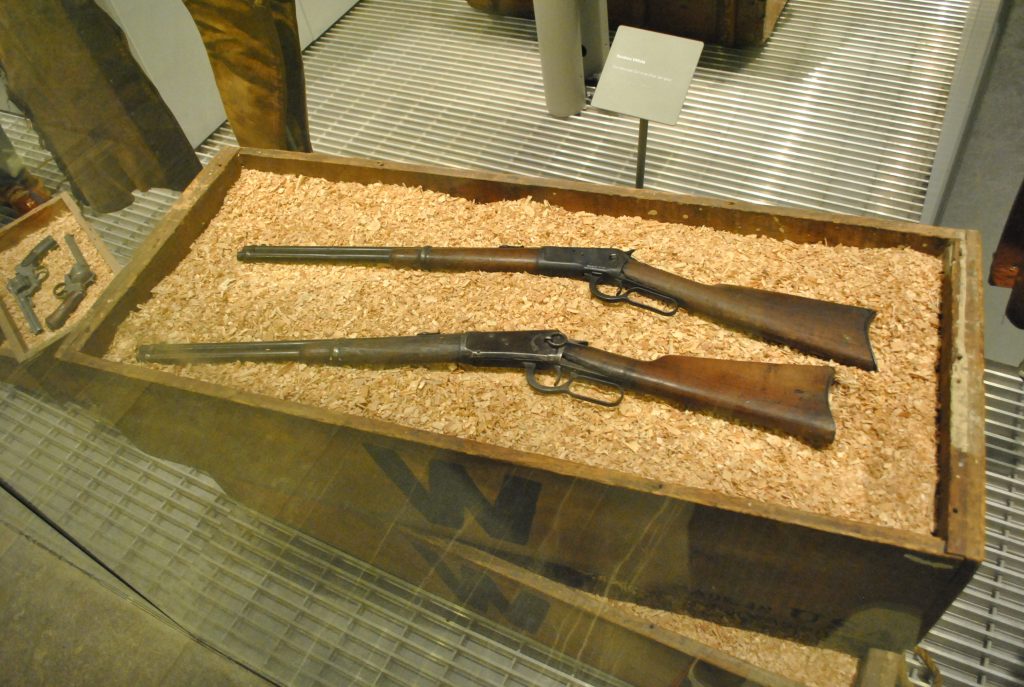
7. Winchester Model 94
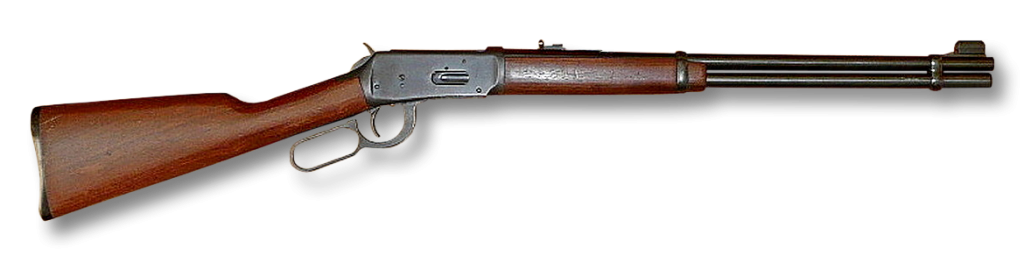
The Winchester Model 94 proved that a lever gun could remain relevant in a changing ammunition era. Browning’s design was the first Winchester sporting rifle built around smokeless powder pressures, helping bridge an older action style into a more modern ballistic period.
Its handling kept it alive. Light weight, fast shouldering, and practical field balance made it an enduring choice for hunting in woods and rough country. Production totals tell the same story: over seven million were made across more than a century. The Model 94 remains important not just as a classic deer rifle, but as proof that a legacy action can survive if it stays useful where carry comfort and fast handling matter most.
Taken together, these seven firearms reveal a pattern that modern gun design still follows. Enduring platforms are rarely defined by novelty alone. They survive because they solved one hard problem well enough that later designers kept the answer. Materials have changed, capacities have grown, and optics now dominate much of the market. The deeper engineering lessons have stayed remarkably stable.


