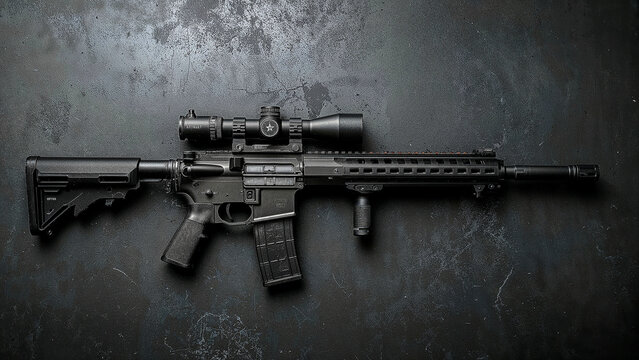
The AR-15 sits at an unusual intersection of engineering, terminology, and regulation. That mix has produced a long list of myths that blend military history, civilian ownership rules, and mechanical details into one blurry picture. A clearer view starts with separating three things that are often mashed together: how the rifle operates, what cartridge it fires, and how American law classifies it. Once those are pulled apart, several persistent claims collapse on their own.

1. “AR” means “assault rifle”
This is the most common naming mistake, and it causes confusion before any technical discussion even begins. In the rifle’s origin story, “AR” referred to ArmaLite, the company that developed the design in the 1950s. The original rifle was the ArmaLite AR-15, and the initials were tied to the manufacturer rather than to a firing mode.
The misunderstanding persists because the AR-15 visually resembles military rifles and because the phrase “assault weapon” entered U.S. legal and political vocabulary in the 1990s. Those labels are not interchangeable. One is part of a product lineage and trademark history; the other is a legal or policy term that has varied by statute and jurisdiction.
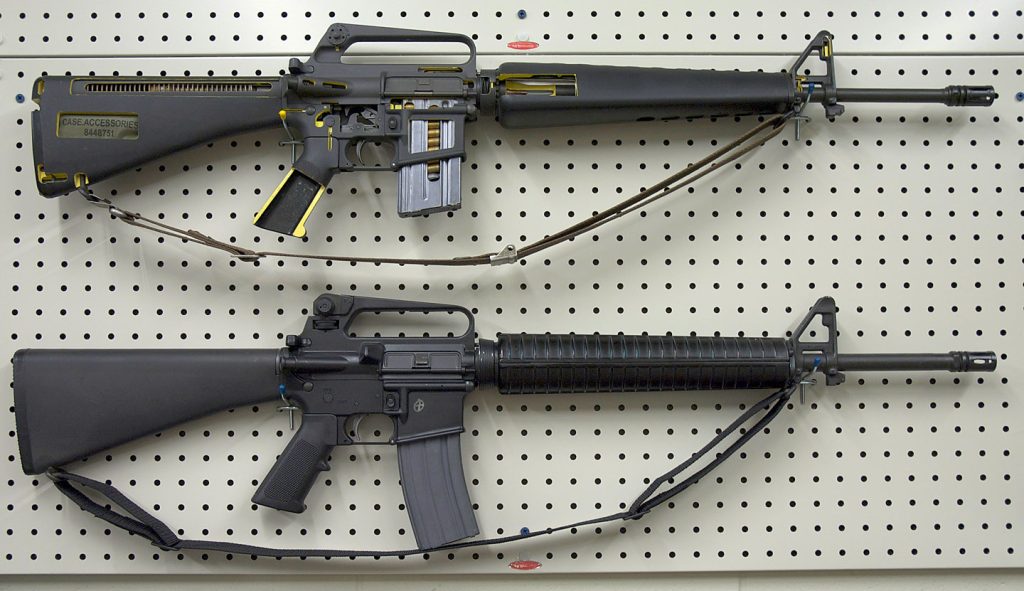
2. An AR-15 is the same thing as an M16 or M4
The civilian AR-15 and military M16/M4 family share a common design heritage, but they are not the same category of firearm. The key distinction is firing capability. Civilian AR-15–style rifles are generally semi-automatic, meaning one round fires per trigger pull. Military rifles such as the M16 and M4 were designed around select-fire capability, allowing additional firing modes beyond semi-automatic.
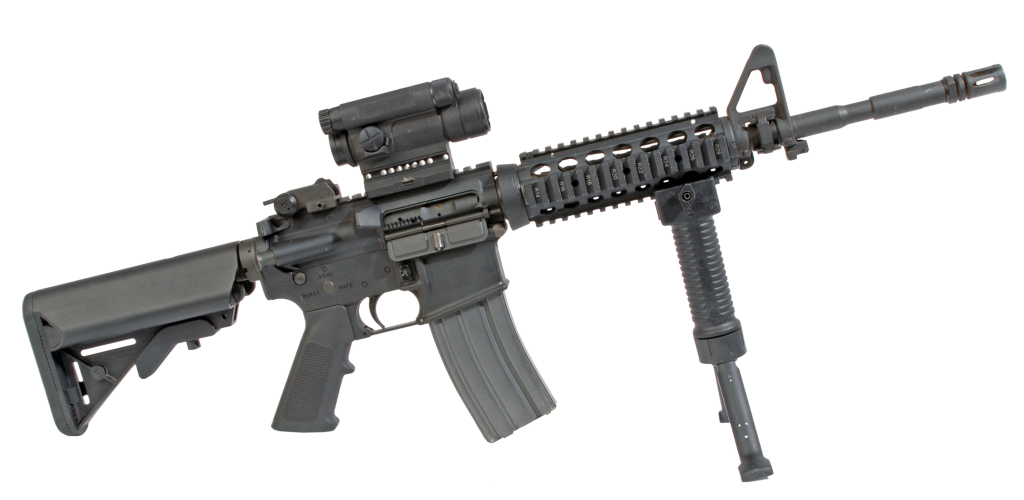
That distinction matters mechanically and legally. Civilian semi-auto variants were produced with changes to parts and receiver geometry to prevent straightforward interchange with select-fire components. The shared silhouette leads many people to assume functional identity, but similar layout does not erase the difference between semi-automatic operation and select fire.
3. The AR-15 uses a conventional direct-impingement system
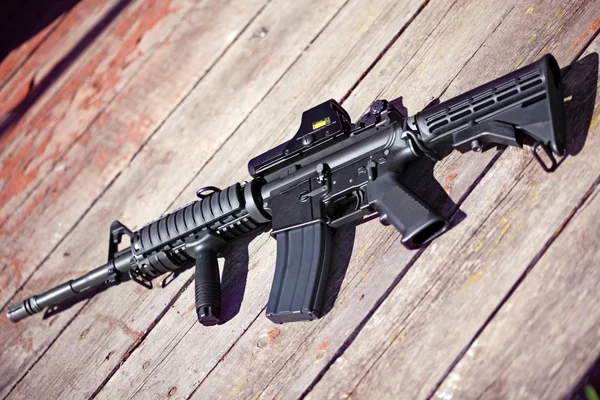
The rifle is routinely described that way, but the label oversimplifies the mechanism. Eugene Stoner’s system sends gas back through a tube into the bolt carrier group, where it expands and cycles the action. In ArmaLite’s own technical language, it was described as “a true expanding gas system instead of the conventional impinging gas system.”
That distinction explains why the platform behaves the way it does. The design helped keep the rifle relatively light, with recoil moving in a straight line through the stock. It also explains why residue can accumulate in the action more than in some short-stroke piston designs. Calling every AR-pattern rifle “direct impingement” is common shorthand, but it skips over the actual engineering logic of the Stoner system.
4. The AR-15 is unusually powerful because it looks like a military rifle
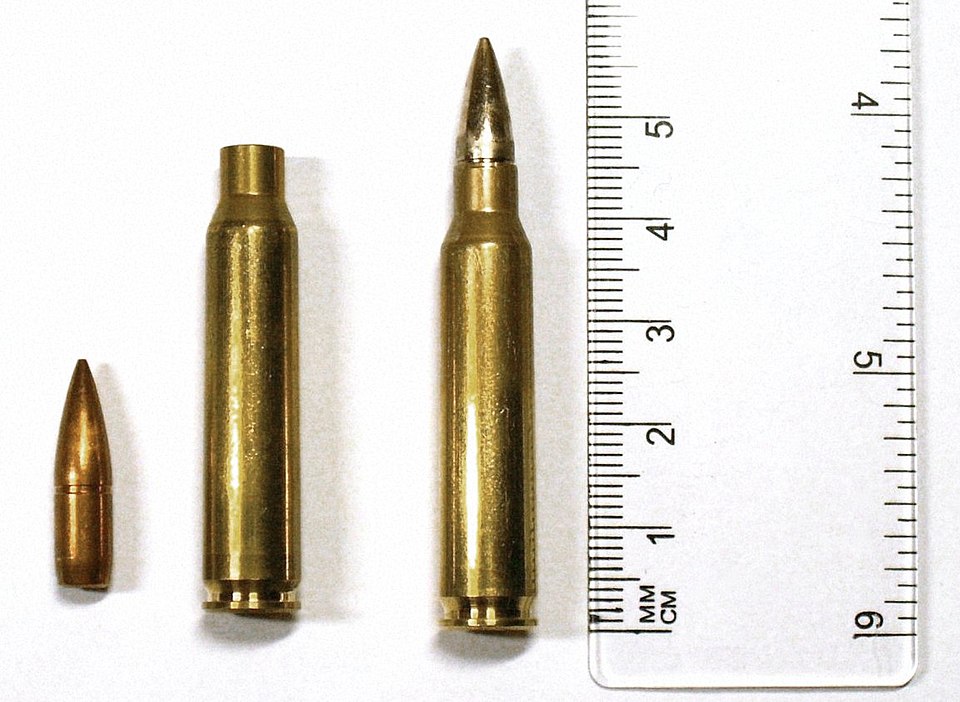
Appearance often gets mistaken for ballistic performance. In practice, the AR-15 is commonly chambered in 5.56×45mm NATO or .223 Remington, cartridges developed to deliver relatively light, high-velocity projectiles with lower recoil than older full-power battle-rifle rounds such as 7.62×51mm NATO. That shift was part of the original logic behind the platform: lighter ammunition, more controllable fire, and greater ammunition carry capacity.
That does not make the cartridge weak, but it does mean power is often overstated by people who equate aggressive styling with rifle energy. The platform’s reputation was shaped as much by modularity, ergonomics, and ubiquity as by raw ballistics. A rifle’s outline does not reveal where it sits on the spectrum between low recoil and high energy.

5. Low recoil means the rifle has no meaningful effect on accuracy or control
The AR-15 family is known for modest recoil, and that is one reason the design became so influential. Straight-line stock geometry and lighter cartridges reduce muzzle rise and help with follow-up shots. But low recoil is not the same thing as no recoil.
As recoil specialists note, excessive recoil can throw off aim and encourage flinching. The AR-15’s reputation for shootability comes from managing those forces better than many larger-caliber rifles, not from escaping physics. Newton’s third law still applies, and practical accuracy still depends on stance, fit, ammunition, and shooter technique.
6. Federal law treats every AR-15 configuration the same way
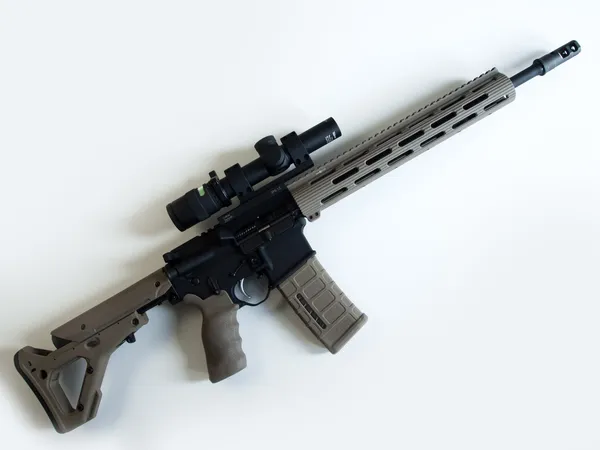
American firearms law does not classify all AR-pattern guns identically. Barrel length, overall length, stock configuration, and original manufacturing status can all matter. Under federal rules, a firearm built without a shoulder stock may be classified differently from a rifle, and changing those features can alter how the law treats it.
The legal picture gets even more layered at the state level. Some states restrict certain semiautomatic rifles by name or by features, while others do not. The federal assault weapons ban from 1994 to 2004 also left behind terminology that still shapes public discussion even though that law expired. Treating “AR-15 legality” as one national rule misses how much classification depends on configuration and location.

7. The lower receiver myth makes the whole rifle easy to understand legally
Many people hear that the lower receiver is “the firearm” under federal law and assume that settles everything. It does not. The lower receiver has long been the serialized component for AR-15–style rifles, but that legal treatment has also generated court disputes over whether the part fully matches regulatory definitions when viewed by itself. This is where the platform’s modular design complicates simple talking points. The rifle was built around two major assemblies joined by takedown pins, making maintenance, caliber changes, and parts replacement unusually straightforward.
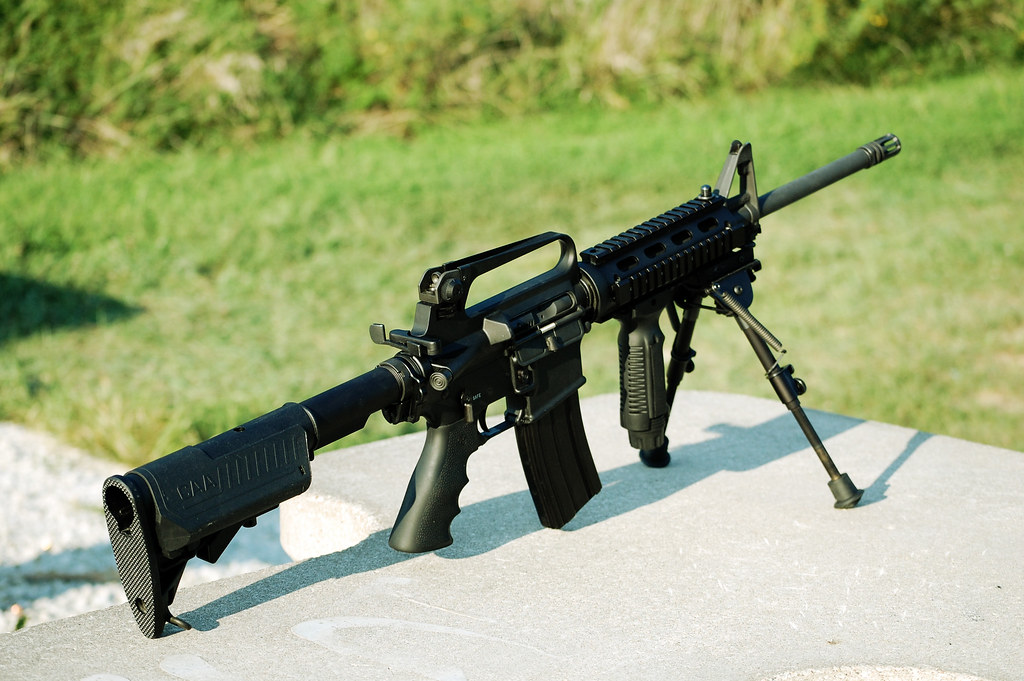
That modularity is one reason the platform became so widespread. It is also one reason legal conversations around parts, receivers, and configurations can become more technical than casual summaries suggest. Most AR-15 myths survive because they package three separate subjects into one sentence. The design’s history came from ArmaLite and Eugene Stoner, its mechanics came from a lightweight gas-operated system, and its legal treatment depends on statutes and configuration rather than on appearance alone. Once those categories are separated, the platform looks less mysterious. It remains a modular semi-automatic rifle family with a specific engineering lineage, a well-defined operating system, and a legal status that changes far more by details than by slogans.


