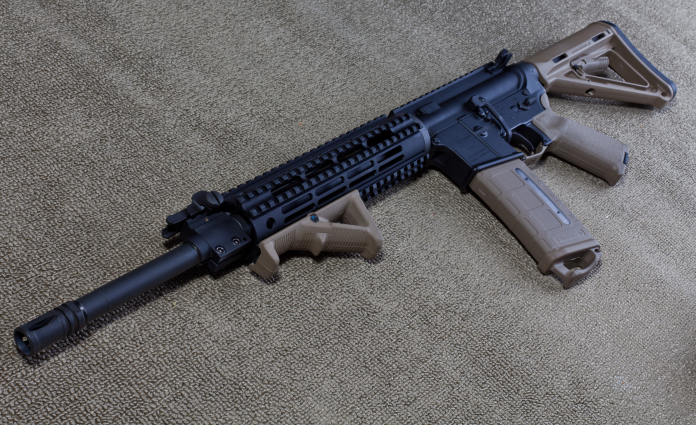
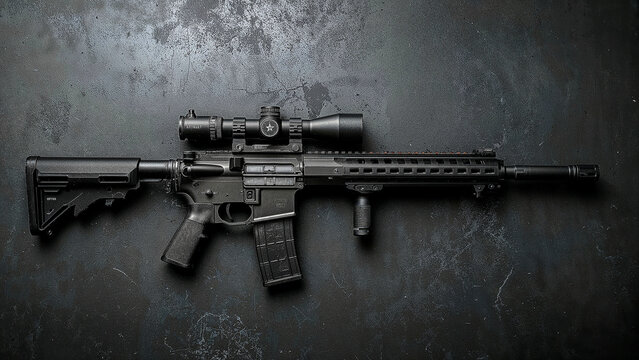
The AR-15 remains one of the most argued-over rifles in the United States, and much of that argument still rests on technical confusion. Its name, operating system, legal status, and practical uses are often discussed as if they were matters of opinion, even though most of them can be checked against design history, ballistics, and statute.
For gun owners, sport shooters, and readers interested in firearms technology, the bigger issue is not symbolism. It is whether the rifle is being described accurately. These seven claims continue to shape public discussion long after the facts became available.

1. “AR” means “assault rifle”
This is the oldest misunderstanding attached to the platform. In the AR-15 name, “AR” refers to ArmaLite Rifle, the company and design line associated with Eugene Stoner’s work in the 1950s. The label does not mean “assault rifle,” even though the rifle’s external appearance often leads people to that conclusion.
The distinction matters because “assault rifle” has a technical meaning tied to select-fire military arms. A standard civilian AR-15 is a semi-automatic rifle, firing one round per trigger pull. That alone places it in a different mechanical category from rifles designed for automatic or burst fire.
2. Civilian AR-15s are basically machine guns
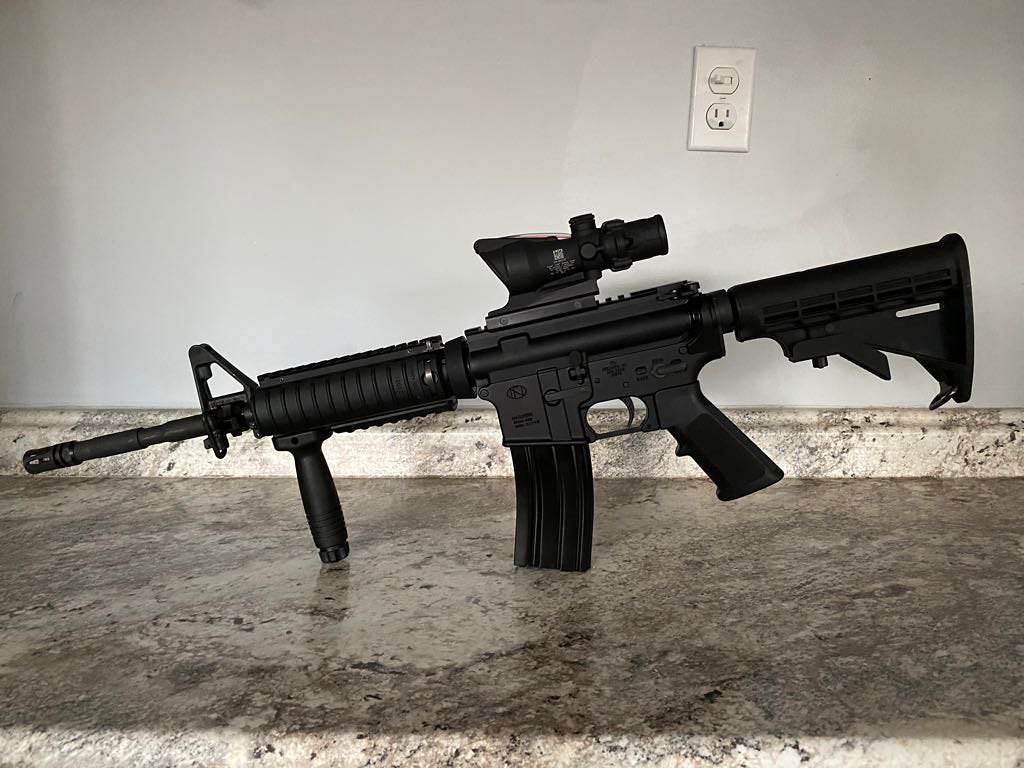
They are not built that way. A civilian AR-15 uses a semi-automatic fire-control system, which means the trigger must be pressed for every shot. Full-auto function requires different internal components and legal status, not merely cosmetic similarity. That point is often blurred because the AR-15 resembles the M16 and M4 family. But visual similarity is not functional equivalence. Federal law has long treated machine guns differently, and civilian ownership of newly manufactured machine guns has been heavily restricted since 1986, making the gap between a standard AR-15 and a true automatic weapon more than a matter of wording.
3. The AR-15 is only a military-style rifle with no sporting role
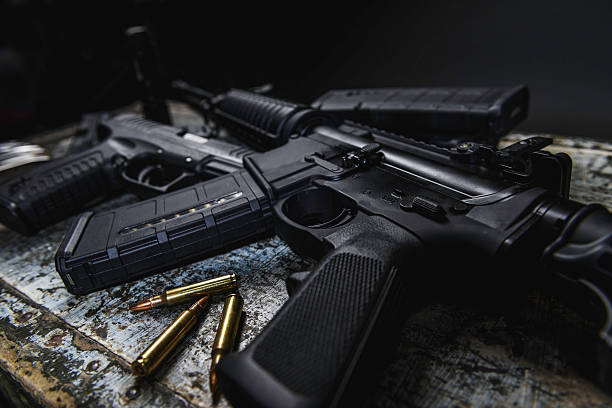
The platform entered the civilian market decades ago and became popular for reasons that had little to do with military identity. Its ergonomics, light recoil, accuracy, and modular layout made it useful for target shooting, competition, predator control, and some hunting applications.
Its modularity is a major part of that story. Stocks, optics, barrels, and upper receivers can be configured for very different uses without changing the rifle’s core operating concept. That flexibility helped move the AR-15 from a niche rifle into one of the country’s dominant sporting platforms.

4. The AR-15 is unusually powerful compared with traditional rifles
That claim does not hold up once cartridge energy is compared. The AR-15 is most commonly chambered in .223 Remington or 5.56 NATO, both intermediate cartridges rather than heavy full-power hunting rounds. In practical terms, that means far less recoil and generally less muzzle energy than cartridges such as .308 Winchester or .30-06 Springfield.
This is one of the places where the rifle’s appearance overwhelms the numbers. Its straight-line stock, detachable magazine, and accessory rails can make it seem more formidable than a wood-stocked hunting rifle, yet the ballistic output often runs lower. The platform’s popularity comes less from raw power than from controllability, speed, and repeatable accuracy.
5. The AR-15 is a poor fit for home defense because it over-penetrates everything
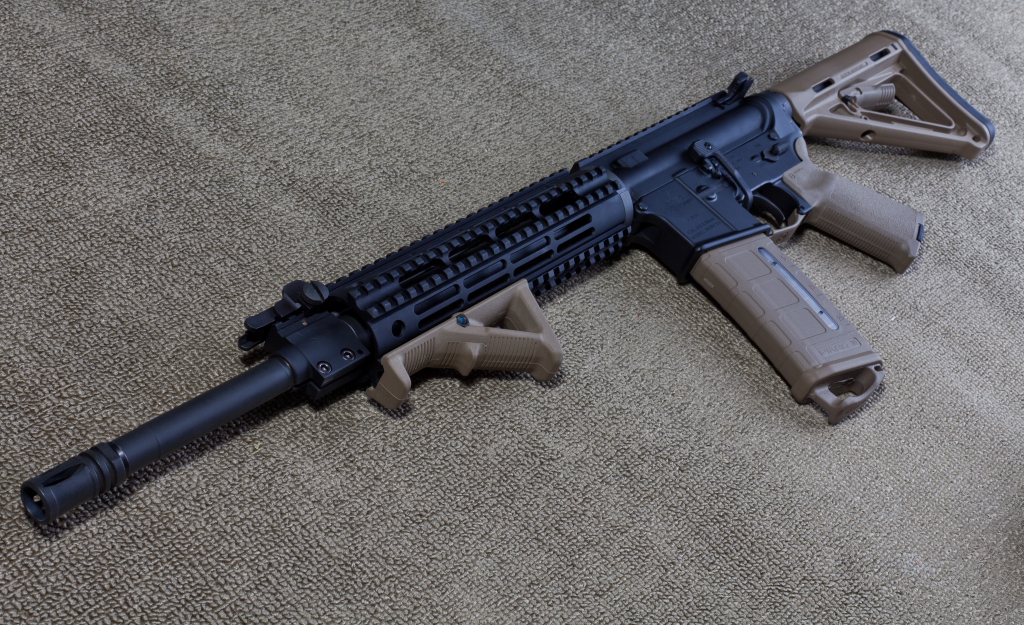
The issue is more complicated than the slogan suggests. Interior wall penetration depends heavily on bullet construction, velocity, and whether the shot hits or misses. Testing with common residential materials has shown that 55-grain M193 began tumbling after drywall impact, while barrier-oriented loads behaved very differently.

That is why broad statements about rifles being automatically worse indoors can mislead. In some tests, light fast .223/5.56 projectiles lost stability quickly after passing through drywall, while some handgun rounds and buckshot continued through multiple layers. None of that removes the need for training or target identification. It does show that over-penetration is a load-selection and shot-placement issue, not a simple category label.
6. The AR-15 is so simple that anyone can build one correctly without skill
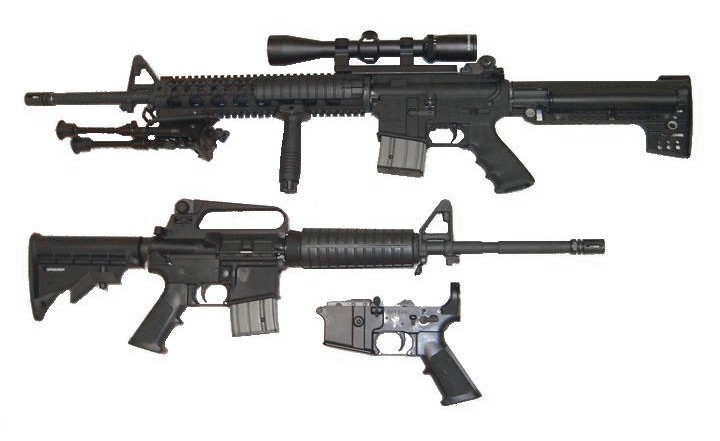
The platform is modular, but modular does not mean foolproof. Correct assembly still involves tools, torque values, alignment, and an understanding of how the gas system, headspace, and fire-control components work together. Many of the rifle’s parts are easy to swap, which creates the impression that complete assembly is little more than snapping pieces together. In reality, an improperly built rifle can produce reliability problems or unsafe operating conditions. The AR-15 is user-friendly by rifle standards, not immune to bad workmanship.
7. AR-15 ownership is either banned everywhere or legal everywhere
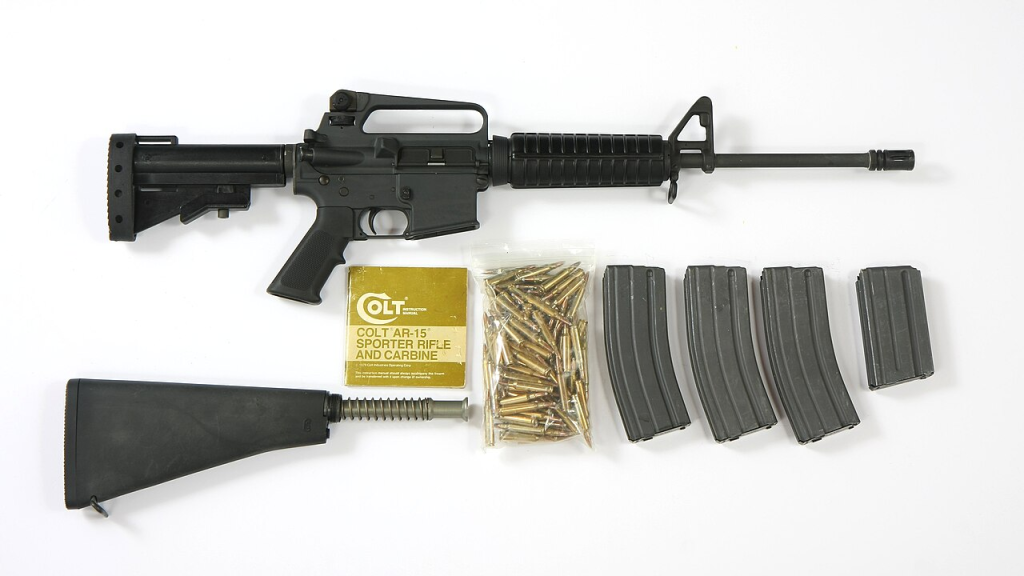
Neither claim is accurate. At the federal level, AR-15 ownership is not universally banned, but state and local laws vary substantially. Some jurisdictions regulate features such as adjustable stocks, flash suppressors, threaded barrels, or magazine capacity, while others impose fewer restrictions beyond the federal baseline.
That patchwork creates a technical compliance problem rather than a simple yes-or-no answer. A configuration considered routine in one state may violate feature rules in another. For owners, the legal status of an AR-15 often depends less on the rifle’s model name than on the exact combination of parts attached to it.

The AR-15 has accumulated a reputation that often outruns its specifications. Much of the noise around the platform comes from mixing visual cues, legal terms, and ballistic assumptions into a single story that the hardware itself does not fully support. That is why precise language matters. When the discussion turns to how the rifle functions, what it fires, where it fits in civilian use, and how laws define it, the details remain more important than the mythology.


