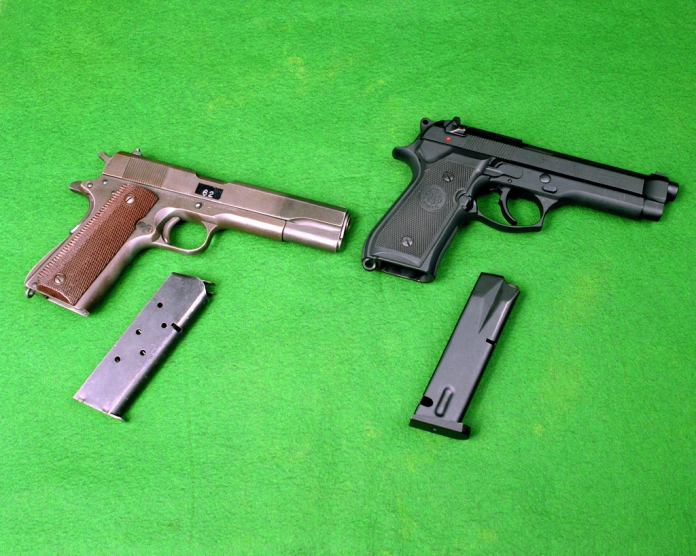
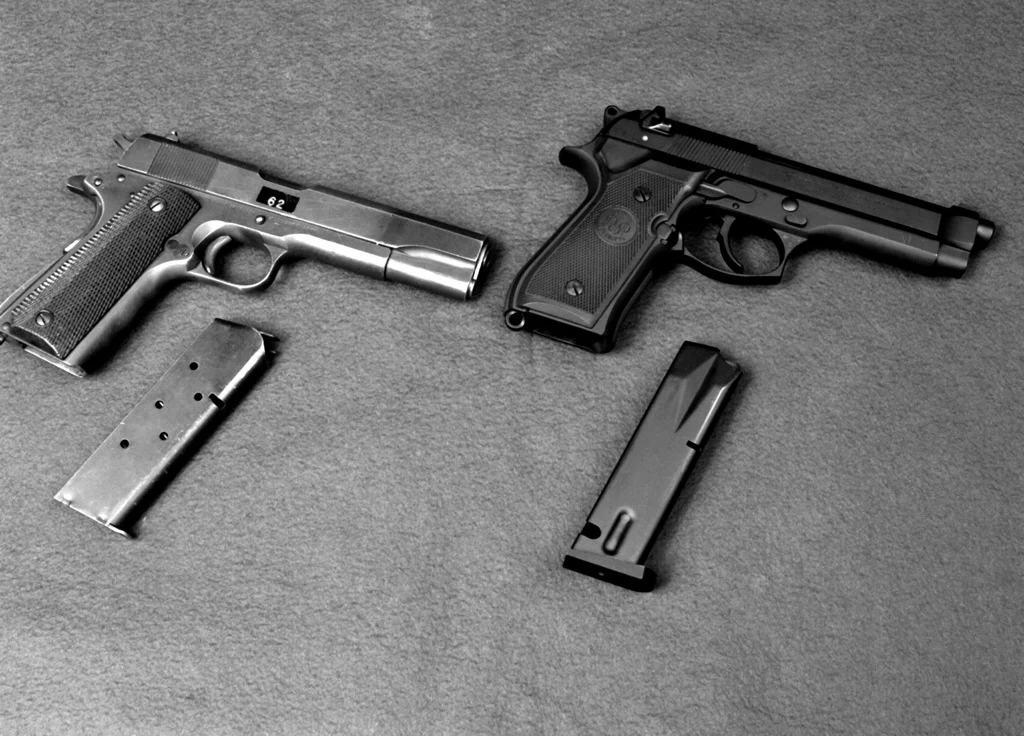
U.S. Army sidearms have often marked turning points in handgun design rather than merely filling a secondary role. Across different eras, Army adoption decisions reflected changing ideas about firepower, reliability, ergonomics, ammunition, and the demands placed on soldiers who carried pistols as backup weapons, command arms, or specialized tools.
Some sidearms lasted for generations. Others served as transitional answers to bigger institutional problems. Together, they trace the Army’s move from single-action revolvers to self-loading pistols, from large-bore doctrine to NATO standardization, and eventually to compact sidearms for specialized users.
1. Colt Single Action Army
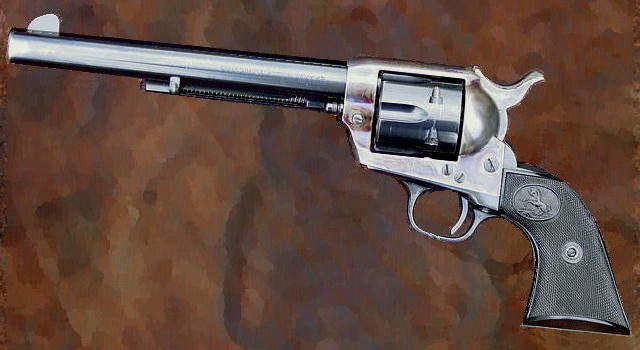
The Colt Single Action Army stands near the beginning of the Army handgun story because it helped define what a practical military revolver looked like in the late 19th century. Introduced in 1873, it paired a robust frame with mechanical simplicity, qualities that mattered to mounted troops and soldiers operating far from armories and repair depots.
Its importance goes beyond frontier imagery. The revolver represented an era in which durability and straightforward manual operation mattered more than speed of reload or magazine capacity. That formula fit cavalry service, where a sidearm had to survive dust, rough handling, and irregular maintenance. The design’s long production life and cultural staying power also show how thoroughly it shaped expectations for what an American military handgun should be. Later Army pistol programs were, in part, reactions against the limits of that world.
2. Colt M1911
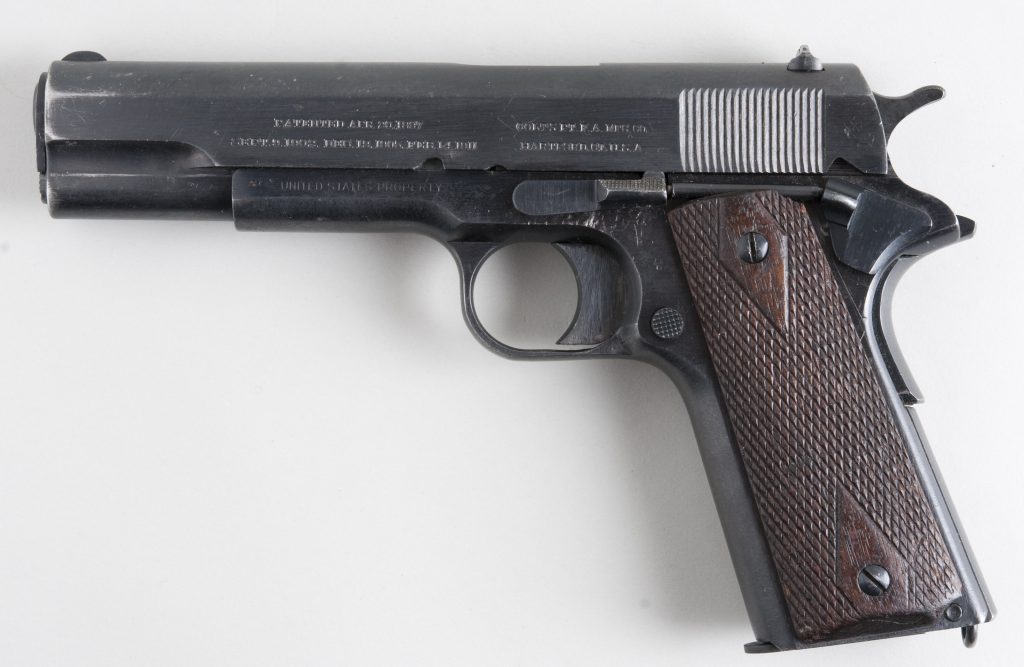
The M1911 marked the Army’s decisive turn to the semi-automatic service pistol. Developed during a search to replace aging revolvers, it emerged from rigorous trials and was formally adopted by the Army on March 29, 1911, bringing John Browning’s recoil-operated design into U.S. service. Its rise was tied to hard battlefield lessons. Army experience in the Philippines had sharpened concern about handgun effectiveness, driving the push toward a .45-caliber self-loader. In the final testing phase, the Colt pistol’s endurance became central to its reputation: 6,000 rounds were fired from a single pistol over two days with no reported malfunctions.
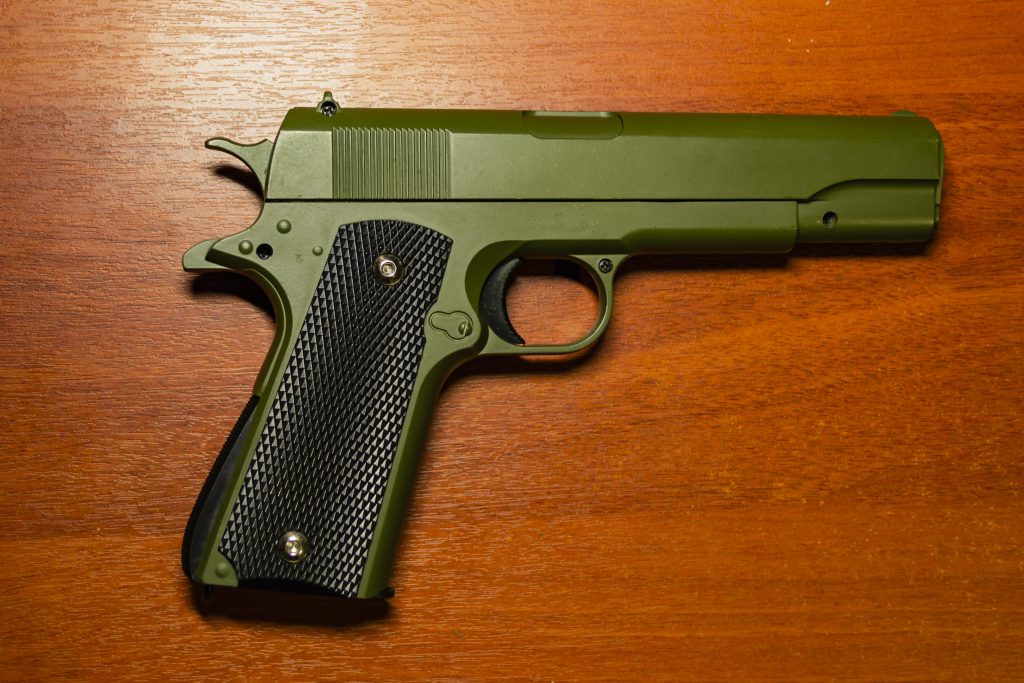
That kind of performance helped establish a new benchmark for military sidearms. The pistol’s design also proved unusually durable as an engineering platform. Its short-recoil system, detachable box magazine, manual safety, grip safety, and serviceable field-stripping procedure made it more than a replacement for revolvers; it became a reference point. The Army’s adoption of the M1911 effectively normalized the semi-automatic combat pistol in American service. Even after later standard-issue changes, the 1911 pattern continued to shape military and law-enforcement handguns for decades through modernization programs, custom variants, and specialized issue weapons.
3. M1911A1
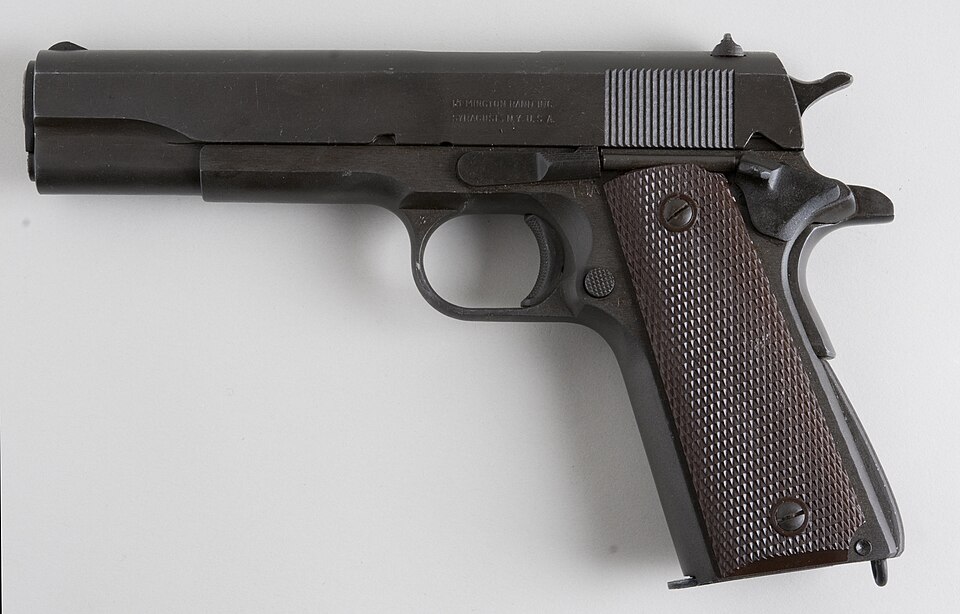
The M1911A1 was not a clean-sheet redesign, but it showed how combat feedback could refine a successful sidearm without discarding its core mechanics. The updated version, classified in the 1920s, preserved the original pistol’s operating system while introducing practical changes to improve handling and shootability. Among the visible revisions were a shorter trigger, frame cutouts behind the trigger, a longer grip safety spur, a wider front sight, and an arched mainspring housing. None of these altered the pistol’s identity, yet together they reflected a maturing Army view of ergonomics. The service handgun was no longer judged only by power and ruggedness; it also had to fit a broader range of hands and support more consistent shooting.
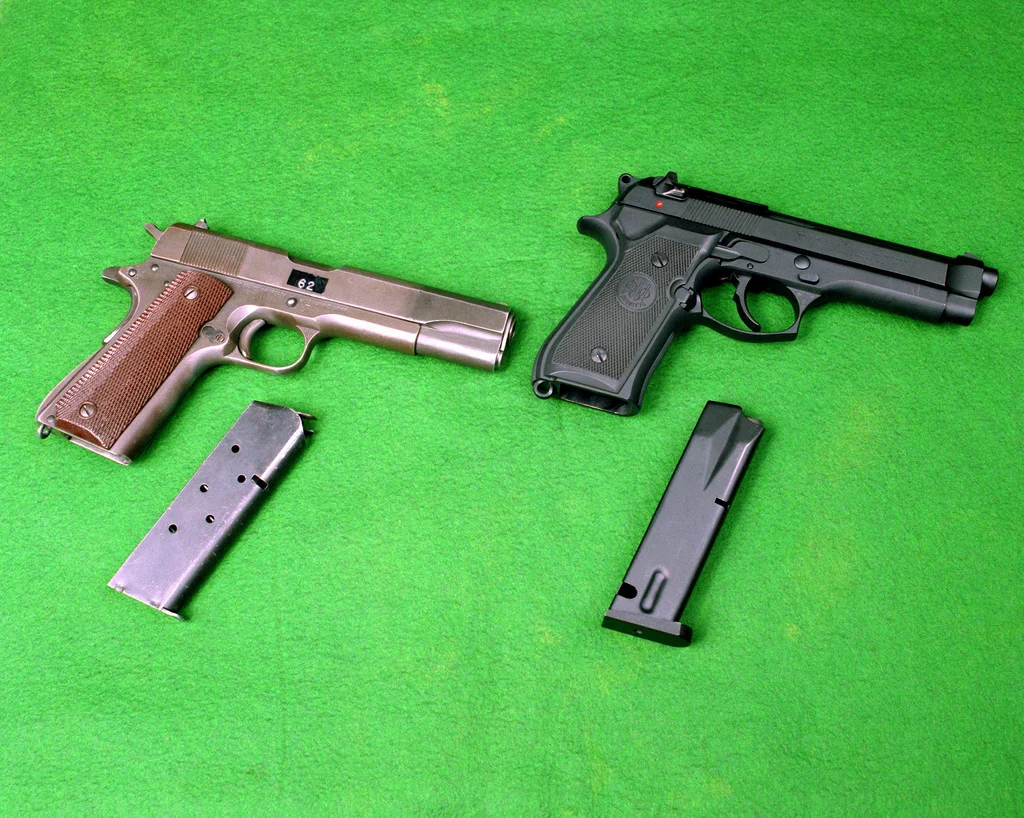
The M1911A1 then became the Army sidearm most closely associated with the mid-20th century. It served through global war, postwar rebuild programs, and the long period when many pistols in inventory were refurbished rather than newly made. By the late 20th century, however, age was becoming a factor. According to one retrospective account, many examples remaining in armories were worn enough that “they were like maracas, they were so loose,” a remark attributed to retired Marine officer Chris Woodbridge in a broader discussion of the old pistol fleet. That condition mattered because it helped clear the path for the Army’s next major handgun shift.
4. Beretta M9
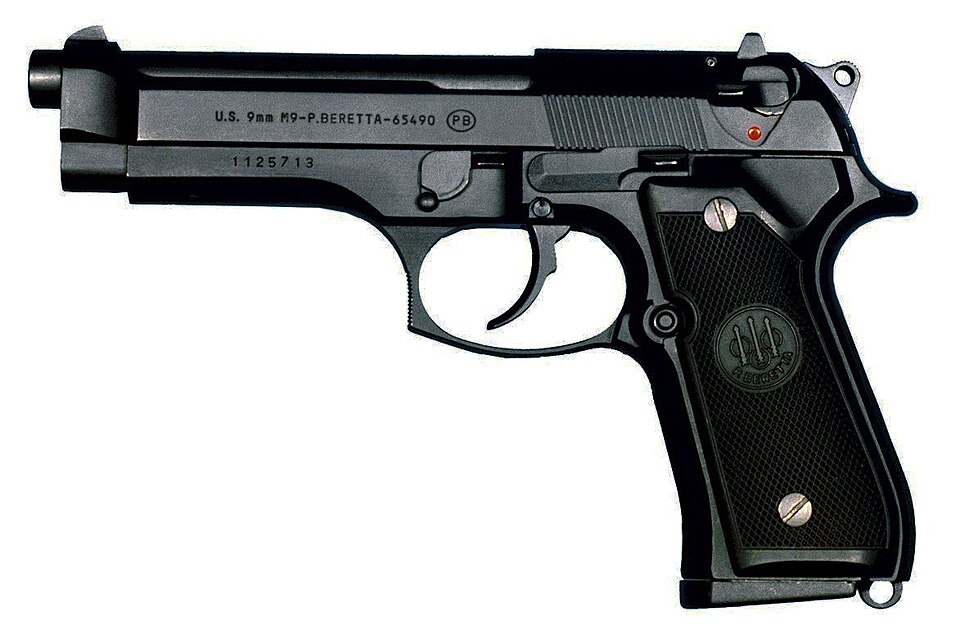
The Beretta M9 represented a doctrinal break as much as a new pistol. Its adoption followed years of interservice disagreement, standardization pressure, and a broader move toward 9×19 mm NATO ammunition. In the XM9 competition, the Beretta 92F and SIG Sauer P226 both passed the final technical hurdle, but the Army officially adopted the Beretta 92F as the M9 on Feb. 14, 1985.
The shift was significant for several reasons. The M9 offered a double-action/single-action trigger system, a higher-capacity magazine than the 1911, and controls built around late-Cold War safety expectations. In earlier testing, the Beretta had posted 2,000 mean rounds between failure, well above the stated requirement. That performance, combined with procurement considerations and NATO compatibility, made the M9 more than a replacement sidearm; it became a symbol of how logistics and alliance standardization could shape small-arms policy.
Its service life also exposed another truth about combat handguns: reputation often depends as much on maintenance and ammunition as on the design itself. The M9’s history included controversy over slide failures, later traced to overpressure ammunition, and continuing debate over parts life and upkeep. Yet its long tenure showed how a military pistol had become a system of training, supply, and support rather than just a mechanism in a holster.

5. SIG Sauer P228 (M11)
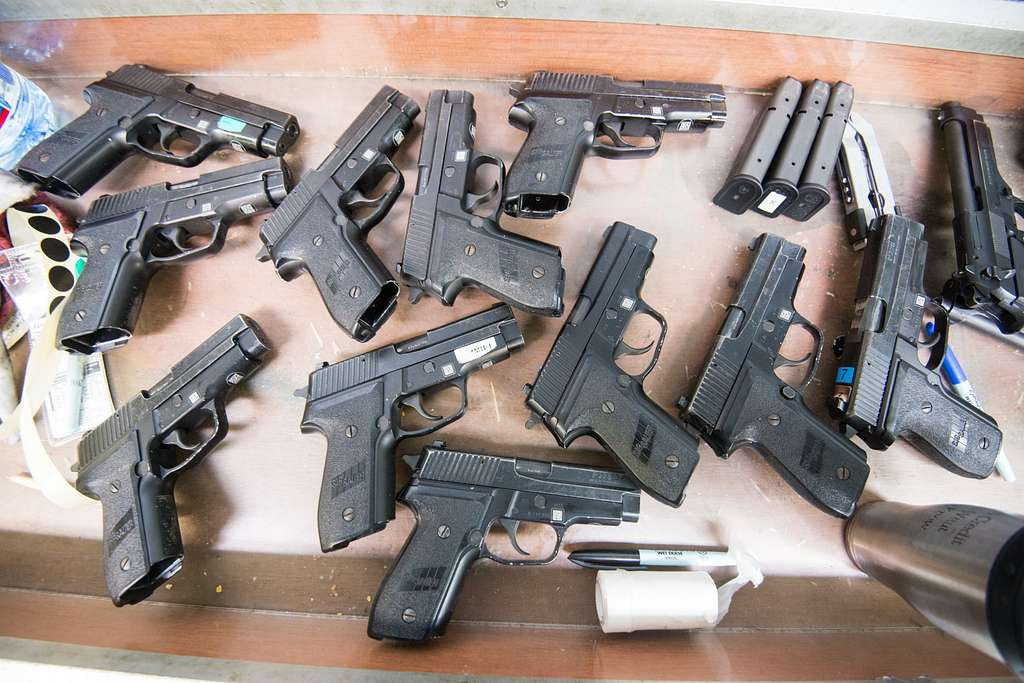
The SIG Sauer P228, adopted by the U.S. military as the M11, pointed toward a different future for Army handguns: compact pistols for specialized missions. While not the Army’s universal service sidearm, the design became closely associated with aviators, investigators, and personnel who needed a smaller weapon without abandoning full-service cartridge performance.
The P228 was a compact member of the SIG P220 family and, in military designation, the M11 handgun chambered in 9×19mm Parabellum. That mattered because it reflected a growing recognition that one size did not fit every sidearm role. A compact pistol could be easier to carry in vehicles, cockpits, and specialized assignments while still retaining the practical features expected of a modern military handgun.

In design terms, the M11 helped normalize the idea that military sidearms could be tailored by mission profile rather than issued only as one universal full-size pattern. That shift would become increasingly important as armed forces moved toward modular handgun programs and a wider range of users with different carry requirements. Looked at together, these five sidearms show that Army handgun history is really a history of changing priorities. The revolver era favored simplicity and mounted practicality.
The early self-loading era rewarded endurance and stopping power. Mid-century refinements emphasized ergonomics. The late Cold War prioritized standardization, capacity, and safety systems. Compact sidearms then highlighted specialization. Each pistol left a technical legacy larger than its own service record. The Army did not just carry these handguns; it used them to redefine what a combat sidearm was expected to do.


