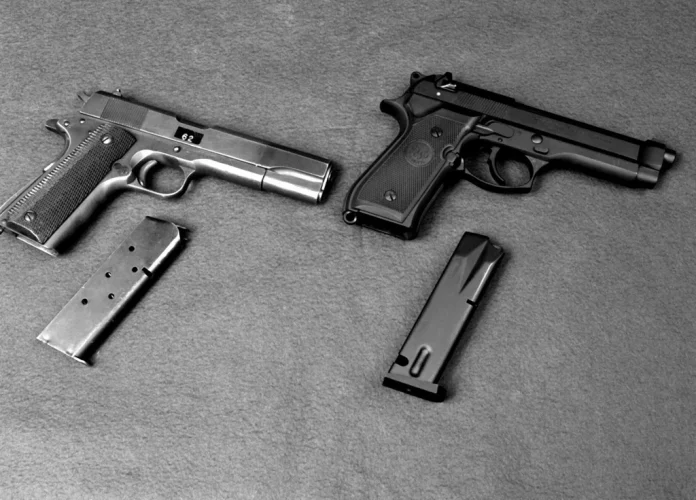
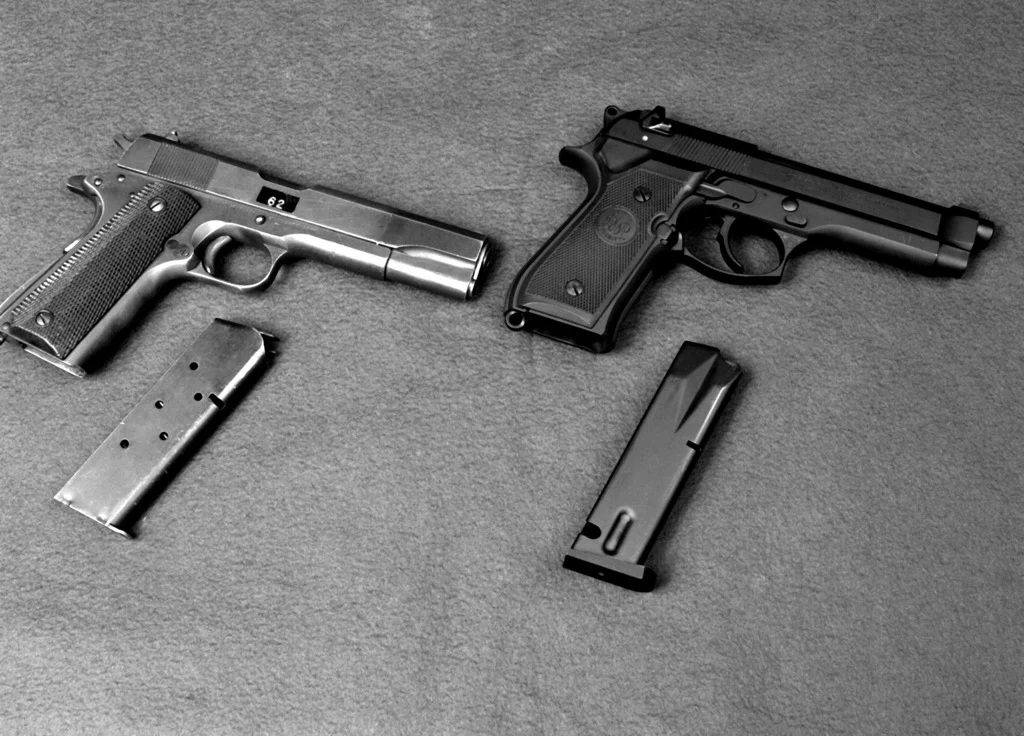
The 1911 and the modern polymer pistol are often framed as a culture war: old steel and single-action precision on one side, lightweight striker-fired utility on the other. That comparison usually gets flattened into slogans about trigger quality, capacity, or tradition.
The more useful comparison is mechanical. These pistols ask different things of the shooter, the holster, the maintenance bench, and the training schedule. Many of the biggest trade-offs only show up after a lot of draw strokes, a lot of magazine changes, and a lot of rounds.
1. Trigger quality versus trigger workload
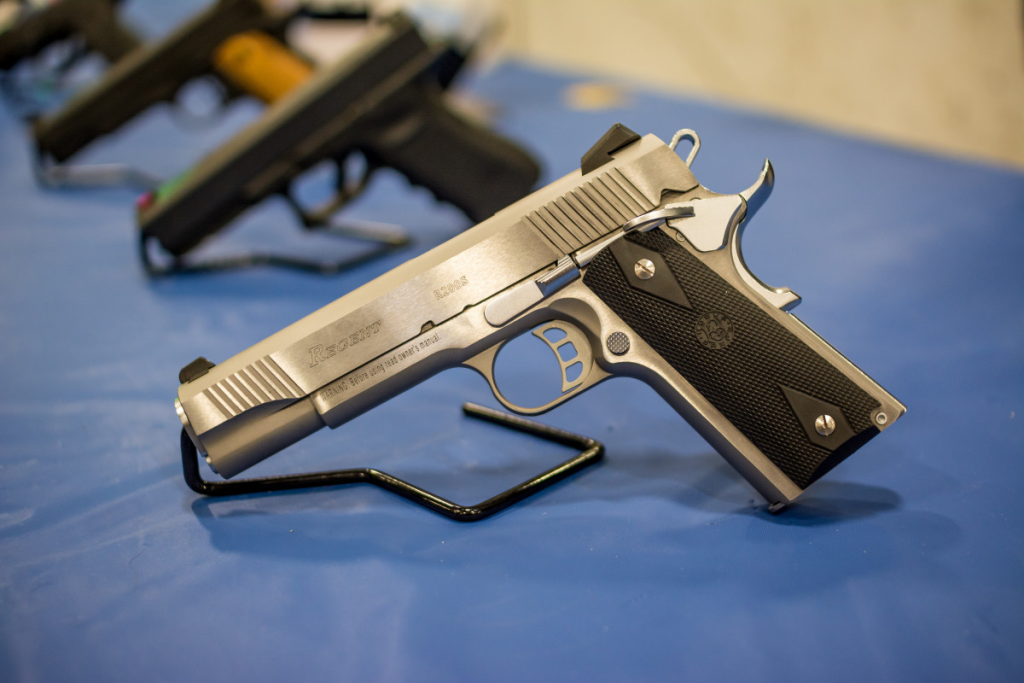
A 1911 trigger is still the benchmark for a reason. Its straight-to-the-rear movement, short take-up, and crisp break come from a single-action system that is mostly releasing an already cocked hammer. Many factory examples break in the 4-to-5-pound range, and that feel tends to reward precise shooting. Polymer striker-fired pistols usually ask the trigger to do more. The press often completes part of the striker’s cocking cycle while also disengaging internal safeties, which is why the feel is typically longer and less glass-rod crisp. The trade-off is consistency and simplicity, not imitation. A striker trigger can be predictable, but it will not behave like a tuned 1911 because the mechanism is fundamentally different.
2. Capacity versus grip shape and concealment feel
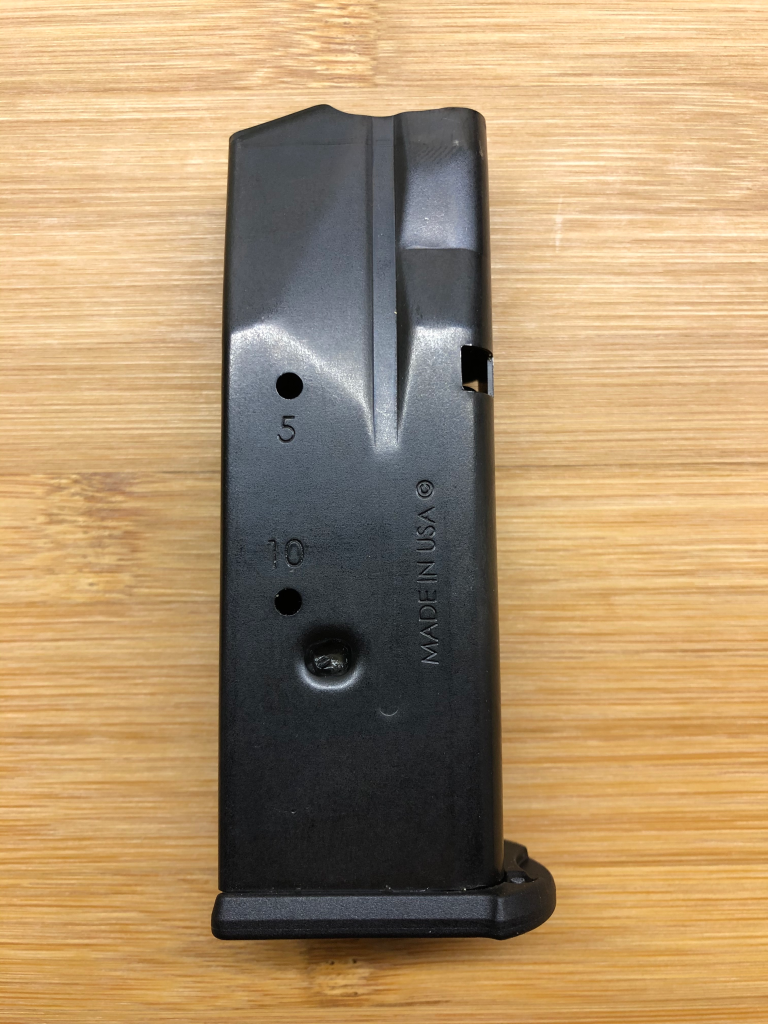
The classic 1911 remains a relatively slim pistol, and that narrow profile is one reason many shooters still carry it well. Even a full-size gun can sit flatter against the body than wider double-stack designs. Polymer pistols usually return that concealment advantage with more onboard ammunition. That higher capacity often requires a thicker grip and a different hand fit, which some shooters prefer and some do not. The overlooked point is that capacity and comfort are linked to geometry, not just magazine design.
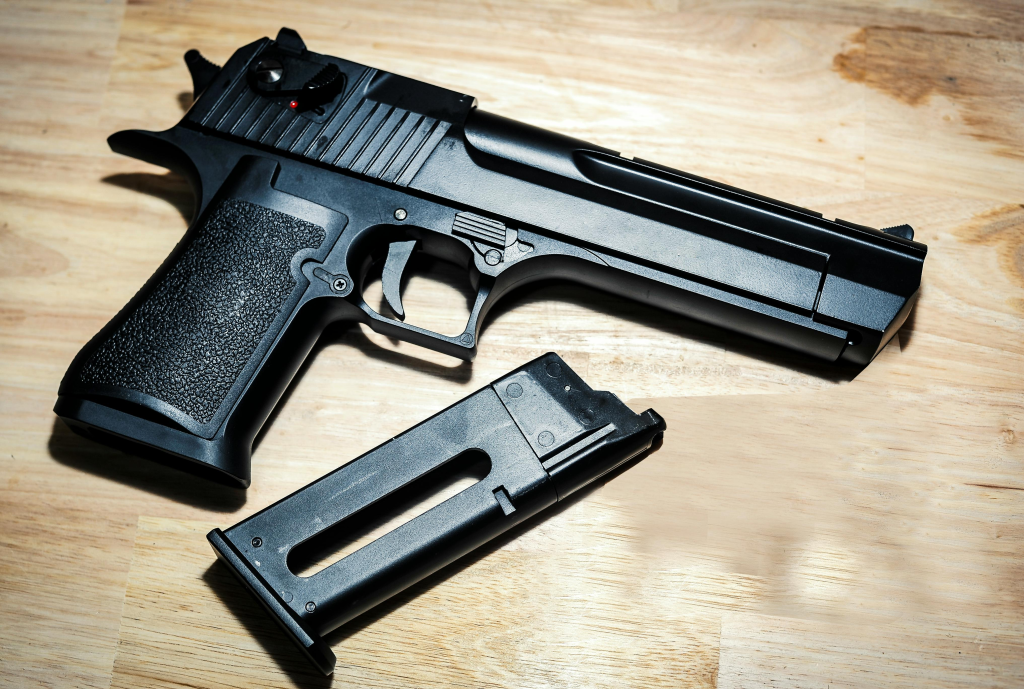
3. Weight that tames recoil versus weight that must be carried all day
Steel helps a 1911 settle. Extra mass reduces movement, softens recoil impulse, and can make sight tracking feel calmer, especially during rapid strings. That same mass becomes a burden on the belt. Polymer frames changed the carry equation by cutting weight without eliminating durability, which is a major reason striker-fired service pistols became so dominant. The lighter gun is easier to carry for long hours, but it often demands more grip discipline because lighter pistols tend to feel sharper in recoil and less forgiving of weak support-hand pressure.
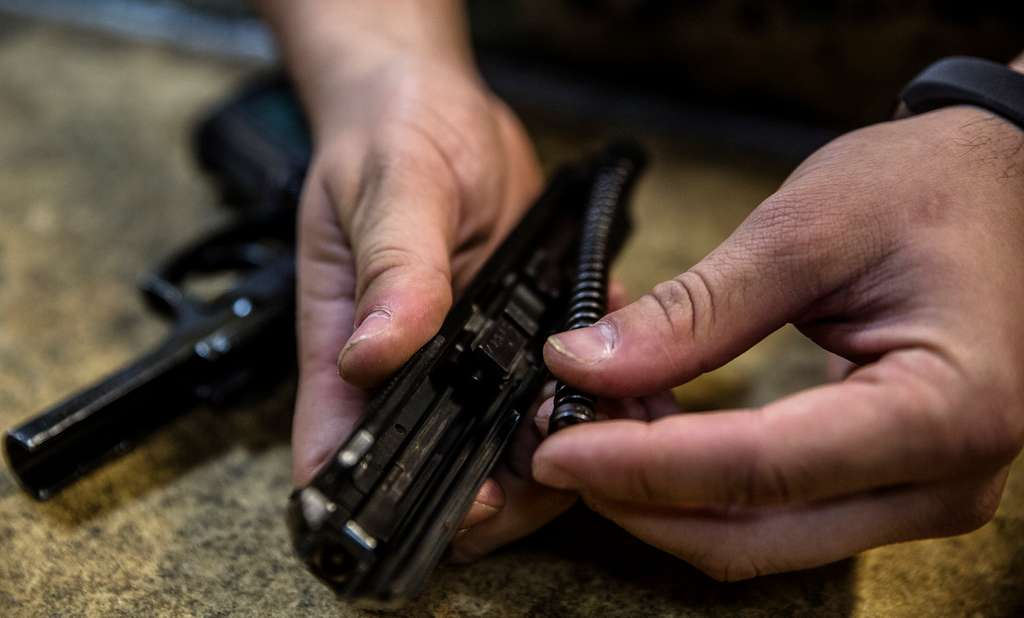
4. Mechanical forgiveness versus maintenance discipline
This is one of the least glamorous differences, but it matters. A well-built 1911 can be highly reliable, yet the platform is more sensitive to spring condition, magazine health, extractor tuning, and correct parts fitting than many polymer service pistols. By contrast, striker-fired pistols built around fewer fitted parts often tolerate neglect better. One long-term example is a 30,000-round Glock 19 that continued functioning despite extremely limited cleaning. That does not mean polymer pistols are maintenance-free. It means their operating window is usually wider when dirt, weak lubrication, or delayed upkeep enter the picture.
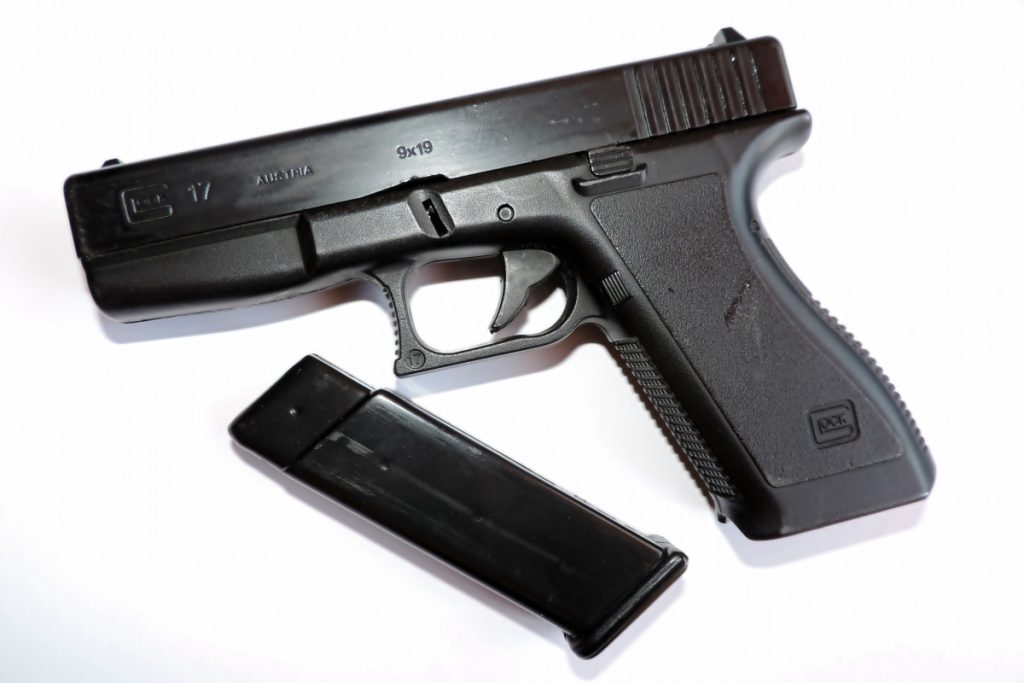
5. Manual safety control versus simpler manual of arms
The 1911’s frame-mounted thumb safety is not decoration. It is part of the system, and using it properly is part of running the pistol correctly. As one trainer put it, “These are features, not bugs.” That comment reflects how the safety locks in the pistol’s carry condition and becomes part of the draw and return-to-holster routine. Polymer striker-fired pistols usually remove that step, giving the shooter a simpler manual of arms with fewer external controls. The trade-off is training emphasis shifts toward trigger discipline and careful holstering because there is often no thumb safety to re-engage before the gun goes back into the holster.
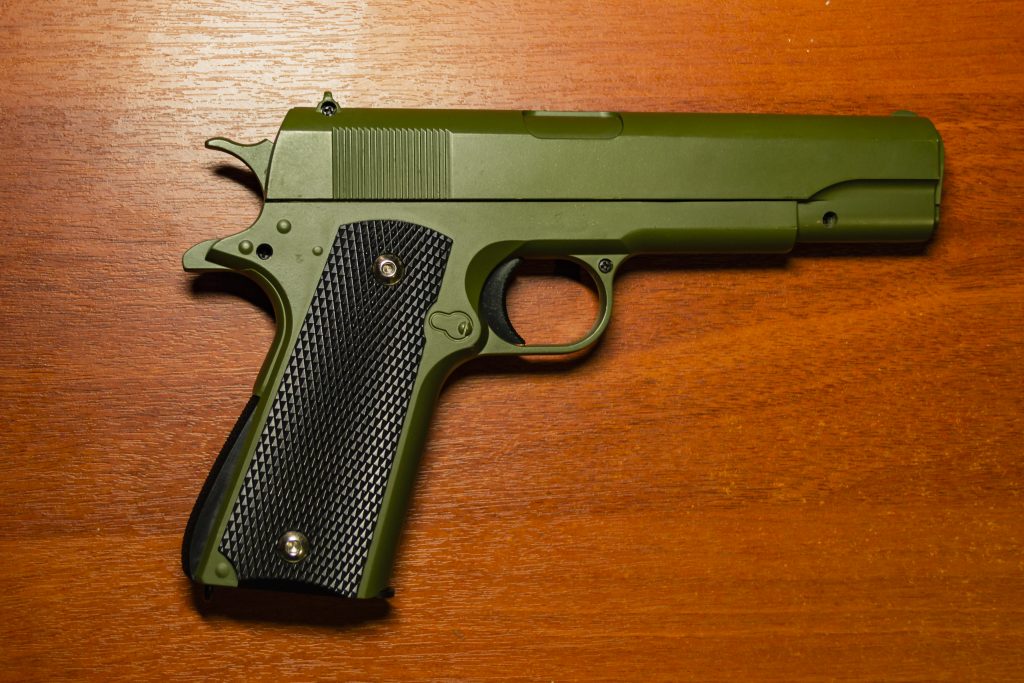
6. Parts fitting versus modular replacement
The 1911 remains a pistol that often rewards expert hands. Safeties, extractors, bushings, and barrels may require proper fitting, and not every “drop-in” part truly drops in. Even experienced armorers treat the platform as a collection of interdependent systems rather than a box of universal components. Polymer pistols generally lean the other way. Parts are more standardized, and many designs were built around easier assembly and replacement at scale. That is one reason they became common in law enforcement, where Glocks remain the most common handguns in use with police departments. The trade-off is less bespoke feel, but usually easier support.
7. Accuracy potential versus reliability margin
A good 1911 can feel surgically precise, but the platform has long carried a warning label about over-tight fitting. One gunsmith’s blunt summary still holds: “A target fitted tight slide will jam on a shred of brass, or a grain of powder.” Tightness can help extract the last bit of precision, but it can also shrink the reliability margin. Polymer duty pistols are usually built around a broader operating envelope. They may not feel as refined in lockup or trigger break, yet they are often engineered to keep running with more dirt, more variation in ammunition, and less hand-fitting. That is a design choice, not a compromise hidden by marketing.
8. Training depth versus training simplicity
The 1911 can be easy to shoot well and harder to master completely. A light trigger and excellent ergonomics help on target, but the platform expects the shooter to manage a cocked-and-locked carry condition, safety manipulation, and platform-specific maintenance habits. Shorter 1911 variants also tend to become less forgiving as slide mass drops and spring demands increase. Polymer pistols usually simplify the learning curve. Their controls are minimal, the trigger pull is the same from shot to shot, and they are easier to hand to a broad range of users. That simplicity is one reason so many agencies and instructors moved toward them over time, even while some experienced shooters stayed loyal to the 1911.
9. Romance and refinement versus broad practical tolerance
The 1911 still offers a shooting experience many newer designs do not match. Its trigger, slim frame, and all-metal feel give it a kind of refinement that explains why it remains relevant more than a century after adoption. It also asks for dedication. As one experienced observer noted, the 1911 is best suited to a committed user willing to learn its “idiosyncrasies.” Polymer pistols are less romantic and more tolerant. They are lighter, generally simpler, and easier to keep in service across large user groups.
That broader tolerance is what made modern striker-fired designs the default sidearm pattern for so many defensive and duty roles. Neither design wins every category because neither was built to solve the same problem in the same way. The 1911 concentrates refinement into a platform that rewards attention. The polymer pistol spreads practicality across a design that forgives more. That is the real divide. Most shooters are not choosing between good and bad. They are choosing which trade-offs they are willing to carry, maintain, and train around.


