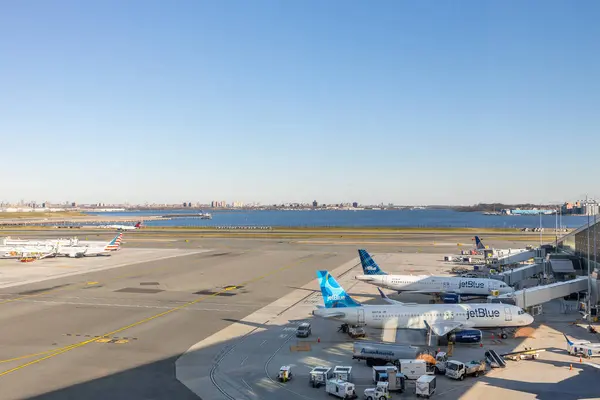
A runway collision at a major airport is rarely about a single bad moment. It usually exposes several layers of design, procedure, staffing and timing that were already in place long before impact. At LaGuardia, the most important engineering and operations questions extend beyond one control instruction.
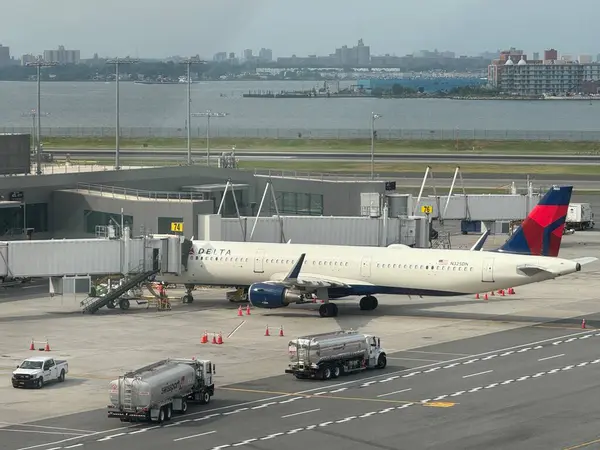
The incident puts attention on how tightly packed airports manage vehicles, aircraft and emergencies in the same strip of pavement, and why small gaps in coordination can become catastrophic when margins are short.
1. Combined tower duties can be legal but still operationally fragile
The main issue is not whether one controller handling both runway and ground traffic was unusual. It was permitted under FAA practice when traffic volume allows positions to be combined. The harder question is whether the setup matched the real workload at that moment. Runway control and ground control demand different forms of attention. One is tracking landing and departing aircraft at speed. The other is managing taxiing aircraft, service vehicles and emergency responders moving across intersecting surfaces.
When both duties sit with one person, the system depends on clean sequencing and immediate mental switching. That arrangement can work in quieter periods, but its resilience drops quickly when weather deteriorates, a vehicle enters the movement area, or an unrelated emergency interrupts routine flow.
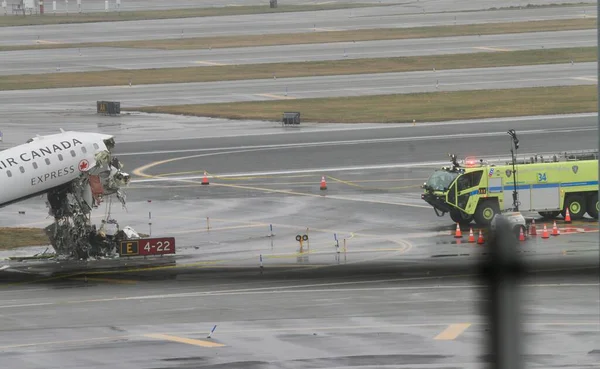
2. Emergency vehicle crossings are routine operations with almost no tolerance for delay
Airport rescue and firefighting trucks cross active pavement as part of normal emergency response. That does not make the task simple. It makes it highly procedural. A fire truck responding to another aircraft issue reportedly entered the runway environment just as a regional jet was completing its landing roll.
In that phase, a landing aircraft is no longer airborne but is still moving at substantial speed, with braking distance affected by runway condition, pilot workload and visibility. A crossing clearance issued too early, or canceled too late, leaves almost no recovery space. The engineering lesson is stark: shared runway use becomes most vulnerable not during ordinary traffic, but when emergency access must be inserted into an already active arrival path.
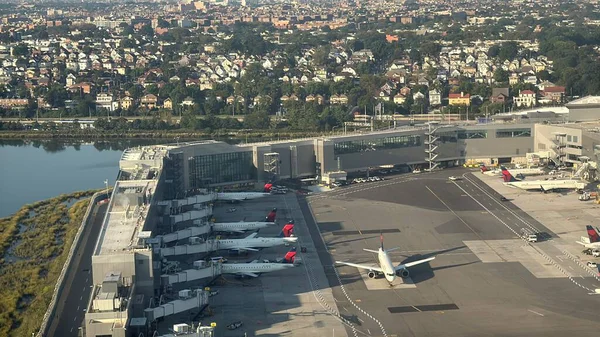
3. LaGuardia’s layout leaves very little room for recovery
Large airports do not all fail the same way. LaGuardia is especially unforgiving because it operates inside tight physical constraints, with compact geometry and limited operational slack. That matters because airport safety is not just about rules on paper. It is also about how much space and time an airport gives people to correct a mistake.
At more expansive airfields, a delayed vehicle crossing or a late instruction may still leave room for separation. At LaGuardia, short distances compress decision-making. A jet on rollout, a truck crossing ahead, and a controller trying to reverse an instruction can all converge in seconds. Busy infrastructure magnifies the consequence of ordinary errors, especially when rain or reduced visibility further shrinks the available margin.
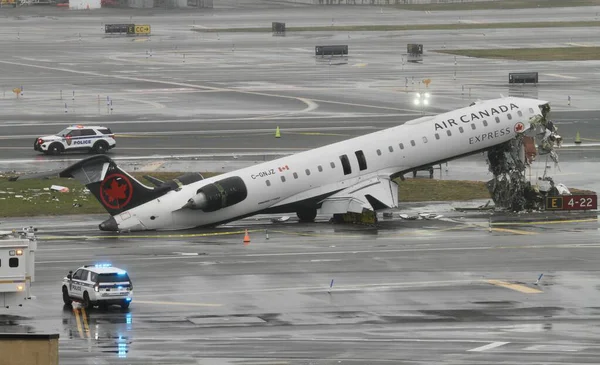
4. The investigation will focus on process, not blame
Public attention often jumps to fault immediately after a crash. The NTSB does not structure its work that way. Under the agency’s investigative process, investigators move from initial notification to on-scene fact gathering, analysis, probable-cause determination and safety recommendations.
The board states that its role is to improve transportation safety, not assign legal blame. That distinction matters in a collision like this because the final explanation may include controller workload, airport procedures, communications timing, airfield conditions and emergency-response design rather than one isolated human lapse. The same framework also means final conclusions can take time; the board says it generally tries to complete aviation investigations within 12 to 24 months.
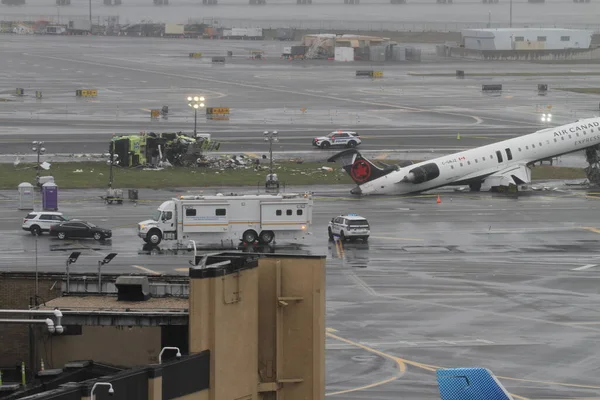
5. Passenger injury patterns show why cabin survivability still matters after touchdown
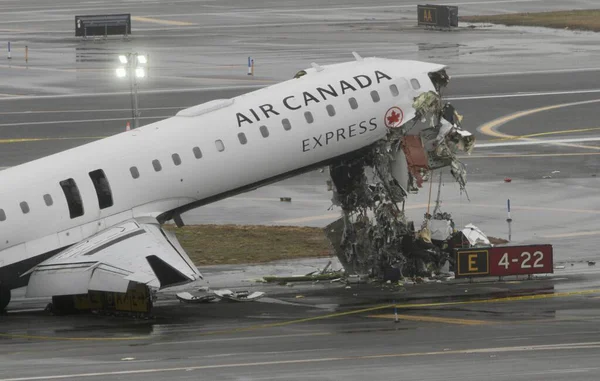
The aircraft had already landed, but the injury risk did not end with wheels on the runway. That point is easy to miss in public discussion of runway collisions. Passengers described a violent jolt and secondary impact forces that threw people forward. One account described hearing braking just before a loud boom, while another described passengers helping each other evacuate by sliding from the wing.
The broader safety takeaway is that survivability engineering cannot focus only on takeoff and cruise. Seat restraints, seatback integrity, floor structure, evacuation access and crew coordination remain critical in post-landing accidents, especially when a collision tears into the forward fuselage or disrupts normal exit routes.
6. Similar accidents show recurring weak points in runway protection
This was not the first time an aircraft and an airport vehicle occupied the same runway with fatal results. That pattern gives the event broader significance. In a 2022 collision in Lima, a LATAM Airbus struck an airport fire vehicle during takeoff roll after the vehicle entered the runway during an emergency drill.
Decades earlier, a Western Airlines DC-10 at Mexico City hit equipment on a closed runway in poor visibility, an accident later tied to multiple breakdowns including markings and situational awareness. These cases differ in detail, but they point toward the same engineering concern: runway incursions are rarely random. They emerge where visual conditions, procedural assumptions, vehicle access and controller or crew expectations overlap in ways the system did not adequately defend against.
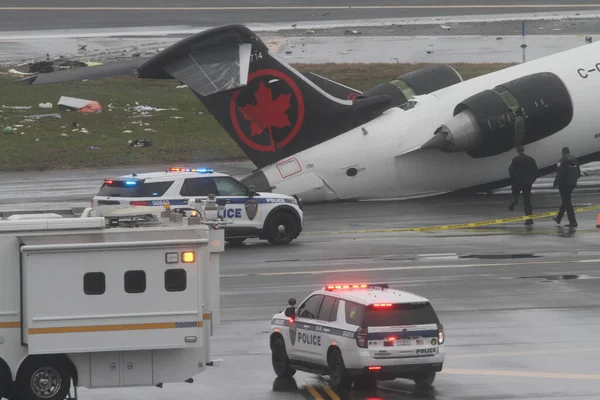
The LaGuardia collision is significant because it highlights a recurring problem in airport operations: the runway is not just for aircraft, yet every additional use of it raises complexity. Emergency response, ground mobility and arrival sequencing all compete for the same protected space. The most consequential questions now concern system design. Investigators will examine whether a broader-scope investigation identifies weaknesses in staffing assumptions, runway-crossing procedures or the way constrained airports handle simultaneous emergencies and arrivals. For aviation engineering, that is the real story.


