Army sidearms rarely get the same attention as rifles, but they often reveal more about military priorities than any long gun. A service pistol has to work when space is tight, maintenance is uneven, and the user may not be a handgun specialist at all.
That is why a handful of Army sidearms became more than standard issue. They marked turning points in caliber choice, reliability standards, industrial improvisation, and eventually the shift toward modular design.
1. M1911 and M1911A1
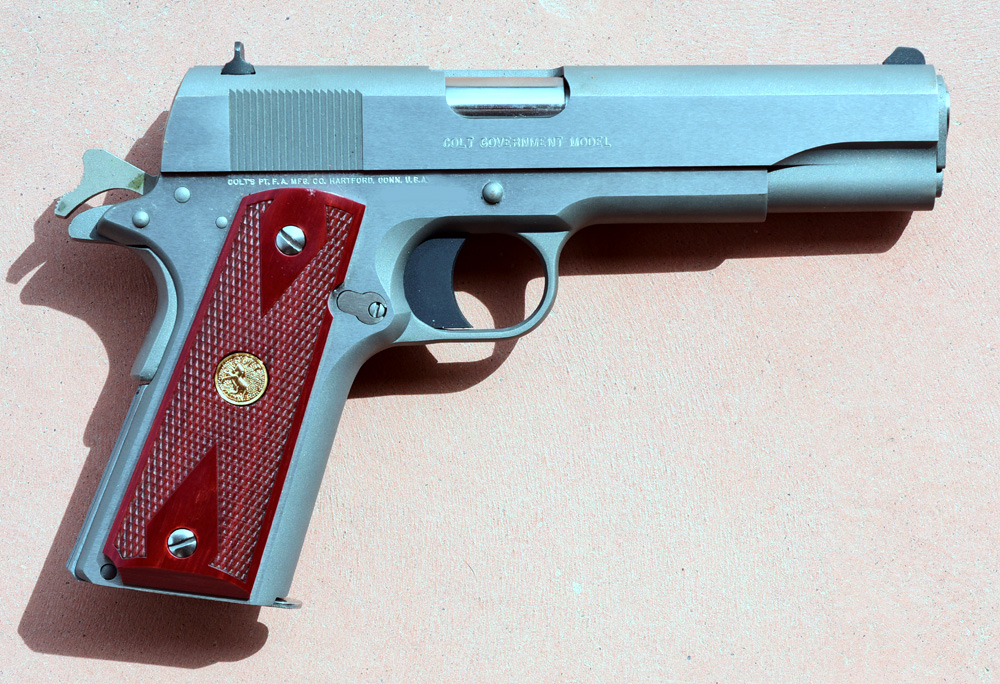
The M1911 became the Army’s benchmark sidearm because it solved a problem that earlier revolvers had not. After combat experience exposed the limits of .38-caliber handguns, Army testing moved toward a heavier round and a tougher pistol design. In the final 1911 trials, the Colt entry fired 6,000 rounds without any jams or malfunctions, a result that fixed its reputation before mass wartime service ever began. Its staying power came from more than caliber. Browning’s pistol paired a strong .45 ACP cartridge with a controllable steel frame, straightforward controls, and durability that held up through two world wars and far beyond.
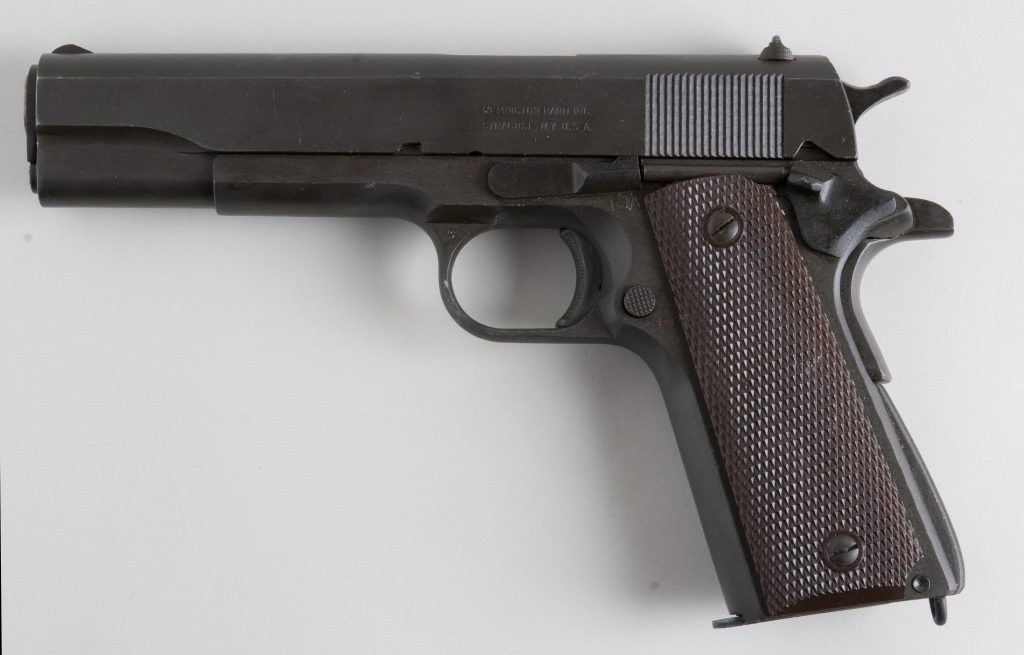
Later A1 revisions refined the grip, trigger reach, sights, and mainspring housing without changing the core mechanism that soldiers already trusted. That long service life was extraordinary. The platform remained a U.S. military standard until 1985, and even after formal replacement, modified 1911 variants kept showing up in specialized roles. Few sidearms have shaped American expectations of reliability and fight-stopping performance more deeply.
2. Beretta M9
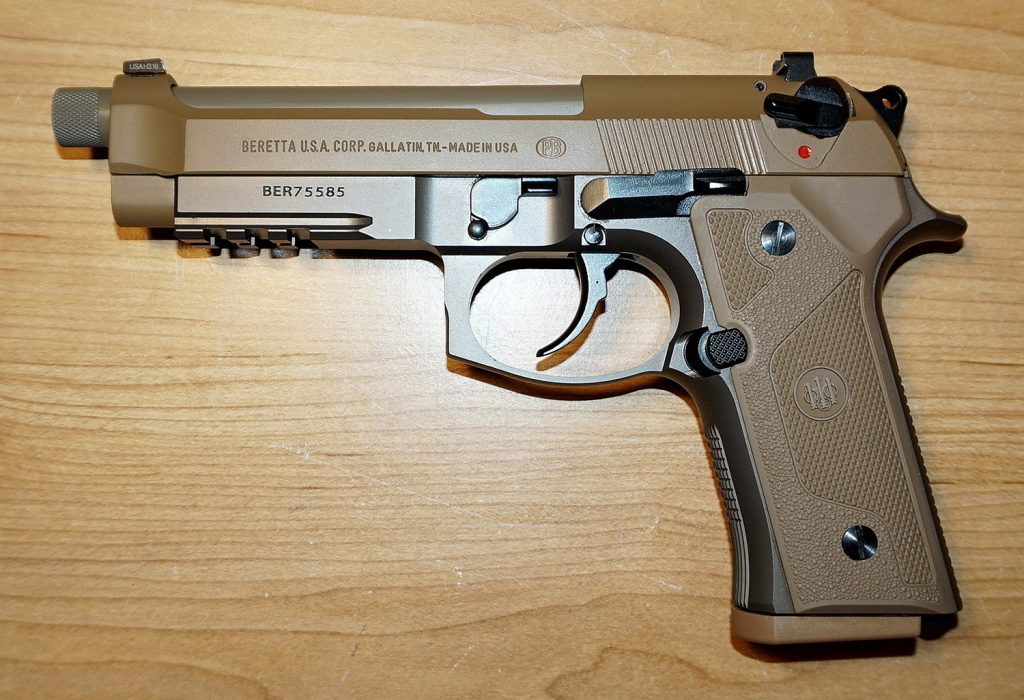
The Beretta M9 represented a very different kind of milestone. Where the 1911 symbolized raw staying power, the M9 reflected standardization, NATO alignment, and the Army’s move toward a higher-capacity 9mm pistol for a broader force. Its selection was not accidental. In final XM9 testing, the Beretta and SIG entries both passed, but the Beretta posted 1,750 MRBF in dry conditions and won on the total package. The pistol offered a 15-round magazine, ambidextrous safety-decocker, and a controllable recoil profile that helped less experienced shooters qualify more easily than older large-caliber handguns.
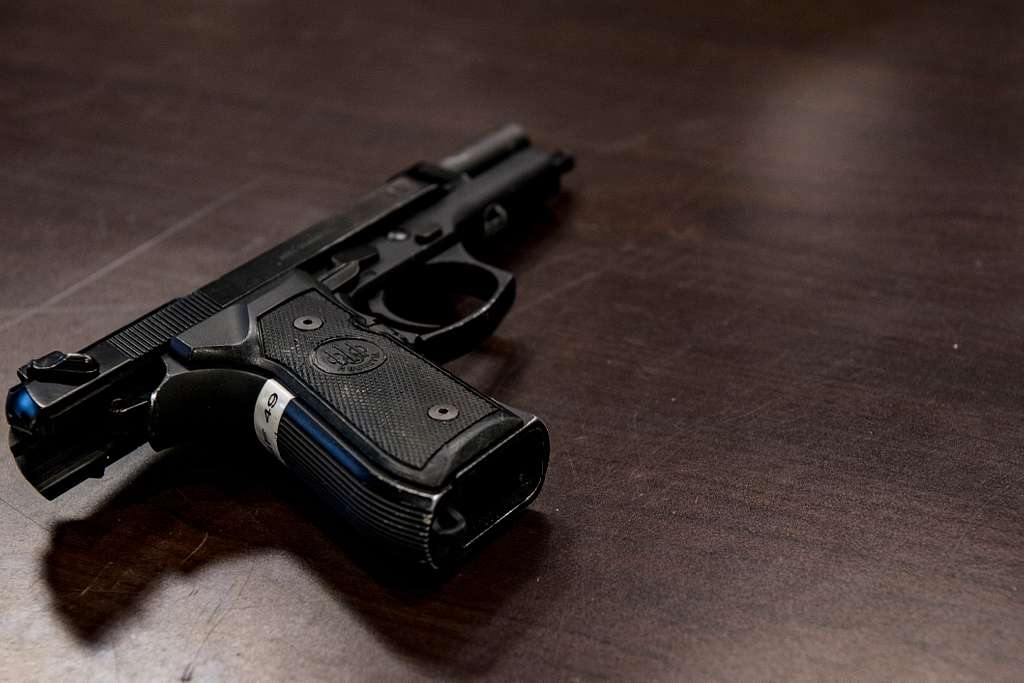
The M9’s mixed reputation came from the environment around it as much as the pistol itself. Early slide failures were traced to overpressure ammunition rather than a simple design flaw, and later combat-era complaints often centered on worn parts, poor magazines, and inconsistent maintenance. That distinction mattered. As one small-arms consultant put it, “The biggest problem with any of the weapons we have in this country are logistics and maintenance.” The M9A1 showed how the system kept evolving, adding a rail and improved magazines for sandy environments, but by then the Army’s definition of a service handgun had already started moving past a fixed metal-frame design.
3. SIG Sauer M11
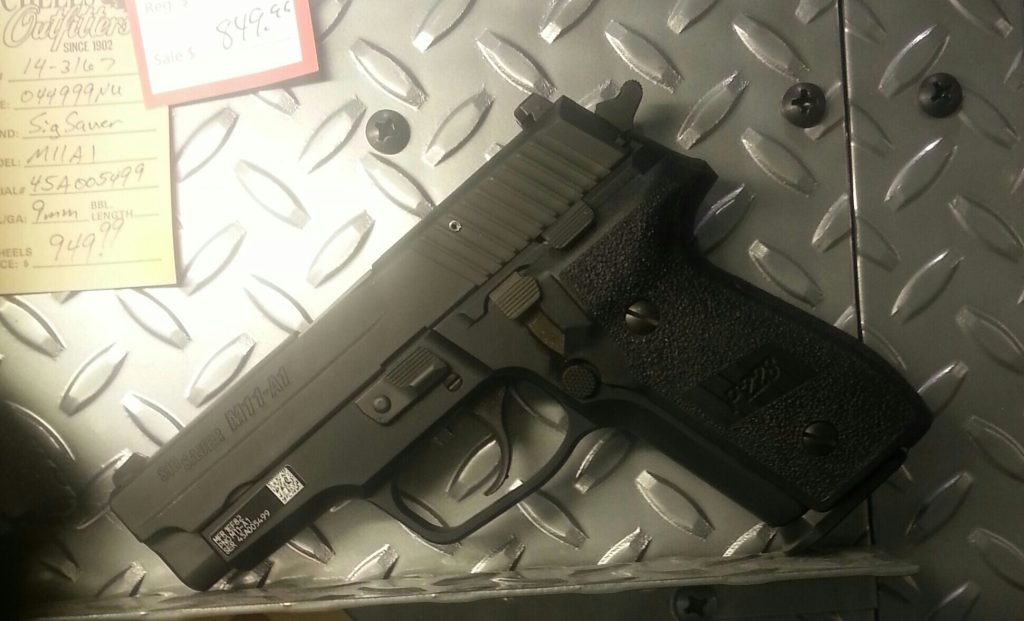
The M11 never became the Army’s universal sidearm, which is exactly why it mattered. It showed that one standard pistol could not cover every role equally well, especially for investigators, protective details, and personnel who needed a smaller package without surrendering reliability. Its quiet reputation was built on endurance. Army testing cited examples at Aberdeen that had gone 15,000 rounds with one malfunction, the kind of performance procurement officers remember even when the broader public does not.
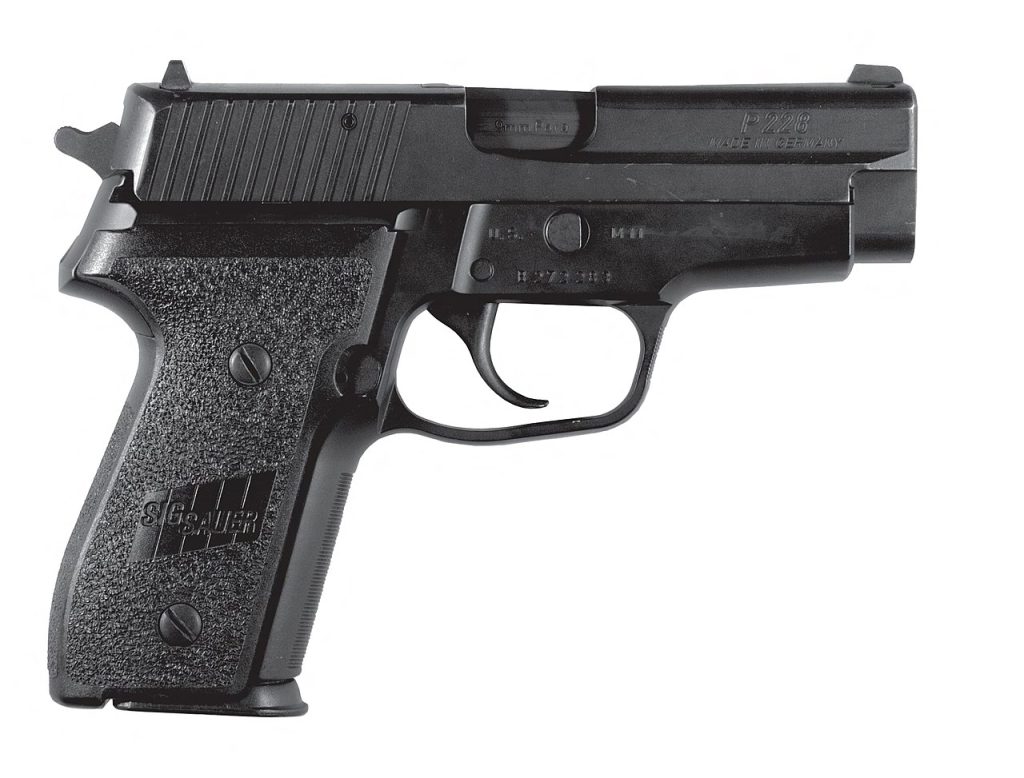
Compact service pistols often get treated as compromises; the M11 helped establish that a shorter handgun could still be a serious duty weapon rather than a reduced-capability backup. Its influence also ran forward into later thinking. The M11 normalized the idea that Army handgun needs were role-specific and that concealability, handling, and consistency could be just as important as full-size dimensions.
4. Colt Single Action Army
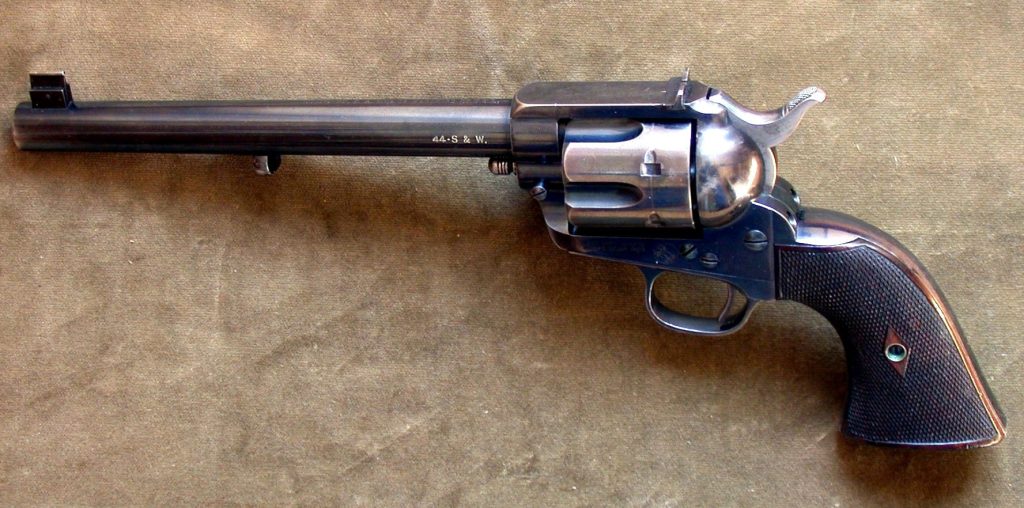
The Colt Single Action Army belongs to an earlier world, but its legend is grounded in engineering logic. Adopted in 1873, it gave the Army a rugged revolver with a powerful .45 Colt cartridge, a strong frame, and simple handling in an era when harsh field conditions and thin support systems were the rule. Its mechanical simplicity made it durable, but its afterlife made it famous. The revolver became inseparable from the frontier Army and from the broader image of American westward expansion.
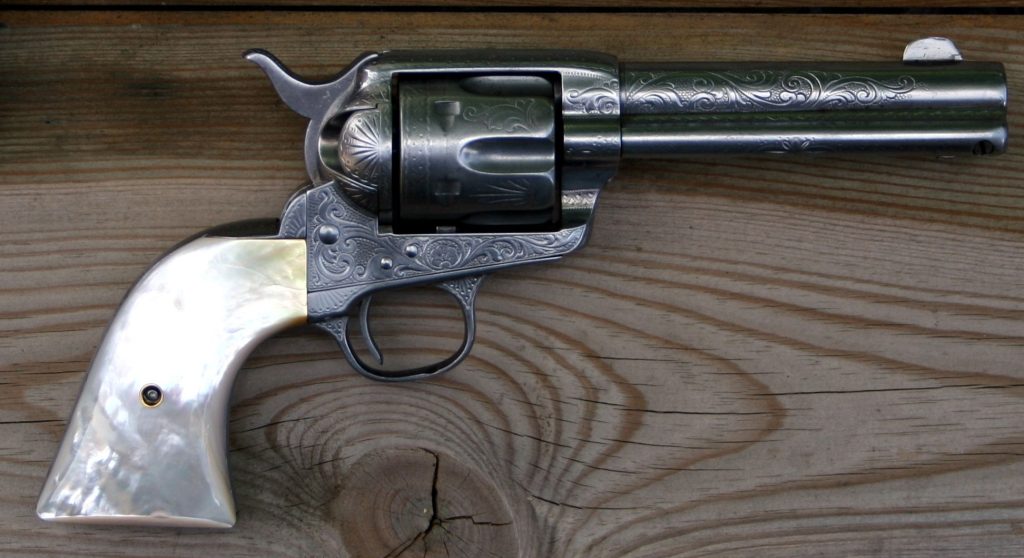
That symbolic power sometimes overshadows the practical reason it lasted: the gun was sturdy, easy to keep running, and well matched to the needs of mounted troops and isolated posts. In Army history, the Single Action Army stands as proof that a sidearm can outgrow its formal service role and become an enduring design reference. When a handgun is both useful and hard to break, it tends to survive in memory long after doctrine changes.
5. Colt and Smith & Wesson M1917 Revolvers
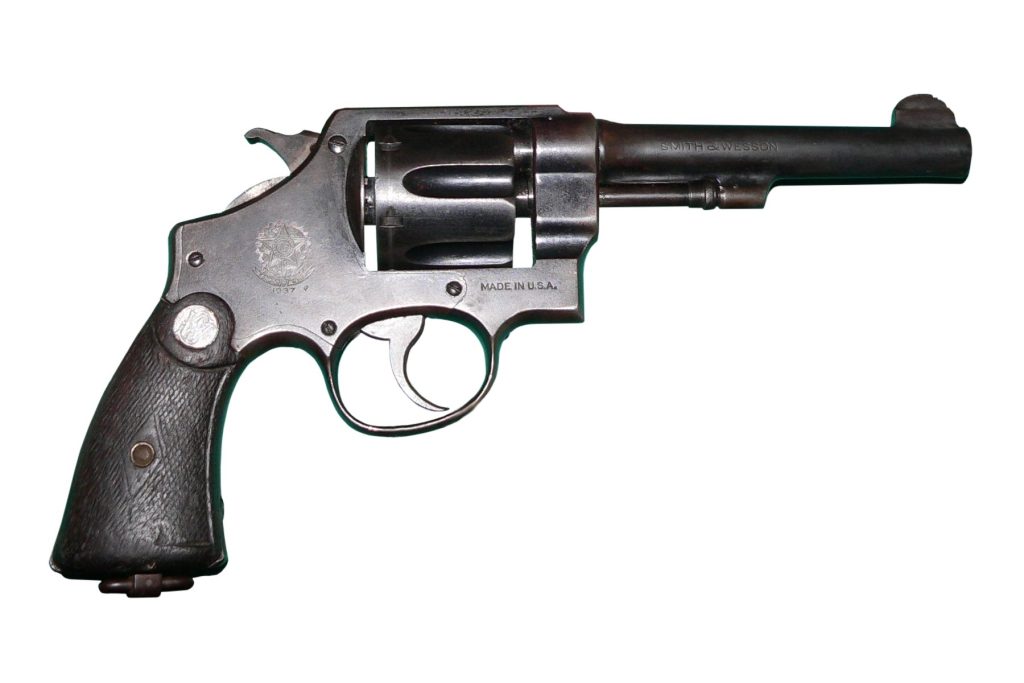
The M1917 revolvers were born from industrial pressure, not from a search for a perfect new handgun. When wartime demand threatened to outrun M1911 production, the Army turned to large-frame revolvers that could fire the same .45 ACP ammunition through half-moon clips. That detail was the breakthrough. The half-moon clip let a rimless automatic-pistol cartridge work in a revolver while preserving extraction and reloading speed. Production numbers show how urgently the stopgap was needed: more than 150,000 were produced by Colt and over 153,000 by Smith & Wesson. The M1917’s importance goes beyond quantity. It demonstrated that a temporary sidearm can become a lasting lesson in logistics and compatibility.
By keeping ammunition common with the M1911, the Army reduced training and supply friction at exactly the moment when wartime expansion made both problems harder. These five pistols did not become legends for the same reason. One set a reliability standard, another embodied NATO-era standardization, one proved compact duty pistols could be trusted, and two showed how durability and manufacturing flexibility can shape military doctrine as much as ballistics. The larger pattern is hard to miss. Army sidearms become memorable when they answer the real problem of their era: stopping power, ammunition commonality, ease of training, maintenance burden, or adaptability to a wider range of troops. That is what turns a backup weapon into a landmark design.


