The AR-15 may be one of the most recognizable rifles in America, but recognition has never guaranteed understanding. Few firearms attract so much confident misinformation about what they are, how they work, and where they actually fit in civilian use.
For owners, hunters, range shooters, and anyone trying to discuss the platform without getting lost in bad terminology, the details matter. The rifle’s design is straightforward in some areas and highly modular in others, which is exactly why so many myths keep surviving long after the facts became easy to verify.

1. “AR” means assault rifle
This is still the most repeated error. In the platform’s original naming history, “AR” stood for ArmaLite Rifle, referring to the company behind the design, not to “assault rifle” or “automatic rifle.”
The confusion persists because the rifle resembles military-pattern carbines and because public debate often uses technical and nontechnical terms interchangeably. But the name itself came from the manufacturer’s designation system. That distinction is small on paper and huge in conversation, because once the name is misunderstood, every later claim about the rifle tends to drift off course too.
2. A civilian AR-15 is basically the same as a machine gun
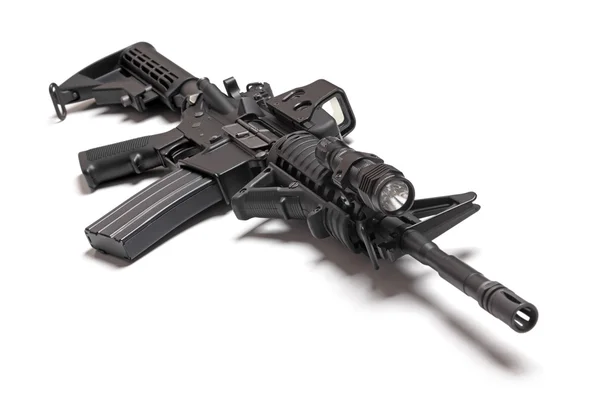
A standard civilian AR-15 fires one round per trigger pull. That is the defining point. Military rifles such as the M16 and M4 family are built around select-fire capability, while the civilian AR-15 is not. The difference is not cosmetic, and it is not a matter of simply flipping a switch. AR-15-style civilian rifles were produced without the select-fire function, and several internal components differ for that reason.

Reference material on the platform notes that civilian variants lack the fully automatic function, even though they share the broader layout and appearance of the military family. Treating those two categories as mechanically interchangeable creates confusion about legality, maintenance, and safe handling.

3. The platform is only useful for military or police roles
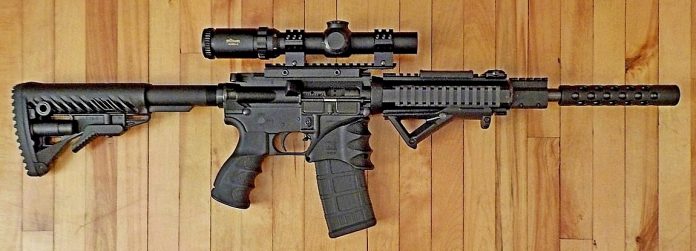
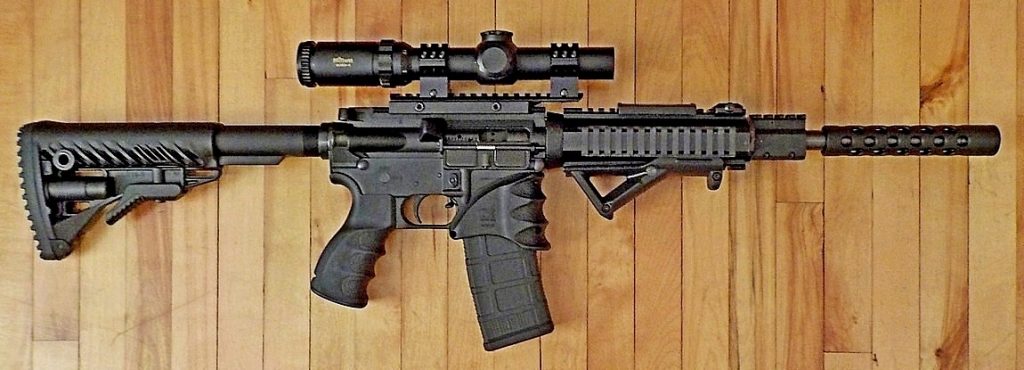
The AR-15 has been in civilian hands for decades, and its staying power comes from adaptability rather than battlefield pedigree. It shows up in target shooting, predator and varmint work, competition, and hunting setups built around different barrel lengths, optics, and chamberings.
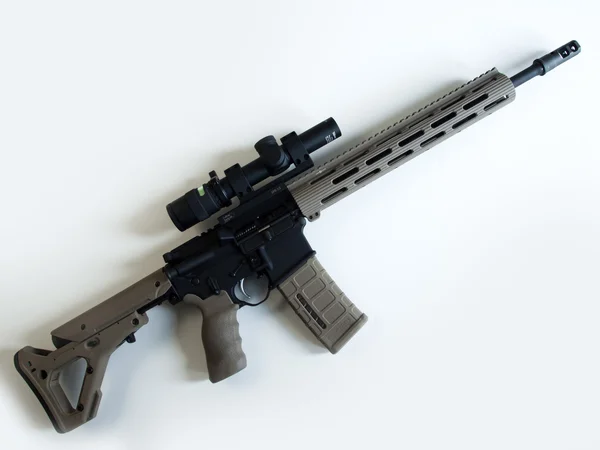
Its appeal is the same reason critics and enthusiasts both talk about it so much: modularity. Uppers, handguards, stocks, sights, slings, lights, and caliber choices can all change how the rifle handles and what it is meant to do. One instructor described that flexibility by saying, “It really is the Mr. Potato Head of the gun world.” That line sticks because it captures a real feature of the design. The same core rifle can be configured for a bench, a field, or a training range without becoming a different operating system.
4. The AR-15 is too powerful for ordinary civilian use
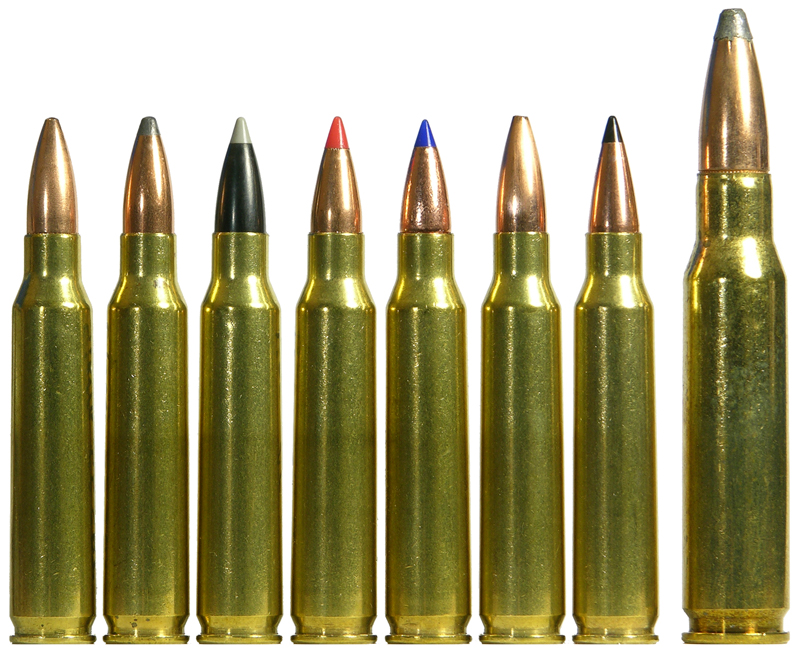
This claim usually depends on appearance more than ballistics. The standard AR-15 chambering, .223 Remington or 5.56 NATO, is an intermediate cartridge. It is not in the same power class as common full-size hunting rounds such as .308 Winchester or .30-06 Springfield. That matters because the rifle’s reputation often gets built on visual cues rather than energy figures.
The platform can be fast, accurate, and easy to control partly because recoil remains relatively light. In practical use, that controllability is one reason so many shooters adopt it. The rifle’s effectiveness does not come from brute recoil or oversized cartridge energy. It comes from shootability, magazine-fed repeatability, and a design that lets the operator fit the gun to the task.

5. AR-15s are a poor choice indoors because they always over-penetrate
This subject gets simplified more than it should. Any centerfire firearm can send a projectile through interior barriers, especially on a miss. What matters is projectile design, impact behavior, and whether the round passes through soft tissue before reaching walls. In controlled wall-and-gel testing, some 5.56 loads did not behave the way many casual assumptions predict.
Testing with simulated interior and exterior walls found that some 5.56 defensive loads stopped in the first wall after gel, while every clean miss with nearly every category still carried serious risk. That does not turn the platform into a magic solution, but it does undercut the blanket claim that an AR-15 is automatically more dangerous through walls than every handgun option. The reality is narrower and more technical: ammunition choice, shot placement, and what sits beyond the target all matter more than the rifle’s silhouette.
6. Building one is as easy as snapping together toys
The AR-15 is modular, but modular does not mean foolproof. Parts compatibility, torque values, gas-system alignment, headspace, and correct assembly all matter if the rifle is expected to run safely and consistently.
That is why the “adult LEGO” line, while catchy, can mislead inexperienced owners. Swapping furniture or attaching optics is one thing. Building a functioning upper or lower from parts is another. A badly assembled rifle can produce stoppages, poor reliability, accelerated wear, or unsafe conditions. The platform rewards careful work, proper tools, and a working understanding of how the system cycles.

7. AR-15 ownership is either banned everywhere or legal everywhere
Neither claim survives a map. Federal law does not impose a blanket national ban on AR-15 ownership, but state and local rules vary sharply on features, magazine capacity, registration, and configuration. That patchwork is where owners get into trouble. Some jurisdictions focus on specific features such as adjustable stocks, flash suppressors, threaded barrels, or pistol grips. Others regulate magazine size or define compliant models differently from neighboring states. Reference material on the platform notes that some compliant rifles limit detachable magazine use or alter furniture to meet local restrictions.

A rifle that is ordinary in one state can become a legal problem across a border. The AR-15 remains a rifle that many people talk about in broad strokes and too few describe with precision. Most of the confusion comes from collapsing separate questions into one: name, function, cartridge power, legality, and practical use all get blurred together. Once those categories are separated, the platform looks much less mysterious. It is still a technically specific machine, and like any machine, it makes more sense when discussed by its actual mechanics rather than by myth.


