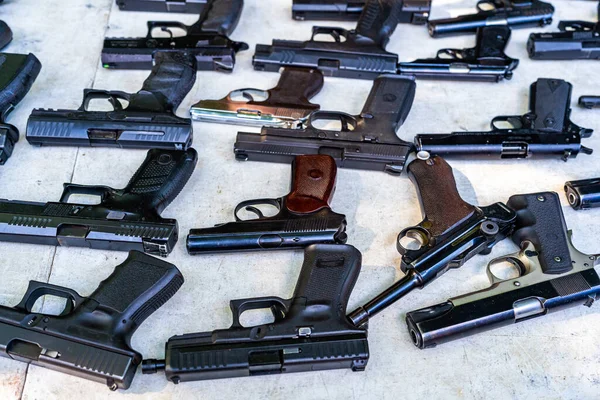
Army sidearms rarely win attention the way rifles do, but they leave a long trail through doctrine, logistics, training, and maintenance. The handguns that mattered most were not always the newest or the most glamorous. They were the ones that forced the Army to rethink caliber, capacity, field support, or what a standard-issue pistol was supposed to do.
Across more than a century, a handful of Army-issued sidearms became reference points. Some pushed the service from revolvers to self-loaders. Others proved that ammunition commonality, compact formats, or accessory compatibility could reshape the entire sidearm program.
1. Colt M1911 and M1911A1
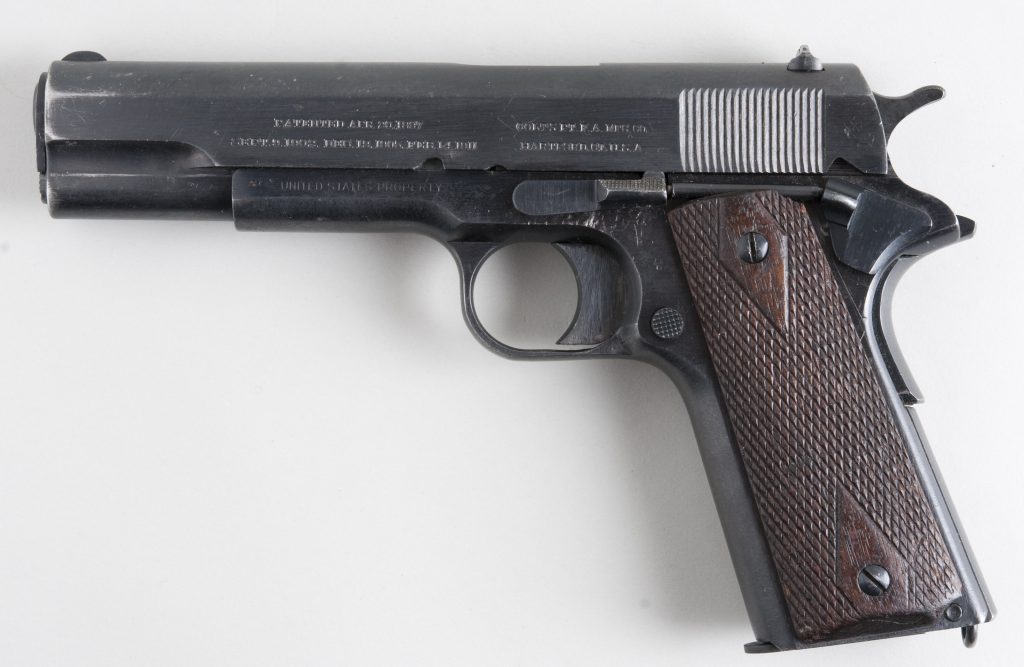
The M1911 changed far more than the Army’s holsters. It marked the service-wide move from revolvers to a semi-automatic pistol platform that combined a locked-breech system, single-action trigger, detachable magazine, and a .45 ACP cartridge selected after hard lessons from earlier service handguns. During the Army’s pre-adoption endurance testing, 6,000 rounds fired in two days with no failures became part of the pistol’s lasting reputation.
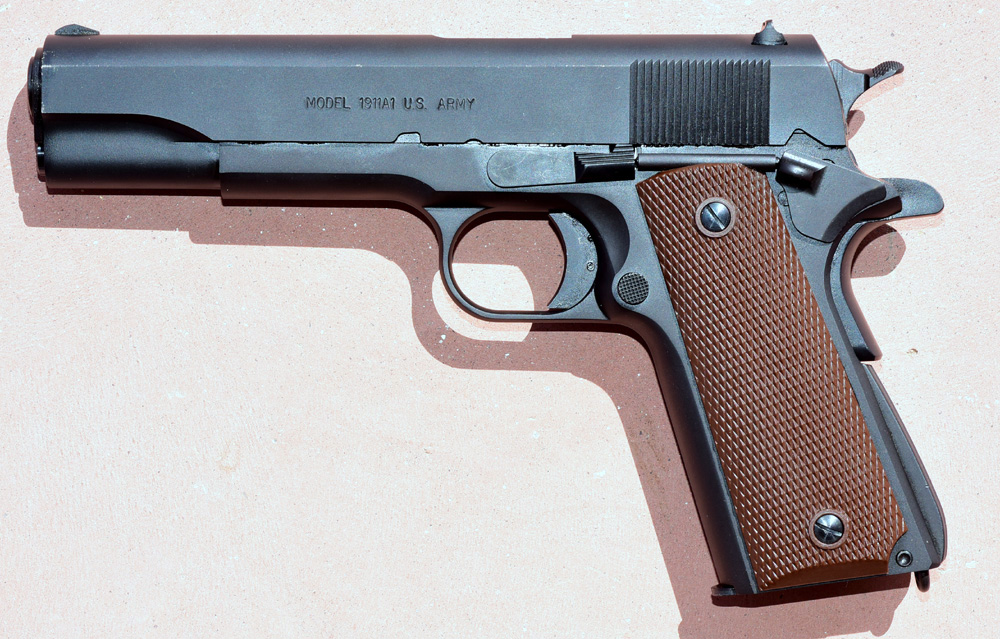
Its influence endured because the design was practical at institutional scale. The pistol was durable, straightforward to maintain, and adaptable enough to remain useful through multiple wars and later revisions. The M1911A1 updates in the 1920s showed the Army could refine ergonomics without abandoning the underlying system. Even after formal replacement, the 1911 pattern remained a benchmark for trigger quality, handling, and service-pistol durability, while select military units continued using variants long after the standard-issue era ended.
2. Beretta M9
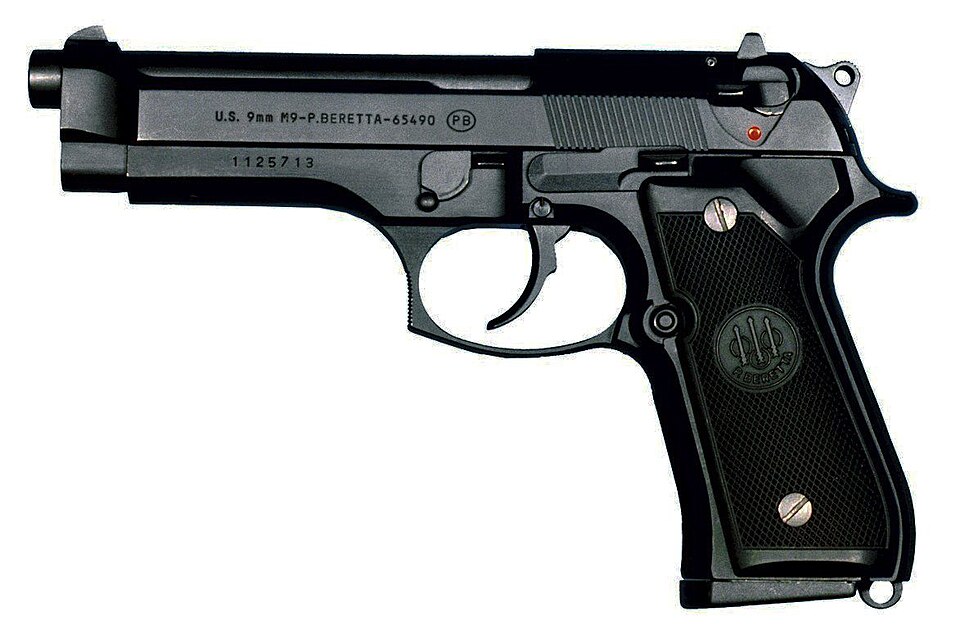
The M9 represents the moment Army handgun procurement became a modern standardization project. Adopted in 1985, the pistol reflected a broader Department of Defense push to unify sidearms and align ammunition with NATO’s 9×19mm standard. That shift carried major consequences: higher magazine capacity, a double-action/single-action operating system, and a new expectation that service pistols had to work as part of a larger logistical ecosystem, not just as stand-alone weapons.
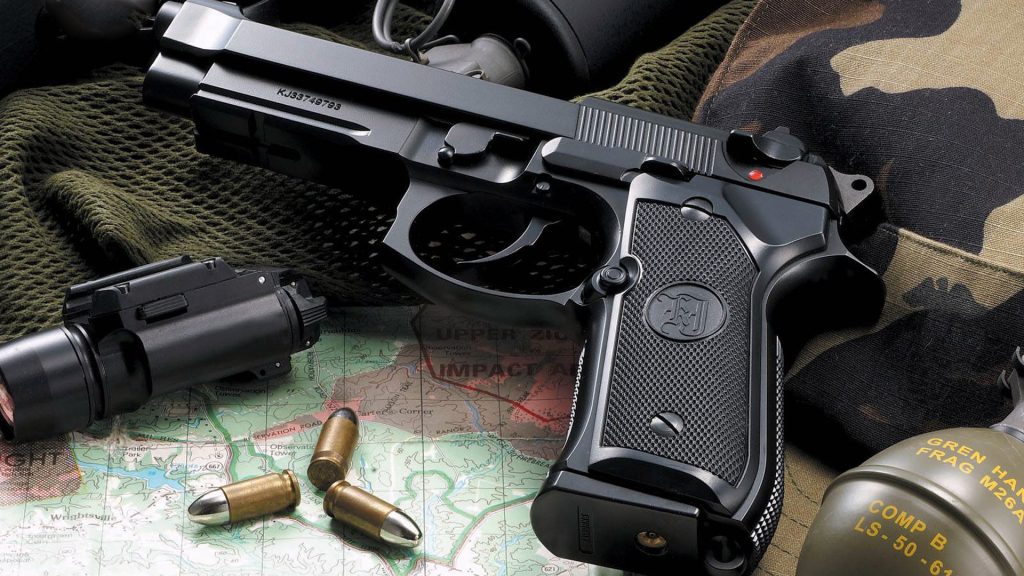
The Beretta platform also helped define what “reliability” meant in military use. Trial results highlighted performance, including a mean rounds before failure of 35,000 rounds, but the pistol’s long service life showed that maintenance intervals, magazine quality, and parts replacement could shape field reputation as much as design. Later updates made the lesson even clearer. The M9A1 added a one-slot Picatinny rail in 2006, showing that weapon lights and accessory mounting had become part of the sidearm requirement, not an optional extra.
3. SIG Sauer M11
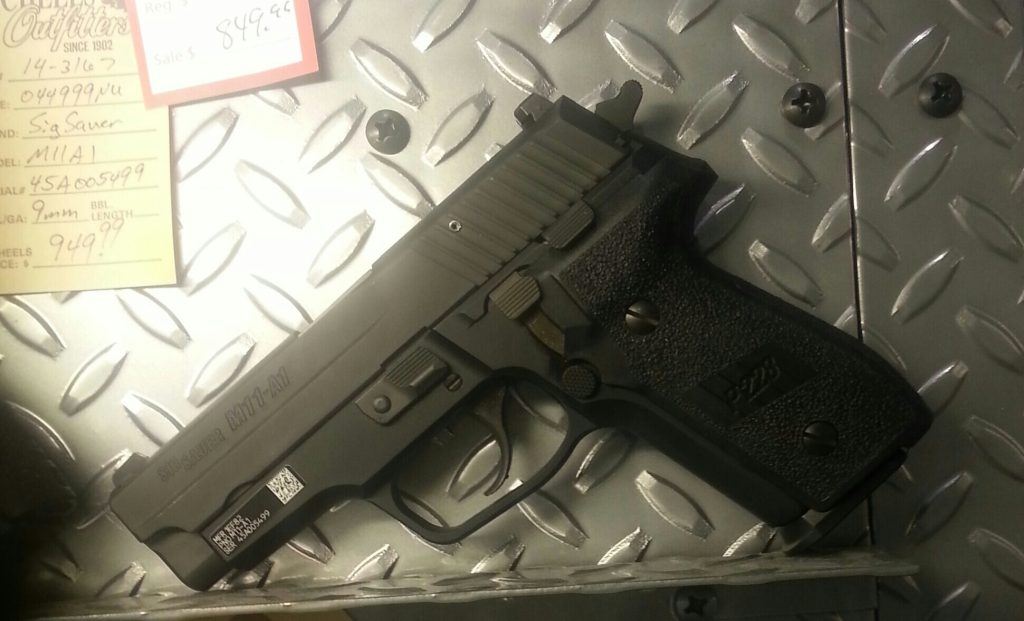
The M11 proved that standardization did not have to mean one size fits all. Based on the SIG P228, this compact 9mm gave the Army a smaller sidearm for investigative, protective, and other specialized roles while preserving cartridge commonality with the larger M9.
That mattered because it normalized parallel handgun procurement without reopening the old problem of a scattered, incompatible inventory. The M11 showed the Army could support a compact pistol line for niche users while keeping training and supply manageable. Its influence was less visible than the M9’s, but strategically important: it helped establish that role-specific handguns could coexist inside a standardized service system.
4. Colt Single Action Army, Model 1873
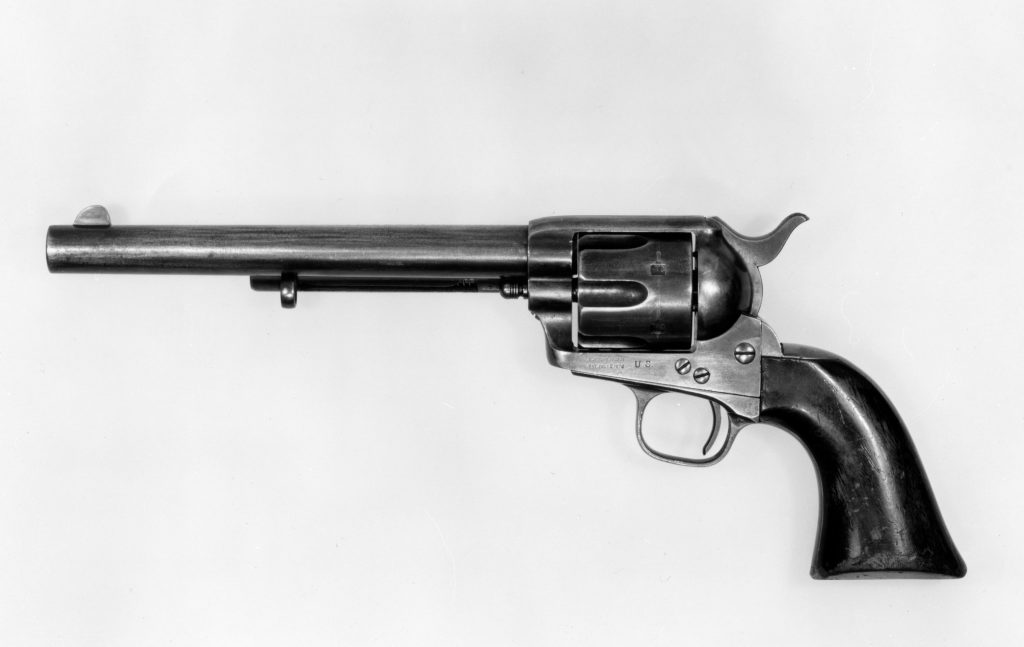
The Colt Single Action Army sits deep in American gun culture, but its Army influence was grounded in field utility. Adopted in 1873, it gave the service a robust metallic-cartridge revolver in .45 Colt at a time when the Army needed a durable standard sidearm for hard use and uneven support conditions.
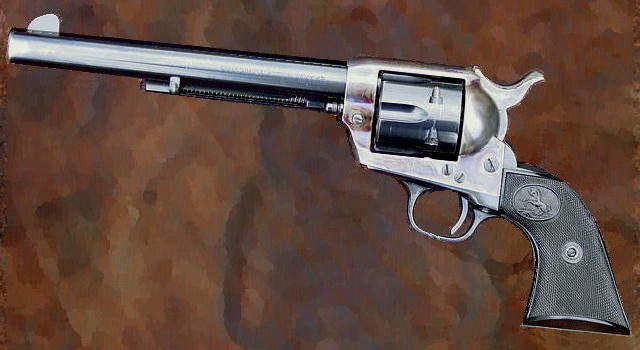
Its simple mechanism and powerful cartridge helped define the Army’s long attachment to .45-caliber handguns. Just as important, it demonstrated an old lesson that kept returning in later pistol programs: a mechanically simple sidearm that survives dirt, weather, and rough handling can outlast more advanced designs if the support system around those newer weapons is not mature enough.
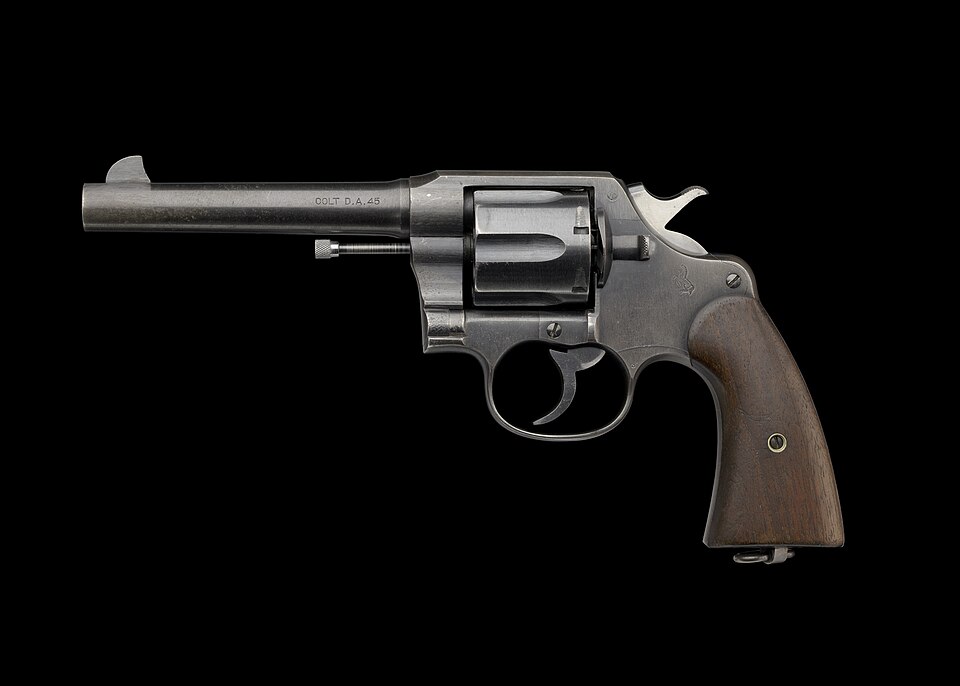
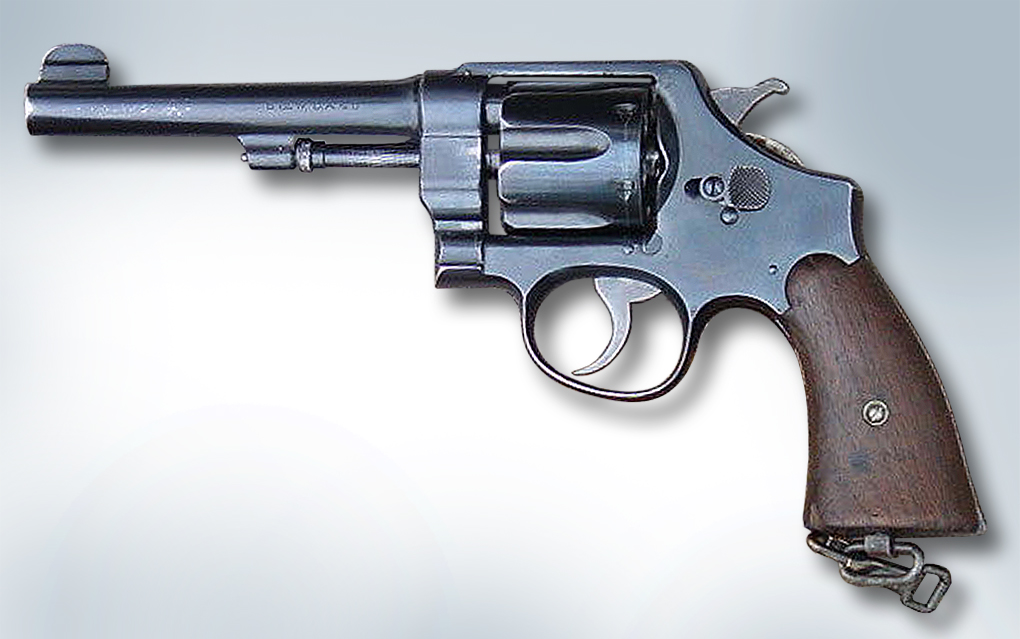
5. Colt and Smith & Wesson M1917 Revolvers
The M1917 revolvers were wartime expedients, but their influence was lasting. When M1911 production could not fully satisfy demand during World War I, the Army turned to large-frame revolvers from Colt and Smith & Wesson and adapted them to chamber .45 ACP through half-moon clips. That was a logistics solution disguised as a handgun story.
Production ran to more than 150,000 Colt revolvers and more than 153,000 Smith & Wesson revolvers, proving that the Army could preserve ammunition commonality even while switching operating systems. The M1917 established a pattern that kept resurfacing in later small-arms decisions: when industrial capacity becomes the real bottleneck, compatibility and scalable substitutes matter as much as ideal design.
Taken together, these five sidearms map the Army’s real priorities across eras. Caliber debates always drew attention, but the longer story was about survivability in service how a pistol fit training pipelines, spare-parts inventories, user skill levels, and changing mission demands. That is why these handguns mattered. Each one altered what the Army expected from a sidearm, whether the answer was raw durability, magazine capacity, compact carry, or logistical flexibility under pressure.


