Long-range precision usually falls apart in small ways. A load shifts with temperature, recoil knocks the shooter out of the optic, or a rifle and cartridge combination turns finicky about bullet choice and seating depth.
The chamberings below stand out because they keep working when conditions are less than perfect. Some are old enough to be considered settled classics, others were designed around modern bullet shapes and faster twist rates, but they all share the same trait: repeatable performance that makes distance shooting more manageable in the field, on steel, or on paper.
1. .308 Winchester
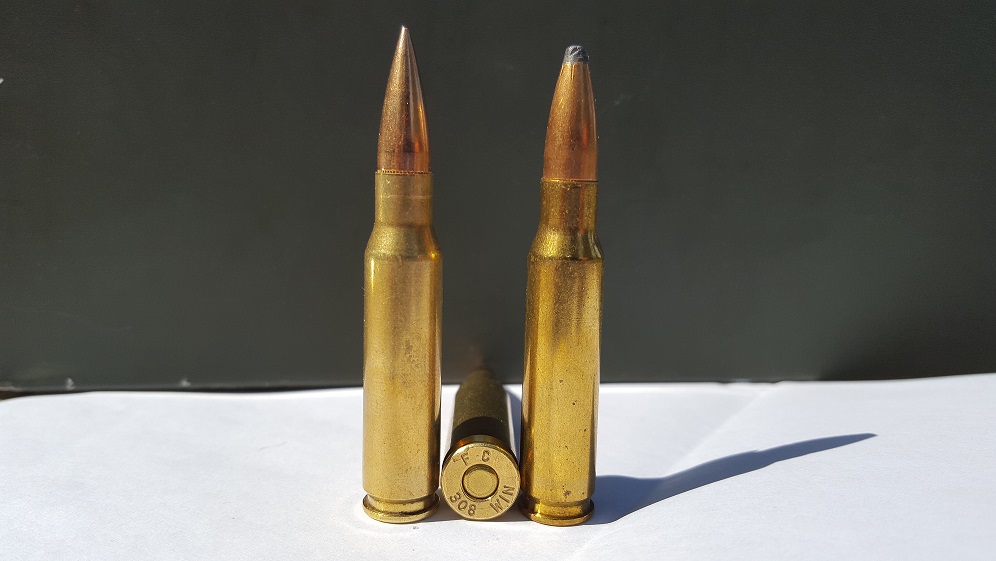
.308 Winchester remains the baseline for practical precision because it is rarely temperamental. Across bolt guns and gas guns, it has a broad record of predictable accuracy, moderate recoil, and mature load development. Match bullets in the 168- and 175-grain class still define what many shooters mean by dependable factory precision. Its strength is not glamour. It is forgiveness. With abundant brass, published data, and established rifle support, .308 lets shooters spend more time refining wind calls and position work instead of chasing a load that only behaves on perfect days.
2. 6.5 Creedmoor
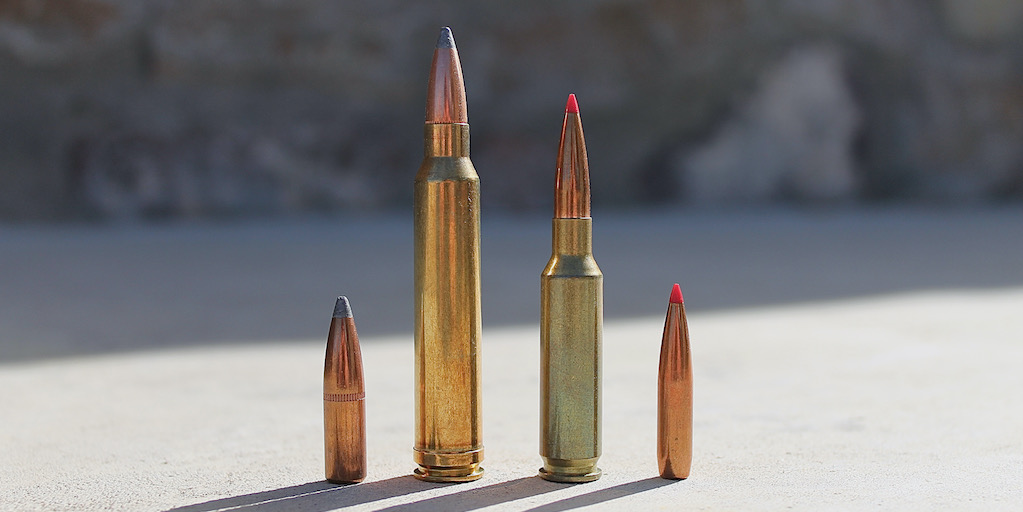
Few cartridges changed the long-range conversation as much as 6.5 Creedmoor. It helped normalize factory rifles built around long, aerodynamic bullets, efficient case design, and the faster twist barrels needed to stabilize them. Modern rifles commonly use 1:7, 1:7.5, and 1:8 twist rate barrels for exactly that reason. The practical result is familiar: mild recoil, strong wind performance, and enough consistency to make it a fixture in precision competition and long-range hunting rigs. It also carries a reputation for staying shootable through long strings, which matters when a shooter needs to see impacts and misses instead of recovering from recoil.
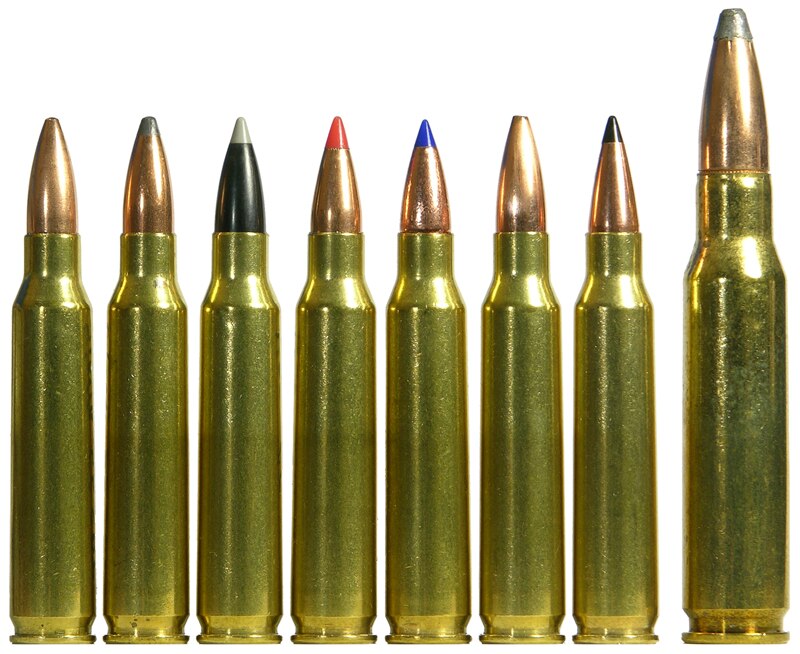
3. .223 Remington / 5.56 NATO
With the right barrel twist, .223 Remington and 5.56 NATO are far better distance trainers than many shooters first assume. A quality barrel with a 1-in-8 twist opens the door to heavier modern bullets, giving the cartridge a wider accuracy window at extended range. Low recoil is the real engineering advantage here. Shooters can watch trace, spot impacts, and correct quickly, which makes this chambering one of the best tools for building honest long-range fundamentals before stepping into larger cartridges.
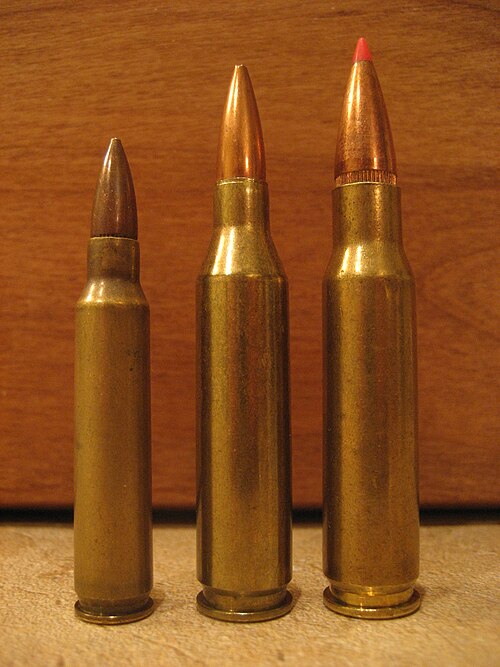
4. .243 Winchester
.243 Winchester remains one of the most useful crossover cartridges in the group. It combines light recoil with a flat enough trajectory to stay forgiving at the distances most field shooters actually use. In many bolt rifles, it groups well without the extra fuss that often comes with hotter, more overbore rounds. That simplicity still matters. A cartridge that shoots tight without demanding constant tuning tends to get practiced more, and practice does more for hit probability than raw speed alone.
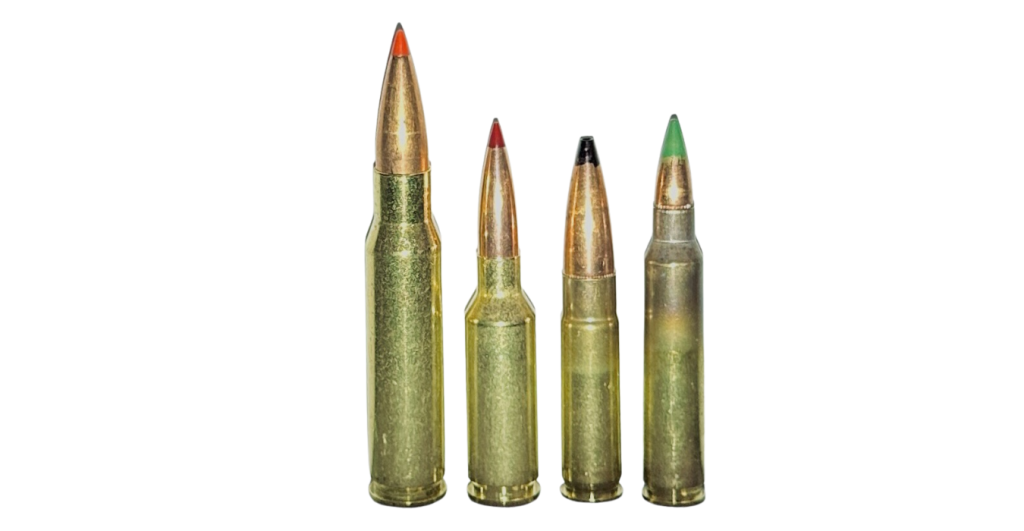
5. 6mm ARC
6mm ARC was engineered to stretch the AR-15 farther without forcing a move to a larger receiver. It pairs the platform with sleek 6mm bullets that hold velocity and stability better than traditional small-bore AR rounds. Hornady’s published performance claims have included 28.5 inches less drop at 500 yards and about 30 percent less wind drift than .223 Remington. That matters because it changes what the rifle can do without changing what the shooter has to carry. In practical use, 6mm ARC turns the AR-15 into a more credible long-range tool while keeping recoil mild enough for good shot observation.
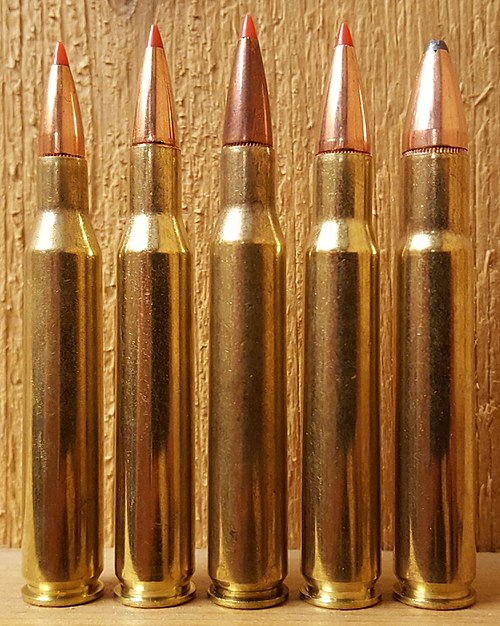
6. .270 Winchester
.270 Winchester proves that a cartridge does not need modern branding to stay relevant. Its reputation was built on flat trajectories, manageable recoil, and rifles that often shoot well with little drama. That history gives it one of the most mature performance windows in the group. For shooters who value a cartridge with broad support and decades of proven field use, .270 still offers a very clear advantage: it is predictable, and predictability is one of the foundations of precision.
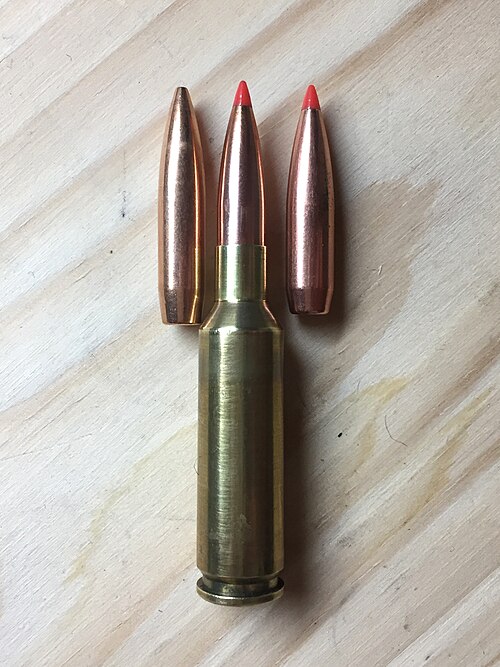
7. 6.5 PRC
6.5 PRC sits in the space between easygoing mid-capacity rounds and harder-kicking magnums. It offers a real velocity gain over Creedmoor-class cartridges, and its specifications were formalized when SAAMI accepted the 6.5 PRC with a 65,000 psi maximum average pressure. Factory intent has centered on long 6.5mm bullets, often around 140 to 147 grains. It earns its place because it cuts drop and wind hold without going all the way to full-size .30-caliber magnum recoil. The tradeoff is real, though: more speed brings more recoil, more barrel wear, and more attention to magazine length and rifle setup.
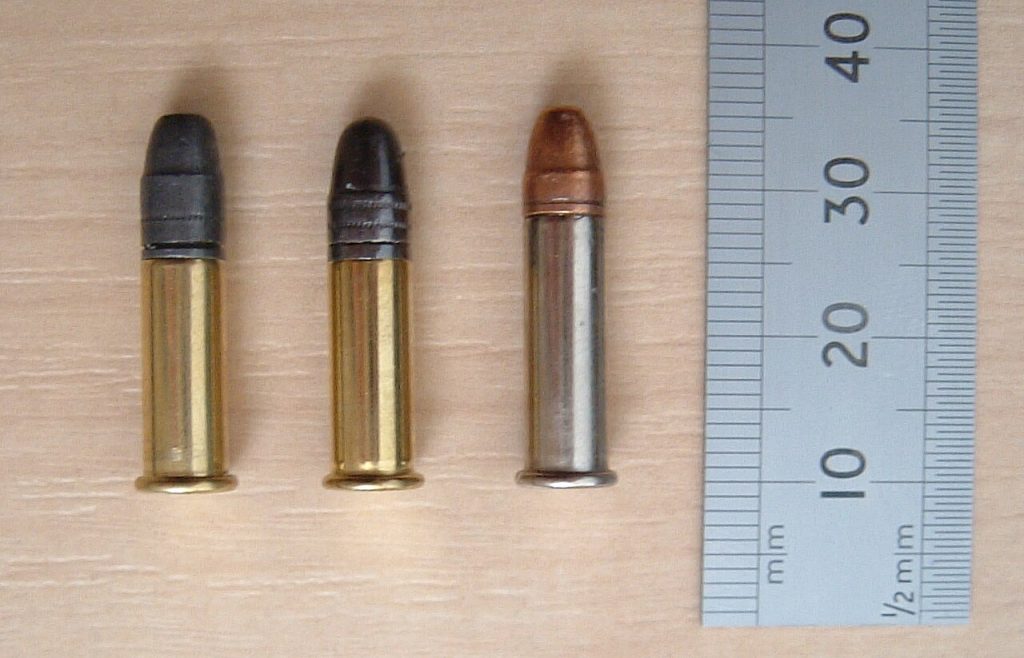
8. Match-Grade .22 LR
Match .22 LR is not a long-range cartridge in the centerfire sense, but it may be the most efficient precision trainer on the list. Serious rimfire shooters often favor subsonic match loads to avoid the instability that can appear as bullets move through the transonic zone. That gives rimfire a very specific value. At short distances it rewards clean trigger control and follow-through; at extended rimfire ranges it exaggerates wind effects enough to teach fast lessons without centerfire recoil or component burn.
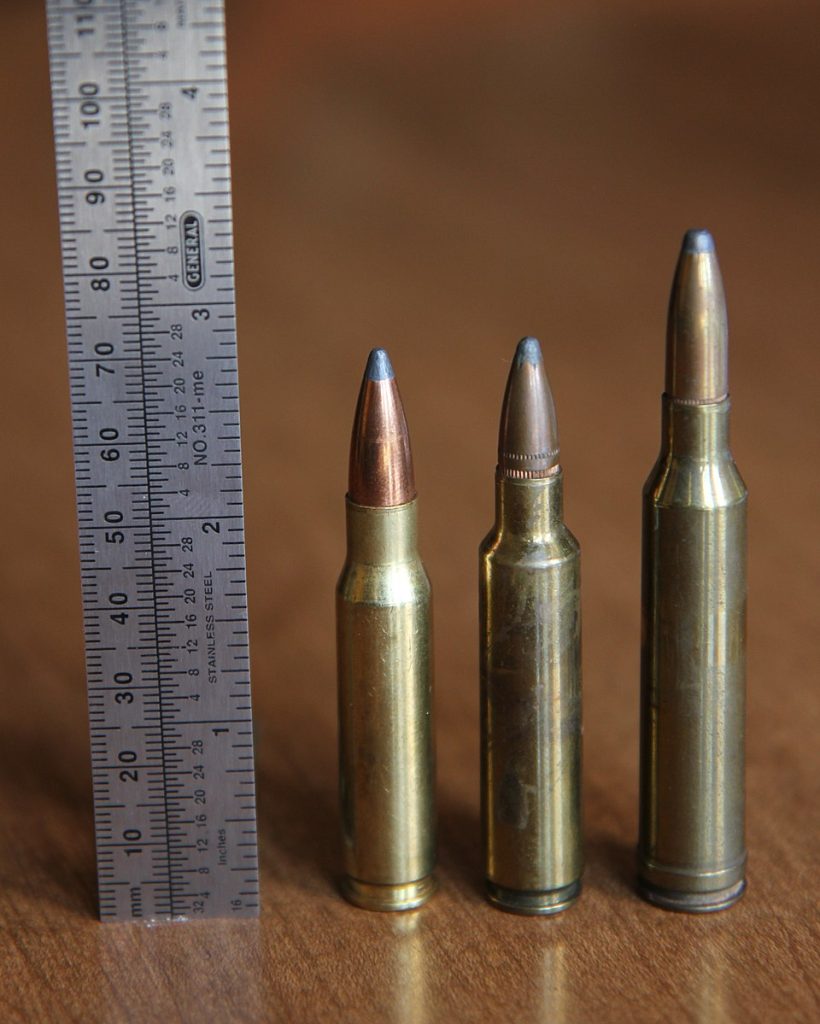
9. 7mm Remington Magnum
7mm Remington Magnum remains a practical long-range hunting cartridge because modern high-BC bullets suit it exceptionally well. The broader trend toward aerodynamic projectiles has only strengthened the 7mm’s place, especially as shooters increasingly prioritize wind resistance and retained downrange velocity over simple muzzle speed. Its capability is not in doubt. The challenge is using it well. Recoil management becomes part of the accuracy equation, especially during longer strings, and that means rifle fit, shooter position, and follow-through matter as much as the cartridge’s flat trajectory.
Across all nine, the common thread is not novelty. It is repeatability under pressure, in changing weather, and across common rifle platforms. That is why older rounds like .308 Winchester and .270 Winchester still hold their ground, and why newer designs like 6mm ARC, 6.5 Creedmoor, and 6.5 PRC gained traction so quickly. Long-range performance is rarely about finding a magic chambering. It is about choosing a cartridge that lets the rifle and shooter stay consistent when the shot gets demanding.


