An Army sidearm rarely defines a campaign on its own. It does something more revealing: it shows what the service values when a pistol has to be carried daily, trained on repeatedly, maintained in bulk, and trusted when the primary weapon is out of reach.
Across more than two centuries, the Army’s issued handguns have shifted from single-action revolvers to optics-ready striker-fired pistols. The thread connecting them is not romance or caliber alone. It is the constant tradeoff between power, reliability, training burden, ammunition compatibility, and the industrial reality of getting enough guns into enough holsters.
1. Colt M1911 and M1911A1
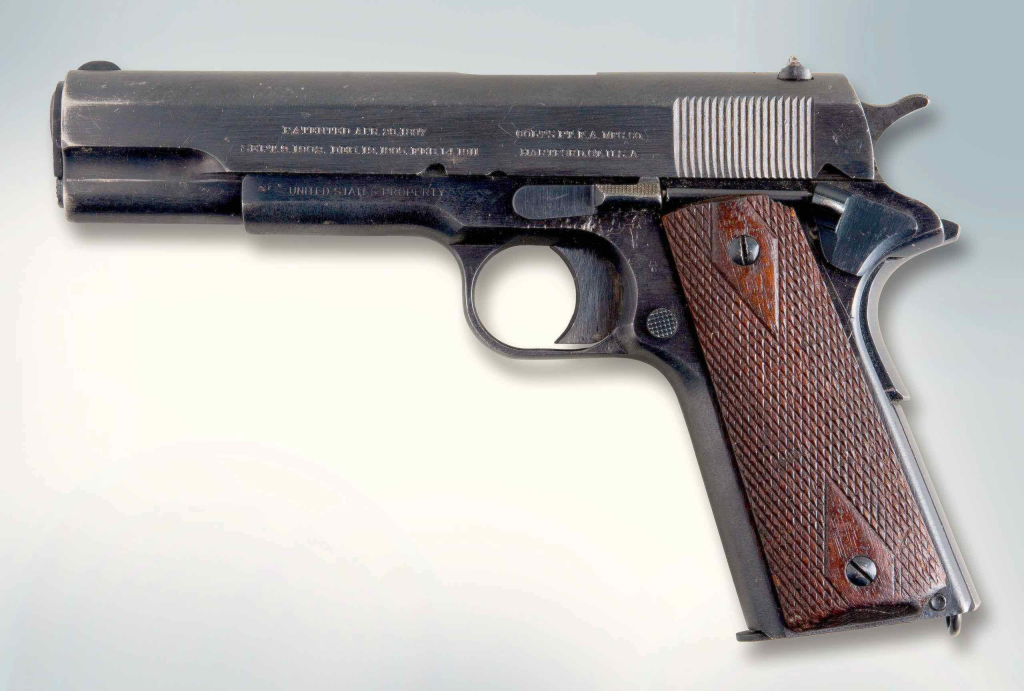
The M1911 became the benchmark because it solved an Army problem that earlier sidearms had not: a handgun had to hit harder than the .38 revolvers that had disappointed in earlier service, and it had to keep running under abuse. John Browning’s locked-breech design paired with .45 ACP gave the Army both a heavy bullet and a self-loading system that proved unusually durable for its era.
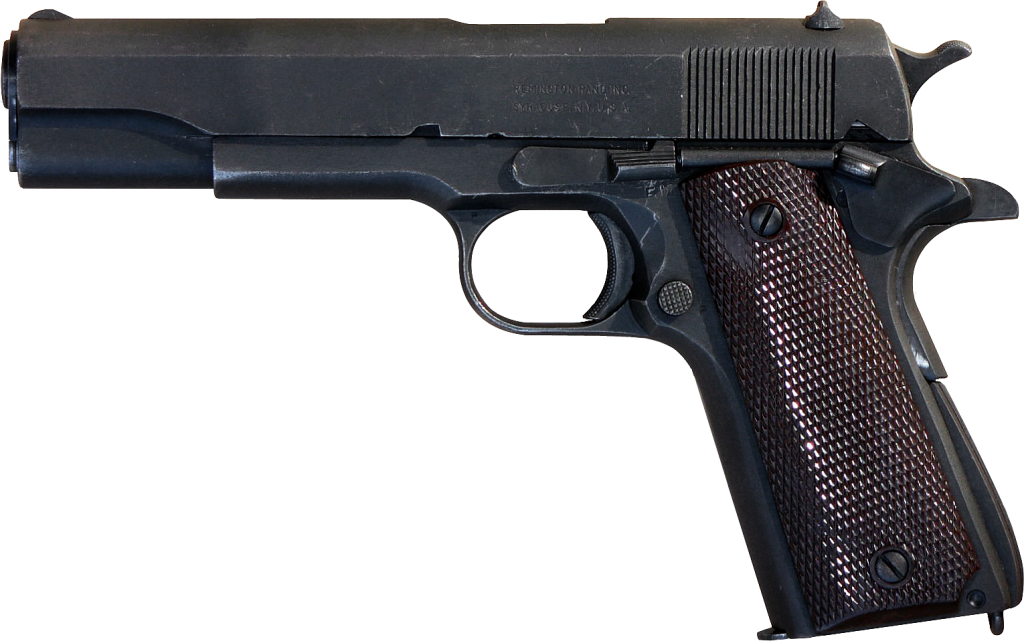
Its reputation was built in testing before it was built in legend. In the final 1911 trials, the Colt completed a 6,000-round endurance test without a malfunction, a result that separated it from competitors and helped lock in adoption. Later ergonomic changes produced the M1911A1, officially standardized in 1926, with a shorter trigger, arched mainspring housing, and frame cuts that made the pistol easier to run for a wider range of hands. The result was extraordinary staying power: the platform served as America’s principal military sidearm from 1911 to 1984.
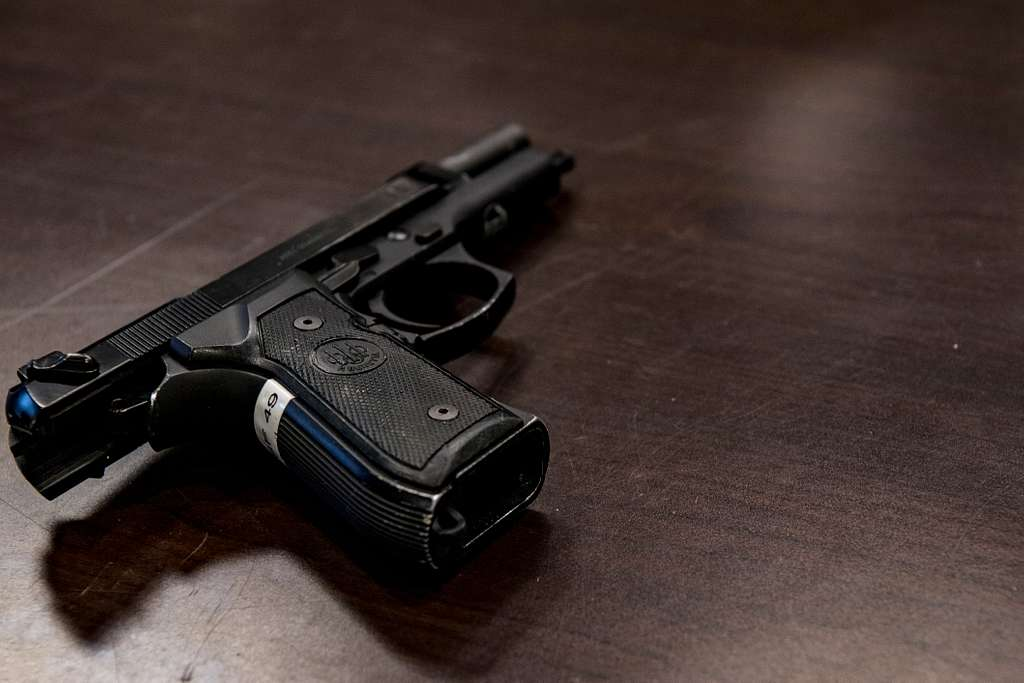
2. Beretta M9
The M9 marked a different kind of Army decision. The pistol itself mattered, but the bigger story was standardization: NATO ammunition compatibility, higher magazine capacity, and a double-action/single-action manual of arms that fit a broad joint-service requirement. In the XM9 competition, the Beretta 92F and SIG P226 both survived the technical gauntlet, and the final choice came down to the total package rather than pure shooting performance.
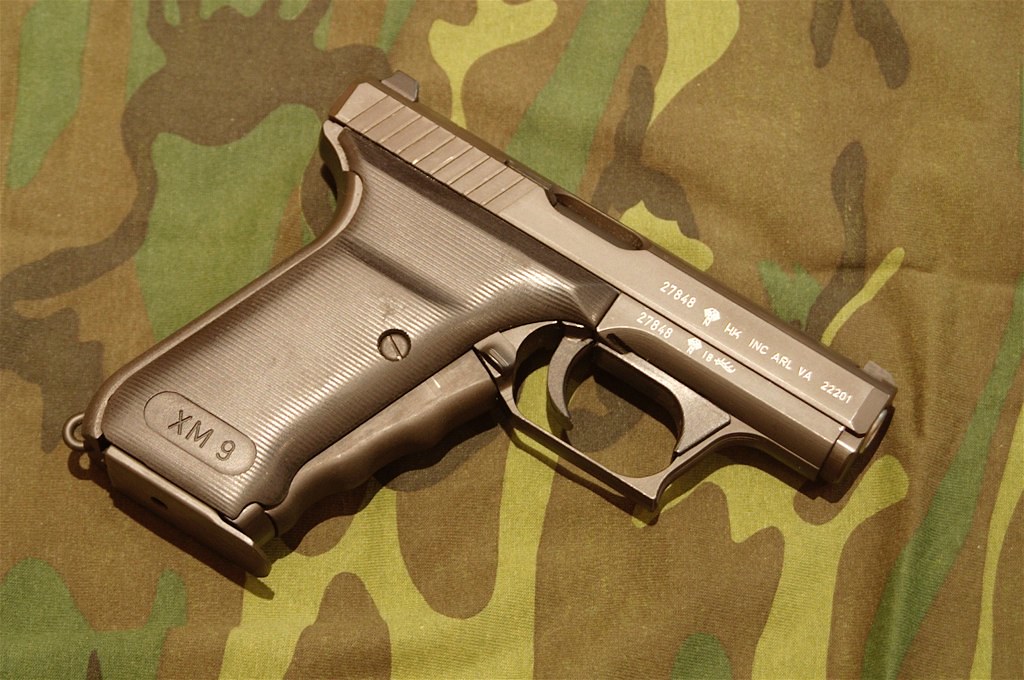
The Beretta’s test record was strong, including about 1,750 mean rounds between failure in part of the trials, and it brought a 15-round 9mm magazine into general U.S. service. Its reputation, though, was shaped by more than procurement success. Early slide failures became one of the best-known controversies in modern U.S. pistol history, but later analysis tied those failures to overpressure M882 ammunition rather than a simple design flaw. The answer became the FS-style retention modification, a small engineering change that kept a larger logistics problem from becoming a permanent design verdict.
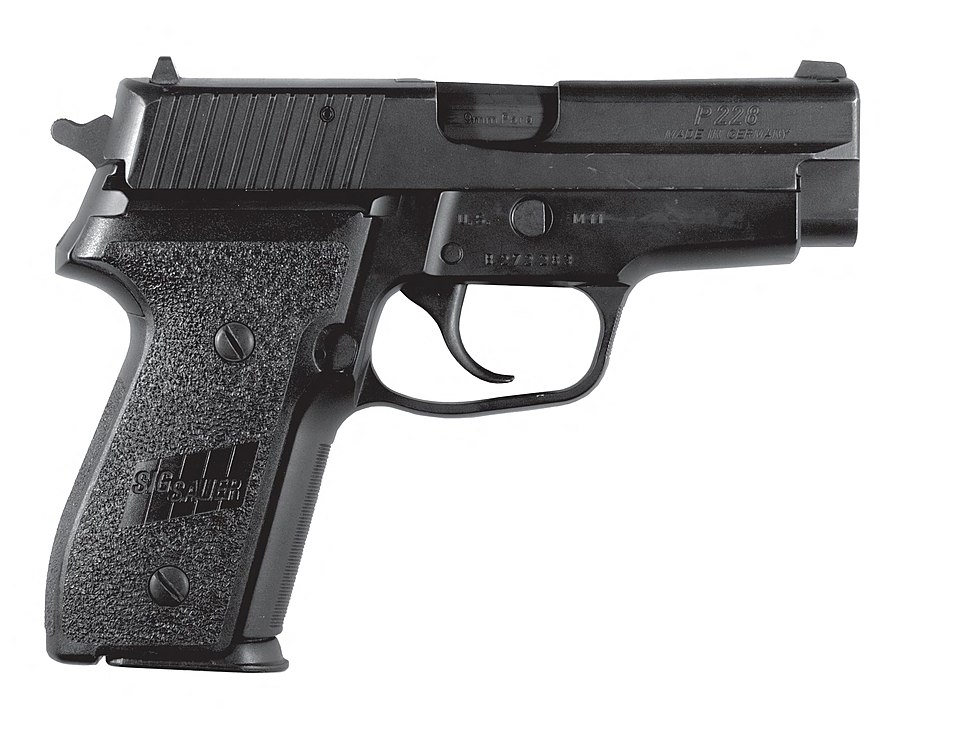
3. SIG Sauer P228 M11
Not every issued Army pistol was meant for mass issue across infantry formations. The M11, based on the compact P228, showed how procurement can favor a more specialized answer when mission requirements are tighter than general service use. For investigators, aircrew, protective details, and personnel needing a smaller sidearm, the full-size M9 was not always the best fit.
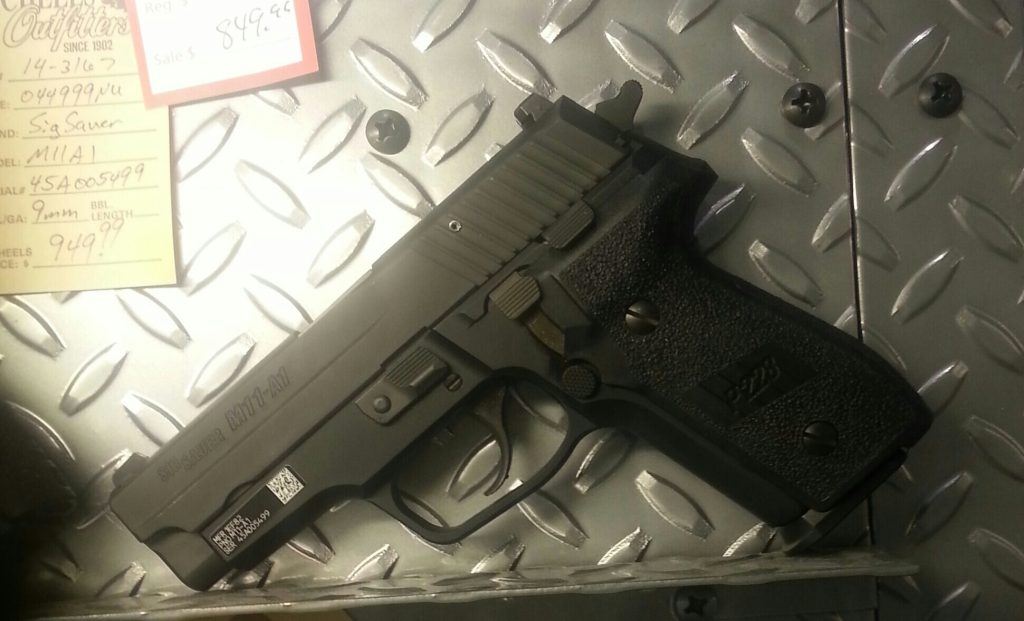
The M11 earned its place with quiet performance rather than broad notoriety. At Aberdeen Proving Ground, three pistols reportedly fired 15,000 rounds with only one malfunction, exactly the kind of data that keeps a niche sidearm alive inside a massive institution. Its significance was practical: concealability, manageable dimensions, and a familiar operating system reduced friction for users who needed a dependable pistol without carrying the Army’s larger standard sidearm.
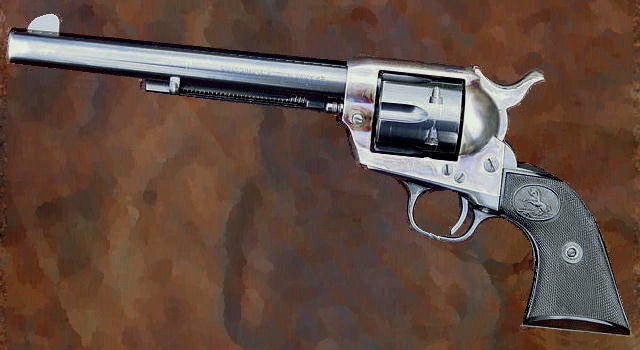
4. Colt Single Action Army
Before self-loading pistols reshaped military sidearms, the Colt Single Action Army represented a major structural step forward. The Army wanted a revolver better suited to metallic cartridges and field use than earlier open-top designs. Colt answered with a solid-frame revolver featuring a topstrap and a stronger overall layout, chambered in .45 Colt.
The Army adopted it in 1873, ordering 8,000 revolvers in the first batch, and eventually issued 37,063 between 1873 and 1891. Contemporary Army opinion was blunt. Capt. John R. Edie wrote, “I have no scruples in affirming the superiority of the Colt revolver in every respect, and in every way it is better adapted to the demands of the Army than the Smith and Wesson.” The pistol’s long afterlife in military memory came from simplicity: strong frame, straightforward maintenance, and enough durability to stay relevant even after replacement.
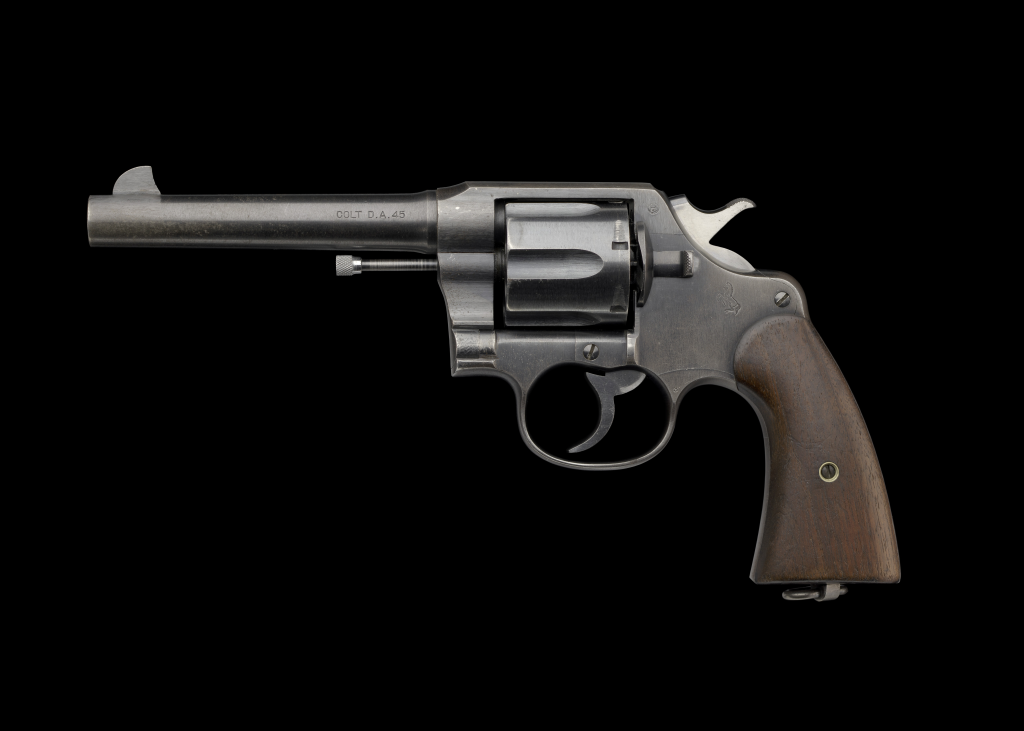
5. Colt and Smith & Wesson M1917 Revolvers
The M1917 revolvers existed because production schedules failed to match wartime demand. When the Army needed more sidearms than M1911 production could supply during World War I, existing large-frame revolvers from Colt and Smith & Wesson were adapted to fire .45 ACP. The key trick was the half-moon clip, which gave a rimless cartridge something for the extractor to engage.
This was industrial improvisation, not a stylistic detour. Bruce Canfield’s compiled figures put output at about 150,000 Colt revolvers and 153,000 Smith & Wesson revolvers. The design proved the Army would accept an inelegant but effective solution when speed and compatibility mattered more than doctrinal purity. The revolvers returned to service again during later shortages, reinforcing a lesson that appears again and again in Army sidearm history: the issued pistol that matters most is often the one that can be produced, maintained, and fed right now.
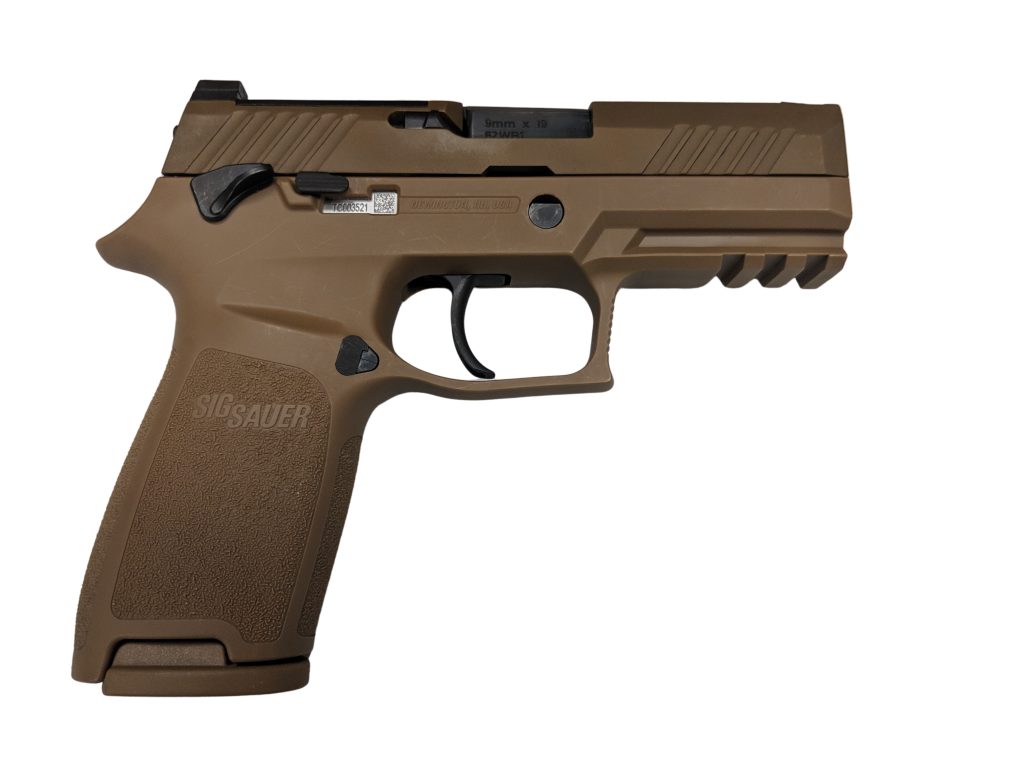
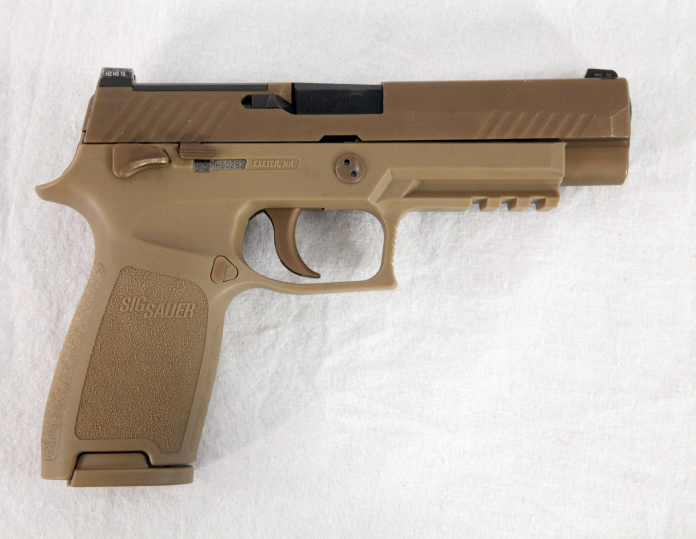
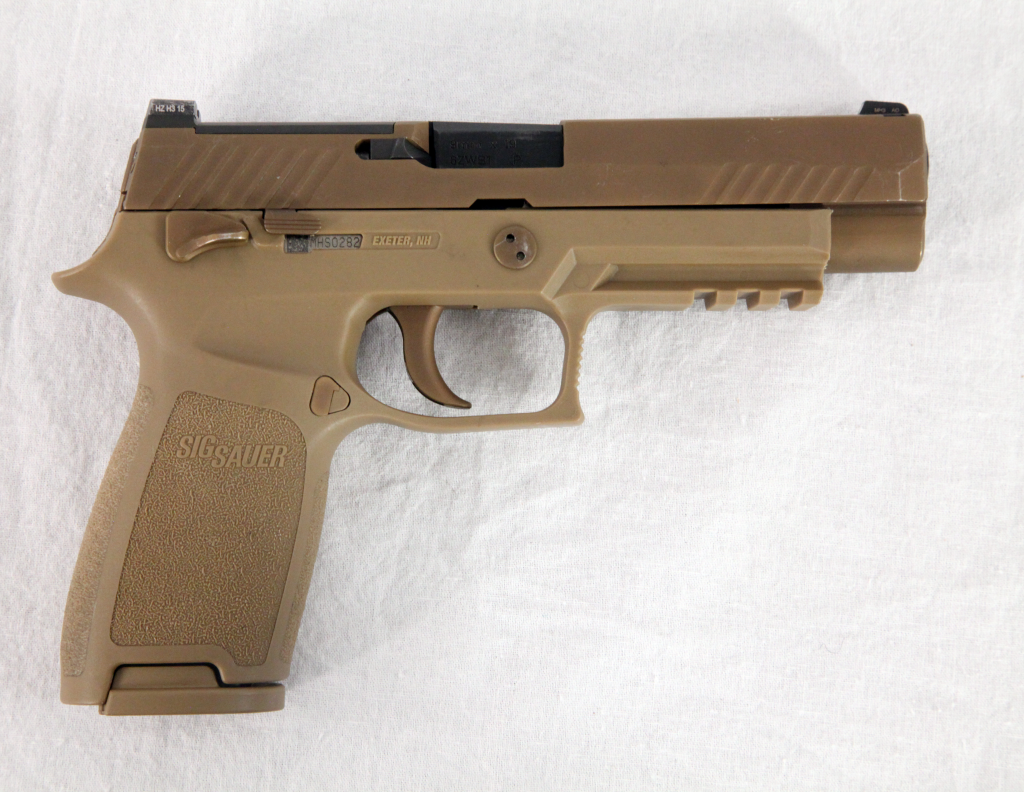
The modern Army’s move to the M17 and M18 family shows that the same pressures still apply. Today the emphasis falls on modularity, optics compatibility, corrosion resistance, and broad fielding, with plans covering up to 421,000 pistols across multiple services and Army replacement of the M9 slated through 2027. More recent updates even added a General Forces Configuration built around optics-ready slides, interchangeable grip modules, and faster reload hardware. The names change, but the standard does not. An Army sidearm earns its place when engineering, training, and logistics meet in one holsterable machine.


