A tiny cluster on paper has launched a thousand bragging rights. Rifle shooters have long treated the neat three-shot group as proof that a rifle is a “half-inch gun,” but that kind of target often says more about a moment than a machine.
The deeper issue is sample size. Across precision-shooting discussions, ballistic testing, and range practice, the same lesson keeps surfacing: small groups are easy to overread. Three shots can be useful for some tasks, but they are a weak tool for judging a rifle’s true precision.
1. Three shots reveal too little of the rifle’s normal spread
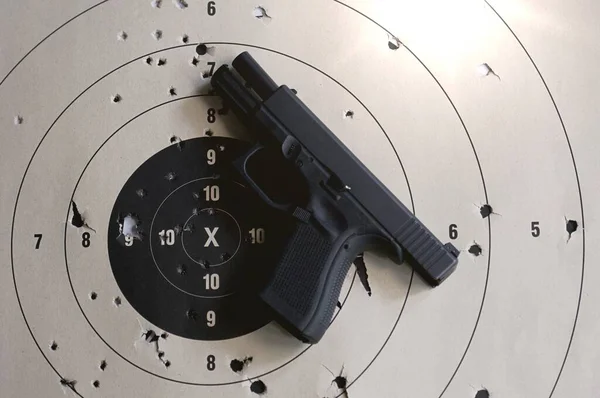
A three-shot group captures only a sliver of what a rifle and load do over time. Hornady’s large-sample testing found that the minimum sample size for fairly accurate data is generally around 30 to 35, with 50 giving a clearer picture of the pattern. That gap matters because a rifle’s dispersion only begins to show itself when enough shots accumulate to reveal the real footprint. With three rounds, the group can look impressively tight simply because the wider shots have not appeared yet. That does not prove the rifle will keep doing it.
2. Small groups hide randomness that looks like talent or tuning
Shooters often credit a tiny group to a new load, a bedding change, or better trigger control. Sometimes that is true. Often, it is just random variation. Broadmouth Canyon’s explanation of “common cause” variation gets to the heart of it: even with the same rifle, ammo, and shooter, some groups will print small and some will open up. Those swings are part of the system. A single good target can become a false signal, encouraging changes that chase noise instead of solving a real problem.
3. Extreme spread exaggerates what the target seems to prove
Most shooters judge group size by extreme spread, the distance between the two farthest holes. That is simple, but it is also a blunt measure. As Everyday Marksman argues, a wallet-stored three-shot cluster measured this way “tells you nothing” about whether the rifle will repeat that performance over many strings. Extreme spread is especially fragile with very small samples. Two or three impacts can produce a flattering number without describing the center of the group, the average distance of impacts from center, or how likely the next shot is to land outside that tidy triangle.
4. Three-shot groups make repeatability look better than it is
The strongest case against tiny sample sizes is repeatability. Hornady engineer Miles Neville said, “You’re getting taken for a loop because you believe in this small sample data, but it isn’t necessarily repeatable.” Their testing showed that five-shot tests can vary by 40% to 50% when repeated with the same ammunition. If that much variation shows up in five shots, three shots are even more vulnerable to flattering outliers. That is why a shooter can print one excellent group, return the next day, and feel as if the rifle suddenly changed. Often, the target simply stopped being lucky.
5. Precision and accuracy are not the same thing
Rifle talk often mashes two concepts together. RifleShooter explains the distinction clearly: accuracy is where the group lands relative to the point of aim, while precision is how tightly the shots cluster. A rifle can be centered and loose, or tight and offset. Three-shot groups tend to confuse the discussion because they are commonly used for both zeroing and judging rifle quality. Those are not the same job. A tiny cluster near the bullseye can make a rifle look both accurate and precise when the sample is too small to establish either with confidence.
6. Hunting rifles and target rifles do not need the same test
This is where context matters. Outdoor Life makes a useful distinction: for evaluating a rifle’s overall precision, numerous five-shot groups tell far more than a single short string. But for a hunter confirming zero, three careful shots can still be practical because the most important field shot is usually the first cold-bore round. That does not rescue the three-shot group as a precision standard. It only defines its proper role. It is a field check, not a full diagnosis.
7. Barrel heat and light hunting profiles complicate the picture
Sporter barrels heat quickly, and group size often opens as shots accumulate. That reality encourages the use of short strings, especially with hunting rifles. Outdoor Life notes that many standard hunting rifles average roughly 1.25 to 2 inches with factory ammunition when tested more rigorously across multiple five-shot groups. That larger, more honest average can look disappointing beside a cherry-picked cloverleaf. It is still more useful. It reflects what the rifle can sustain rather than what it did once before the barrel warmed or the sample stayed too small to expose variation.
8. Better statistics matter more than better storytelling
Large-sample shooting is not glamorous, but it is revealing. Hornady’s team found that a 20-shot sample represented a practical trade-off, with roughly 20% to 25% variation, while larger strings provided even more trustworthy data. That is a very different standard from the classic three-shot target pinned up at the range bench.
The lesson is straightforward. Three-shot groups are easy to shoot, easy to photograph, and easy to celebrate. They are also easy to misread. A rifle’s real precision appears only when enough rounds are fired to let randomness stop pretending to be certainty. For shooters trying to understand what their rifle actually does, the smartest move is not to worship the smallest target. It is to look for the most repeatable pattern.


