Modern service pistols often look contemporary, but many of their defining traits were settled decades ago. Magazine capacity, trigger systems, frame materials, safety arrangements, and even slide geometry all trace back to a small number of handgun patterns that proved hard to improve upon.
This is not a catalog of the “best” pistols. It is a look at the designs that still shape what manufacturers build, what institutions issue, and what shooters now treat as normal.
1. Browning Hi-Power
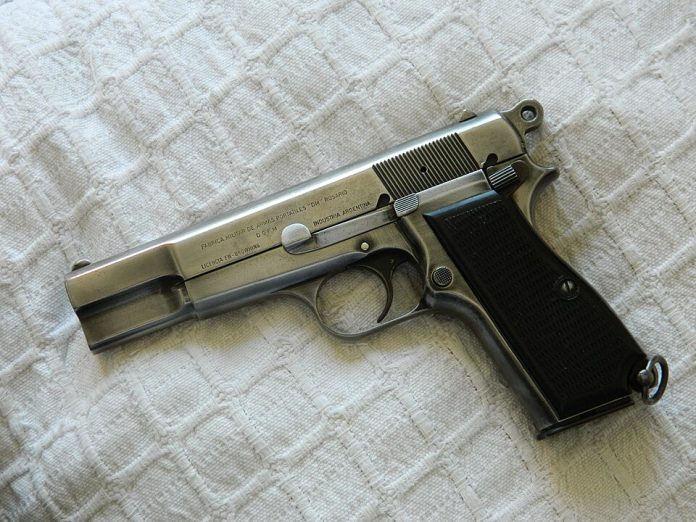
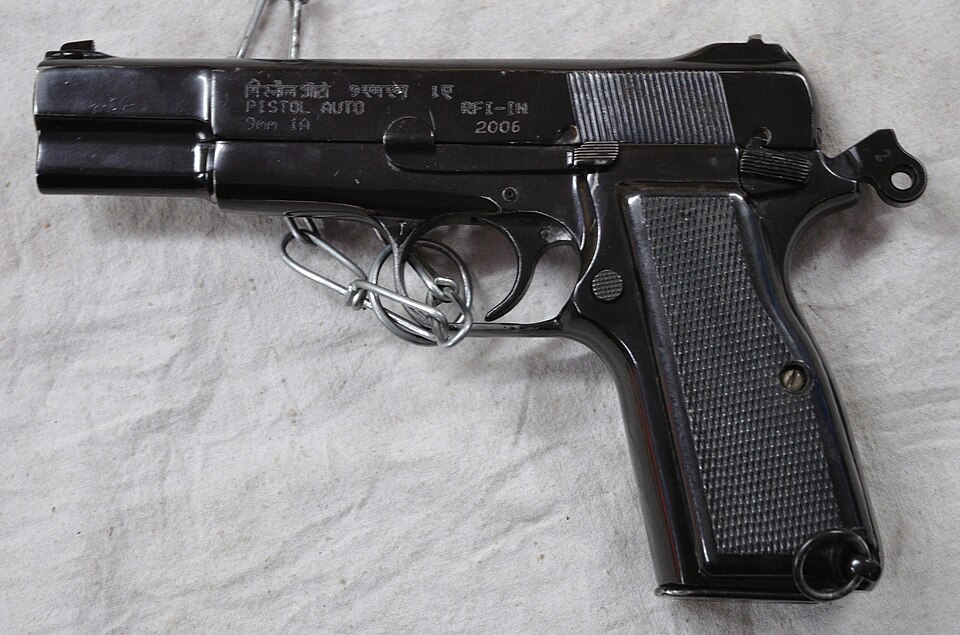
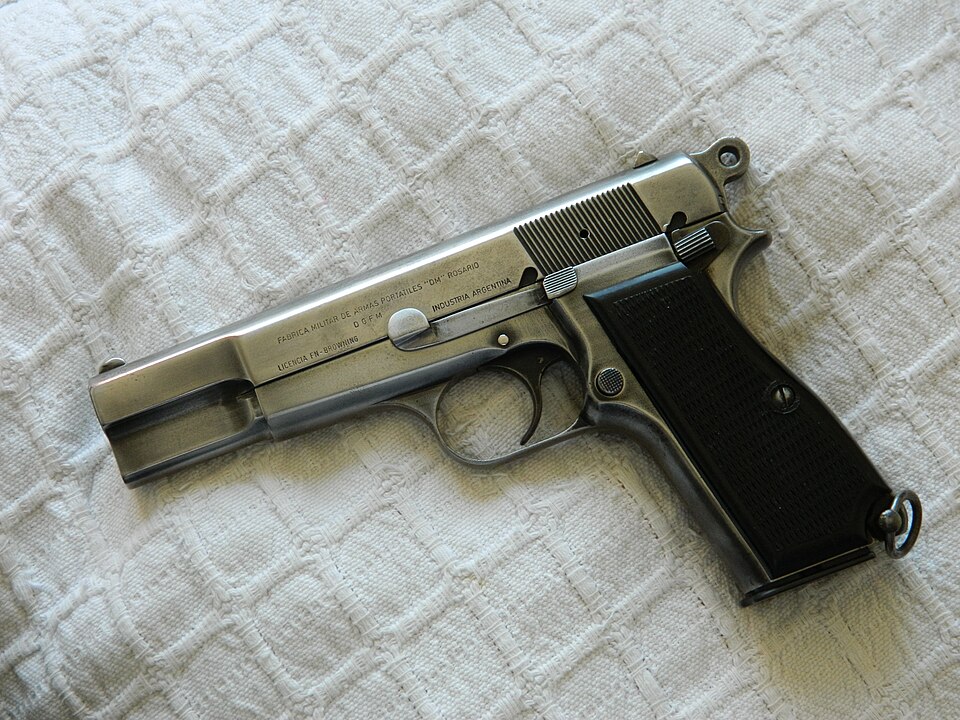
The Hi-Power remains one of the clearest bridges between classic steel handguns and the modern double-stack era. Developed from John Browning’s final work and completed by Dieudonné Saive, it paired single-action operation with a magazine capacity that changed expectations. Its 13-round magazine was a defining advantage when many service pistols still carried far less.
Its long influence came from more than capacity. The Hi-Power normalized the idea that a full-power 9mm sidearm could remain slim enough for military carry while offering real reserve ammunition. It also spread globally on a remarkable scale, with service use in over 50 countries and a production life that lasted more than eight decades. Modern high-capacity metal-framed pistols, and many of their clones, still operate in the shadow of that formula.
2. Glock 17 and Glock 19
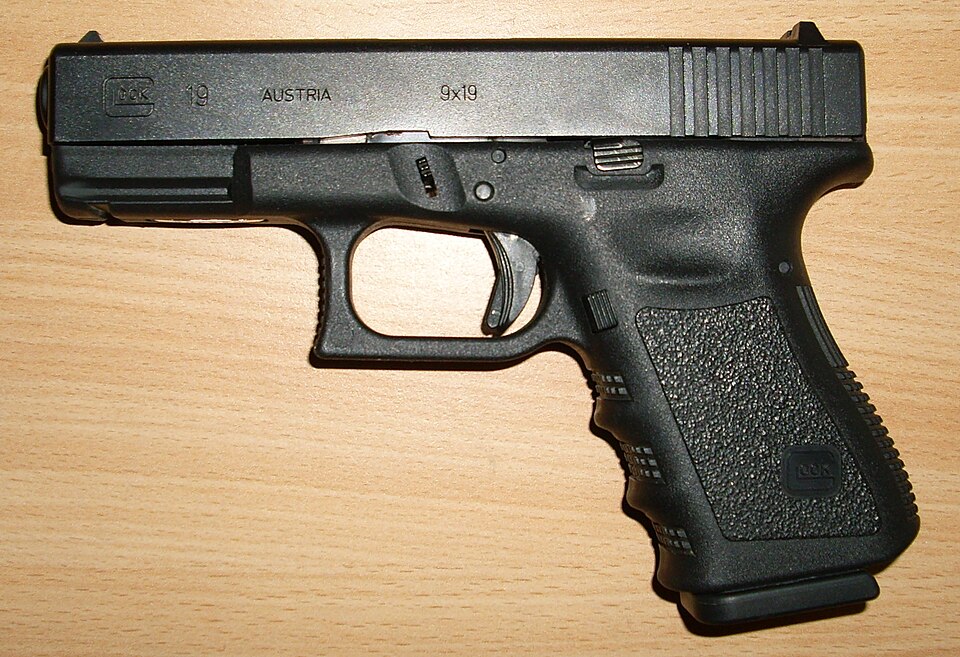
If one design redrew the modern duty-pistol map, it was Glock’s polymer-framed striker-fired system. The Glock 17 introduced a commercially successful service pistol that discarded the traditional steel or alloy frame and paired it with a simplified trigger and internal passive safeties. That combination altered police and military procurement across the world.
The Glock 19 then proved the same system could be scaled into a more compact form without losing general-purpose usefulness. Its staying power comes from simplicity, reliability, and modularity more than ornament. The platform’s influence is visible in nearly every striker-fired handgun now sold, from frame rails to optics-ready slides to pared-down controls. Even recent updates to the platform have been largely evolutionary, including ambidextrous slide stop and a flared magazine well, which shows how settled the basic template already became.
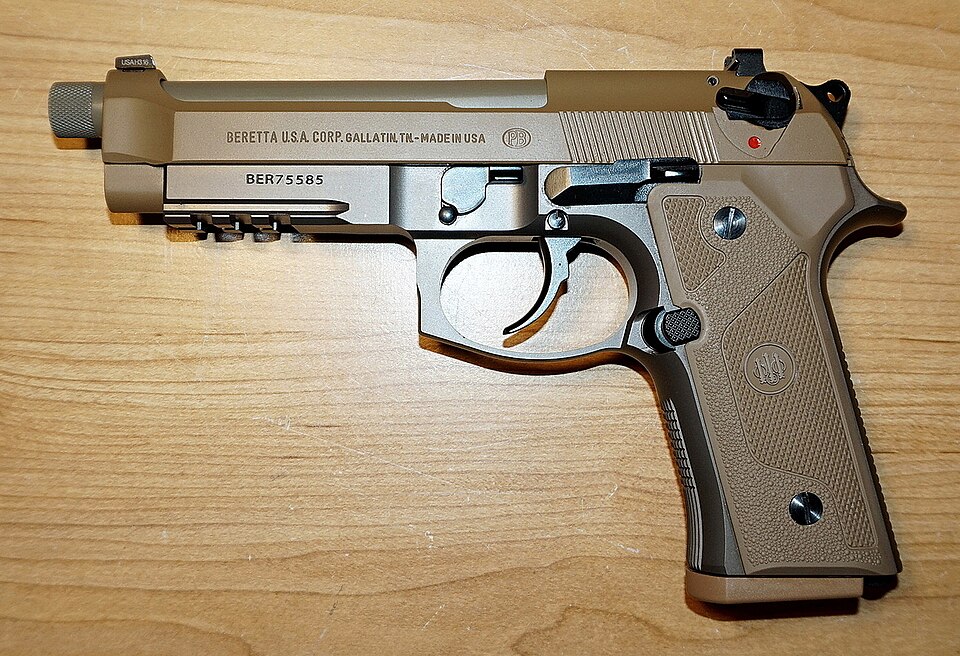
3. Beretta 92 and M9
The Beretta 92 family represents the high-water mark of the large-frame DA/SA service pistol. Its open-top slide, alloy frame, and locking-block system gave it a distinct mechanical identity, while its adoption by the United States military fixed its silhouette in the public mind for a generation.
The military requirements that helped shape the M9 are still recognizable today: 9mm chambering, at least 13 rounds, a detachable magazine, and dependable endurance. The design also demonstrated that a duty sidearm could combine generous capacity with mild recoil and strong practical accuracy. Many later pistols departed from its size and control layout, but the Beretta pattern still defines discussion around double-action first-shot handguns and military sidearm durability.

4. The Double-Stack Wonder Nine Formula
Before it became a category, it was a design breakthrough. The “wonder nine” formula combined 9mm chambering, a staggered magazine, service-grade durability, and combat-ready capacity in one holsterable package. The Hi-Power helped open that door, and the Beretta 92 helped industrialize it.
Today, high-capacity is no longer a premium feature. It is the default. That expectation is one of the most lasting design inheritances in handgun history, and it continues to govern how new pistols are judged before a trigger is ever pressed.
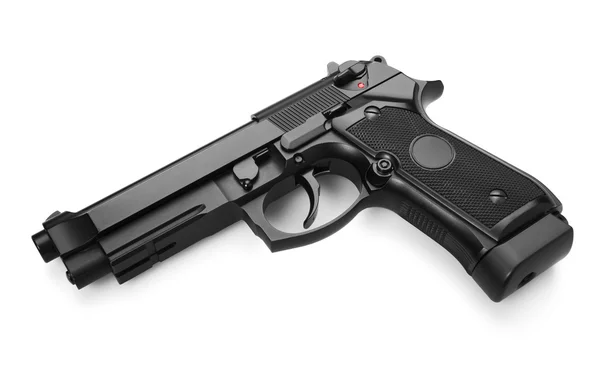
5. The DA/SA Service Pistol Layout
For decades, many institutions preferred a first long double-action pull followed by lighter single-action shots. This system attempted to balance readiness, safety, and accuracy within one handgun. Pistols like the Beretta 92 made that arrangement mainstream, and their descendants kept it relevant long after striker-fired alternatives took over much of the market.
Even where DA/SA pistols are no longer dominant, they still define the language of trigger transitions, decockers, and administrative handling. Modern handgun design often presents itself as a reaction against this format, which is another way of confirming how powerful its influence remains.
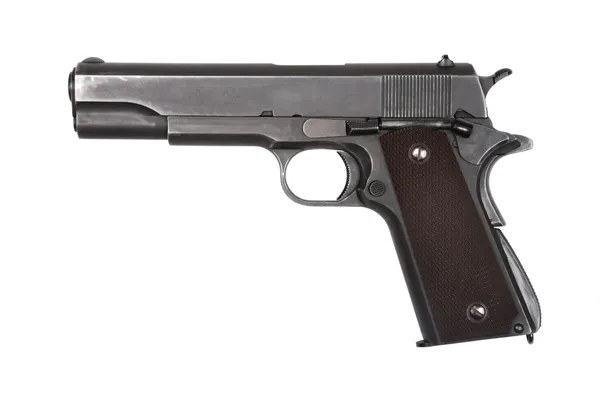
6. The Single-Action Fighting Pistol
The single-action 9mm did not disappear when newer systems arrived. The Hi-Power showed why. It offered a crisp trigger, excellent shootability, and a slim steel profile that many later pistols never fully replaced in feel or balance.
Its limitations were also instructive. Concerns over manual safeties, hammer bite, and older ergonomics pushed later designers toward different solutions, but those changes still began from the single-action baseline. In that sense, many “modernizations” have really been redesigns of old Browning-era questions.
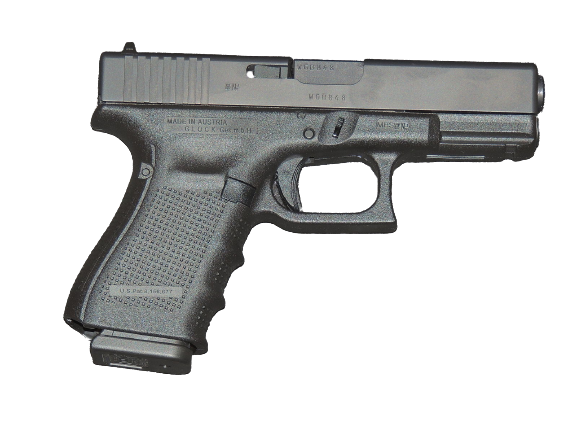
7. The Compact Duty Pistol
The Glock 19 established that a handgun did not need to be full-sized to serve in serious institutional roles. Its dimensions made it suitable for open carry, concealed carry, and specialized assignments without demanding separate platforms for each. That balance has become one of the central design goals in the modern 9mm world.
The result is visible almost everywhere. The compact service pistol is now the center of gravity for handgun design, not a compromise category. Many current handguns are effectively answers to the same problem the Glock 19 solved: how to be large enough to fight with and small enough to carry daily.
8. The Simplified Control Scheme
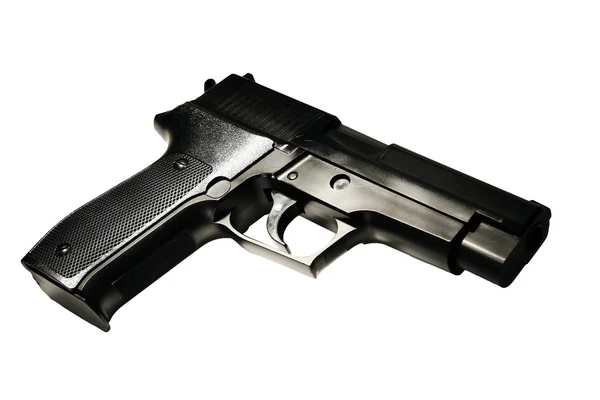
Older service pistols often featured more levers, more modes, and more training burdens. Modern handguns moved toward fewer external controls, and Glock became the clearest expression of that shift. A trigger, magazine release, and slide stop became enough for most users.
That philosophy changed expectations well beyond polymer pistols. Even metal-framed handguns increasingly adopted cleaner layouts, and many later designs were judged by how quickly they could be learned and maintained rather than by how many manual features they offered.
9. The Extended-Capacity Combat Sidearm
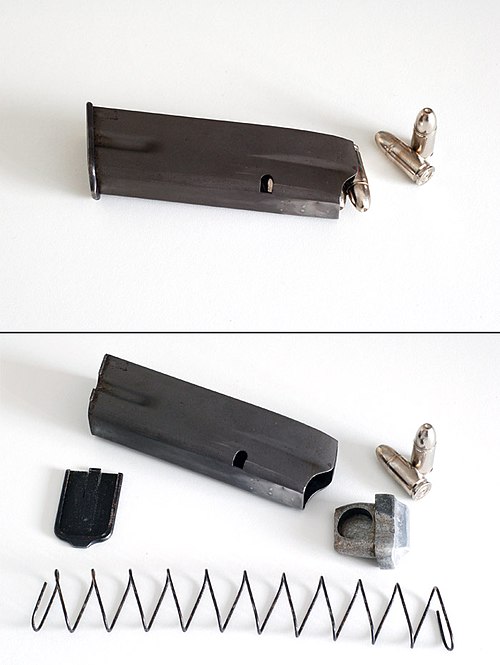
The appetite for more onboard ammunition did not start with today’s extended magazines. Specialized users had been pushing beyond standard capacity for decades. One vivid example came from the SAS, where Hi-Powers were seen with extended magazines estimated at 20 to 25 rounds during the 1980s.
That detail matters because it shows a recurring design pressure: users consistently want more ammunition without abandoning familiar handguns. Modern extended base pads, enlarged magwells, and higher-capacity redesigns all follow the same logic. Even recent reworks of classic patterns have leaned into that demand, including the 17-round FN High Power redesign.
Modern 9mm handguns look like products of the present, but their bones often belong to an earlier age. The Hi-Power fixed the idea of serious capacity in a fighting pistol, the Beretta 92 refined the large-format service handgun, and Glock compressed simplicity, durability, and polymer construction into the new normal.
That is why these designs still refuse to fade. The industry keeps changing materials, sights, finishes, and controls, but the underlying arguments were settled long ago.


