The modern 9mm sidearm did not arrive as a single invention. It emerged through a chain of design leaps: higher-capacity magazines, safer duty triggers, lighter frame materials, simpler internals, and better adaptability for optics, lights, and hard daily use.
Some pistols became famous because they served on a large scale. Others mattered because they changed what engineers, armorers, and shooters expected from a fighting handgun. Together, these ten models explain why the 9mm became the dominant service-pistol format of the modern era.
1. Luger P08
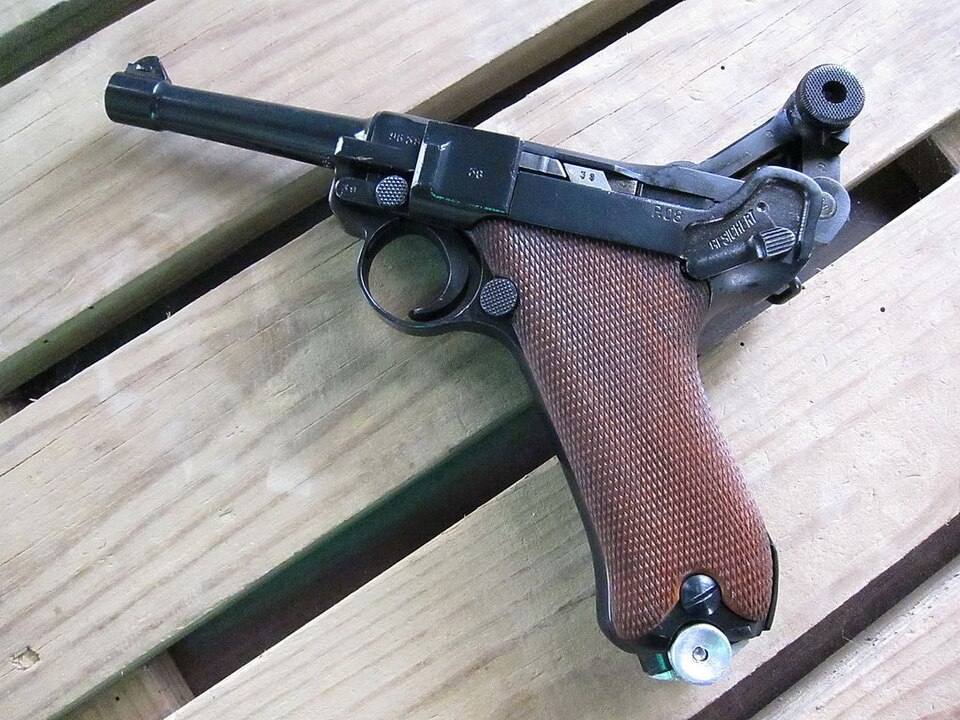
The Luger P08 belongs on any serious list because it helped make the 9mm cartridge itself a global standard. Georg Luger’s design and the 9x19mm round arrived together in the early 20th century, and the pistol’s distinctive toggle-lock action gave it an identity that still stands apart from later service pistols.
Its mechanical layout was not the future. Its legacy was. The Luger established the cartridge platform that later military, police, and civilian handguns would inherit, and it fixed the term “9mm” in the firearms vocabulary long before polymer frames or accessory rails existed. For all its age and complexity, the P08 remains the point where the modern 9mm story truly starts.
2. Browning Hi-Power
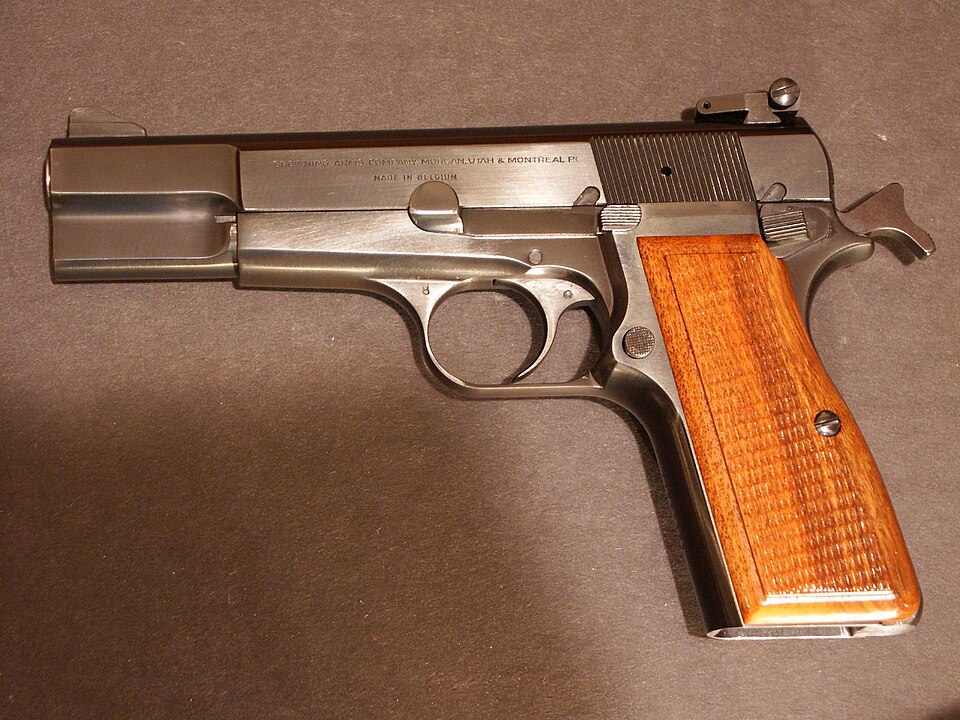
If one pistol drew the blueprint for the high-capacity service handgun, it was the Hi-Power. Finalized by Dieudonné Saive from John Browning’s late work, the pistol entered production in 1935 with a 13-round double-stack magazine that permanently changed expectations for duty handguns.
The Hi-Power also combined strong ergonomics with a slim-feeling grip that concealed its capacity unusually well. Its influence spread widely through military service across multiple continents, and later “Wonder Nine” pistols owe a visible debt to its formula: 9mm chambering, practical capacity, and a grip shape that encouraged fast, instinctive shooting. Even many pistols that moved far beyond its single-action trigger still carried its design DNA.
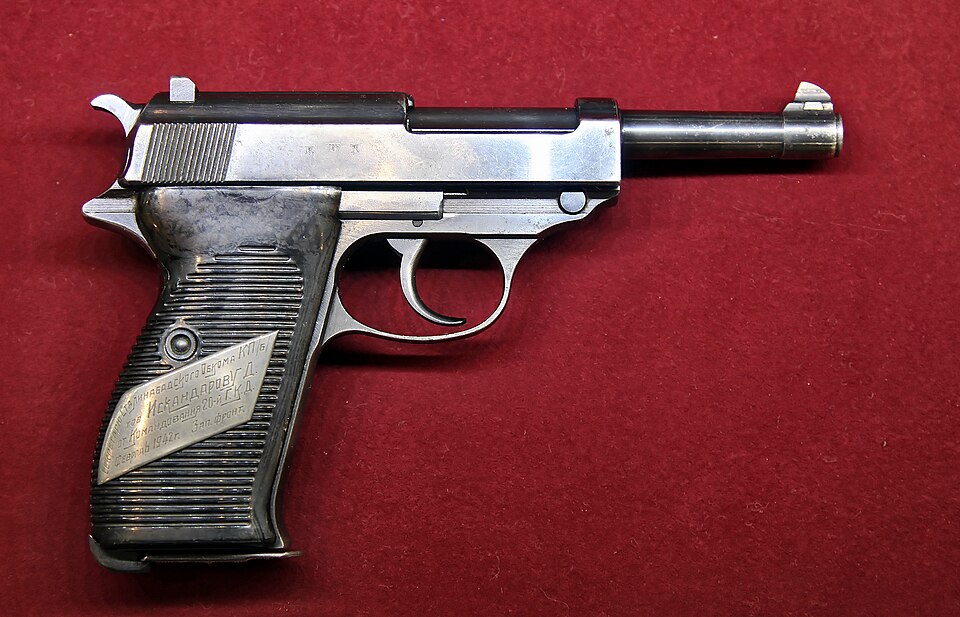
3. Walther P38
The Walther P38 mattered because it helped normalize the double-action/single-action service pistol. That was a major shift in military sidearm thinking. Instead of relying on a cocked single-action pistol or an empty chamber, the P38 offered a more practical first-shot system for service carry.
Its locking-block action also left a lasting mark. Beretta’s later pistols would draw on that architecture, refining it for a new generation. The P38 does not always get top billing in broad popular memory, but many later duty pistols make more sense when viewed as answers to the problems Walther had already begun to solve.
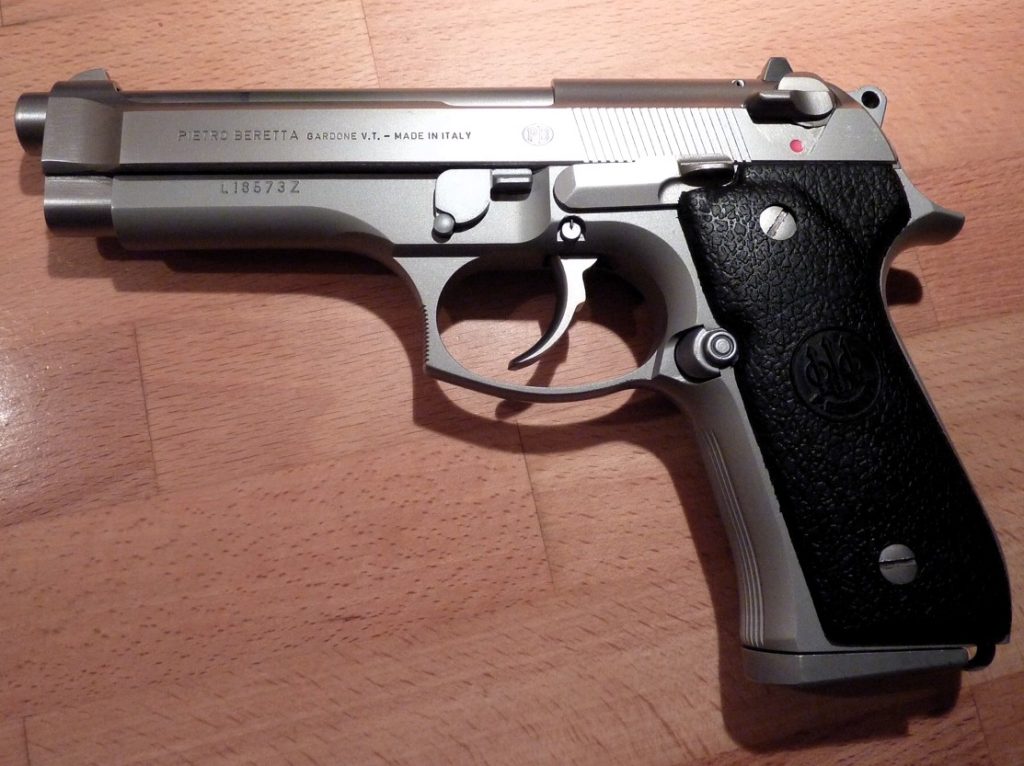
4. Beretta 92
The Beretta 92 turned older concepts into one of the most recognizable service pistols ever made. Its open-slide profile came from earlier Beretta work, while its locking system traced back through the M1951 and the Walther lineage. By the mid-1970s, Beretta had combined those ideas with a double-stack magazine and a DA/SA format that fit institutional use.
The result was a pistol with a reputation for smooth cycling, generous capacity, and broad service adoption. The design’s signature open top was not cosmetic alone; it helped reduce feeding and ejection interruptions by leaving more room for the gun to clear spent cases. The U.S. military selected it as the M9 in 1985, and the platform remained the standard American service sidearm until 2017. Beretta’s own count places the 92 family at almost 4,000,000 units produced, which helps explain its global footprint.
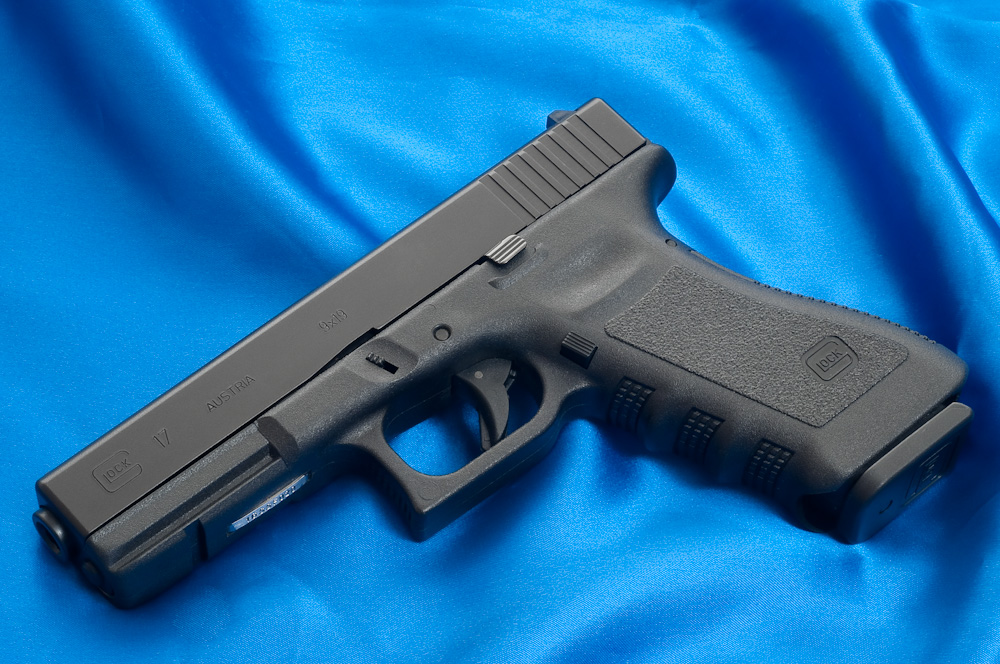
5. Glock 17
The Glock 17 changed handgun design by making polymer impossible to dismiss. Developed for Austrian military trials, it paired a lightweight frame with a striker-fired system, a 17-round magazine, and a famously low part count. That simplicity became one of its strongest engineering statements.
It also rewired institutional expectations. Reliability trials pushed the pistol through water, mud, freezing conditions, and impact abuse before it was adopted by Austria as the P80. Public suspicion about “plastic pistols” faded as departments and armies discovered that polymer was durable, corrosion-resistant, and easier to maintain than many metal-framed competitors. By late 2023, more than 23 million Glock pistols of all generations were in circulation worldwide.
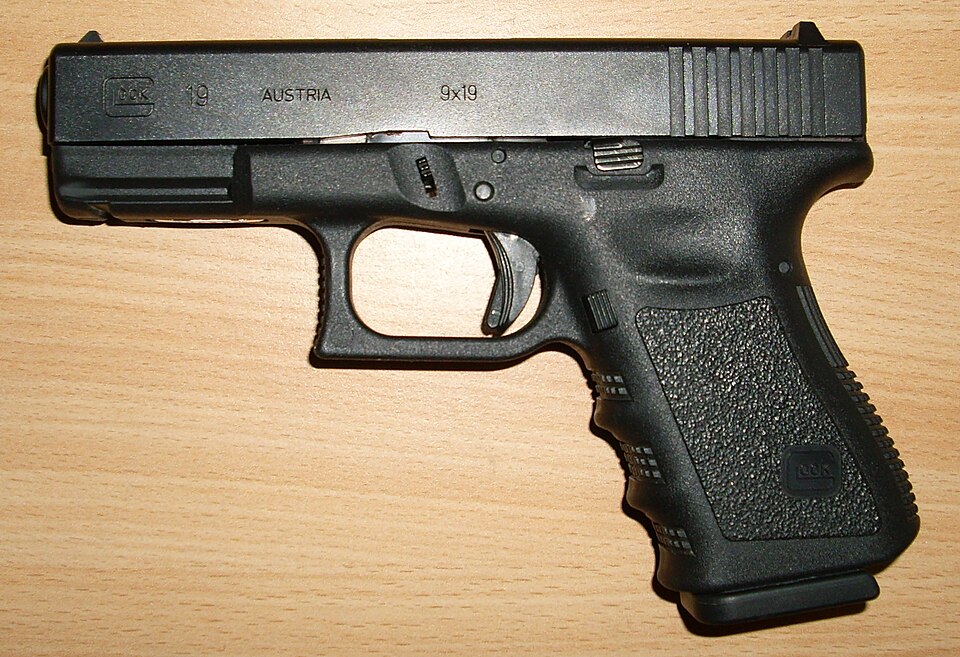
6. Glock 19
The Glock 19 took the Glock formula and made it more universally useful. Introduced in 1988, it offered a more compact footprint without abandoning the durability, simple manual of arms, and parts commonality that made the larger Glock 17 so influential. That balance is why the Glock 19 became a benchmark rather than just a shorter version of an earlier gun.
It fit duty, off-duty, training, and general-purpose roles with unusual ease. Many later handguns chased the same middle ground: compact enough to carry, large enough to shoot well, and simple enough to maintain at scale. In practical terms, the Glock 19 became the template for the do-everything 9mm.
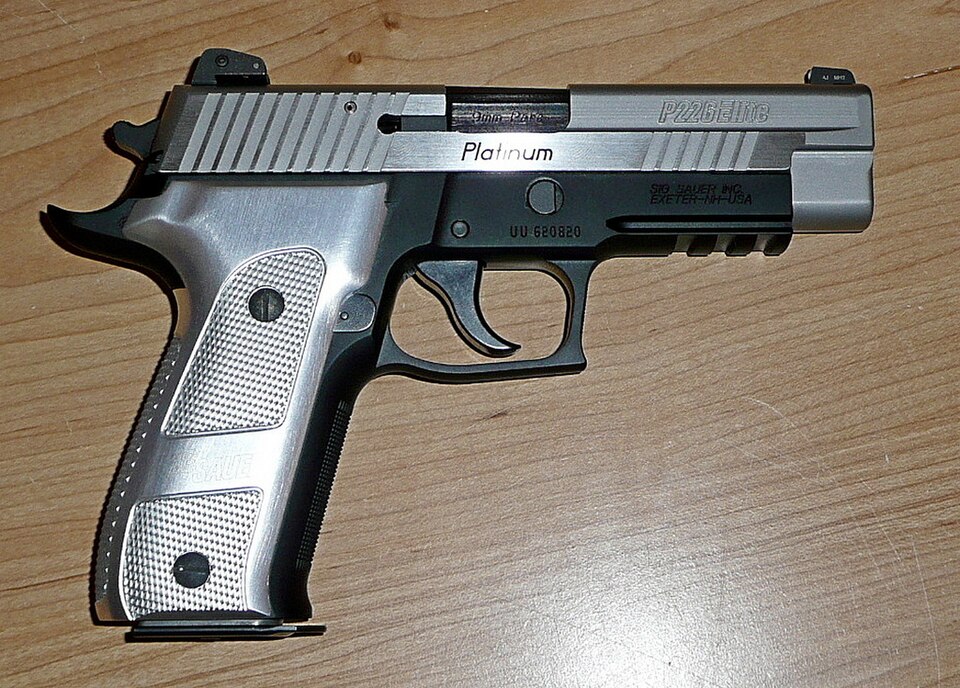
7. SIG Sauer P226
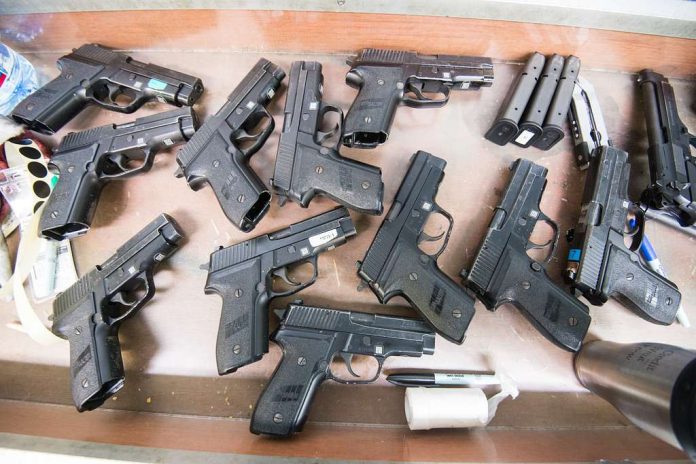
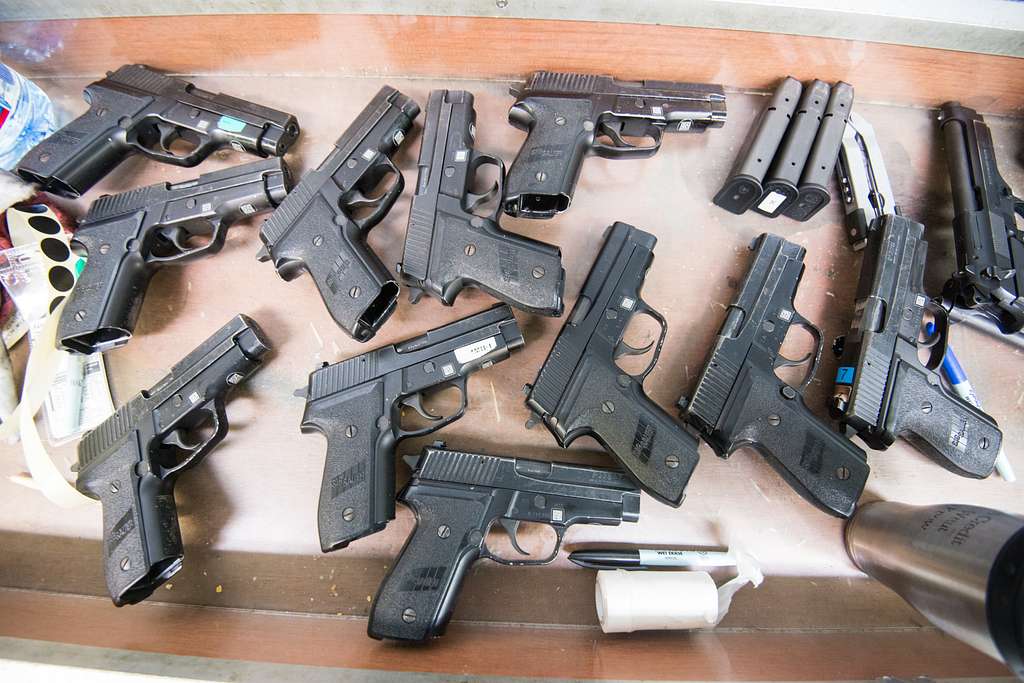
The P226 represents the high point of the classic metal-framed service pistol in the modern age. It was one of the final contenders in the U.S. trials that selected the M9, and it later gained a strong reputation with specialized units that valued durability, accuracy, and a refined DA/SA system.
Unlike the polymer wave that followed, the P226 stayed committed to an alloy-frame service format and proved that the older approach still had room to evolve. Rail-equipped and optics-ready variants extended its life without changing the platform’s core identity. For engineers and users alike, the P226 showed that modernity in handguns was not tied to one material alone.
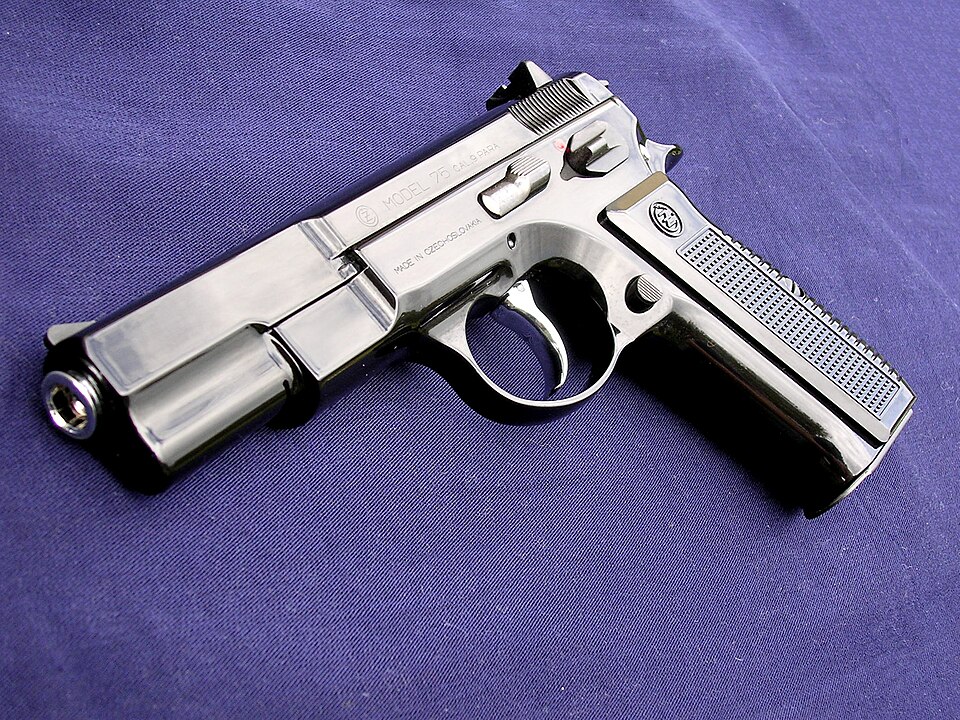
8. CZ 75
The CZ 75 became influential for a reason that is immediately obvious in the hand and less obvious on the bench: it combined strong shootability with an unusually elegant mechanical layout. Its internal slide rails helped produce a low-profile slide and a natural feel in recoil, while its steel frame gave it a stable, accurate character.
The design also proved unusually adaptable. Competitive shooters, police users, and clone makers all found something useful in it. The pistol’s blend of capacity, ergonomics, and controllability made it one of the most copied 9mm patterns outside the Glock family, and its descendants still shape competition and service-oriented handgun design.
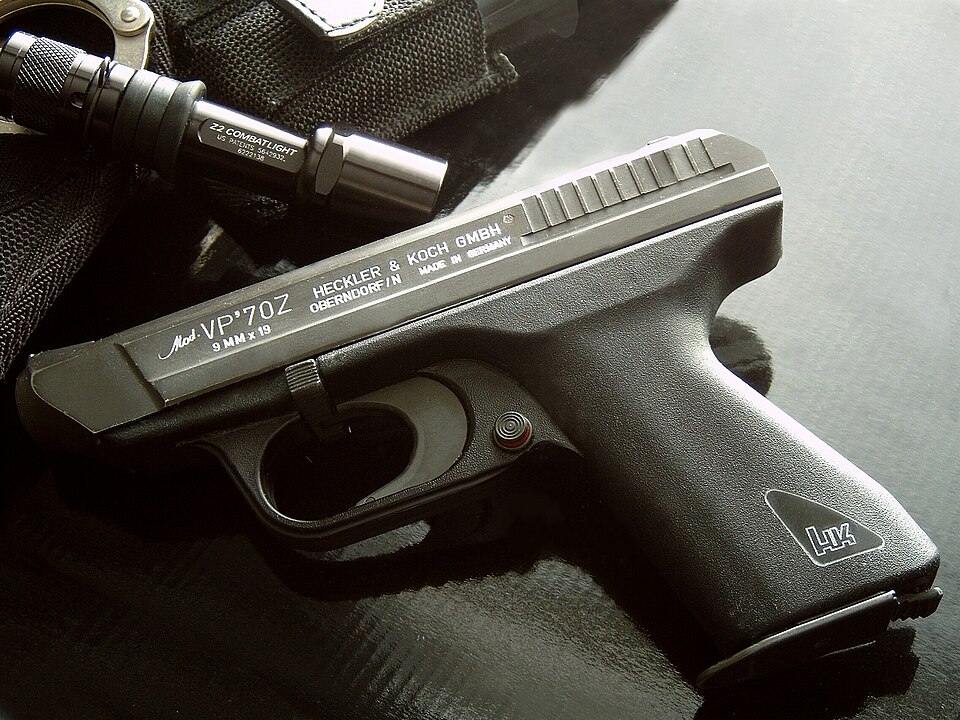
9. HK VP70
The VP70 was not a commercial giant, but it was a design landmark. Heckler & Koch introduced it in 1970, and it is widely credited as the first polymer-framed handgun. That alone secures its place in firearms history. It also carried a remarkably forward-looking 18-round capacity for its time.
The trigger and overall shooting characteristics kept it from becoming a universal favorite, but its importance is larger than its popularity. The VP70 demonstrated years before Glock that synthetic frame construction was not a gimmick. It was an engineering direction.
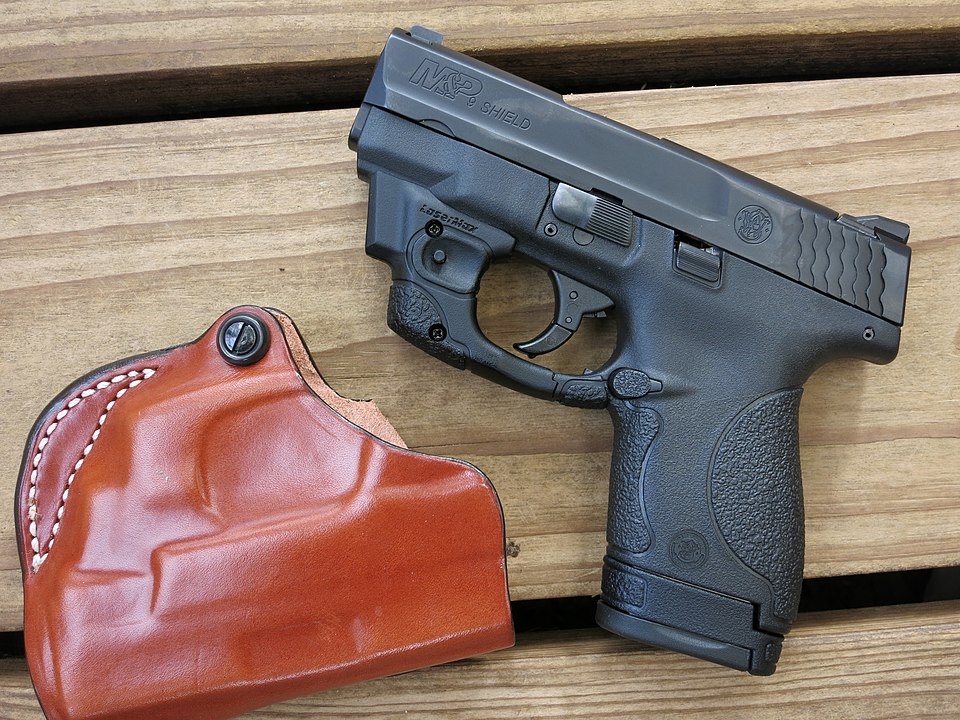
10. Smith & Wesson M&P Shield
The M&P Shield earns its place not because it introduced the first compact 9mm, but because it helped define how the modern slim carry pistol should feel and function. It brought credible shootability, manageable dimensions, and service-pistol lineage into a format that fit everyday carry far better than earlier double-stack duty guns.
Its importance lies in what it signaled: the center of gravity in handgun design had shifted. Once the industry proved that full-size 9mms could dominate duty roles, the next challenge was compressing that confidence into lighter, flatter pistols for constant carry. The Shield became one of the major answers to that problem and helped set the stage for the current micro-compact era.
These pistols did not all dominate for the same reasons. Some introduced a new cartridge standard. Some redefined capacity. Some changed frame materials, trigger systems, or carry dimensions. A few simply became the pistol that everyone else had to answer. That is what makes them foundational rather than merely famous. The modern 9mm handgun is less a single design than a stack of inherited ideas, and these ten pistols supplied most of the important ones.


