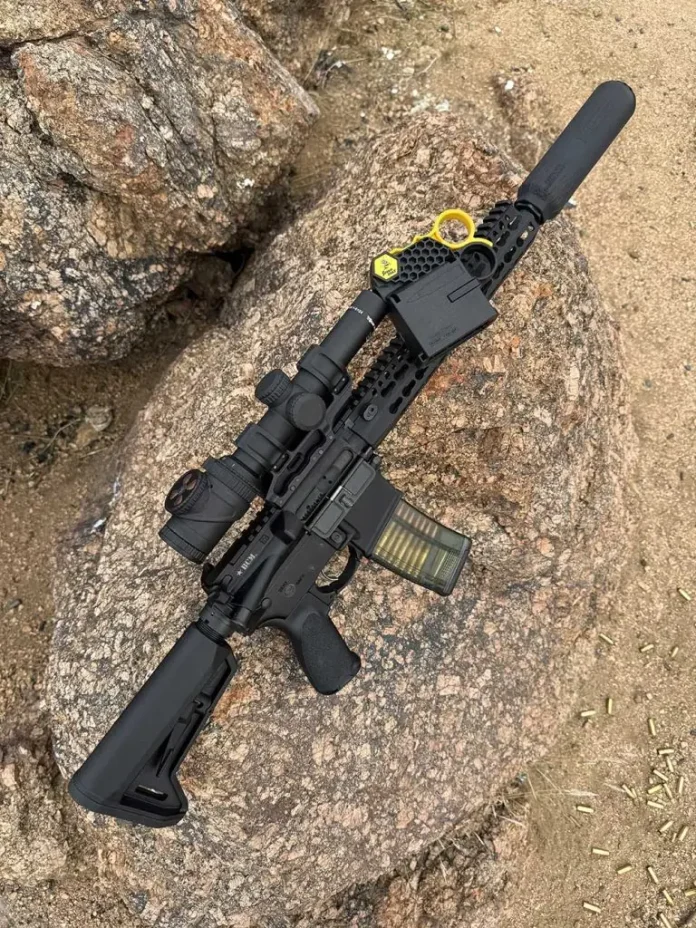
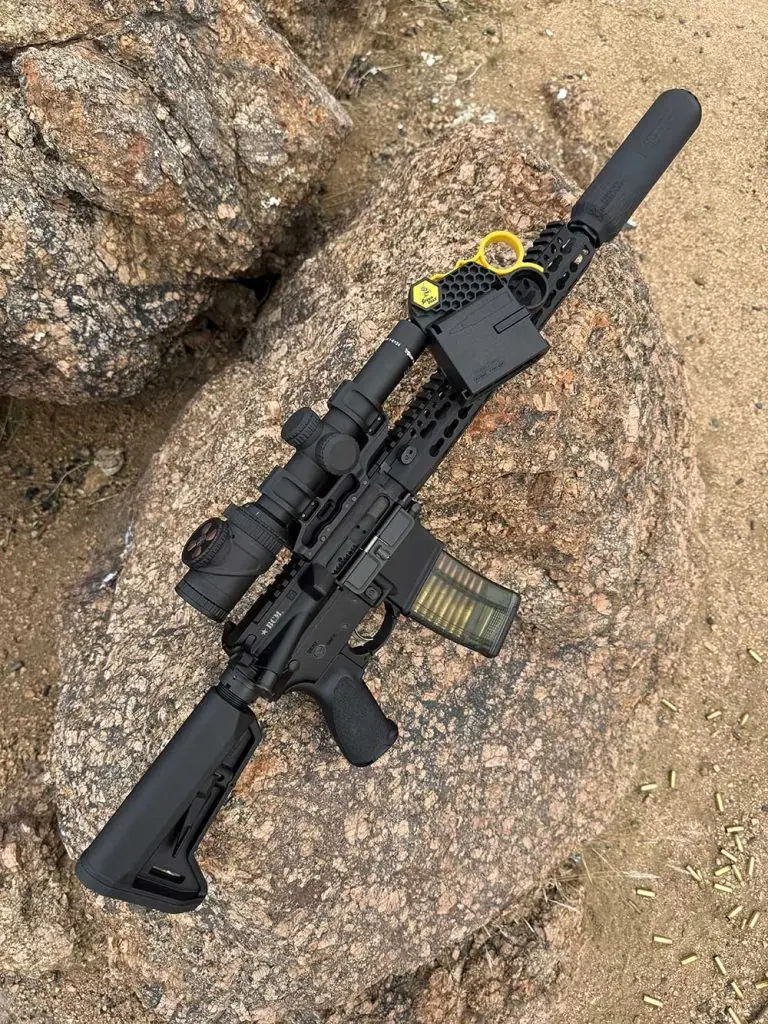
Three letters have come to refer to a shorthand to a entire group of assumptions. The AR-15 usually becomes a symbol in the first place and a machine in the second, though the engineering decisions, use of materials, geometry, and design of fire-control, can be simply explained.
The distinction between myth and mechanism is important since it influences the ways individuals deal with rifles, discuss the question of ability, and what they anticipate the platform deem in reality. These are not trifles, the distinction between a category term and a working system.

1. “AR” means “assault rifle”
AR is not a label, but a lineage marker. It was initially called ArmaLite Rifle, and was associated with the firm that made the design a smaller successor to the AR-10. The confusion in naming still remains, as the rifle appears to look like military carbines, yet the brand is more of an origin, rather than a functionality.
2. A civilian AR-15 runs like a machine gun
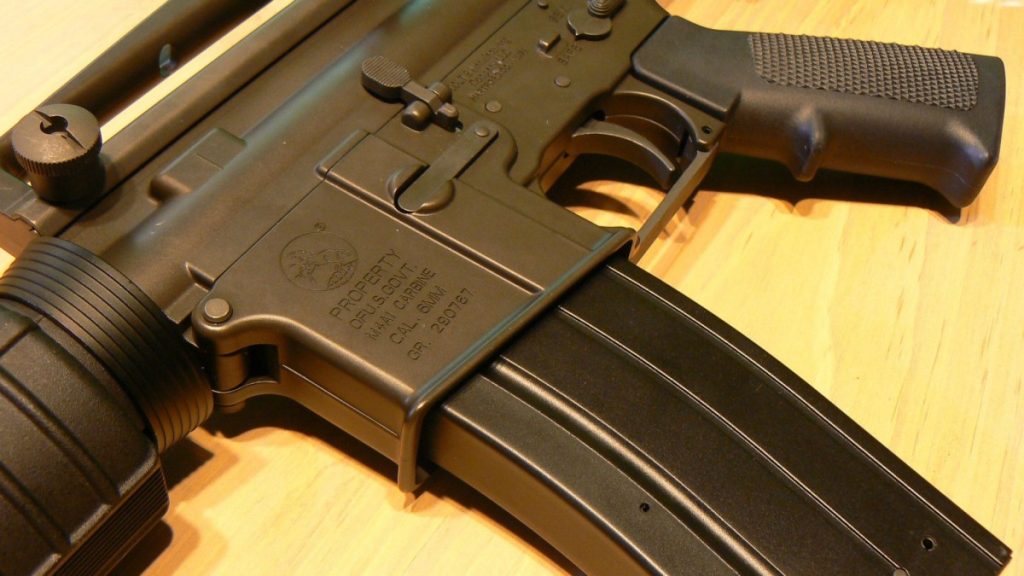
An ordinary civil AR-15 can shoot an average of one round at a time. Automatic fire uses an auto sear and other components which alter the interaction between the trigger and the cycling action; semi-automatic designs lack such an interface. It is important to talk about the blurring of the terms semi-auto and full-auto, and to note that the behavior of the rifle is determined by the fire-control group rather than by cosmetics.
3. The AR-15 and the M16 are basically the same rifle
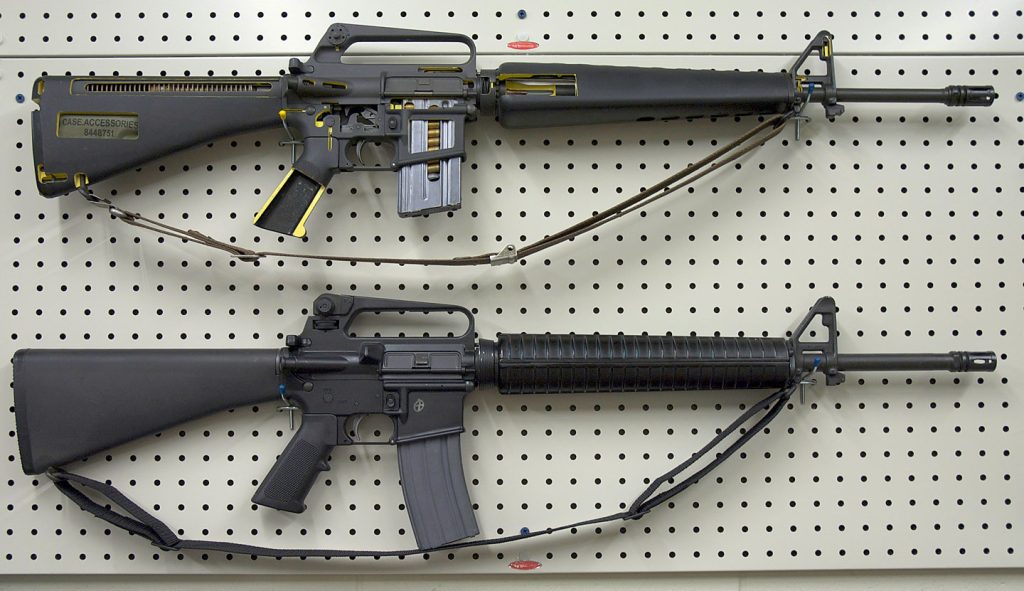
The family resemblance exists but interchangeability is exaggerated. An M16 design is centered on select-fire operation along with components and geometry planned to take automatic or burst fire, whereas an AR-15 pattern centered on semi-automatic functionality is created more toward the civilian market. There are even minor mechanical variations, such as the carrier interacting with full-auto components, the reason being to ensure that the same rifle, different switch is not a valid concept.
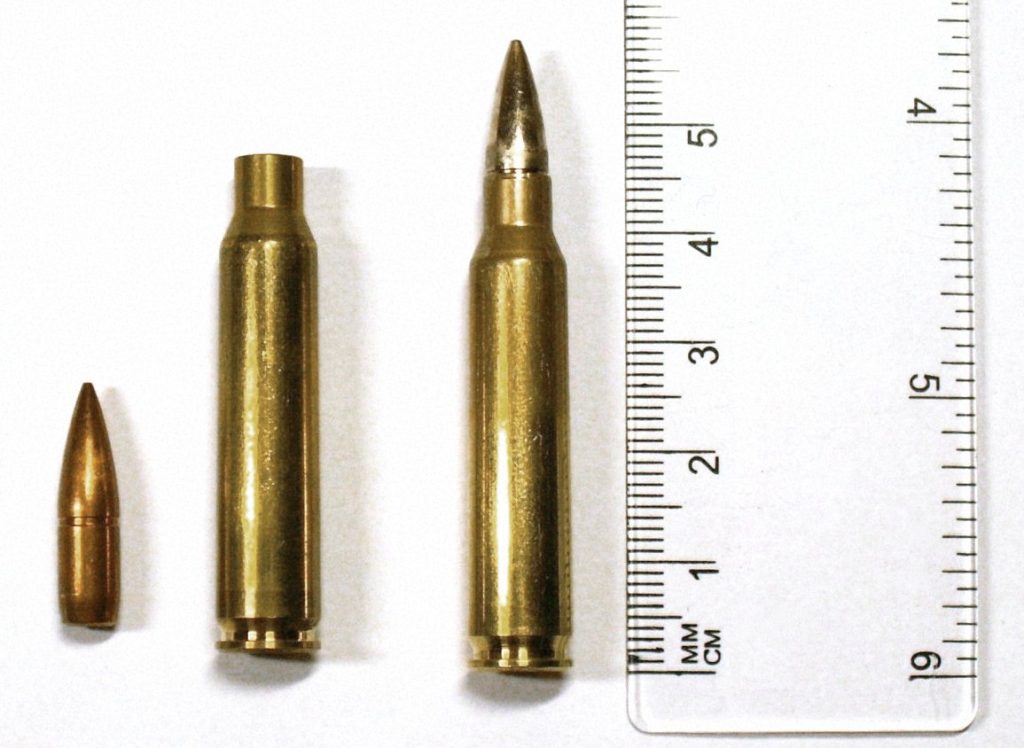
4. The AR-15 is “too powerful” compared with typical hunting rifles
In standard versions, the AR-15 is typically chambered in 5.56 NATO or.223 Remington, both intermediate cartridges. One set of figures then used as a reference point identifies a 55-grain 5.56 load at 1,223 ft.-lbs. of muzzle energy and a 150-grain .308 load at 2,648 ft.-lbs. as an indication that most of the conventional hunting rounds are not in a similar energy range. What makes the AR 15 popular is that it has been more about its manageability and accuracy rather than brute strength.

5. A rifle cartridge always over-penetrates more than handguns or shotguns indoors
The performance of the barrier is greatly dependent on the construction of the projectile and what the round strikes prior to striking a wall. In one of the tests, the test article was placed before a simulated exterior wall, equipped with a simulated exterior wall, and the wall was framed with 2×2 feet wall frame sheeted with a 3/8 inch drywall, and a 12 inch 10 percent ballistic gel block in the front to simulate the interaction with soft-tissue. In that arrangement, several handgun and shotgun loads continued to leave the wall assemblies on clean misses and others stopped in the first wall having passed through gel. The lesson, however, is smaller than the internet lore would have it seem: over-penetration is not a story of caliber only, and hits are not misses. Any defensive strategy which neglects that difference is one based on the wrong variable.
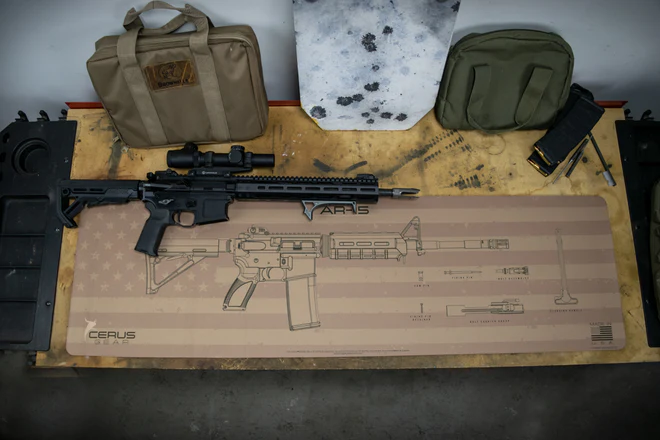
6. AR-15s are simple “kitchen-table builds” that require no real precision
It is a platform based on modularity, which is not equivalent to forgiving assembly. The minimum specifications do not lose their value, particularly where reliability and safety are concerned with the movements of the torque and alignment.
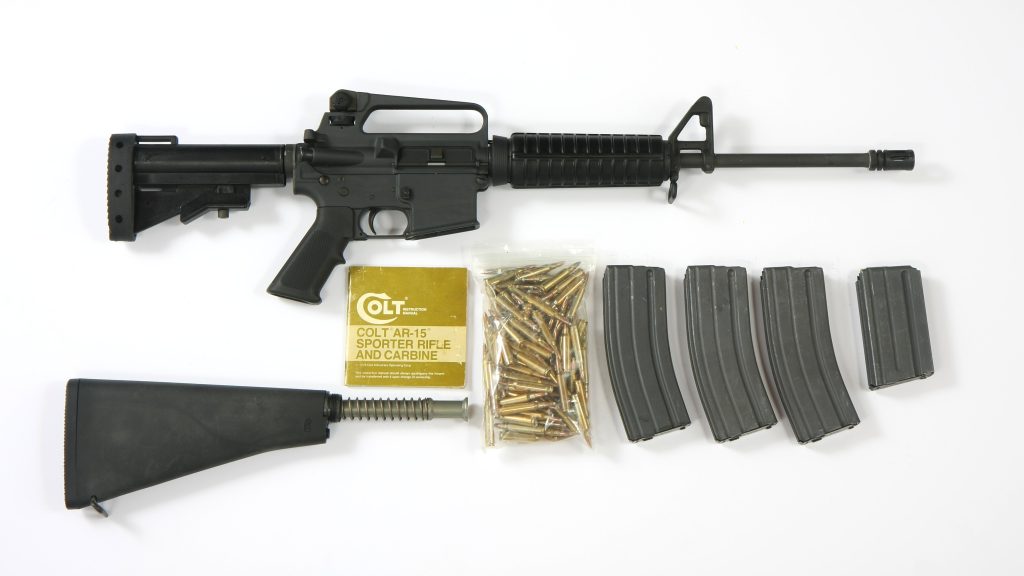
One of the most frequently quoted build specs is a barrel nut range of 30-80 ft.-lbs. (to fit gas tube clearance), carrier key screws at 35-40 in.-lbs and a castle nut at 40 in.-lbs. +2. Such figures are possible due to the rifle being a pressure driven model; the smallest of errors propagate to cycling issues, gas leakages, or inaccurate results.
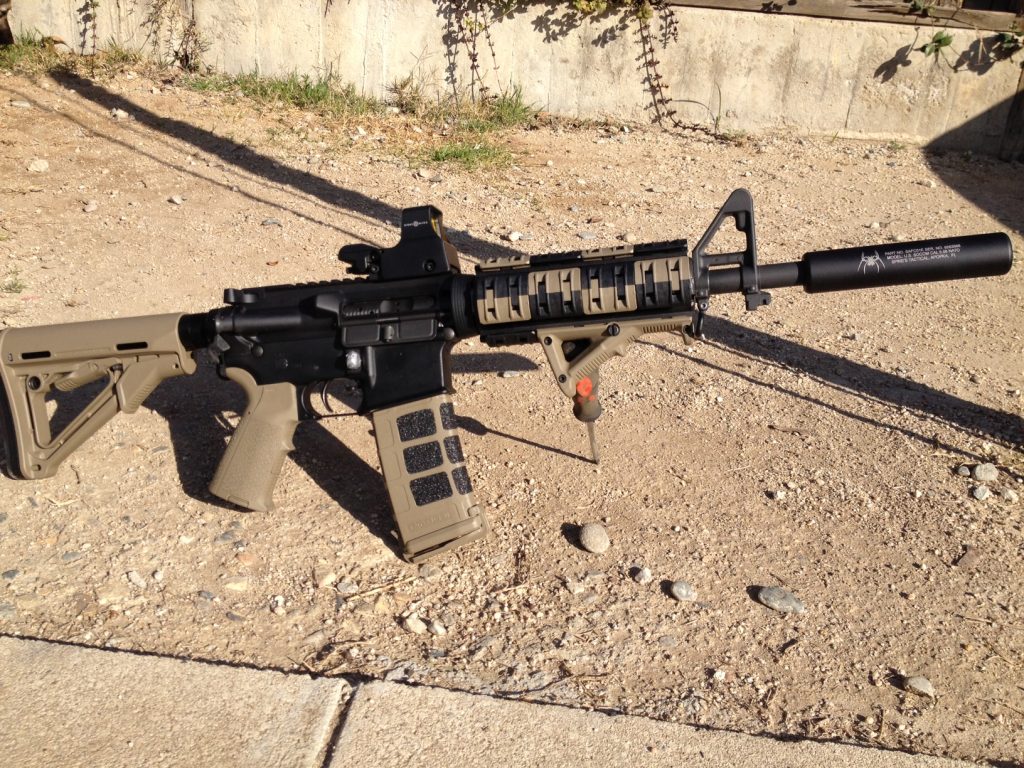
7. AR-15s are prohibited everywhere in the United States
No overall federal prohibition on ownership exists, but legality varies radically between jurisdiction and configuration. In Californian style compliance systems featureless builds are often defined in terms of missing certain features, such as a pistol grip, folding/telescoping stock, flash suppressor or forward pistol grip. Practically, it is the case that two rifles, which appear similar on the photos, can be handled quite differently by local law due to discrete parts.
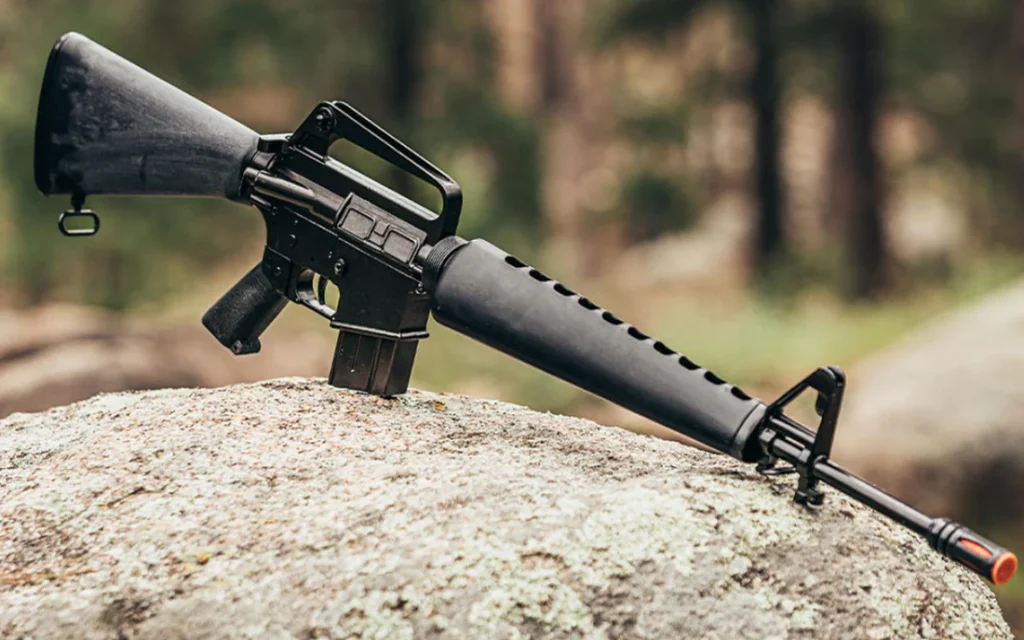
The AR-15 has become mythical since it is familiar and specific. As soon as one starts discussing mechanisms, trigger-function, cartridge-class, and configuration-rules, the heat gets out, and the lefthanders become answerable. To someone who is attempting to get oriented in the platform, the best shortcut will always be the oldest one: disregard the labels, and follow the parts.


