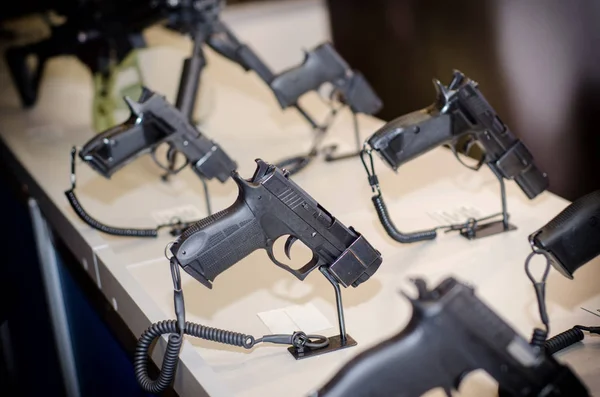
“What makes an Army sidearm ‘legendary’ usually has less to do with a spec sheet and more to do with the moment it showed up: when a cavalry board wanted something ‘trooper-proof,’ when production lines could not keep up, or when standardization demanded a different caliber.
Over two centuries, Army pistols traced the arc of an engineering tradition from slow-burning, single-shot ignition systems to the present day modular, striker-fired systems. The thread that ran through all of them was this: a handgun in uniform was supposed to work when the primary weapon didn’t, and be easy to fix by people who weren’t gunsmiths.

1. Colt M1911/M1911A1 (.45 ACP)
The Model of 1911 was built with a particular experience in mind: that the service revolvers in .38 Colt-chambered revolvers then in service were not sufficient in terms of stopping power, and the Army wanted a larger bore and a self-loading pistol that could operate in dirt, sweat, and neglect. The line’s development from prototype to production was driven by a series of fixes controls added, safeties improved, and a locking system developed to the point where it could resist “powerful charges of powder” without separating links or frames.
Its legend was cemented in endurance trials, including the famous 6,000-round test that became a byword for reliability. The 1926 M1911A1 variant, with its shorter trigger, arched mainspring housing, and improved sighting, showed how the Army felt about handgun ergonomics as a combat multiplier, not a luxury item. The pistol’s long service life also reflected the realities of logistics: once a good design is placed in widespread service, it becomes a system of training, spare parts, and institutional muscle memory, not just a weapon.”
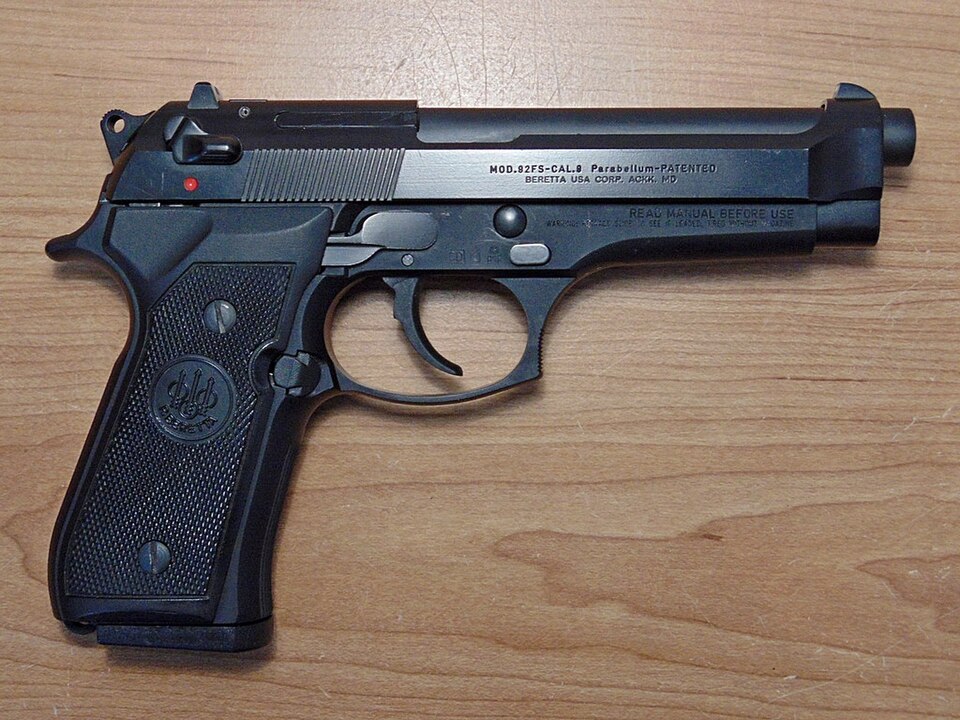
2. Beretta 92FS/M9 (9×19 mm)
The M9 generation can be summed up in “NATO caliber” speak, but the real-world tech story is more complex: more ammo, double-action/single-action trigger groups designed to be more safe for varying levels of shooters, and performance requirements described in terms of reliability math speak such as mean rounds between failures. In the XM9 tests, the final shootout included reliability data such as 2,877 MRBF and 1,750 MRBF, and the winner also took into account the overall system package, not just the gun itself.
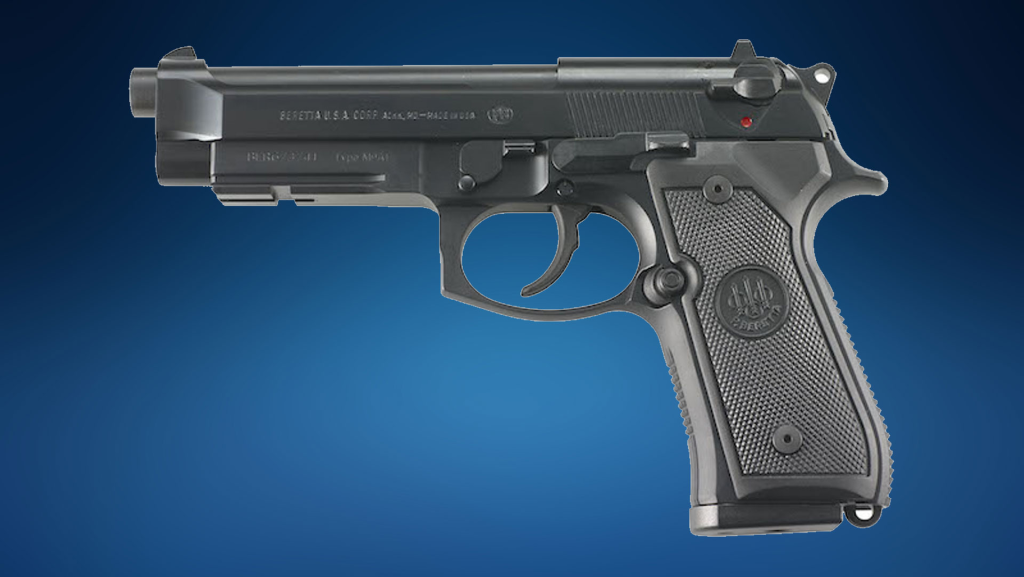
Its legend rose and fell with the support of the overall system. One detailed technical history of the M9 series suggested that many of the problems seen in the field were due to what could be expected in terms of wear and tear, rather than the original design concept itself, observing that “The biggest problem with any of the weapons we have in this country” essentially boiled down to logistics and maintenance procedures. The Marine Corps’ M9A1 variant, with a MIL-STD-1913 rail and sand-resistant magazines, demonstrated how small details of interface design could be important when handguns are stored in fine dust and vehicles for months at a time.

3. SIG Sauer M11/P228 (9×19 mm)
The M11 proved that the Army’s “standard issue” pistol was never the whole solution. There was a requirement for a compact pistol for investigative work, aircrew, and personnel who required concealability and a smaller grip size than the full-size M9. In the Compact Pistol Program, the toughness message of the P228 was clear: “high round counts with minimal stoppages.”
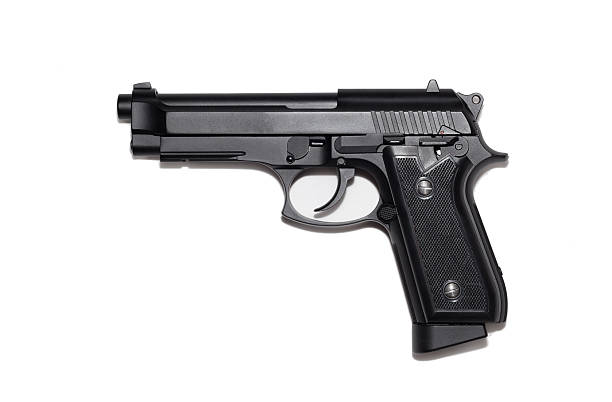
In one of the most famous tests, the P228 was subjected to a 15,000-round test with only one malfunction, making it simple to justify as a professional’s sidearm for those who carried discreetly but still required duty-grade performance. Its continued use in specialized units also foreshadowed what was to come the Army’s transition from one-size-fits-all handguns to a series of pistols designed for different shooters.
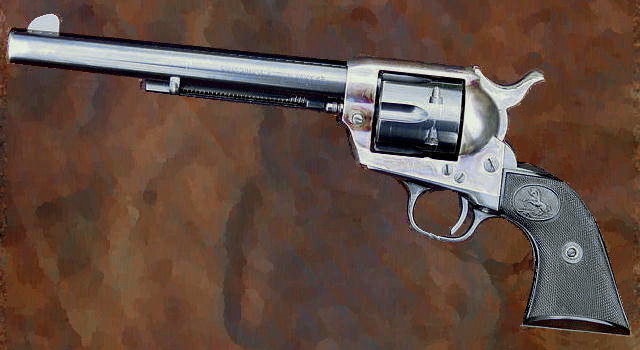
4. Colt Single Action Army “Peacemaker” (.45 Colt)
The Peacemaker’s Army heritage was established in a time of polymer frames and feed ramps, when a pistol’s toughness was measured by its ability to withstand rough handling, black powder residue, and a lack of specialized gear. The lineage of its military-issue revolver status came about as a result of a change in frame design a topstrap frame and other improvements after earlier models were deemed unsatisfactory or clumsy to handle in the field. In formal testing, Capt. John R. Edie’s assessment became the stuff of legend: “I have no hesitation in declaring the Colt revolver superior in all respects.”
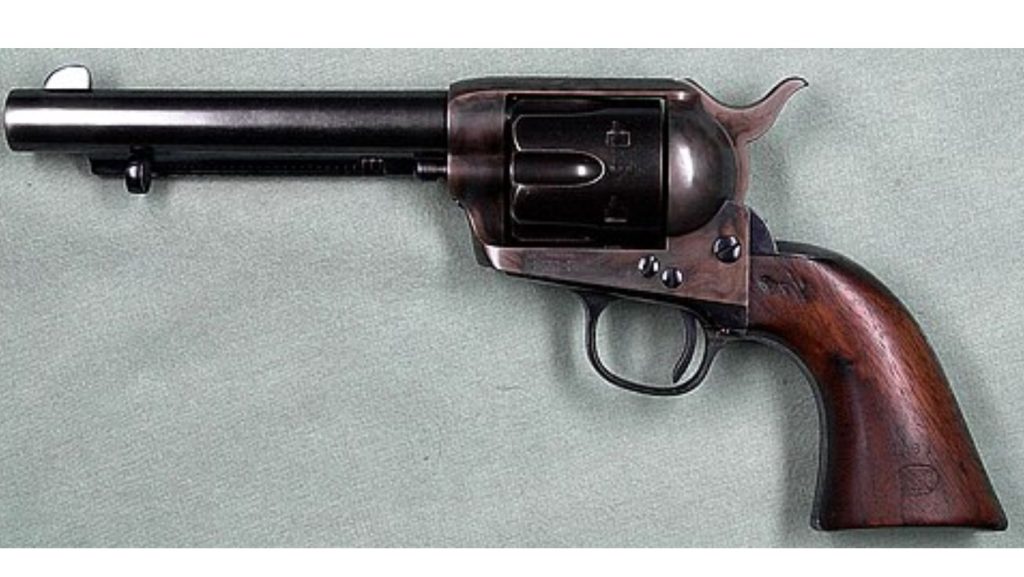
Its influence extended far beyond its time as an issue sidearm because it addressed several issues simultaneously balance, power, and having a round capable of propelling the kind of power that shooters of the time expected at close range. Even when it was finally retired, the longevity of its design suggested that there was a certain truth to the Army’s experience that when a handgun becomes “standard” issue in popular culture, it sets the training and performance bar for generations to come after it has been retired from service.
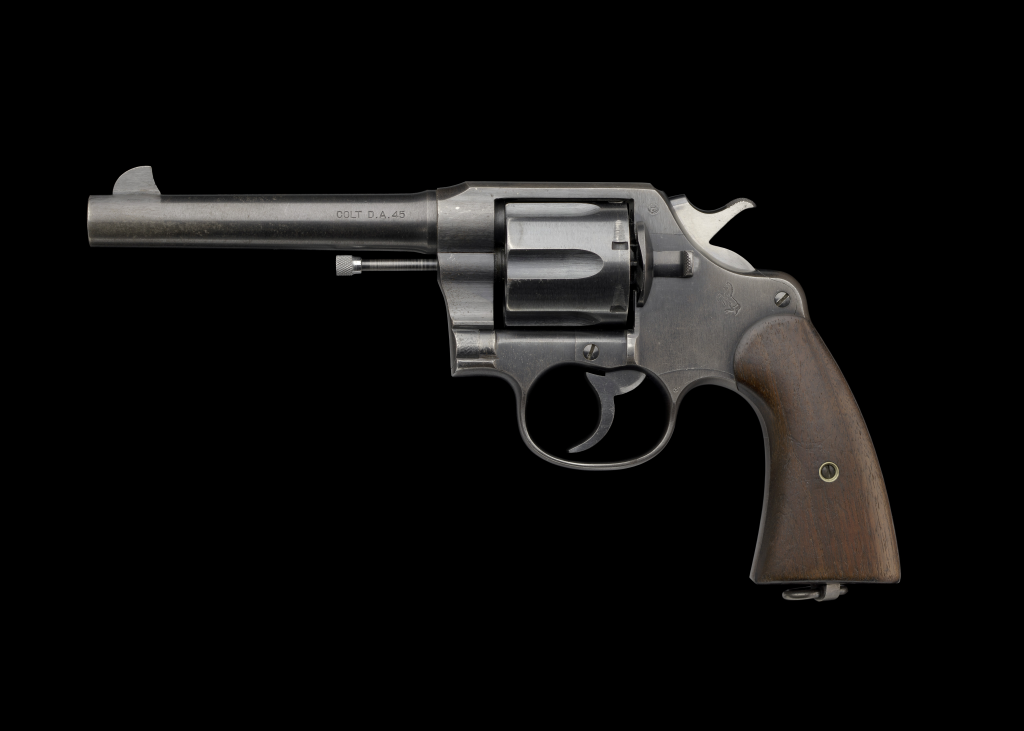
5. Colt & Smith & Wesson M1917 Revolvers (.45 ACP)
The M1917s were the Army’s way of saying that pragmatism can be as valuable as innovation. When the Army found that it could not keep up with the demand for M1911s during World War I, it fell back on existing revolver designs and modified them to fire .45 ACP rounds using half-moon clips a clever hack that allowed the rimless cartridge to seat and extract properly from a wheelgun.
The sheer volume of production only served to underscore the need for the temporary fix: over 150,000 from Colt and over 153,000 from Smith & Wesson in 1917-1919. Their continued use well into the latter decades, particularly in secondary roles, only served to underscore a theme that has been evident throughout the history of Army small arms: “temporary” solutions have a way of sticking because they are simple, effective, and interoperable with existing ammo infrastructure.
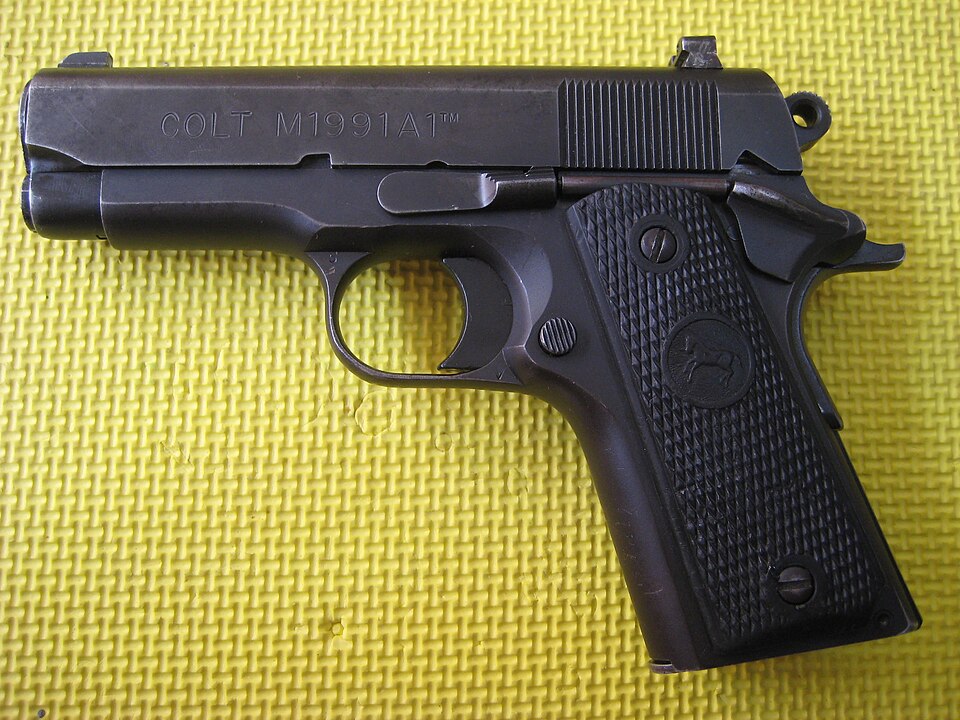
These handguns, as a group, represent the Army’s increasing recognition of what constitutes an “enough” handgun: from sheer brawn, to enhanced capacity and standardization, to subcompact duty pistols, and finally to modular designs that recognize the existence of different hands and different missions. In each instance, though, one thing has always been crystal clear: When the rifle is out of reach, the handgun has to be boringly reliable.”


