

The AR-15 magnet has captured your attention in the same way as a magnet picks up filings: fast, untidily and with an awful amount of sharp little pieces glued together.
The bulk of the misunderstanding is a result of confusion between brand history, mechanical operation and a quilt of rules and regulations that vary with zip code. What comes out is a platform which is talked about as a concept rather than as a machine with certain components performing certain tasks.

1. “AR” describes what the rifle does
AR is not a firing mode, but rather a lineage marker. It goes back to the earlier work of ArmaLite and Eugene Stoner, on an AR-10, and the naming remained, even as the other types became more differentiated. The shape can be reminiscent of military carbines, but even the letters had never carried the meaning of assault rifle and were never meant to be a technical shortcut to the idea of capability.

2. A civilian AR-15 behaves like a machine gun
An average civilian AR-15 is semiautomatic: one shot with each press of the trigger. The components and geometry of the receiver that a standard civilian rifle lacks are needed to be fully automatic fire. Its timing is not made cosmetically, but rather inherent in the way the fire-control components time the hammer and the cycle of the bolt carrier during use.
3. The AR-15 is a single, fixed “model”
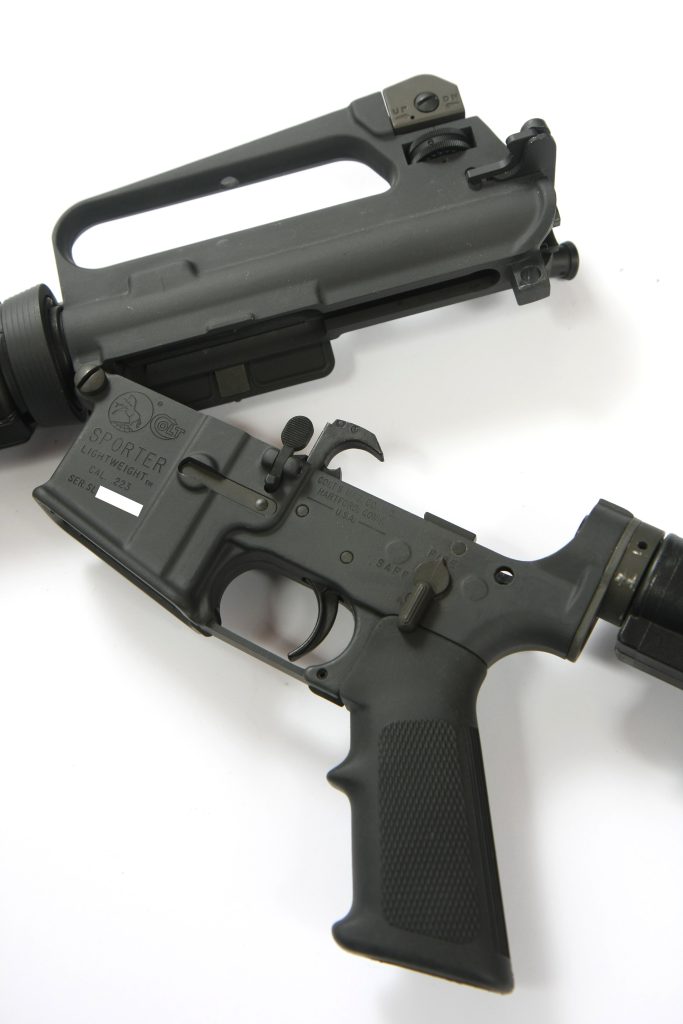
An AR-15 is often referred to by their owners as a single standardized object, whereas the platform is more of an interface. The trigger group and buffer system is located on the lower receiver and the barrel, bolt carrier group, and gas system are located on the upper receiver. It is this division that allows caliber, barrel length, and optics to be swapped with an upper without reassembbling the entire rifle (often referred to as multiple upper receivers on one lower). This is not a new point: it is that AR-15 denotes a family of configurations, not a specification sheet.

4. The cartridge is automatically “too powerful”
The majority of AR-15s are loaded with.223 Remington or 5.56x45mm NATO, usually considered intermediate cartridges. With common comparisons, a 55-grain .223 typically comes at about 1,280 foot-pounds at the muzzle, and a 150-grain .308 typically comes at above 2,600 foot-pounds. The fact that the platform is regarded as easy to manage is also linked to that fact, along with its straight-line recoil design, rather than chance.

5. AR-15s are inherently unsafe for home defense because they “always overpenetrate”
The phenomenon of overpenetration is not determined by the name of the platform; it is an interaction between the design of projectiles, the conditions of impact, and obstacles. In a domestic test environment, in one test environment where there were many loads on a single shot, the clean miss shots went through several layers of the wall, which should remind us that misses are a source of risk to anyone who owns a firearm. The same test also indicated that some expanding or intentional defensive loads penetrated sooner than ball-shaped projectiles when they had traversed calibrated gel and drywall. The lesson is less broad than internet certitude permits: the selection of ammunition and of a real angle and a homestead situation are at least as significant as the selection of rifle over handgun/shotgun.
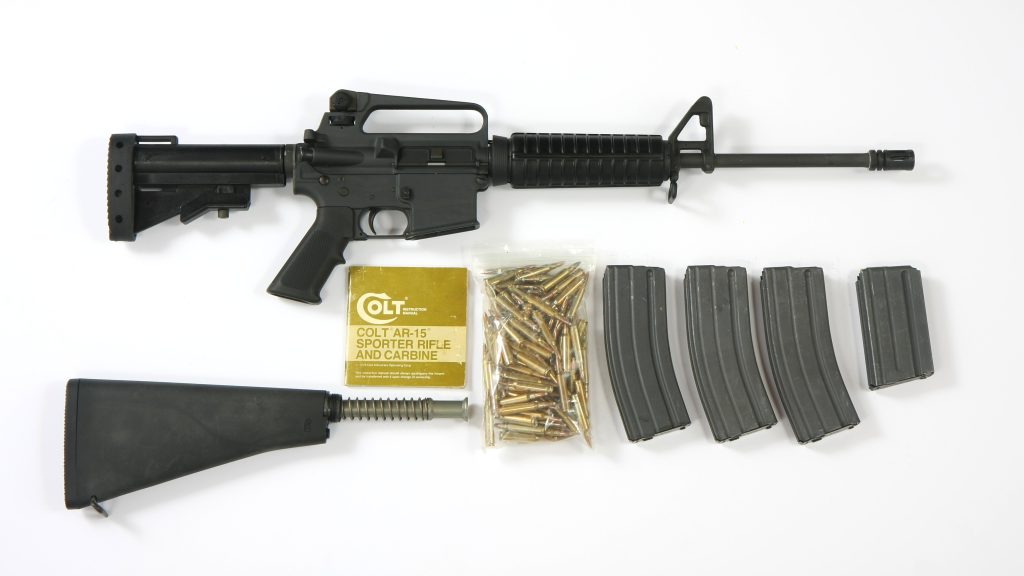
6. Putting one together is basically snapping bricks into place
Tolerances are not eliminated by modularity, which leaves parts replacement approachable. Correct headspace, alignment within the gas system and proper torque is the distinction between a rifle that cycles and one that seeks failures.
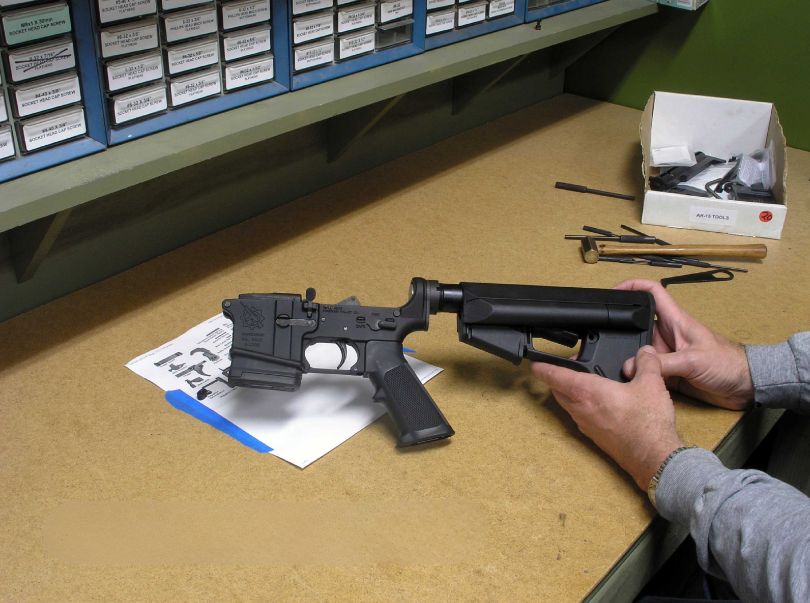
The framing of it is just adult LEGO is a flattening of the engineering into a vibe, and that is the mechanism behind small errors of assembly spawning into sustained issues of reliability.

7. The legal rules are consistent nationwide
Configuration and jurisdiction frequently come before legality, preceded by model name. Features sets can turn a rifle into a semiautomatic centerfire rifle or vice versa even within a single state, e.g., a features test of semiautomatic centerfire rifles. Storage and parts controls, such as AB-1263 (effective January 1, 2026), and similar requirements that influence the way in which some accessories are purchased and shipped are also increasingly discussed in California compliance discussions. Its practical aspect is straightforward: what is in one state a configuration that is practical may be in another state constrained.

The AR-15 is the point of intersection of engineering language, identity language and legal language. When individuals respond in a different vocabulary to the questions of other vocabularies, the myths begin to sound like the common knowledge. The more long-lasting strategy is to view the platform as a machine as any other: define the term under discussion, figure out the precise mechanism under discussion, and align the rules with the particular configuration under discussion.


