Writing about the rifle, Jeff Cooper said: “The rifle itself has no moral stature, because it has no will of its own. This, of course, can be in the hands of bad men to bad purposes, but there are more good men than bad, and the latter cannot be encouraged by propaganda to the true ways of righteousness, but can be reformed certainly by good men with rifles.
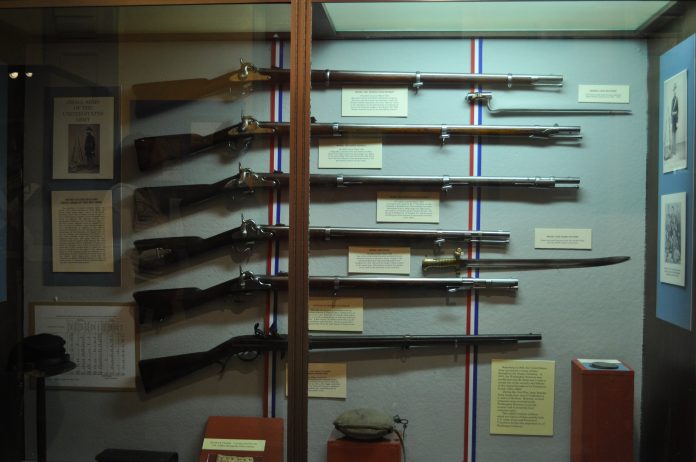
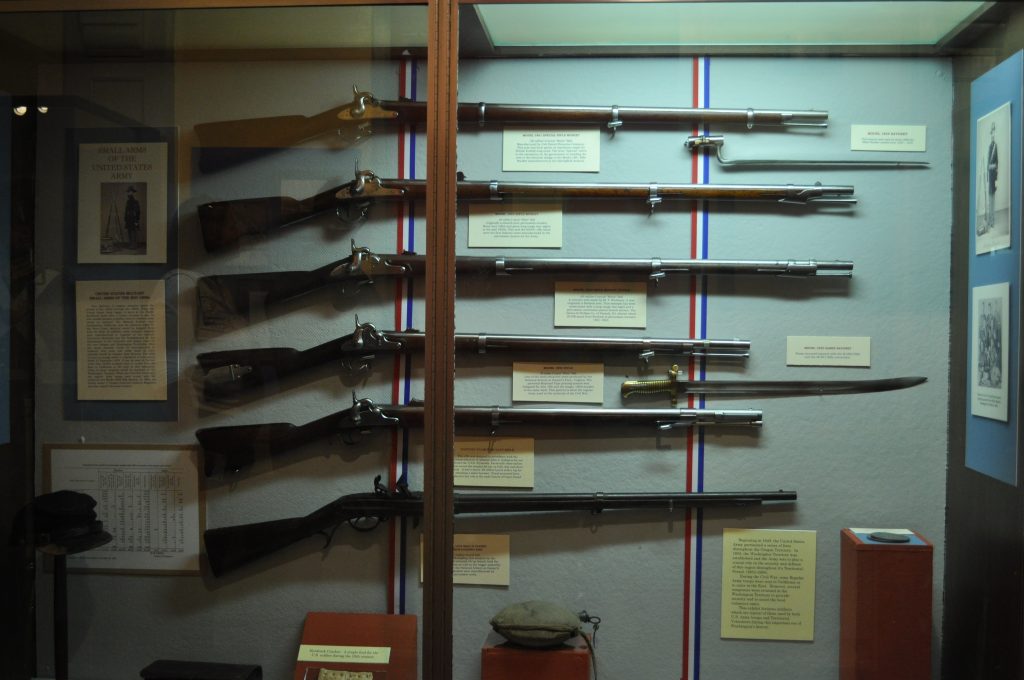
In the American history, the most powerful rifles have never been the best in all categories. Rather, they came with a certain solution to a certain limitation: slowness in loading, excessive weight in ammunition, unreliability in ignition, excessive recoil, lack of training time, or the logistics of maintaining a squad. Their outcome was a series of design choices: some beautiful, and some sacrificed, which transformed the culture of marksmanship, and infantry doctrine, and even manufacturing itself.
A single strand is passed through virtually every point of turning: the cartridge. Stocks and sights could be changed by designers, however, the ammunition a military used could always determine the amount of weight carried, controllability, its range expectations and it could be placed in the same supply line as the weapons of a squad.
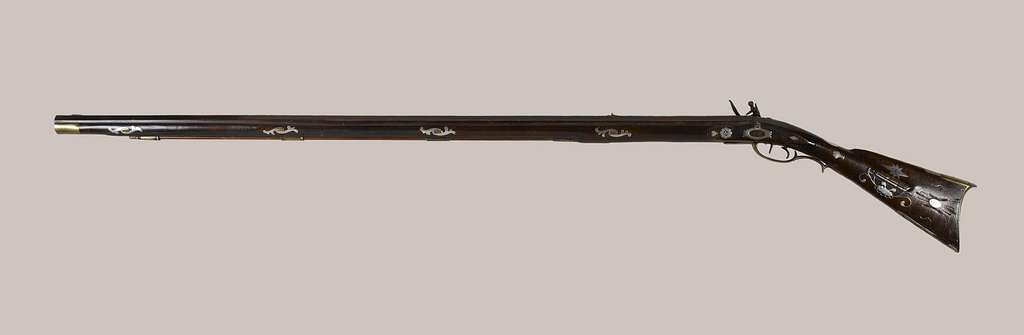
1. Kentucky Long Rifle
American long rifles were derived through tradition of German and Swiss gunmaking that was introduced in Pennsylvania, and later gradually changed to suit the conditions in North America. Earlier models were usually larger, heavier and wider bored, although frontier service led to the design being made slimmer and with smaller calibers that conserved powder and reduced the pain of long walks. By the middle of the 18th century, the trend, which had been identified by the settlers, namely long, balanced, and accurate, had already been grown up. There was a price attached to that accuracy: speed. Rife took time to be loaded and fired consciously, which was the reverse of the volley doctrine of the musket era. But under the control of special departments, the impact would be magnified. Rifle companies were authorized in 1775 by continental forces and the reputation of the precision work of Daniel Morgan by the men in the rifle companies, gave rise to the American myth of the expert rifleman that has always endured.
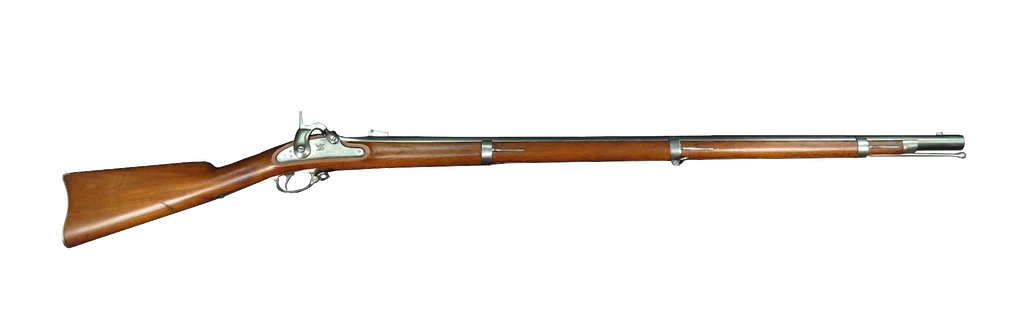
2. Springfield Model 1861 (rifled-musket leap)
The shoulder arm characteristic of the Civil War was by no means a superior musket. It was the industrial union of rapid quick-loading and rifled accuracy, which the expanding mini-type ball afforded. There was this old engineering problem which the family of bullets out of the same stuff helped to resolve; how to load without difficulty and still get rifling at ignition. Through the Springfield Model 1861, mass armies were now provided with a general issue weapon capable of exploiting that projectile concept on a large scale and the battlefield reacted. The transition did not only increase the distance, it strained formations, pacing, and officers-made decisions regarding the range of command made based on the older assumptions of how range worked.
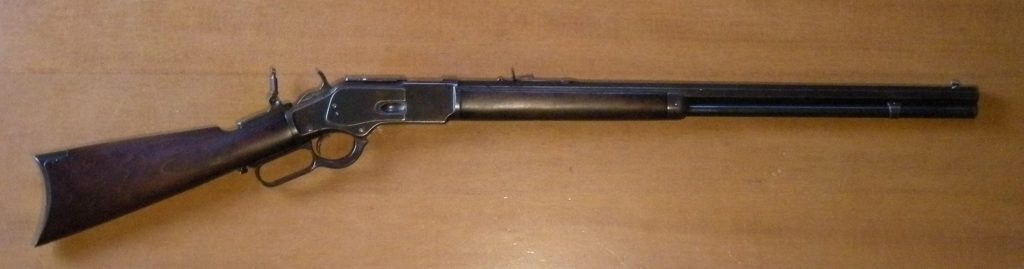
3. Winchester Model 1873
The Winchester 1873 is commonly recalled as a cultural shorthand of the postwar frontier, though the mechanical narrative that it tells is more pragmatic than myth. A lever-action repeater provided quick follow-up shots without the complete complexity of the self-loaders of the era, and suited a world where threats and opportunities presented themselves abruptly and near. It was also important that repeating rifles stimulated an alternative connection to practice. Rapid riding paid to know, To know to ride–on ranches knowing and on trail knowing and in match knowing. The legend of 1873 survived as it was at the convergence of portability, repeated fire and an emerging mass market in manufactured arms.
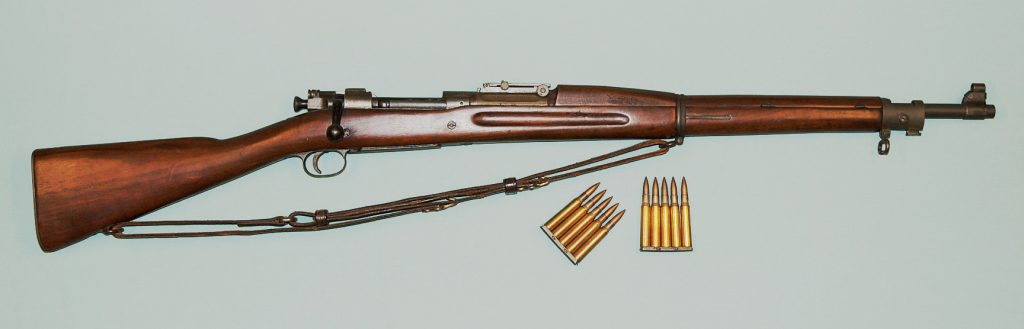
4. Springfield M1903
The M1903 is a time when the army appreciated the concept of controlled, long-range accuracy of an infantry rifle, and American engineers were very devoted to the established European ideas of the bolt-action. It was chambered in.30-06, and combined a robust action with a cartridge which facilitated reach and power, which were important on the open terrain and in the training culture that valued prudent sight alignment. The rifle was also made flexible by that field. The M1903 might be used as a common service rifle or be the basis of precision duties, and its principles found an echo in decades of civilian sporting rifle that imitated its design and its demands of performance.
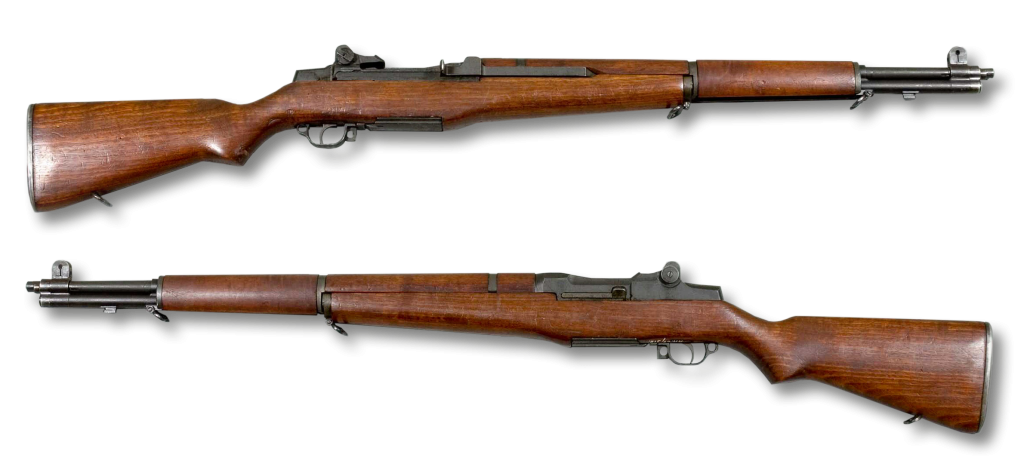
5. M1 Garand
The importance of the Garand is that it is not just semi-automatic, but the effect that the semi-automatic fire had on the unit math of infantry firepower. It was adopted in 1936 and was fed by an internal eight-round system, which allowed an individual to provide aimed shots with the use of a full-power service cartridge with even greater speed. One of the most commonly quoted lines of Patton was speech, although he wrote it down: In my opinion, the M-1 Rifle is the greatest battle implement ever devised. The scale of the rifle too was an engineering tale of the production tooling and throughput during wars. The identical production history registered a high level of output where Springfield Armory produced 122,001 rifles in the thirty-one days of a month-a factory rhythm that served to standardize training and repair in a mass army.
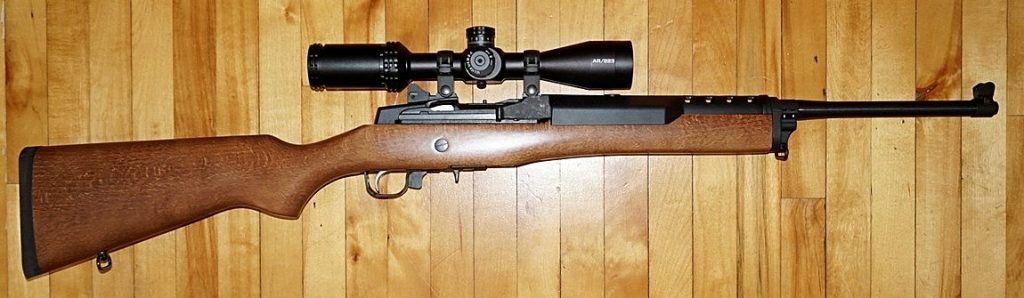
6. M14
The M14 was intended to be a compromise: modern materials and magazines with an operating logic with which they were familiar, all mounted on a standardized cartridge. The replacement of the .30-06 round by the 7.62x51mm NATO cartridge after the Second World War was an indication of a need to achieve interoperability and the use of a smaller round with approximate ballistic properties. The rifle might accomplish a great many things, but not all of them with equal effectiveness. Paper could be selective fired, but automatic fire was hard to control, and was not easily managed by ordinary soldiers due to recoil and weight. As a matter of fact, the M14 got its long-term fame due to accuracy at range-some of those attributes that allowed it to remain useful in more narrow applications around long after it had lost its general-purpose status.
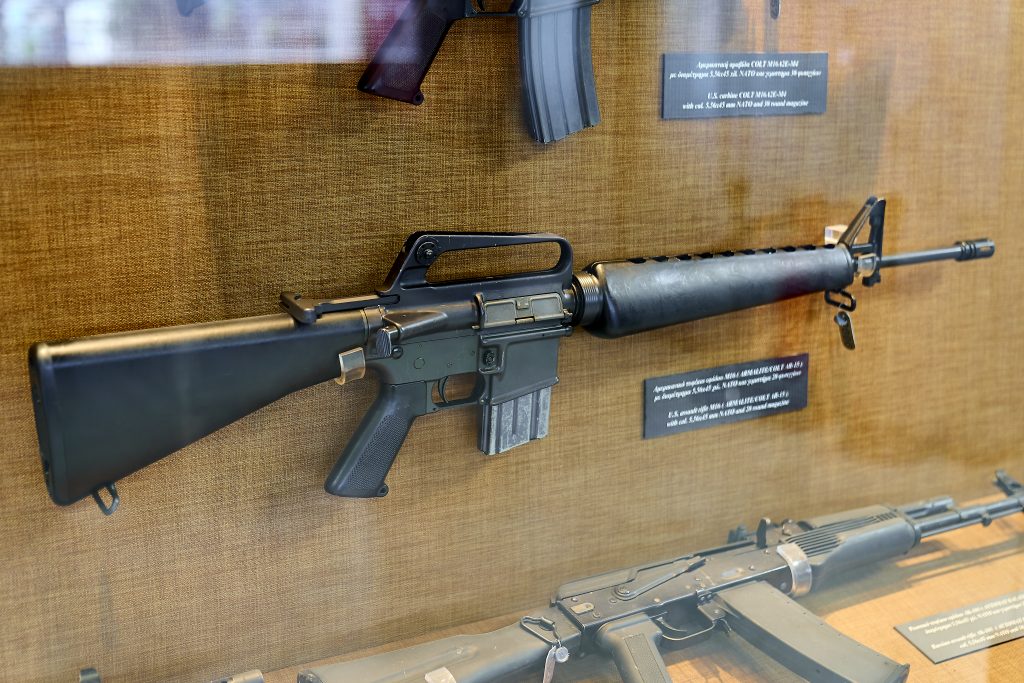
7. M16
The genesis of the M16 was aerospace adjacent, with aluminum, fiberglass and a straight line design that minimized muzzle ascension. It was successful, however, only with a larger systemic change the adoption of small-caliber, high-velocity ammunition, and a lightweight rifle that would enable troops to carry more rounds without adding as much fatigue. The idea of .223 evolved into 5.56 NATO, and the controllability of the platform created the possibility of hitting at a rapid and consistent rate to be a realistic possibility and not an ideal of training. Experience in the field at such a young age also taught the lesson of how procurement details can override design intent. An ammunition propellant chemistry change and insufficient maintenance support generated a crisis of reliability which was eventually overcome by subsequent measures. M16 family, especially in its mature form, which started being modular, demonstrated that infantry rifles could be a platform, rather than an object.
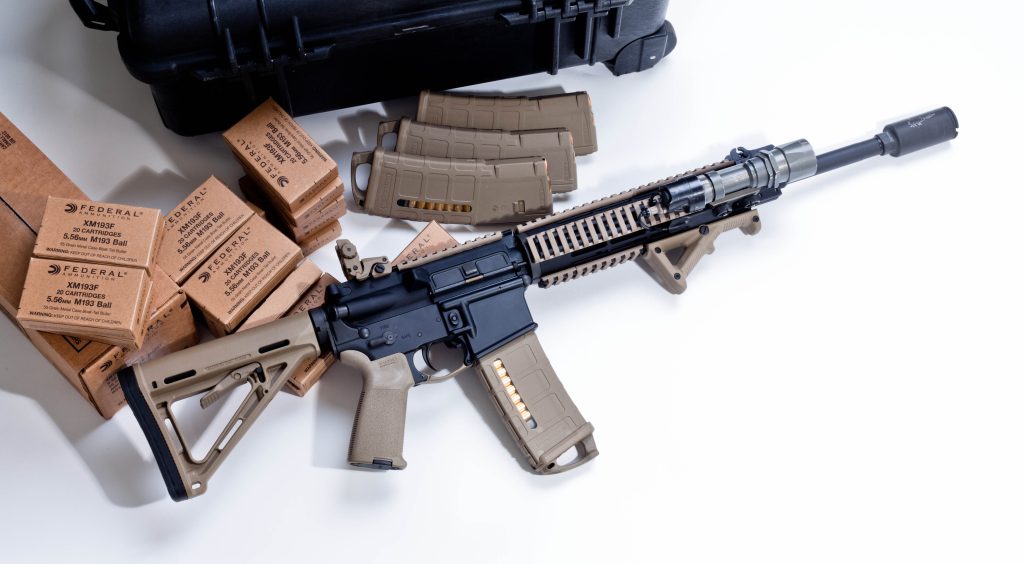
8. AR-15
In civilian hands, the AR-15 became a symbol of modular engineering more than a single “model.” Its receiver geometry and accessory ecosystem encouraged owners to treat the rifle as a configurable system, swapping components to match tasks, preferences, and training styles. That flexibility helped explain why the platform acquired the workshop nickname “Adult Legos”. The AR-15’s cultural footprint also shows how designs can escape their original categories. A rifle built from military ideas became a long-running template for competition, hunting, and hobbyist tinkering while also remaining a focal point in public debate.
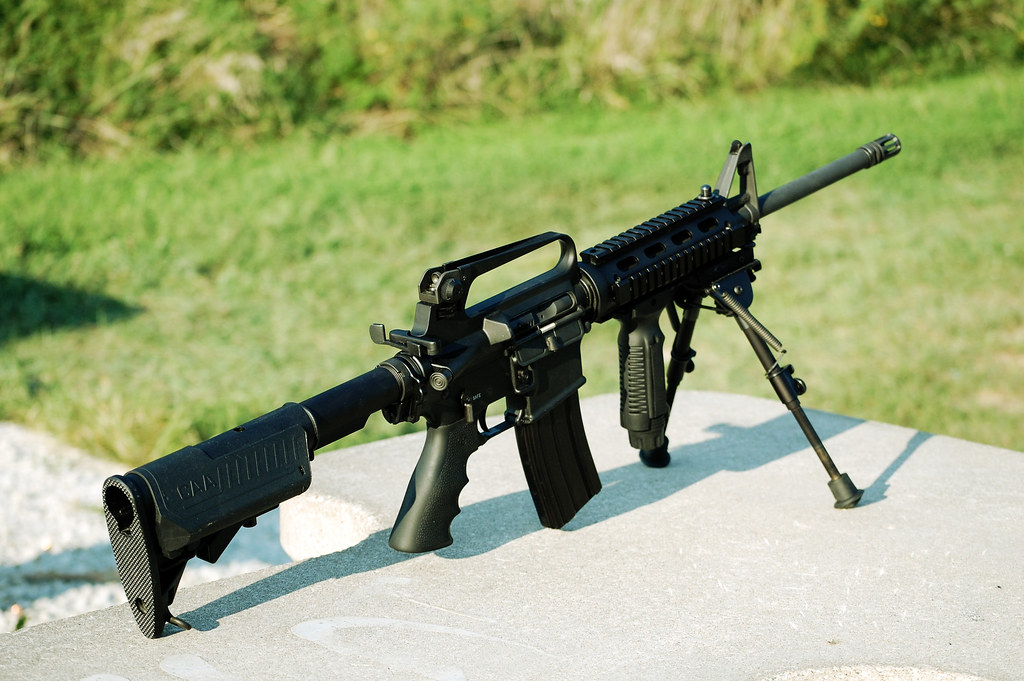
As an artifact of engineering, the platform’s real story is the triumph of standard interfaces and repeatable manufacturing over the one-off craftsmanship that defined earlier eras. From patched round balls to standardized NATO cartridges, the American rifle story is a record of tradeoffs made tangible. Materials, ammunition, training doctrine, and factory output repeatedly pushed designs toward different definitions of “effective.” What endured was not a single mechanism, but an evolving idea: a rifle succeeds when it fits the way people actually carry, supply, maintain, and learn it.


