
“The year 2026 is proving to be one of the most technically ambitious years in the history of Apple, with a set of hardware and software achievements converging to completely reinvent the iPhone experience. With a significant AI re-design of Siri to advanced semiconductor and display technology, the company is gearing up to launch innovations that are directly focused on delivering to performance, personalization, and breakthroughs in form factors.
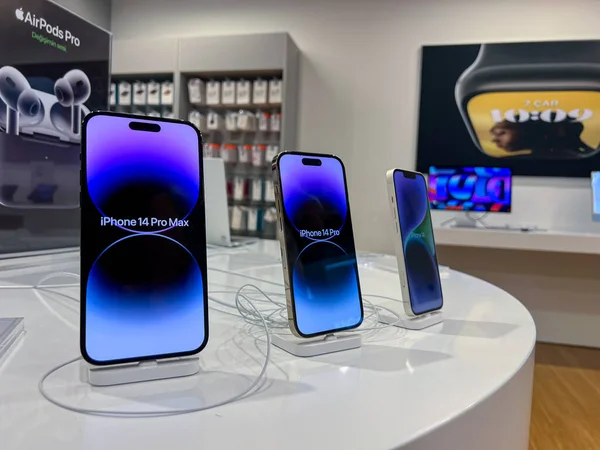
1. Siri 2.0 in iOS 26.4: Context-Aware AI
Siri 2.0, the much-anticipated upgrade to the Siri language engine, will be released in iOS 26.4 in the spring of 2026 and runs on a large language model architecture using Google Gemini. It is an enhancement of the voice commands to rich awareness of context that Siri can now process the information on the screen, find the information in emails, messages, and calendars and perform actions across applications through voice-based workflows. There will be increased integration of health tracking, which will allow proactive recommendations. The step-by-step approach to rolling out upgrades will enable Apple to provide a functional upgrade initially and then aesthetically upgrade in iOS 27 before the eventual rebrand.

2. iOS 27: Stability Meets AI Expansion.
As announced at WWDC 2026, iOS 27 will be a Snow Leopard-style release with a performance focus and bug fixes, with new Apple Intelligence features superimposed on this. It will also have an AI-based Health+ service, which incorporates coaching and food logging, an enhanced Spotlight web search, better Photos collections, and a redesigned Calendar app. In the case of the iPhone Fold, iOS 27 will include multitasking optimizations similar to iPadOS as it has more display space.
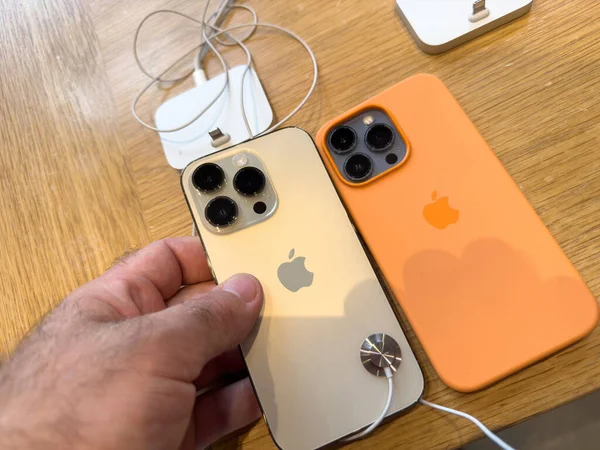
3. iPhone 18 Pro: 2nm A20 Pro Chip
The Pro iPhone 18 Pro and Pro Max will introduce the A20 Pro chipset based on TSMC’s 2nm N2 process that is up to 15 percent faster and 30 percent more efficient than the A19 Pro. Wafer-Level Multi-Chip Module (WMCM) packaging incorporates a RAM chip with CPU, GPU and Neural Engine dies directly, which saves space, improves thermal performance, and increases the responsiveness of Apple Intelligence. Bandwidth to the high-demand tasks will be increased via LPDDR5X memory channels, and the C2 modem will allow mmWave 5G to be comparable to the current one offered by Qualcomm.

4. Engineering under-Display Face ID.
Face ID under display in the iPhone 18 Pro by Apple entails overcoming complicated optical and fabrication issues. The system with metalenses that redirect infrared light through OLED pixels without distortion has to keep Face ID up to date, with its 1-in-1,000,000 accuracy and milliseconds unlock times. This change can be used to have a reduced pinhole camera aperture, matching more screen area but maintaining Dynamic Island-like software overlays to maintain a recognizable user interface.
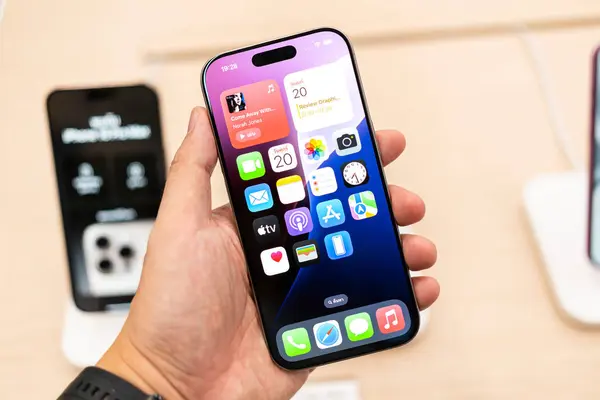
5. Variable Aperture Camera System.
The main 48MP lens of the iPhone 18 Pro will be the first iPhone phone to have a mechanical variable aperture, produced by LG Innotek and Foxconn with actuators by Luxshare ICT and Sunny Optical. This allows the light intake to be manually controlled, enhancing the quality of low-light shots, eliminating the possibility of overexposure, and providing optical depth-of-field control without detracting on computational bokeh. Samsung has released a new three-layer stacked sensor, which will also improve responsiveness and dynamic range.

6. Folding iPhone: Creaseless Display Technology.
The iPhone Fold will be available with the iPhone 18 Pro and has an inner 7.8-inch display and an outer 5.5-inch panel in a book-shaped format. Engineering work conducted by Apple has been done to remove the crease with the help of ultra-thin glass, titanium and stainless steel hinge, which is strengthened by the liquid metal and a structural glass mid-frame. The custom Samsung OLED has built touch sensors into the panel, making the panel thinner by 19% and increasing rigidity. It will be the thinnest device Apple has ever released at 4.5mm.

7. Foldable Hardware and Performance
The iPhone Fold will also use the A20 chip with 2nm dimensions, the same chip used in the Pro models with C2 mmWave 5G modem. The inner screen will feature a camera of 24MP that will be an industry first, with the outer display being a hole-punch camera. Touch ID will come back through a sensor mounted on the side to save internal space. The battery with 5,400-5,800 mAh capacity will be the highest capacity that iPhones have ever had with high density cells and a smaller size of display driver IC to enhance the efficiency.
8. Pricing and Market Positioning
The iPhone Fold will have a rumored price of up to $2,400 and will be priced slightly higher than Samsung Galaxy Z Fold 7, relying on Apple to be precise in its design and integrate with its entire ecosystem. The Pro version of the iPhone 18 can also have its price changed by the increased costs of manufacturing 2nm chips which could make these devices the most expensive Pro iPhones to date.

The 2026 iPhone range can be viewed as a twofold strategy in that Apple will provide immediate user-facing AI and camera upgrades as well as the foundations of fundamental hardware changes, such as under-display biometrics and foldable designs. The combination of these advances indicates a year in which the ambition of the engineering profession will meet the market ready.”


