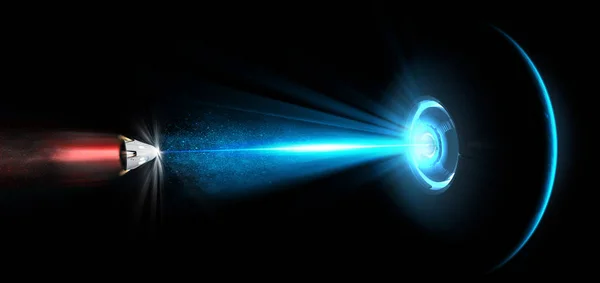
Can one of science fiction’s most iconic inventions become the key to saving Earth’s orbital highways? For decades, the notion of a tractor beam, an invisible force tugging objects through space, has been the stuff of fantasy in Star Trek and Star Wars. But now researchers are turning that fantasy into very real engineering to solve one of modern spaceflight’s most pressing challenges: an escalating threat of space debris.
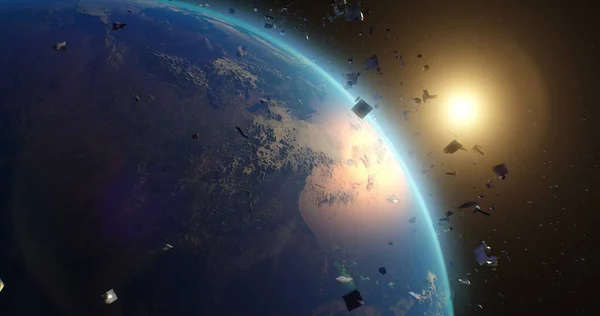
Over the past two decades, both collisions and uncontrolled breakups have littered Earth’s orbits with defunct satellites, rocket stages, and millions of high-speed fragments. This junkyard now imperils the integrity of communications, navigation, weather monitoring, and future exploration missions. NASA is preparing an electrostatic tractor beam as a touchless technology which may revolutionize debris removal by safely nudging dead spacecraft into graveyard orbits without ever touching them.
From orbital disaster to the intricate physics of electrostatic attraction and on through engineering hurdles that must be overcome before these sci-fi-inspired devices patrol our skies, here are nine fascinating aspects of the technology.

1. Born from a Catastrophic Collision
The concept was born in the wake of the 2009 collision between Iridium 33 and Kosmos 2251, which sent over 1,800 trackable fragments scattering throughout low Earth orbit. Hanspeter Schaub, from CU Boulder, realized that what was needed was a system to prevent such incidents by relocating defunct satellites before they could do harm. He drew his inspiration from the realm of science fiction tractor beams, but the application was rather more prosaic, involving electrostatic physics rather than exotic energy fields.
2. How Electrostatic Attraction Does the Heavy Lifting
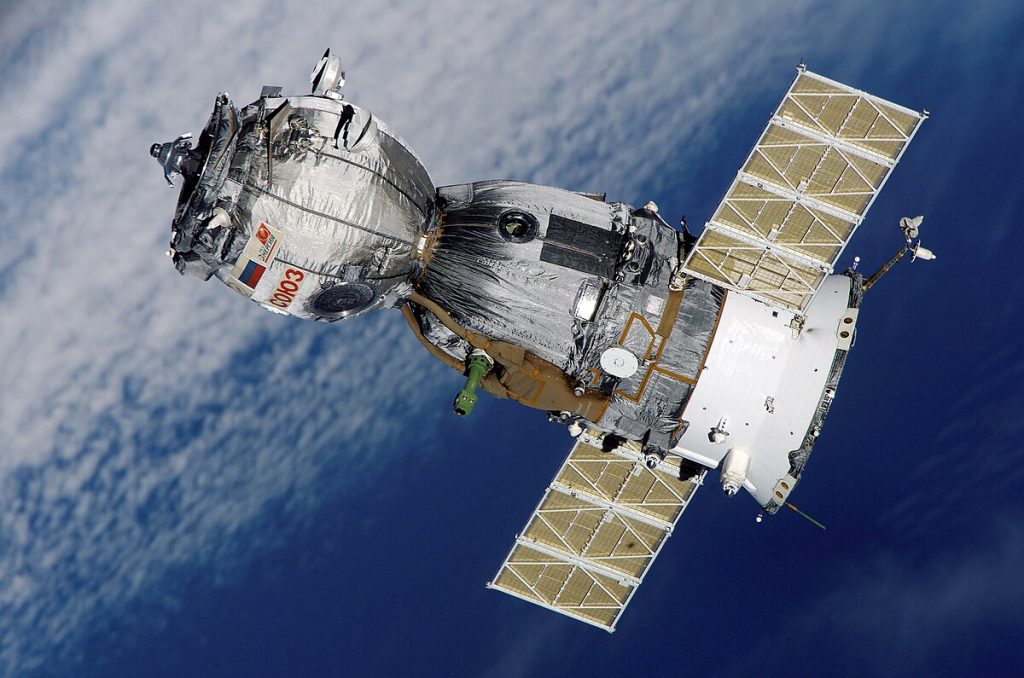
An electrostatic tractor would rely on a servicer spacecraft equipped with an electron gun. Firing negatively charged electrons at a target satellite, the servicer gives the debris a negative charge while it maintains a positive charge itself. A weak yet relentless attraction across 20–30 metres of empty space ensue – effectively a “virtual tether” that allows the servicer to tow a target without actually touching it.

3. Touchless Removal: A Safety Revolution
Harpoon-and-net and robotic-arm-based physical capture techniques run a high risk of damaging tumbling debris, which might worsen the junk problem. The contact-free concept of an electrostatic tractor circumvents such risks completely: “You have this large, dead spacecraft about the size of a school bus rotating really fast. Physical contact can damage the spacecraft, and then you are only making the [space junk] problem worse,” Julian Hammerl said.

4. The GEO Challenge: Clearing Prime Orbital Real Estate
Geostationary orbit hosts critical communications and military satellites 22,000 miles above Earth. There are only about 180 viable slots in GEO, making it “prime real estate.” Moving defunct satellites into distant graveyard orbits frees those slots for new missions and prevents overcrowding that increases collision risks in one of the most valuable orbital regions.
5. Slow but Steady: The Pace of Tractor Beam Operations
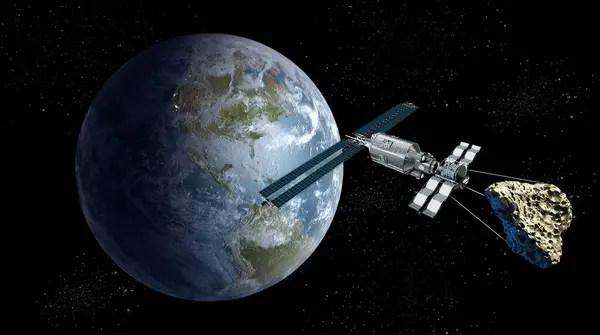
Electrostatic attraction is inherently weak; thus, the process of relocation is slow. Current models for proposed approaches to planned removals of large, inert spacecraft estimate this would take two to three months to tow a multi-ton satellite about 200 miles. This might be far slower than the tractor beams of cinema but sufficient for proposed approaches to planned removals of large, inert spacecraft and unsuitable for small debris removal or any imminent collision threat responses.

6. Laboratory Simulations in ECLIPS
CU Boulder’s ECLIPS is a stainless-steel vacuum chamber that attempts to replicate the conditions of orbital plasma inside the lab. Researchers then simulate various types of debris, using everything from metal cubes to complex shapes, testing how electron beams interact across a range of different plasma environments, including those beyond Earth’s magnetic shield in cislunar space.

7. Funding and Economic Challenges
Building a prototype electrostatic tractor could cost tens of millions of dollars, with operational versions costing more. “The science is pretty much there, but the funding is not,” said Kaylee Champion. While expensive upfront, the capability to move multiple objects with a single servicer over its lifetime could make the technology cost-effective versus single-mission removal.
8. Complementing Other Debris Mitigation Strategies
The electrostatic tractor joins a growing suite of space-debris removal techniques that comprises harpoons, nets, magnetic capture, and laser ablation-each with its own strengths and weaknesses. All of these will be required to prevent the so-called Kessler Syndrome, in which the rate of collisions becomes self-sustaining, say experts, who add that shorter postmission disposal times could help prevent further collisions.

9. From GEO to the Moon: Expanding the Mission
Besides Earth’s immediate environment, scientists are studying how tractor beams could also work in cislunar space, where solar wind plasma and ion wakes create unpredictable conditions. Champion’s team has added an ion gun to ECLIPS to study those effects, expecting future roles in supporting lunar infrastructure and deep-space missions under programs such as NASA’s Artemis. The electrostatic tractor beam is where science fiction meets aerospace innovation, providing a safer, contactless way to remove large pieces of debris from critical orbits.
Slow and expensive, the potential it represents for real estate preservation and collision risk mitigation makes it a compelling addition to the space sustainability toolkit. As funding and engineering challenges are overcome, this once-fantasized technology could become routine in orbital maintenance-proof that what was yesterday’s science fiction can indeed be tomorrow’s reality.


