
“We are talking about the rate of fire that can reach 800 or 1,000 or more rounds per minute,” warned ATF Director Steven Dettelbach as recently as 2023. “This kind of rate of fire,” he noted, “has traditionally only been seen with military-grade machine guns.” But increasingly, it has also characterized the rate of fire of ‘aftermarket’-advanced semi-automatic firearms. For firearms enthusiasts, engineering enthusiasts, and defense technology watchers, the interplay between military technology, the law, and the darker end of the gun culture has rarely, if ever, been more fascinating than it is today.
The gun culture in the US is a result of legislation such as the National Firearms Act, which has been in existence for several decades; however, innovation in conversion kits such as bump stocks and forced reset triggers has managed to push the boundaries of legislation. While some of the conversion kits are brilliant examples of mechanical ingenuity, others are crude and very functional, to say the least, and they all have various ramifications in terms of their safety, legality, and functionality in either recreational shooting or crime scenes. The article will highlight nine of the most popular ones.
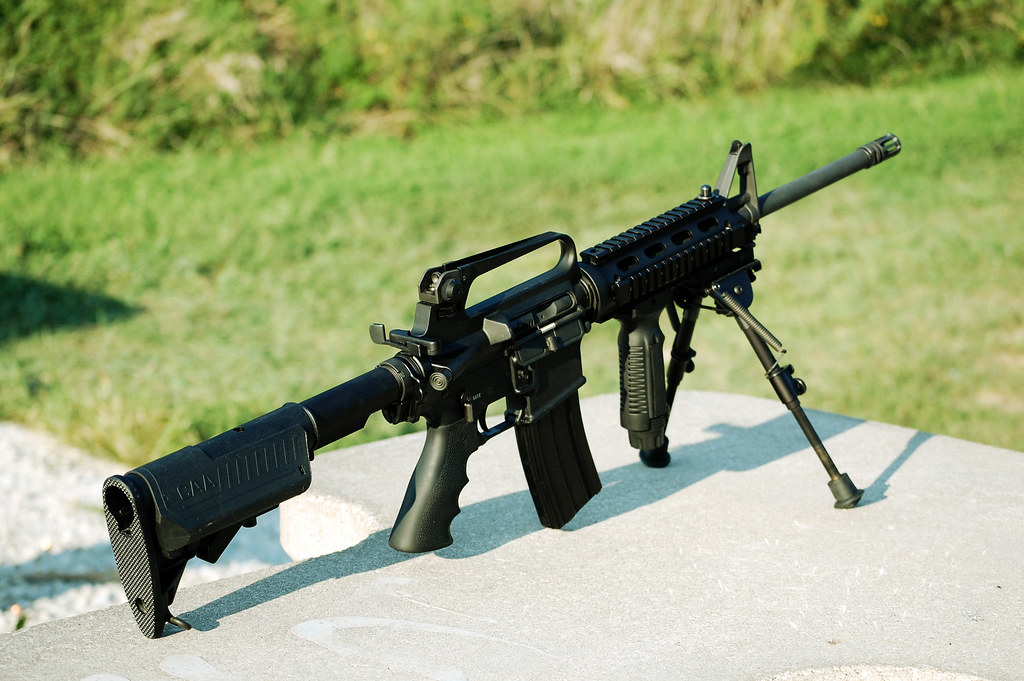
1. Hell-Fire Trigger – The 1990 Pioneer
Launched in mid-1990, the Hell-fire trigger is one among the very earliest attempts to increase semi-automatic guns’ rate of fire. The spring-loaded bar is fastened over the trigger guard’s rear part and pushes the trigger forward to reset it each time it is fired. This simplicity made it possible to adapt to all sorts of weapons from AR-15 and AK-series rifles to G3 and MAC-10 handguns too.
The spring tension could be adjustable, which made it possible to fine-tune the fire rate. Although it was mechanically very simple, it gained notoriety due to its involvement in events such as the Waco Siege in 1993 and the 101 California Street Shooting. The Hell-fire is still a baseline model used in the development of newer forced reset designs.

2. Bump Stocks – From Las Vegas to the Supreme Court
Developed by Bill Akins in 2005 for the Ruger 10/22, bump stocks utilize the recoil and slider on the stock to “bump” the trigger against a finger that is held in a fixed position. Early models using springs led to them being classified as machine guns by the ATF, while newer ones relied on manually pressing forward, barely staying within limits.
It came into notoriety due to its involvement in the 2017 Las Vegas shooting, wherein 14 AR-15s with bump stocks were used to fire more than 1,000 bullets within ten minutes. In 2018, bump stocks were banned by the administration of then-US President Donald Trump. However, in June 2024, the ruling of Garland vs. Cargill in the Supreme Court declared that bump stocks are not machine guns but are thus legal.

3. Auto Glove – Motorized Trigger Pull
In 2017, the Auto Glove allowed an electric motor to be installed inside a glove, which the user wore to pull the trigger on the gun. The product worked on all types of guns and overcame any limitations of the gun platforms. However, the ATF was quick to shut it down, as they declared the manufacturer guilty of making a machine gun inasmuch as it replaced the original trigger actuation system.
Even if the Auto Glove was short-lived, it showed how alternative designs based on wearable technology could produce rapid firing without having to modify the weapon.
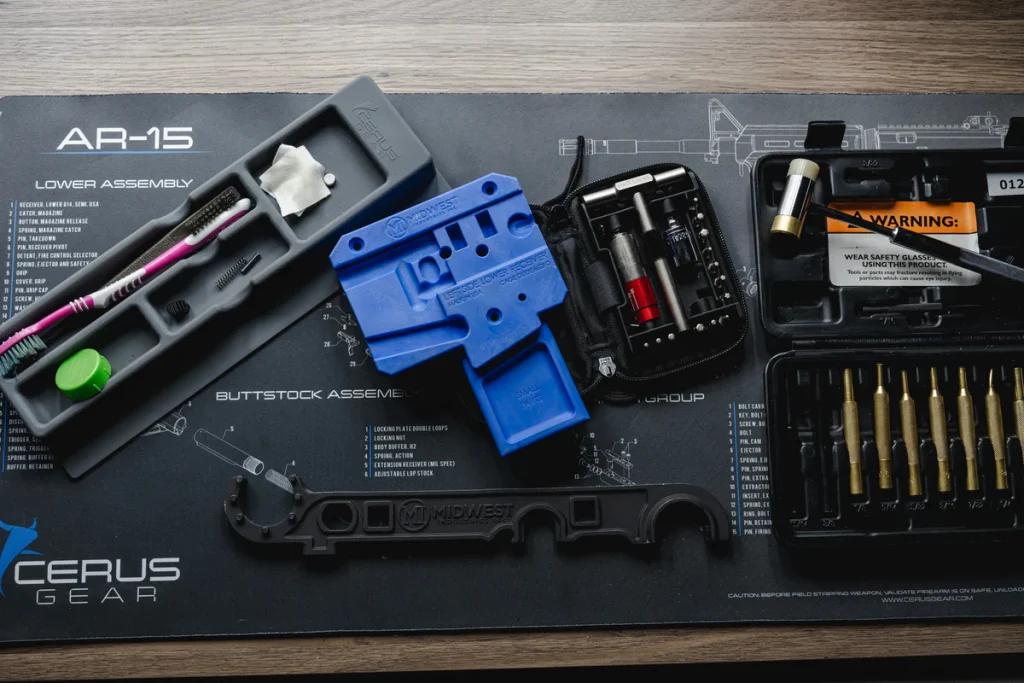
4. Forced Reset Triggers (FRTs) – Internal Positive Reset
Based on the idea developed by Thomas Allen Graves in the 1970s, contemporary FRTs feature an internal trigger reset that moves the trigger forward after each shot to allow quick follow-up shots without needing to turn the rifle. Rare Breed’s drop-in systems in their AR-15 in 2020 featured reset options for safe, semi-automatic, and forced reset modes.
In May 2025, Rare Breed was permitted in a federal settlement to sell some types of FRTs, but they could not be made for use in handguns featuring grip-loaded magazines. This came after many years of fighting over how ATF would classify FRTs, because some groups supporting firearms asserted that FRTs must have a separate trigger for each round.
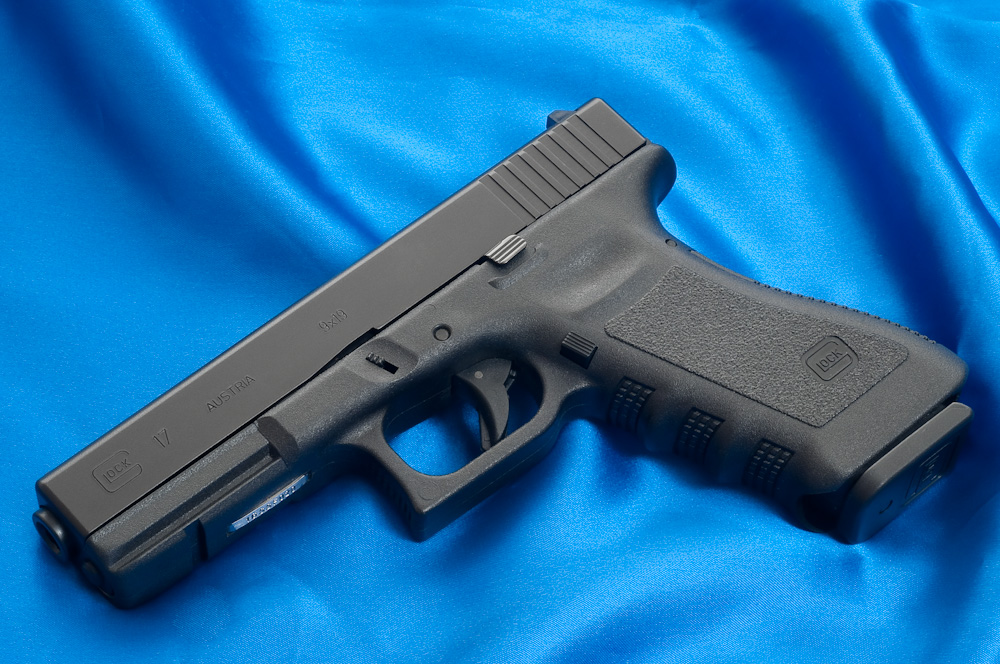
5. Drop-In Auto Sears – A compact full-auto solution
Drop-in auto sears engage the bolt carrier with the hammer discharge only when the sear is fully inserted, allowing the shooter to fire the weapon automatically. For the AR-15 line, the components can range from simple, battered coat hangers to sophisticated items produced with CNC machinery. As far as federal law regards these items, they are indeed machine guns. They had to be registered prior to May 1986.
The “switch” version of the Glock attaches to the back of a Glock pistol slide and bypasses the existing trigger bar to allow fully automatic fire. Rated for 1,200 rounds per minute, these “switches” have seen significant use in street crime and have been seized by the ATF with a 570% increase from 2017 through 2021.

6. Binary Triggers – Doubling Output Per Cycle
The binary triggers will fire once upon pulling the trigger and then release. The model produced by Franklin Armory in 2015 uses two disconnectors that allow easy switching between the phases, enabling rapid fire that simulates the action of the automatic weapon.
Despite being legal at a federal level, they are prohibited in a number of states. In Minnesota, a court decision in 2024 invalidated a ban on binary triggers, finding they were illegitimately imposed as an aside in an omnibus bill. This reflects a legal uncertainty about such devices.
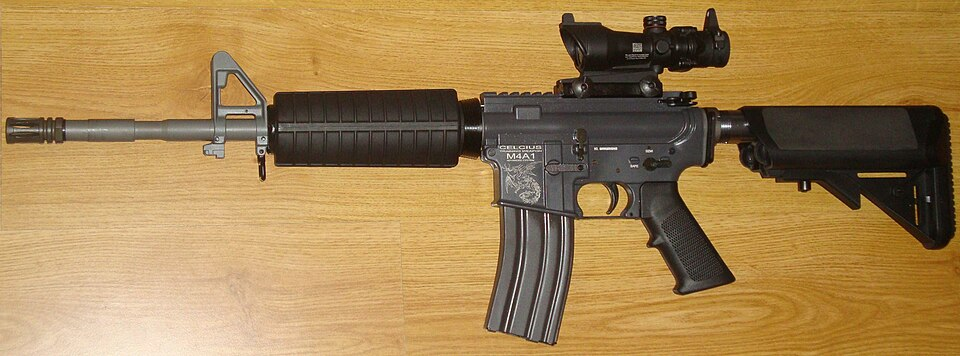
7. GatCrank Systems – Manual High RPM
Gat Crank systems are mounted either on a trigger guard, as a part of the pistol grip, functioning by means of a handle that moves the trigger in each turn. About one turn dispenses three shots, which reaches a speed of 700rpm, approaching the speed of the M4A1.
While it is certainly more of an innovation than an upgrade, GatCranks do have some legal ambiguity regarding their status in certain countries, but they do demonstrate how manual systems can be just as rapid-fire as motorized ones.
8. 3D-Printed Machine Gun Conversion
consumer 3D printing technology has reached the point that home-made illegal machine gun conversion parts can be printed. Glock switch files and AR auto sear files can be found in ‘GunCAD’ communities that have received downloads of over 11,000 times on some designs.
A 784% increase in MCD recoveries, documented by law enforcement agencies, occurred between 2019 and 2023. MCDs cost less than $20 to print, enabling unauthorized groups, including juveniles or extremists, to print these without being traced.

9. Criminal Adoption and Law Enforcement Response
“The Thompson machine gun of the Prohibition era and the present-day Glock switch have long been the tools of choice of full-blast bombers who rely on intimidation and suppressive fire,” wrote Selous, his concern evident in his quotes and writings about the problem of full auto fire in gun violence situations. Full auto fire in massacres Programs such as ‘Operation Texas Kill Switch’ aim to end the trafficking of MCDs that were produced illegally, with rewards for information on the activity and up to a 10-year sentence upon conviction. Others, such as Glock Manufacturing, face lawsuits over claims of negligence for failure to prevent conversion of the products.
Manufacturers have subsequently changed new product design to forestall conversion. The development of firearm conversion devices represents an ongoing process where there is always innovation, definition, and law enforcement capacity. These conversion devices present both opportunities and challenges, not only to engineers, law enforcers, and lawmakers, but also have an impact on citizens and the future prospects of this technology as far as gun violence in America is concerned. How future lawmaking closes the gap between design innovation and lawfulness will determine whether these technologies become mere curiosities or continue to influence gun violence in America.


