Has it ever happened to you to think why the armored knight was an absent presence on the battlefield or why the trenches and the mud marked the battlefields of World War One? This is not to be found in the shift in the political interests or in the emergence of new players, but in the endless progress of innovation in firearms, where the art of warfare and wars themselves have become a completely different matter.
Beginning from the crudest version of the hand gun to the most precise rifle, these weapons are not just exhibits of exemplary engineering skills. Rather, they are tools of strategic revolution. Herein lies the list of the top ten strategic weapons that have left their imprint on the face of warfare beyond the barrel of the gun.
1. Handgonne: The Portable Cannon That Started It All
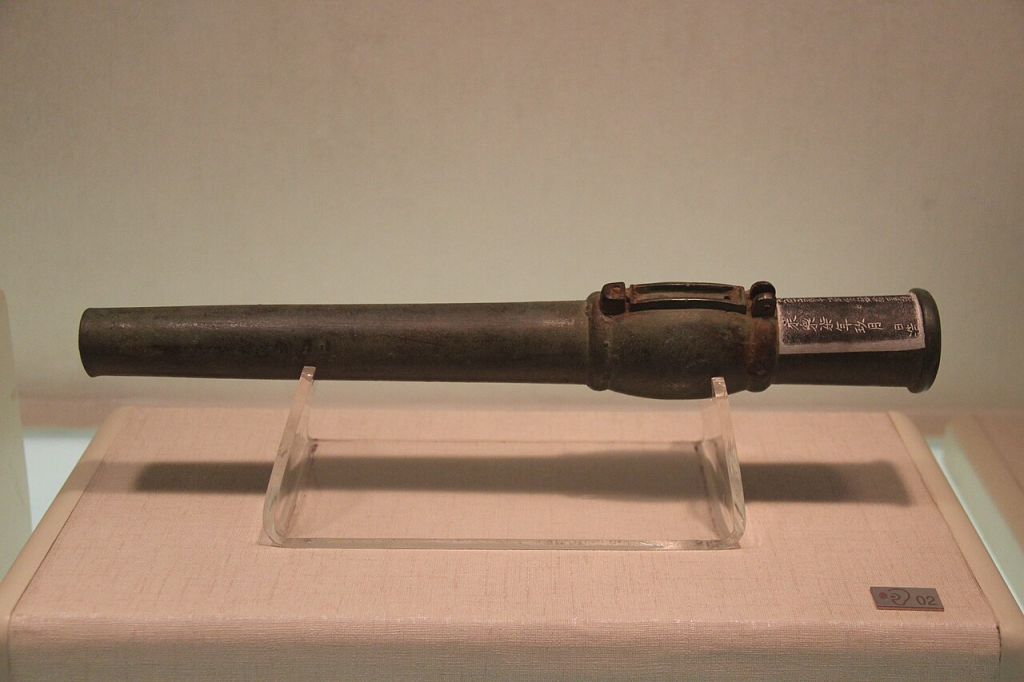
The handgonne, or hand gun, emerged in Europe during the 14th century, following the arrival of gunpowder from China, which was essentially a reduced version of a canon stood on a wooden pole. The hand gun was very crude and inefficient, but the most important feature remained the same: it did not require much training to operate. The common man was able to inflict damage to the armored knight, thus ending the monopoly that the knight had over the ability to command the battlefield for so long. As evidently stated through the archaeological findings, the hand cannon of 1288 AD Heilongjiang was firing either lead balls, stone balls, or grapeshot in their primary designs. Although their rate of reloading was remarkably poor, requiring the assistance of a second person to trigger them through the touch hole, their intimidation and penetration qualities led to these weapons soon appearing in the European arsenal.
2. Arquebus – Standardizing Firepower
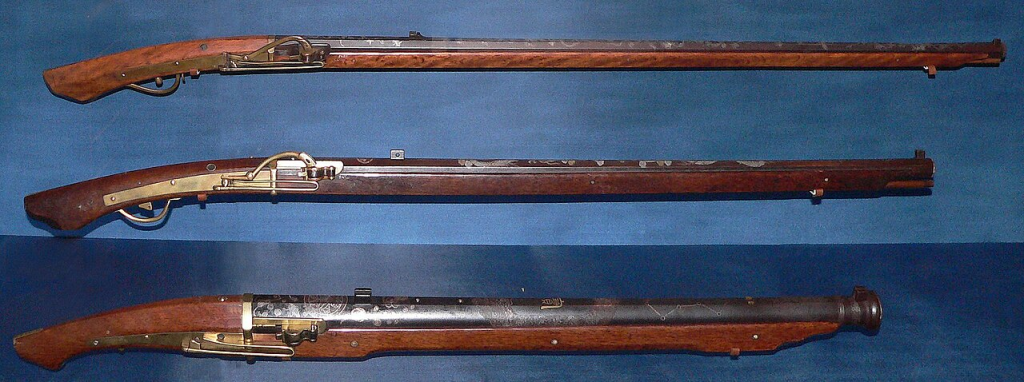
Their improvement, the arquebus, of the 15th century, perfected the handgonne, with its matchlock and shoulder stock, making this weapon much better to use for foot soldiers. A necessary improvement by the French was the standardization of the caliber of the guns, making it easier to manage the logistics and ensuring good compatibility between the different ammunition. The Ottoman Janissaries, together with the European army, developed mass formations for arquebusiers in volley fire. This was the point where the development of firearms ceased to be considered supplemental to pikes and swords, but was given utmost importance in battle formations.
3. Flintlock Musket – Two Centuries of Reliability
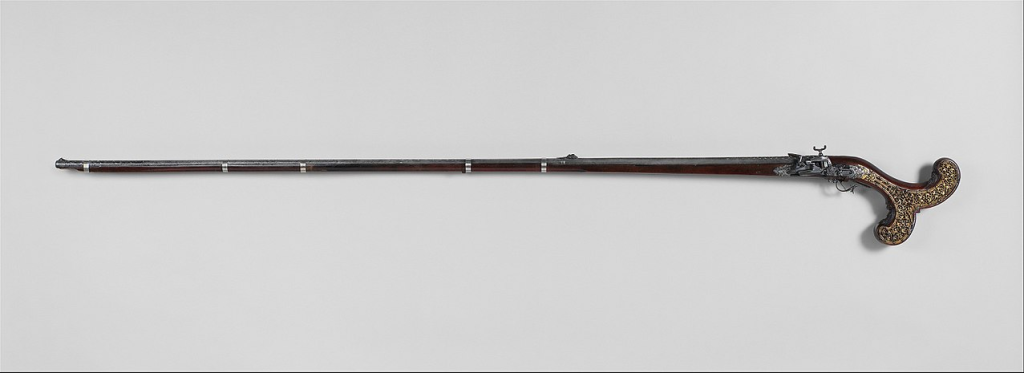
Matchlocks, which had replaced matchlocks during the 17th century, relied on the striking steel and the flint that ignited the gunpowder, eliminating the smoldering match. The invention of Marin le Bourgeoys in 1610 to be used by the French military perfected the gun and made it more affordable and quicker to use. The historical British “Brown Bess” musket was introduced in 1722 and would later become a legendary item in many battles from the American Revolution up to the Napoleonic wars. Its ability to fire volleys and use socket bayonets allowed the soldier to fire a shot and then be able to resist a cavalry attack without the need to change his weapons, making the need for a pike obsolete.
4. Rifled Musket and Minié Ball – Range and Accuracy Problem Statement:
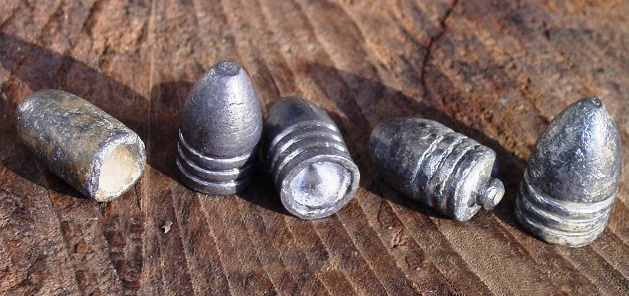
During the middle part of the 19th century, barrels had spiral grooves to give the bullets the effect of rotation. Next came the “Minie ball,” which is cone-shaped and expanded upon discharge to give the effect of range and destructive power of bullets. During the American Civil War, the use of the rifled musket led to battle ranges extending to several hundred yards. Because of this, the strategy of charged attacks was rendered suicidal, and the prepares generic tactically anticipated the trench warfare, stalemate pattern established in World War I.
5. Breech-Loading and Self-Contained Cartridges – Speed and Safety
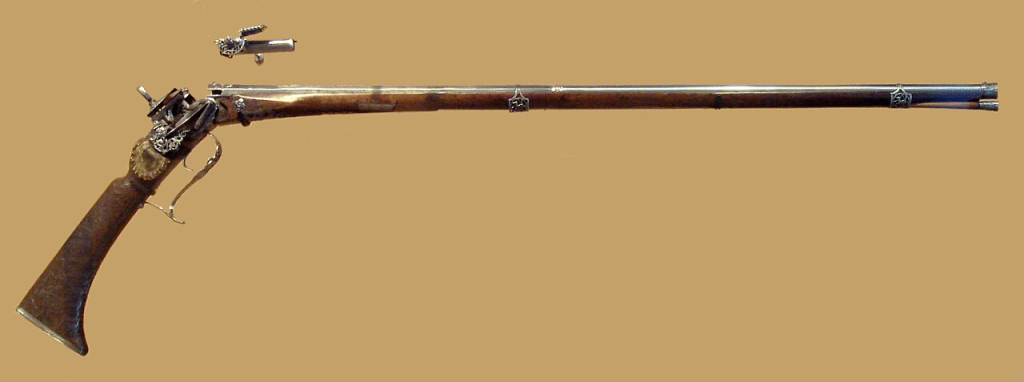
The-loading mechanism through breech, and not muzzle, made the process of discharging ammunition faster. This facilitated discharging of ammunition by soldiers while they were in a prone position, which made them safer from enemy attacks. The metallic cartridge provided an advantage in being a container with primer, powder, and bullet altogether. Weights such as the Prussian Dreyse needle gun could discharge rounds at the rate of 10-12 per minute, and this mobility and firepower overwhelmed the muzzle-loading rifles of the enemy soldiers, as evident in the Austro-Prussian War of 1866.
6. Gatling Gun – Industrializing Firepower
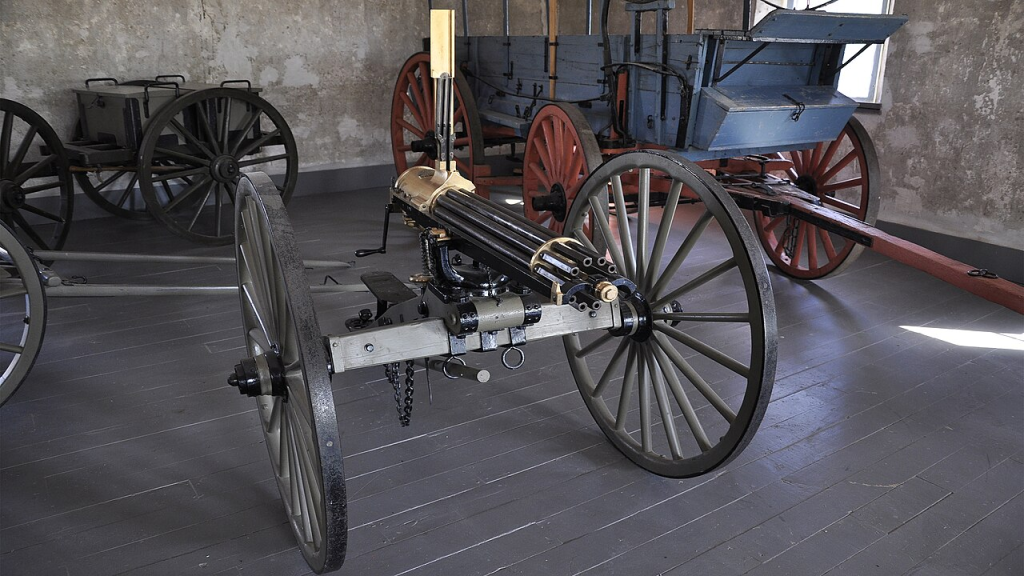
Gatling patented this weapon in 1862; then it was able to fire 400 rounds a minute using a magnetic system; later models only fired 100 rounds a minute. Gatling designed this weapon with humanitarian intentions: Gatling believed that this weapon would help reduce the size of armies because there would be no need for that many soldiers if these guns were placed on the front lines. The siege of Petersburg to the colonial wars in Africa, the use of the Gatling gun to provide continuous fire changed the course of the history of both defense and offense. The Gatling gun invention opened the way for the creation of automatic rifles.
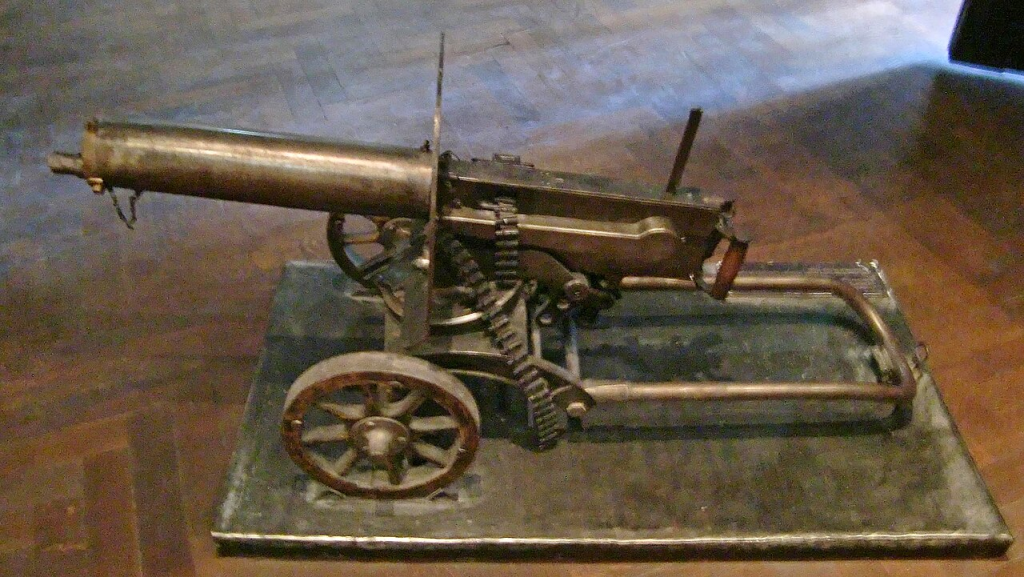
7. Maxim Gun – The First True Machine Gun
The Maxim gun was designed by Hiram Maxim in 1884, and this weapon used the recoil motion to achieve the automatic loading, function, and ejection. It was a water-cooled and belt-fed weapon with the ability to fire up to 500 rounds per minute with very little labor. It led to the era where a few units would timeout entire army attacks. For World War I, the Maxim Machine Gun set the tone for the trenches. Nobody’s territory became the Death Valley featured by consistent gun fire.
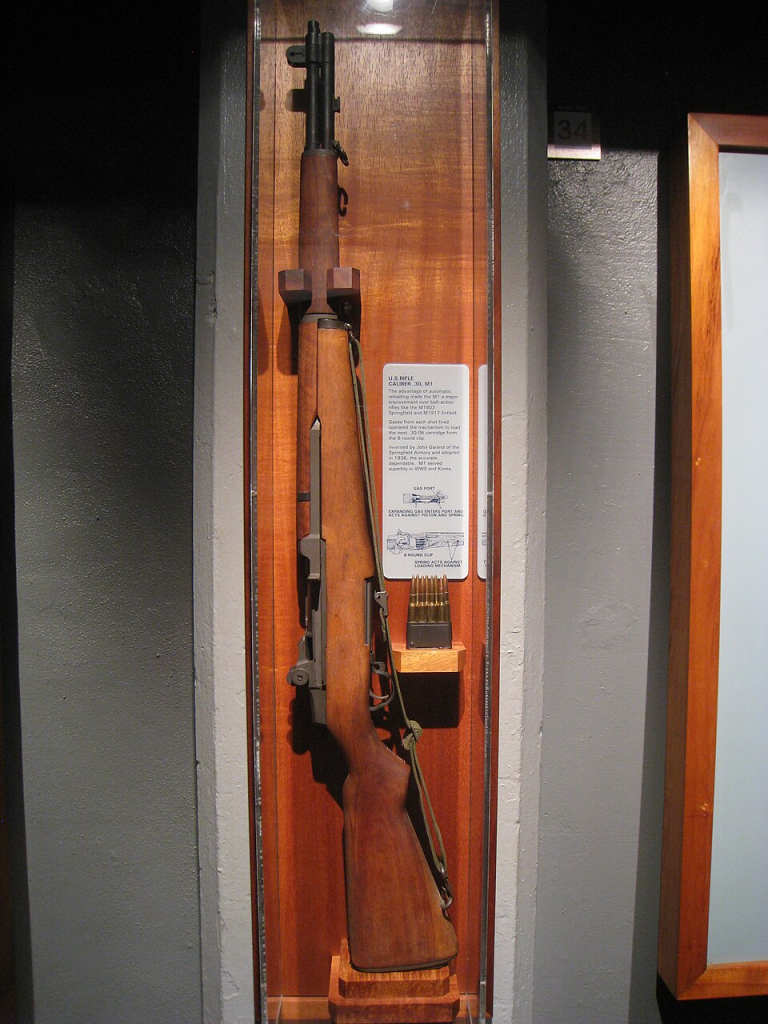
8. M1 Garand – Semi-automatic
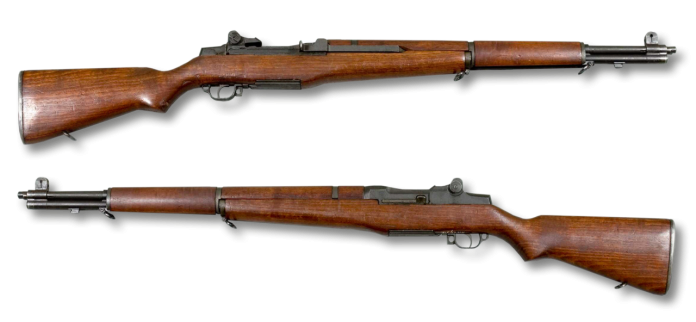
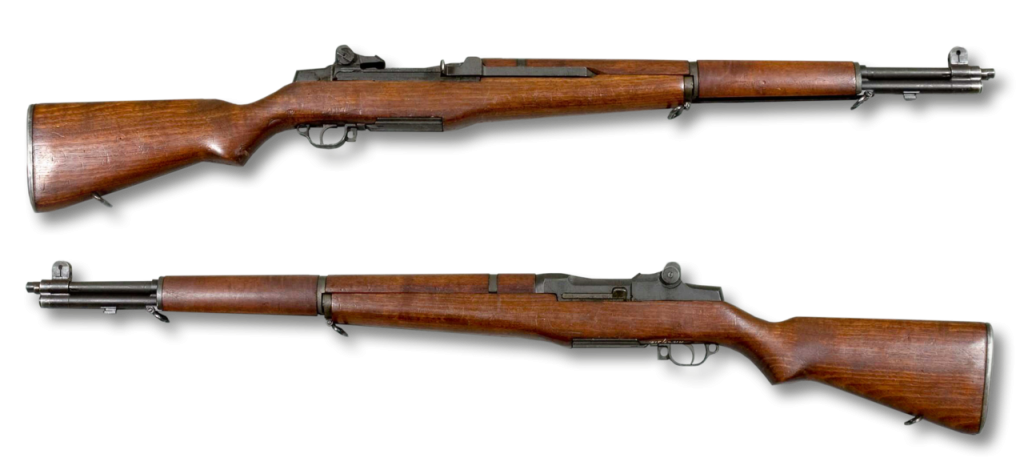
The rifle, adopted by the US Army in 1936, was the first semi-automatic battle rifle, developed by John Garand, and the rifle functioned in a semiautomatic manner, firing in .30-06, with an eight-round clip of ammunition, so the user could fire ammunition faster than they could manually cycle the weapon. As was aptly quoted by then General George S. Patton, “it was the greatest battle implement ever devised.” The rate of fire that this gun had gave the Americans an edge over their competitors, who had bolt-action rifles, during the World War II era.
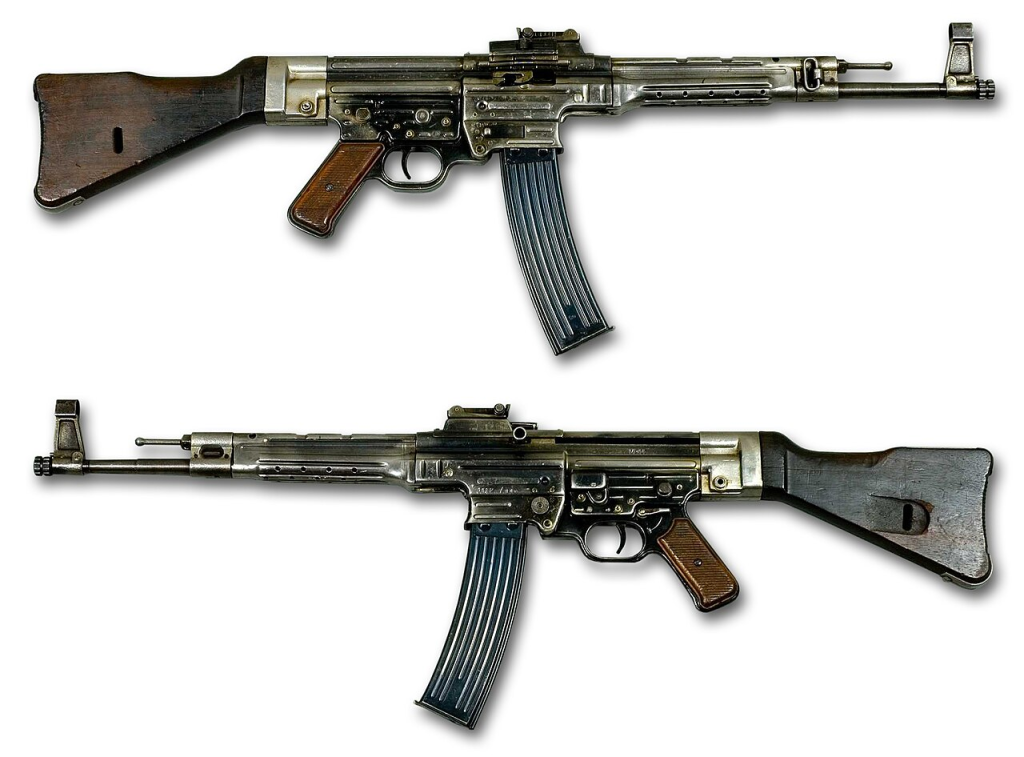
9. StG44 and AK-47 – The Making of the Assault Rifle
This was followed by the German StG44, a gun built near the end of World War II, which combined the range of a rifle with the rate of fire of a submachine gun by firing an intermediate round. Although it was not produced in great numbers, it went on to influence other designs around the world. The AK-47, created by Mikhail Kalashnikov in 1947, improved this design simple, durable, and functional even in harsh environments. Today, with more than 75 million units produced, it is the most used weapon in history, having inspired conflicts and uprisings during the Cold War periods for many decades.
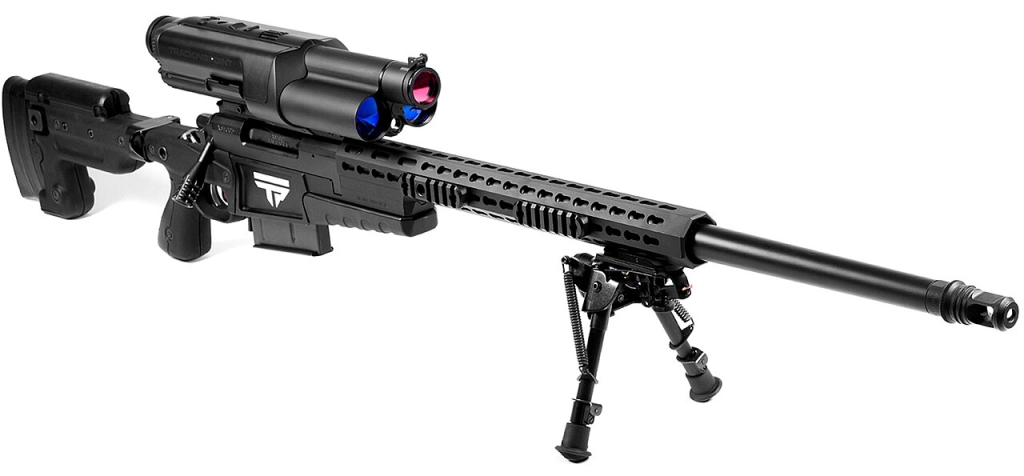
10. Precision-Guided Small Arms – The Digital Frontier
The focus of modern innovation is now centered on the integration of electronic components in infantry weapons. Rifle sights such as M7 for the United States Army are now equipped with computer optical sights which provide real-time corrections for distance, wind, and movement for longer engagement distances. Such projects as the guidance for .50-cal bullets being worked out at the DARPA conceptualize future warfare in terms of the role of the fighting troops themselves becoming shooters whose skills are substantially aided by ingenuous technological gimmicks. All these developments clearly tend to confirm the ongoing continuation of the tradition of OTHERWISE speeding up the speed, effectiveness, and versatility of the fighting troops in a manner evident in the nineteenth and eighteenth centuries.
Within the timeframe of six centuries, each of these arms marked crucial turning points beyond which technology necessitated changes in warfare tactics, organization, and politics as such. From the very primitive form of the handgonne to today’s precision-guided rifle, this evolution of innovation is obviously for the exclusive and rapid adaptationist advantage of the one and only one. These arms are far from being no longer relevant relics in the history of military innovation. These arms are actually war innovation milestones.


