
Could the next tech global competition be determined not on the internet but on the production floor? The fusion of generative AI and robotics research has enabled humanoid robots, once relegated to trade-show exhibits, to graduate to serious industrial projects and nowhere more rapidly than China. From high degree-of-freedom actuators to embodied intelligence, all the enabling technologies line up with geostrategic visions.
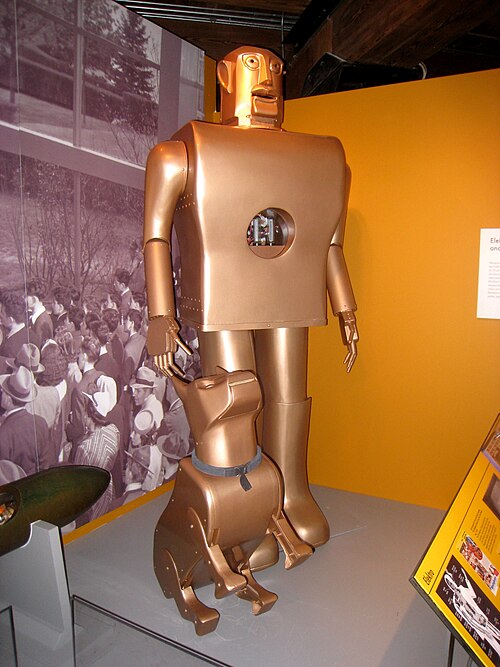
1. From Elektro to Embodied AI
It has been almost 90 years since Westinghouse’s Elektro could blow up no more than balloons and puff out cigarettes. However, humanoid robots today are learning to display coordinated actions within football, boxing, and even marathon running. The reason for this rapid transition rests within combining physical platforms and basic AI models that enable “a form of embodied intelligence inside a humanoid, making it more capable to react to an uncertain environment,” as Jonathan Aitken explains at the University of Sheffield.
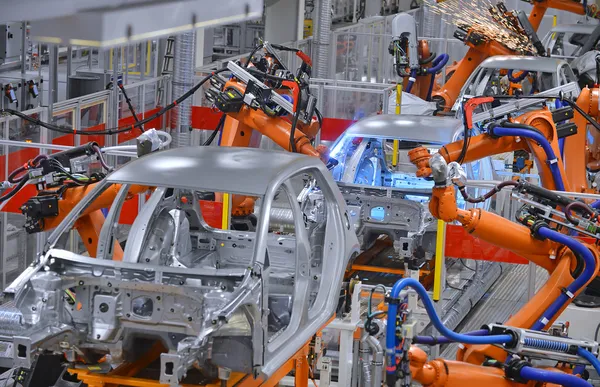
2. China’s Early Lead in Adoption
China represents 54% of all industrial robot installations today, and its humanoid industry will scale from a very low base. But Third Bridge forecasts that no more than 15,000 humanoid models will be sold worldwide this year. And yet 62 percent of Chinese executives expect to start pilots within three years. That fits very well with China’s overall embodied AI plan, which focuses on physical AI for the “real economy” and not on digital uses.
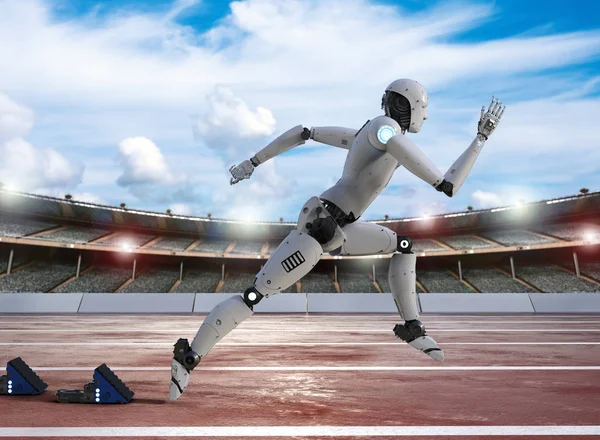
3. Hardware Breakthroughs: Degrees of Freedom and Actuation
The transition from six-axis industrial arms to humanoid designs with 23-43 degrees of freedom, as seen in Unitree’s G1, promises much more biologically capable kinematics. Breakthroughs in ultra-low-friction and high-load actuators and dexterous robot hands with enough sensing resolution to detect forces as low as 100 grams have brought dexterity convergence. Boston Dynamics’ Atlas is fully electrified with about 28 DoF for dynamic agility, and Tesla’s Optimus focuses on product manufacturability with a maximum 40 structural actuators and a 20kg payload.
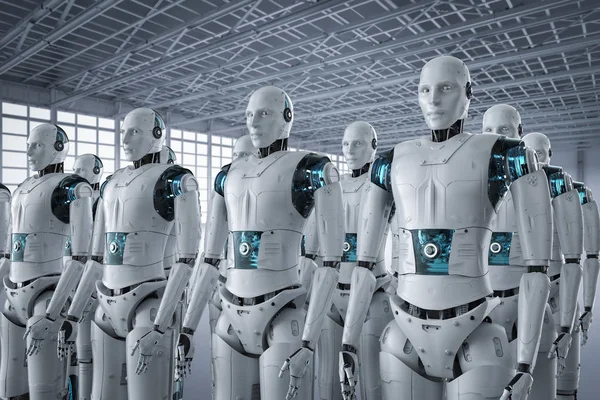
4. AI as the Control Layer
“Roomba” copiers aside, generative AI after 2022 has dramatically reshaped robot “brains.” Large multimodal models combine knowledge of words, images, and touch, enabling robots to learn from humans, generalize to new settings, and solve multi-step problems. Tesla uses its autonomous driving perception toolkit for its Optimus project, while UBTech Robotics, among other Chinese robot manufacturers, uses models like DeepSeek R1 for tasking teams of humanoid robots for autonomous battery swaps, among other 24/7 functions.

5. China’s AI Push: Economic & Demographic Drivers
Embodied AI will be Beijing’s game-changer against a slumping GDP and an aging population. According to CAICT, humanoid robots might replace humans as flexible modules on production lines and fulfill roles as caregivers and in hazardous jobs. Usefulness as dual-purpose tools extends into the military domain, with PLA Daily planning an electronic warfare-proof ‘commander-warrior’ robot.

6. labour market effects
While there are varied findings from empirical research, certain findings have emerged. Where skill-absorption abilities are high, as with information and communications technology and the pharmaceutical industry, a 10% increase in robot utilization leads to an 11% employment increase. But for agriculture and mining, robot use reduces labor demand. A panel study on a country found that a standard deviation increase in robot exposure lowered employment chances by 5 percentage points and reduced low-skilled labor remuneration rates by 8%, as well as encouraging young people to pursue technical education.

7. Global Competitive Landscape
The humanoid type is led by Chinese and US companies. At Boston Dynamics, agility represents an area of research; Tesla focuses on scalable utility, and start-ups like Figure AI rely on general-purpose platforms with the support of OpenAI. Unitree and UBTech stand at the forefront of multipurpose humanoid robotics in China. The country’s production infrastructure and supply chain networks for sensors, LiDAR, and actuators have boosted these developments. Patenting activity reflects the rapid progress made. China has filed 5,688 humanoid robotics patents.

8. Scaling Challenges and Strategic Risks
Regarding scaling Despite advancements on the hardware side, the sector is still at an R&D and pilot stage. Obstacles here are limited availability of NH&M AI chips, import dependence for torque and force sensors, and a lack of an overall business cycle. Country-state-backed capital might result in duplication, as seen with EV developments. But if there are major advancements on balance control, autonomous driving, and cost in the next decade, China could develop rapid production and export capabilities for AI systems incorporated into physical products and potentially breed global dependence, as with 5G and solar cells.

China’s strategy is easy to discern: it intends to integrate world-class hardware production with generative AI and dominate the next platform revolution in automation. Whether it will deploy billions of humanoid robots within 2040, as some predictions forecast, will depend on how soon these can be shown reliable and indispensable outside research labs.


