
“No fortress of the Russian occupier is beyond reach.” That statement from Ukraine’s Defense Intelligence captures the essence of a new phase in the war one defined by precision, reach, and the relentless evolution of unmanned strike systems. The latest operations of Ukraine’s Security Service Special Operations Center ‘A’ have underscored how tactical drones are now delivering strategic effects deep in contested territory.
Over the last weeks, numerous kamikaze drone strikes have hit Russian-occupied warehouses, bases, and high-value military hubs, as captured by video evidence and reported in official reports. These are not isolated incidents but rather a wider-reaching part of Ukraine’s campaign to disrupt logistics, degrade elite enemy units, and show that even fortified rear positions are vulnerable. The FP-2’s role in these missions offers a revealing look at how Ukraine is blending indigenous defense innovation with evolving battlefield tactics.
The following listicle outlines the most significant aspects of the deployment, technical capabilities, and strategic context that shapes the use of the FP-2.
1. Alpha Unit’s Precision Strikes on Occupied Territory
The SBU’s Special Operations Center ‘A’ carried out coordinated strikes using FP-2 drones on Russian-controlled warehouses and accumulations of troops. According to the agency, these were key spots for logistics and deployment staging. In footage published by SBU, at least several drones hit with high speed, followed by big explosions that likely put the installations out of order. The selection of the targets suggests a deliberate effort at severing the supply chains and reducing the operational tempo of Russian forces in occupied regions.
These attacks are part of a broader campaign. SBU chief Vasyl Malyuk has said previously that over 160 drone strikes in 2025 had already cut Russian refinery capacity by 37%, triggering fuel shortages in 57 regions. The latest FP-2 operations fit into this pattern of targeting infrastructure that sustains the enemy’s war effort.
2. FP-2 Drone: From Concept to Combat
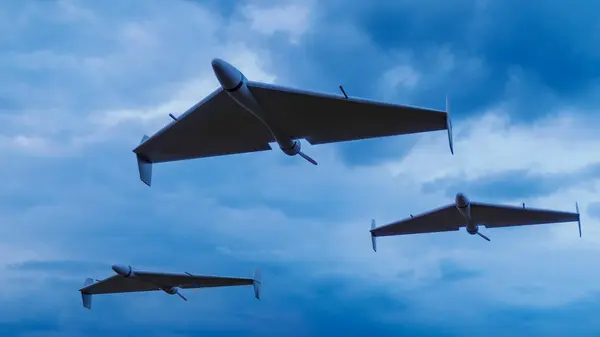
The FP-2 was introduced in September 2025 by Ukrainian defense firm Fire Point as a middle-range strike drone for frontline and near-rear operations. While structurally similar to the long-range FP-1, it decreases its range but increases its payload to 105–120 kg, whereas the maximum load it can carry of the FP-1 is only up to 120 kg. Its 200 km operational reach makes it ideal for striking high-value targets just beyond the front line.
The versatility of the FP-2 is key to its appeal it can be used autonomously against fixed positions or manually guided by radio against mobile targets. This dual-mode capability enables operators to adapt strikes to dynamic battlefield conditions, a feature demonstrated in recent multi-angle attack footage.
3. Warhead Engineering for Maximum Effect
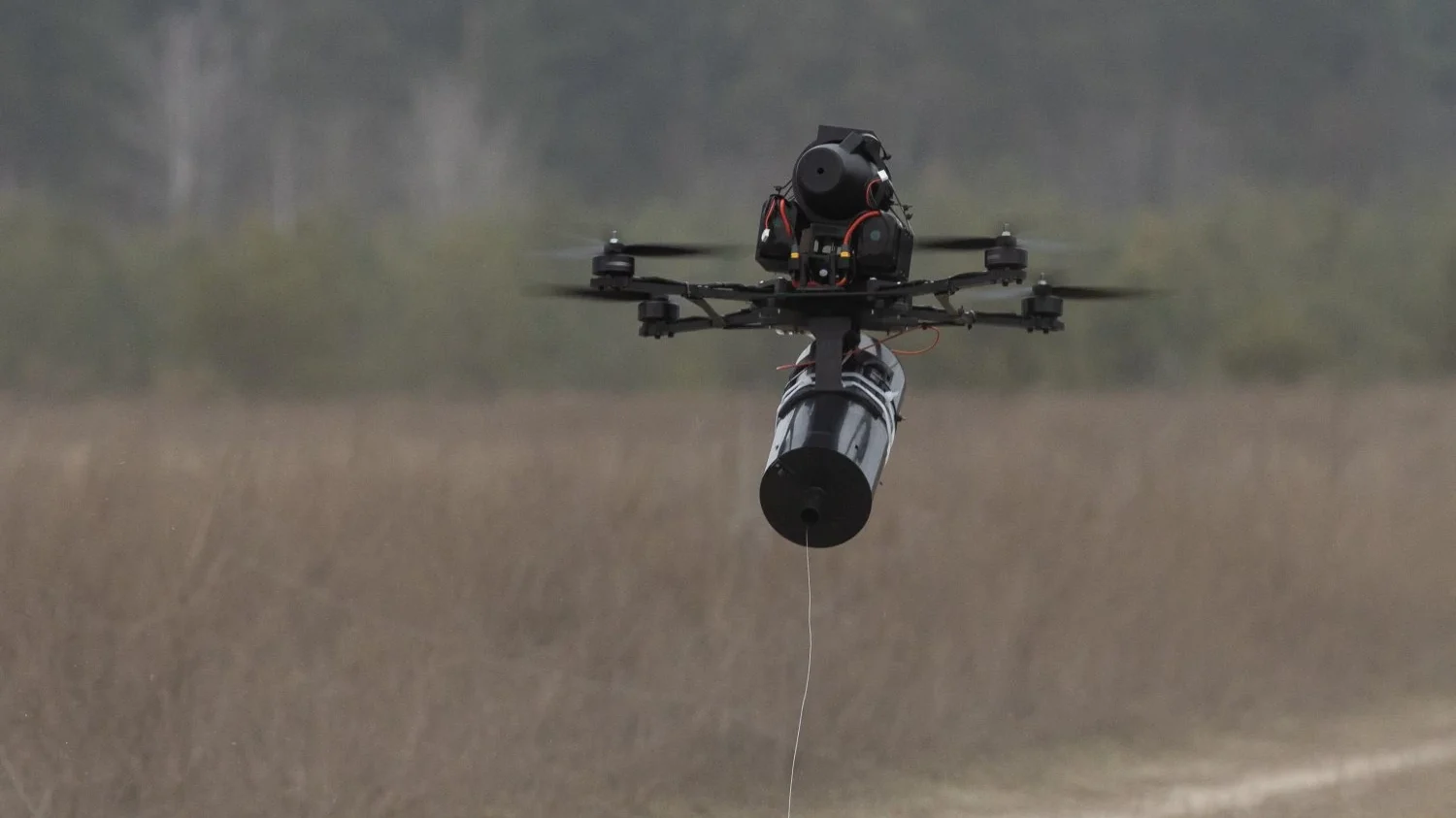
The FP-2 is fitted with a modified OFAB-100-110-TU HEF bomb, originally from Czechoslovakia. To improve balance and flight performance in its drone configuration, the tail section is removed, reducing total weight to around 100–105 kg. This warhead contains roughly 44 kg of TG-50 explosive essentially a TNT/RDX mix optimized for unarmored or lightly protected structures.
By contrast, the FP-2 carries a much heavier payload than Russia’s Geran-2 drones, also known as Shahed-136, which carry about 90 kg. This extra payload has proved decisive in demolishing warehouses, barracks, and command posts in recent SBU operations.
4. Strikes against Russian Elite Drone Units
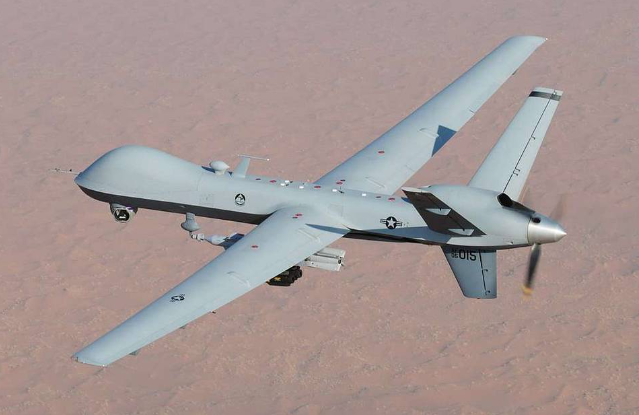
One of the most notable FP-2 strikes took out personnel from Russia’s elite drone warfare center, Rubikon, capable of advanced electronic reconnaissance. Operating in Avdiivka in Donetsk Oblast, Rubikon was set up to neutralize Ukrainian UAVs and guide Russian strike drones. Precise coordinates from Ukrainian intelligence guided an FP-2 right into the headquarters, killing officers and operators inside.
Neutralizing such a unit not only removes skilled adversaries from the fight but also disrupts Russia’s ability to contest Ukrainian drone operations in contested airspace.
5. First-Person View Combat Footage
The release of FPV footage from the FP-2 strikes serves both an operational and a psychological purpose for the SBU. In one sequence, the onboard camera on a drone shows the final seconds before impact on a warehouse, followed by a massive detonation. Other clips capture simultaneous strikes from different angles, infrared views showing heat signatures from secondary explosions.
The precision and destructive capability of the FP-2 are confirmed by such footage, while at the same time signifying to the Russian forces that their rear areas are within constant surveillance and reach.
6. Tactical Role in Ukraine’s Wider Drone Doctrine
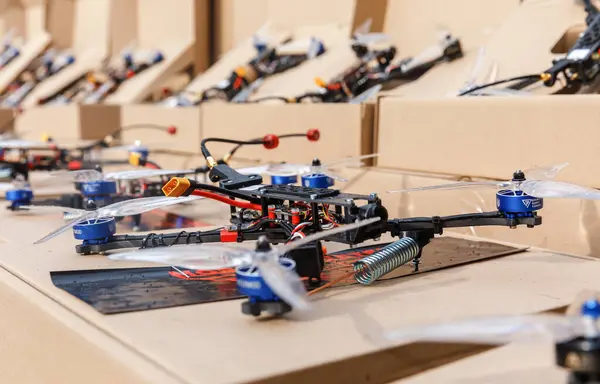
The FP-2 supplements Ukraine’s layered UAV strategy. The FP-1 will conduct deep-strike missions out to 1,400 km, while the FP-2 will target tactical and operational objectives within 200 km of the front. This enables more numerous, lower-cost strikes that still inflict significant damage.
Such drones allow Ukraine to saturate Russian air defenses through mass deployment at low altitudes, or fly around them entirely-as has been done with the use of FPV drones and loitering munitions-but with the additional advantage of heavier warheads to strike hardened targets.
7. Fire Point’s Expanding Arsenal
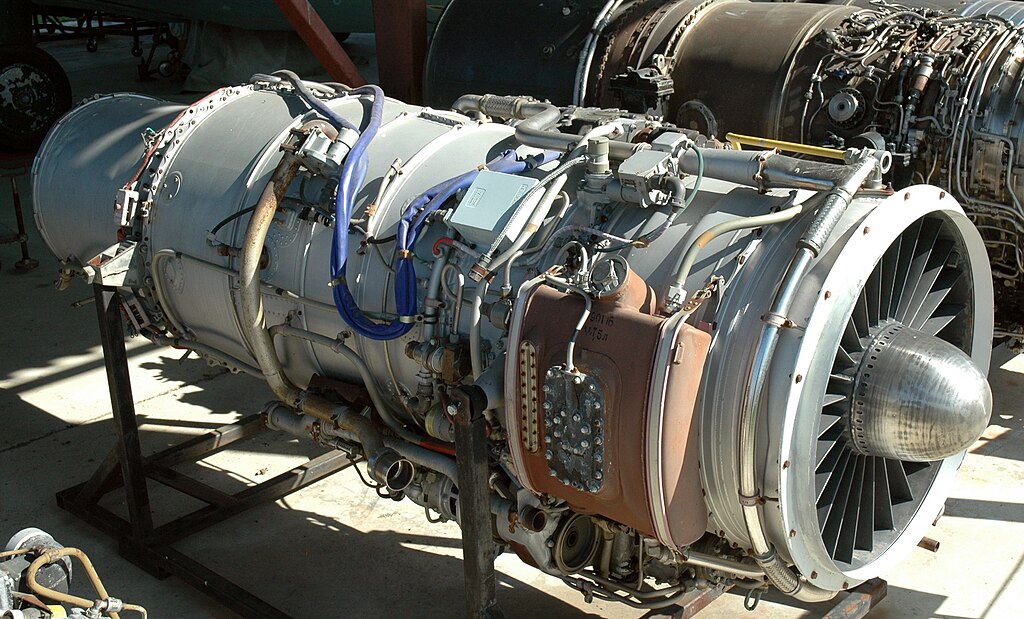
Fire Point is also the developer of the long-range FP-5 Flamingo cruise missile, with a 3,000 km reach and a 1,150 kg warhead. The Flamingo, built from recycled parts, including second-hand AI-25 engines, epitomizes the “affordable mass” that many militaries are looking for.
Complementing its tactical sibling, the FP-2, the Flamingo offers strategic deep-strike capability at a much lower cost than Western counterparts. This dual development track places Fire Point at the leading edge of Ukraine’s transition toward self-sufficient, scalable strike systems.

8. Cost-Effective Warfare and Production Potential
The FP-2 is designed with considerations for economical production and the ability to be mass-produced. It has achieved deep standardization with the FP-1, meaning manufacturing lines can switch between models with minimal delay. Ukrainian officials have noted that such systems produced at home reduce dependency on foreign arms and will ensure a steady supply for sustained operations.
In modern conflicts, cost-effectiveness is a force multiplier Forcing an adversary to expend expensive interceptors on relatively inexpensive drones imposes a long-term economic strain.
9. Strategic Messaging and Psychological Impact
Beyond physical destruction, FP-2 strikes have symbolic weight. As professor Katarzyna Zysk explained to The Moscow Times about deep strikes, striking high-value assets “undermines Russia’s image of military invulnerability and of the Kremlin’s control.” The visibility of these attacks augmented by combat footage undermines enemy morale while reassuring Ukrainian and allied audiences of continued offensive capability. Capable of demonstrating reach, precision, and adaptability, the FP-2 is no longer just a weapon but a tool of strategic communication in the information domain.
The FP-2’s arrival on the battlefield exemplifies how Ukraine is harnessing homegrown ingenuity to narrow the gap with a more formidable foe. With its melding of adaptable targeting, heavy payload, and cost-conscious design, it thereby forms a powerful tool both in a tactical and strategic context. The more production scales and operational experience accrues, the likelier it is that the FP-2 will remain one of the key features of Ukraine’s growing drone warfare doctrine proof that in modern conflict, technological agility can be as determinative as raw firepower.


