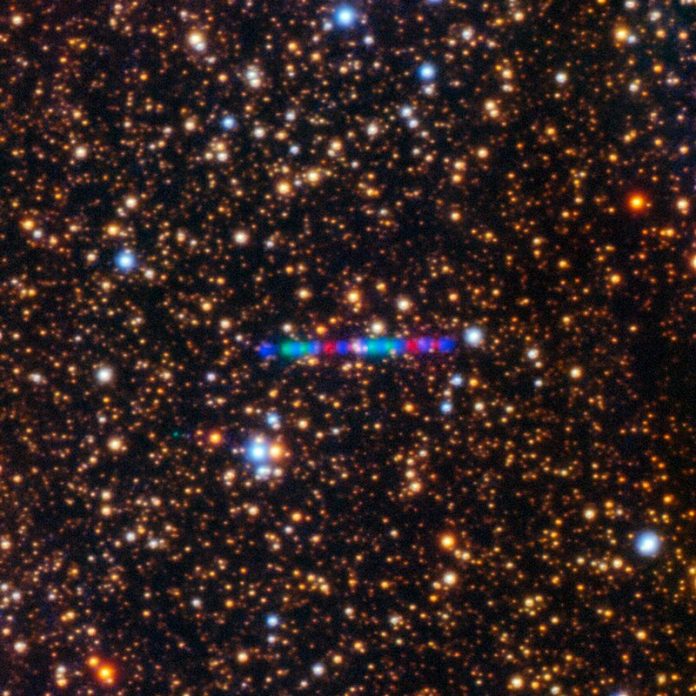
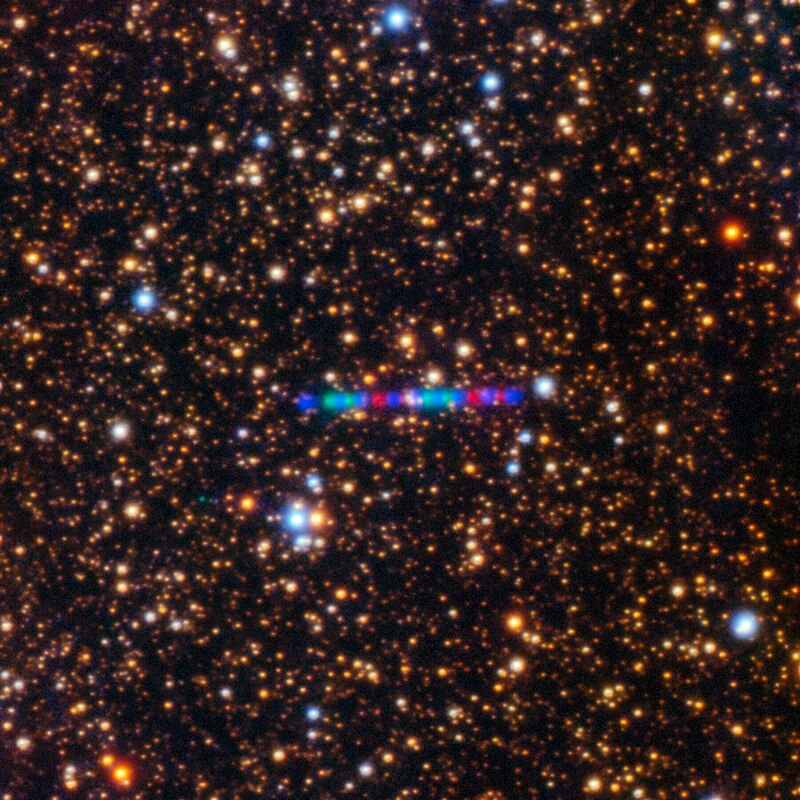
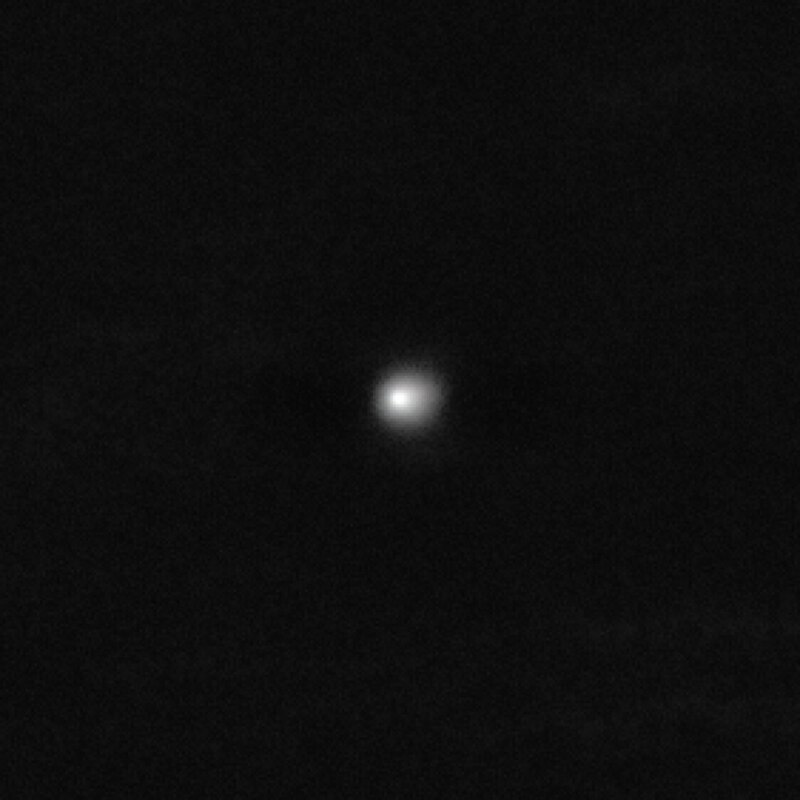
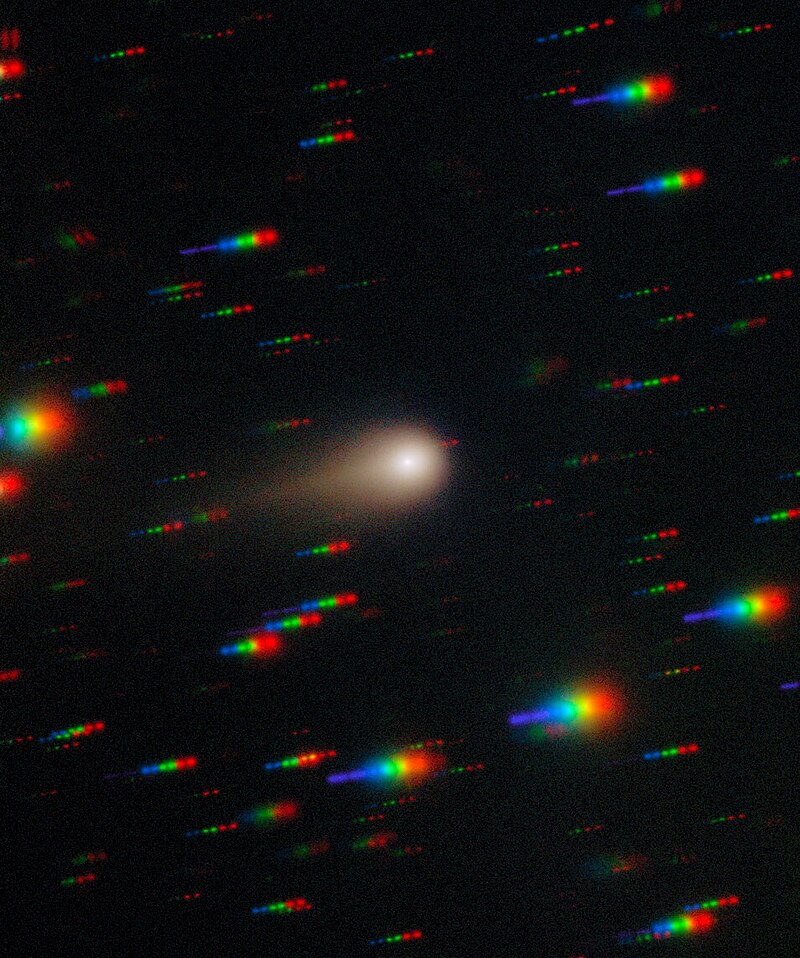
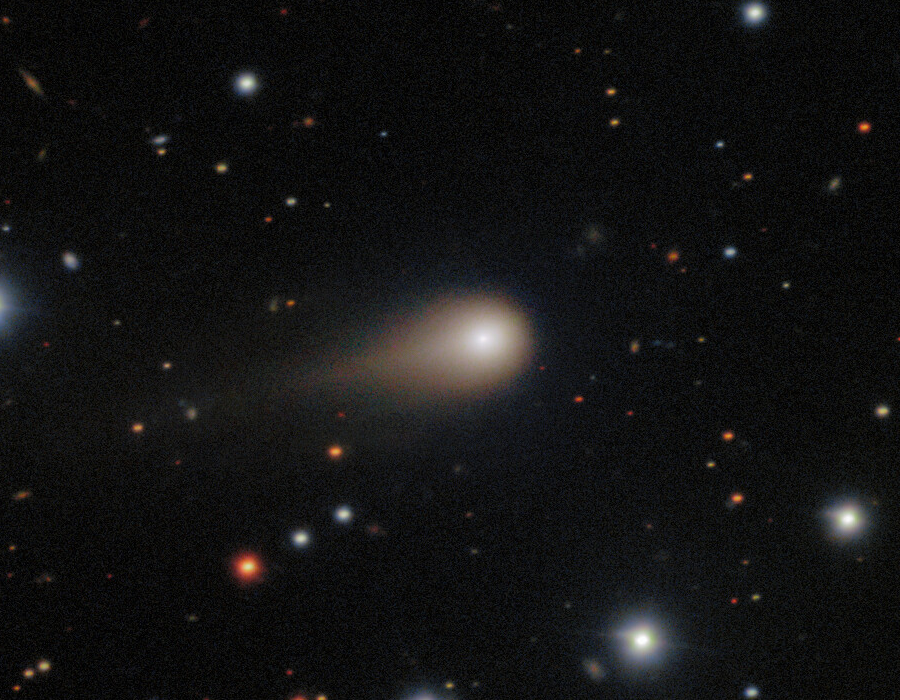
This first optical post-perihelion image of comet 3I/ATLAS gave astronomers a rare glimpse into the behavior and composition of one of the most unusual visitors ever to pass through our solar system. Captured on October 31, 2025, with the Lowell Discovery Telescope in Arizona by Qicheng Zhang, this is an important milestone in the study of interstellar objects, only the third ever recorded.
1. A Rare Interstellar Visitor
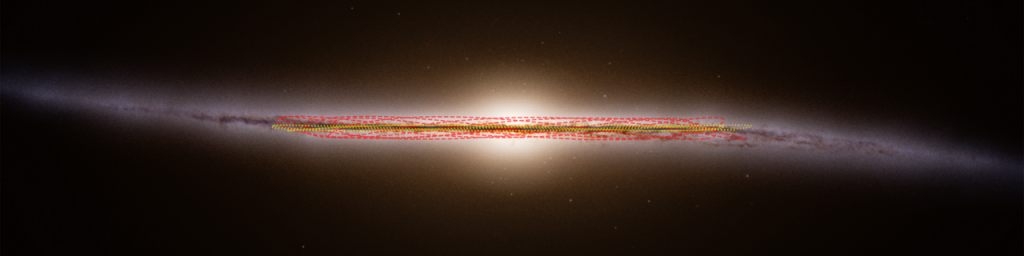
3I/ATLAS was discovered on July 1, 2025, by the ATLAS survey telescope in Chile. It’s plunging toward the Sun at over 130,000 mph (210,000 km/h) on a hyperbolic orbit that ensures it will never return. Its eccentricity of 6.14, the highest of any interstellar object yet detected, confirms that it originated beyond the solar system. Preliminary orbital calculations trace its path backward toward the thick disk of the Milky Way, suggesting that it may be as much as 3 billion years older than the solar system.
2. Post-Perihelion Imaging Challenges
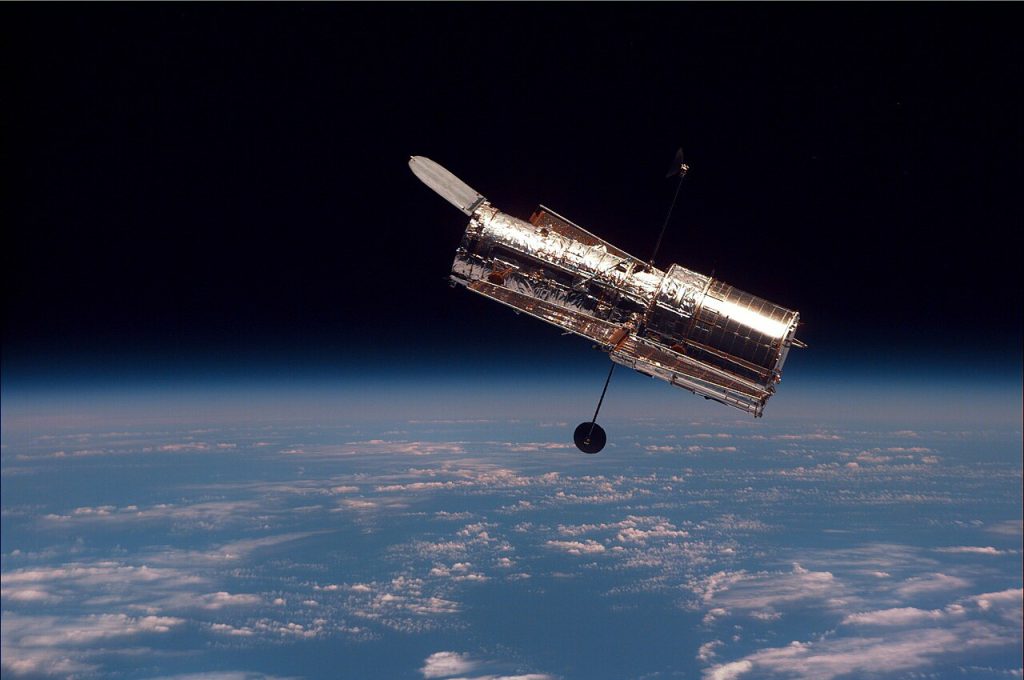
Capturing the comet so soon after perihelion its closest approach to the Sun at 1.4 AU required a telescope that could point close to the horizon. Zhang’s success came when the comet was just 16° from the Sun and 5° above the horizon. Though NASA’s space telescopes are powerful, they failed to take clear imagery because of the comet’s small size, its high velocity, and proximity to solar glare.
3. Rapid Brightening and Unusual Color
The days before perihelion saw a truly dramatic and unprecedented surge in brightness, with a distinctly blue hue for 3I/ATLAS. Such coloring is atypical for comets, which usually appear red because of dust reflection, and serves as an indication of strong gas emissions-likely carbon-based molecules-overpowering dust scattering. Researchers extrapolated a geocentric V magnitude of about 9 at perihelion, far brighter than earlier estimates.
4. Spectral Composition and Volatile Ices
Spectroscopic measurement showed a CO₂-dominated coma with very low water vapor, which is an unusual composition for a comet at 3 AU from the Sun. Such enrichment suggests the sublimation of highly volatile ices at low temperatures. The measured CO₂-to-water ratio of 7.6:1 was among the highest ever, supporting the idea that galactic cosmic ray irradiation over billions of years transformed CO into CO₂ in the outer layers of this comet.
5. Galactic Cosmic Ray Effects
Initial studies based on JWST and SPHEREx data reveal that this comet’s ice structure has been altered to a depth of 15–20 meters due to long exposure to cosmic rays, developing a CO₂-rich crust. Such an irradiated shell obscures the interior material in its pristine state from its home star system. According to Romain Maggiolo, “It’s very slow, but over billions of years, it’s a very strong effect,” which means most of the current outgassing samples processed rather than primordial material.
6. Metal Content Anomalies
The observations with the VLT of the European Southern Observatory recorded an exceptional enhancement in the gas-phase nickel-to-iron ratio. This imbalance, rare among comets in the solar system, may reflect differences in thermal release or unique chemical pathways during formation. The nickel-to-cyanide ratio is also orders of magnitude higher than known cometary values, adding to the list of anomalies.
7. Orbital Mechanics and Non-Gravitational Forces
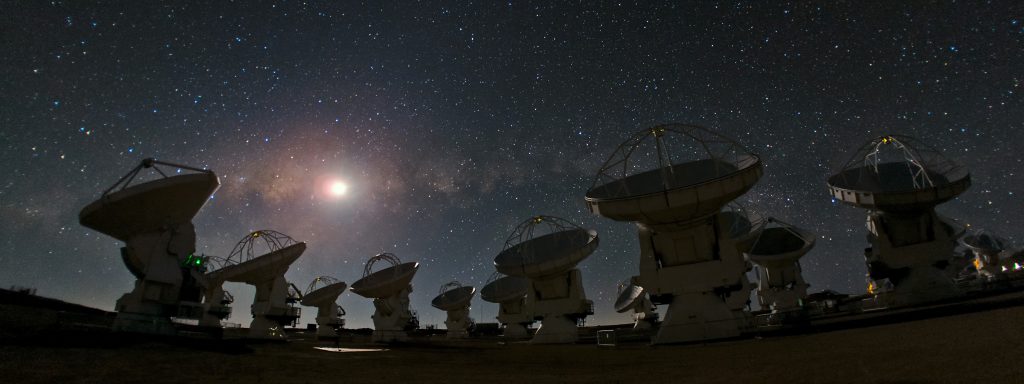
Jets of escaping gas and dust act like micro-thrusters on the comet, providing a measurable non-gravitational acceleration. Near perihelion, ALMA detected a positional offset of 4 arcseconds from the ephemeris position. Only some of this offset is explained by gravitational lensing due to the Sun, and the rest is probably due to outgassing dynamics.
8. Viewing Opportunities
By early November, 3I/ATLAS will rise higher in the morning sky, moving from Virgo towards Leo. By mid-month, it will become visible to amateur astronomers using standard telescopes across much of the Northern Hemisphere. Its closest approach to Earth on December 19, 2025, at 1.8 AU will provide an opportunity for larger observatories worldwide to carry out detailed studies until it fades again into interstellar space.
9. Scientific Importance
Interstellar comets like 3I/ATLAS are natural probes of the diversity of planetary systems. Their compositions offer clues into the chemical environments of distant stars and the processes by which icy bodies get ejected into interstellar space. According to Dr. Franck Marchis of the SETI Institute, “Each one of these discoveries is a rehearsal next time, we’ll be ready to send a spacecraft.” More than a milestone in observational astronomy, the first post-perihelion image of 3I/ATLAS forms a window into the deep-time history of planetary systems, sculpted by radiation, chemistry, and gravitational dynamics over billions of years.


