

It’s not the mic that’s listening to you. It’s the math. The years-long urban legend of sneaky listening by smartphones has been fueled by spooky ad coincidences and viral “evidence” videos. But big-scale blind testing from Northeastern University’s examination of 17,000 Android apps to controlled “audio room” tests by Wandera found no evidence of sneaky, always-on eavesdropping for ad targeting. Spooky truth: Advertisers don’t need to hear. They already have a sophisticated, pre-emptive map of your existence.
1. Why the Hot Mic Theory Is Incomplete
Technical and legal limits make a 24/7 eavesdropping capability impractical. The federal Wiretap Act and state consent laws would expose companies to catastrophic liability if they record unwilling passersby. Continuous sound recording would also be giveaway indicators: spikes in data usage, faster battery drain, and constant network traffic. As International Computer Science Institute’s Serge Egelman explains, “That can’t be happening. Your phone would be constantly streaming audio.” Northeastern’s 2018 survey confirmed no such thing occurred, though it did find apps capturing clandestine screen recordings and sending them on to third parties an equally significant privacy violation.
2. The Real Engine: Data-Driven Ad Targeting
Instead of microphones, the ad process has a four-step supply chain: platforms, advertisers, identity providers, and data brokers. Platforms like Instagram or TikTok track in-app activity, device context, and location to run real-time ad auctions. Advertisers provide hashed customer lists and request “lookalike” audiences. Identity providers link devices and accounts into one profile. Brokers such as LiveRamp or Acxiom take purchase histories, location histories, and app behavior and assemble them into pre-packaged audience segments. Once matched, these datasets enable the potential for ads to be shown at miraculous moments, without a moment of live audio.

3. Predictive Models That Anticipate You
Ad new platforms leverage AI-powered predictive analytics to predict what users are going to do, millisecond for millisecond. Each ad impression triggers a bid-time decision: the system evaluates the likelihood you’ll click, donate, or buy, then adjusts bids accordingly. These models ingest first-party data, brokered third-party data, and historical campaign performance to refine predictions. As Ari Paparo, an ad-tech veteran, explains, “The ads are attempting to guess what you’re interested in. It’s all about numbers.” What you get is a targeting engine that can “know” you’re ready to act before you’ve even made a decision.

4. Cognitive Bias and the Illusion of Listening
The hauntings are amplified by mental shortcuts. The frequency illusion makes a subject appear to appear everywhere after it’s in your mind. Confirmation bias gets you remembering the advertisement that appeared after a debate, but not the thousands that did not. Availability heuristics and illusory correlations complete the loop, crafting a plausible but untrue narrative: we discussed it, then saw it, so the phone must have been listening.
5. The Shadow Economy of Data Brokers
Data brokers operate largely behind the scenes, constructing “ghost profiles” based on publicly available data, app SDKs, loyalty schemes, and web monitoring. These profiles might hold sensitive location information, health data, and inferred characteristics such as income or political affiliation. Abuse of such information, the FTC says, can lead to discrimination, stalking, or the revelation of private life. Enforcement actions like the 2025 settlement with Mobilewalla for selling location data tied to visits to pregnancy centers highlight the risks. State laws in California, Texas, Oregon, and Vermont now require broker registration and, in some cases, deletion mechanisms.

6. AI’s Role in Tightening the Net
Generative and predictive artificial intelligence are making ad targeting increasingly targeted. Meta’s Advantage Plus and Google’s Performance Max leverage machine learning not only to serve ads but generate creative assets for micro-segments. Collaborative filtering recommends products based on behaviour similarity with other users, and regression and time-series models make predictions for seasonal demand. These systems increasingly execute on-device or in walled gardens, reducing raw data movement but amplifying the latency of ad delivery.

7. The Privacy Arms Race
Anxious users can avoid disclosure by reviewing app permissions, disabling location services when idle, and using tracker blockers like uBlock Origin in conjunction with behaviour-based alternatives like Privacy Badger. Steering clear of broker databases manually or via paid offerings can restrict targeting precision, though the endeavour persists. As the Electronic Frontier Foundation’s Eva Galperin recommends, “Only install and use apps that you really need.” But, Northeastern’s Christo Wilson warns, nobody can successfully outwit “an ecosystem built to surveil.”
8. Regulation and the Global Context
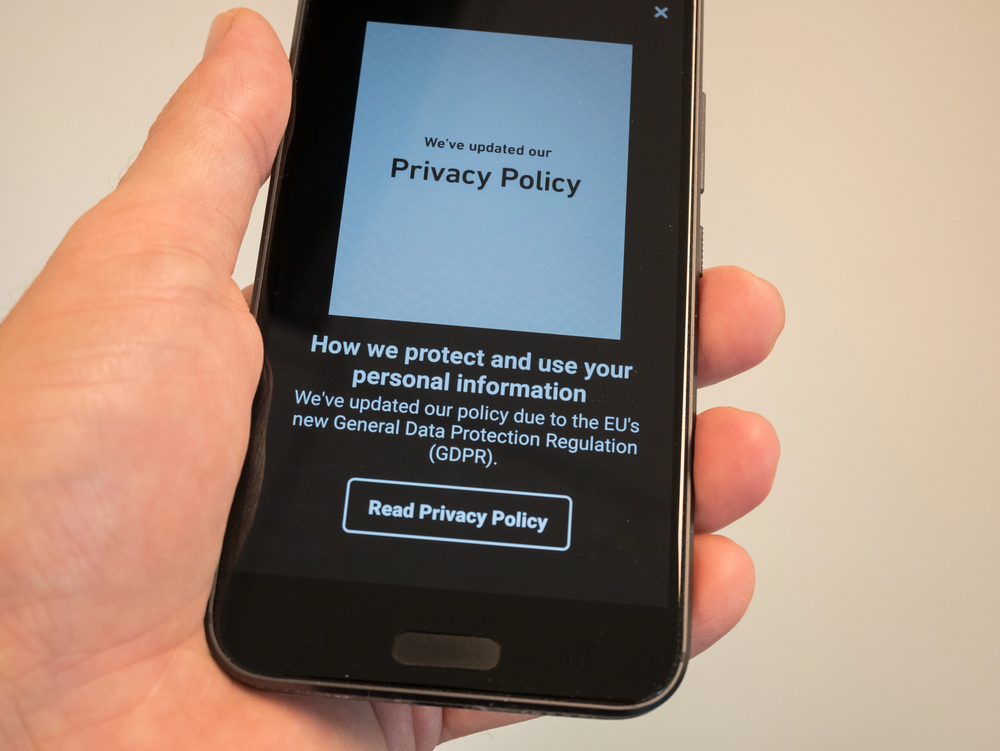
In the USA, emerging federal regulations like the Protecting Americans’ Data from Foreign Adversaries Act prevent brokers from trading sensitive data with foreign entities in countries of concern. The DOJ’s Final Rules prevent further transfers of bulk sensitive data. In Europe, there is no law that singles out brokers, but it has GDPR regulations demanding transparency and legitimate processing. There exists a wide disparity between regulation and practice, and enforcement rarely keeps up with technological developments.
The phone myth of listening persists because it’s tangible, a villain with a mic is a more comprehensible idea than an algorithm network, identity maps, and auctioning systems. But the mechanism in action is more subtle and noiseless: a predictive system that reads your week, judges your intent, and sends the right message to you when you’re most likely to act.


