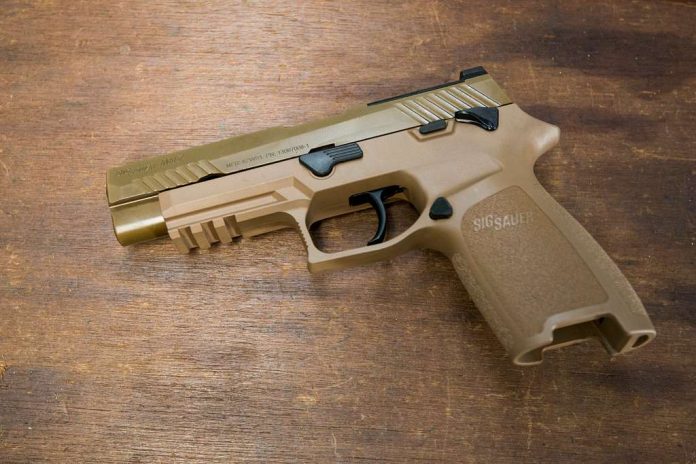
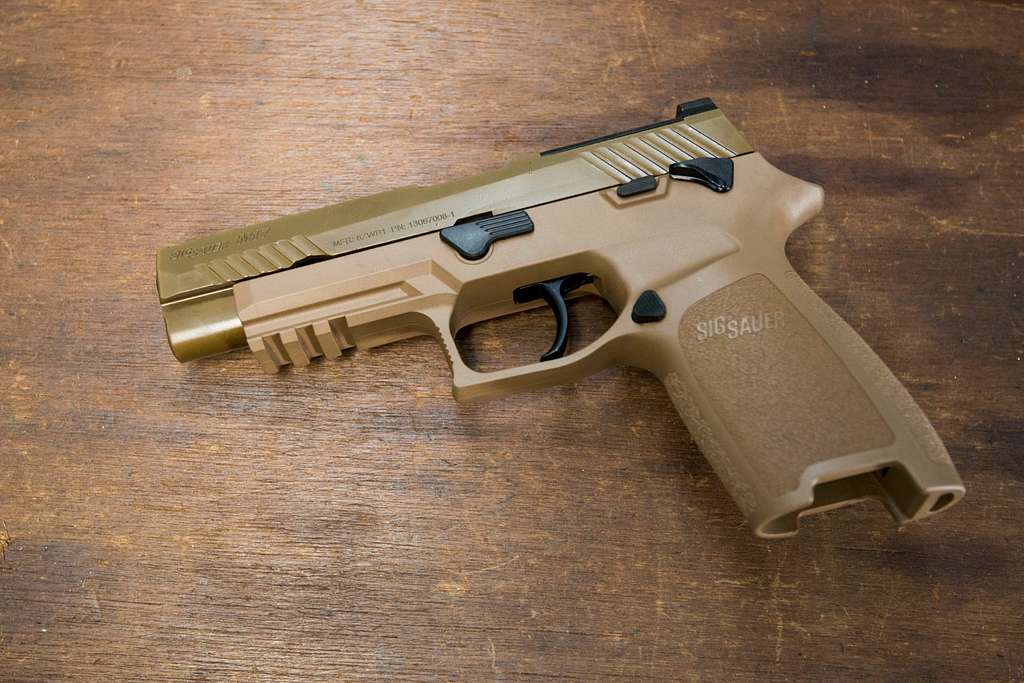
The U.S. Army’s most remembered handguns were rarely just backup weapons. Each one arrived because an older answer had stopped fitting the mission, the ammunition, or the troops expected to carry it. That is what makes Army-issued pistols so revealing. Some solved durability problems, some fixed logistics headaches, and some forced the Army to rethink what a standard sidearm should even be.
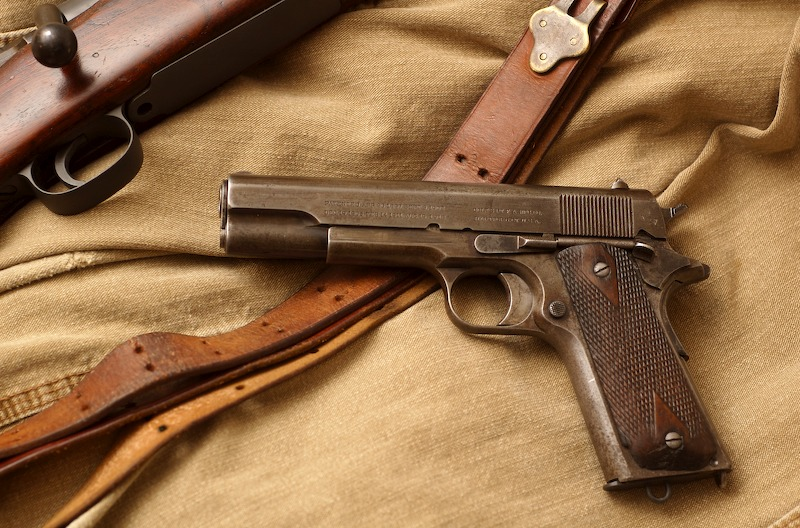
1. Colt M1911 and M1911A1
The M1911 became the benchmark because it answered a very specific Army complaint: earlier .38-caliber revolvers had not delivered the close-range performance soldiers wanted. That pushed the Army toward a heavier bullet and ultimately toward John Browning’s .45 ACP self-loader, a pistol whose reputation hardened during endurance testing when it fired 6,000 rounds without failures or breakages.
The later M1911A1 showed why the platform lasted so long. It accepted ergonomic updates without losing the traits that made it desirable in the first place: mechanical simplicity, strong reliability, and a trigger system generations of soldiers came to trust. For decades, it defined what an American service pistol looked and felt like, and every replacement effort after it had to answer the same question: was the new gun truly better, or merely newer?
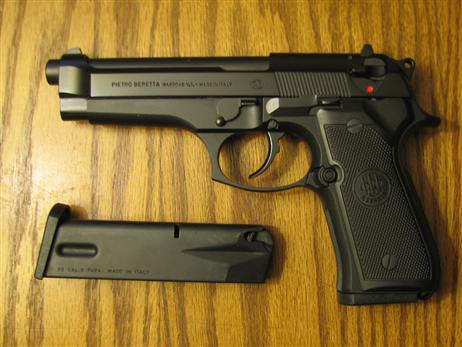
2. Beretta 92F/92FS, Adopted as the M9
The M9 marked one of the Army’s biggest sidearm resets. It emerged from a long competition era that ended with Beretta’s design beating out rival entries and becoming the standard service pistol in 1985, replacing the M1911 as the general-issue handgun across the force.
Its significance was larger than caliber or brand. The pistol brought a 15-round magazine, a double-action/single-action operating system, and NATO-standard 9mm ammunition into the Army’s everyday sidearm culture. According to published trial accounts, Beretta’s package stood out during the XM9 process and the pistol went on to serve for more than three decades. Later updates such as the M9A1 added an accessory rail and sand-resistant magazines, a reminder that magazine design can matter as much as the pistol itself when reliability is judged in dust-heavy environments.
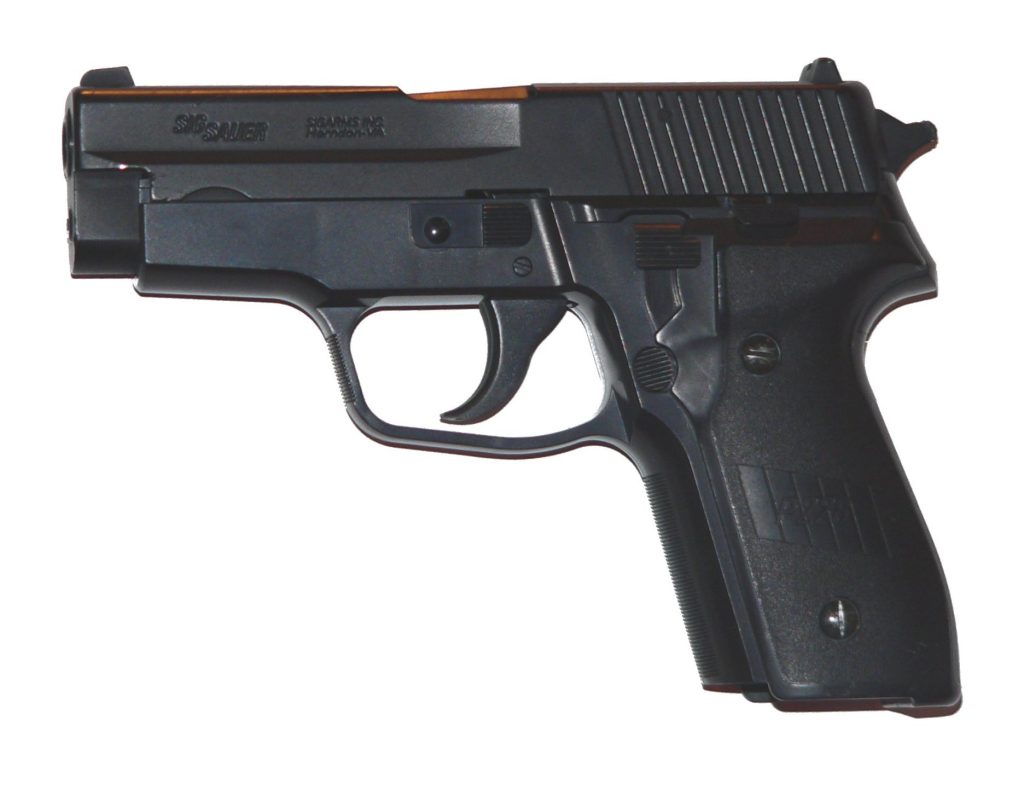
3. SIG Sauer P228, Issued as the M11
The M11 never replaced the M9 as the Army’s main sidearm, but it proved that one standard pistol could not cover every role. The compact P228 was brought in for investigators, aircrew, and other personnel who needed a smaller handgun that was easier to carry in confined spaces or under conditions where bulk mattered.
Army testing gave the pistol a strong technical case, documenting 15,000 rounds with a single malfunction. More importantly, it reinforced a lasting Army principle: compact sidearms are not a luxury category. They are a recurring operational requirement, especially for crews, specialists, and personnel whose main job does not center on a full-size sidearm.
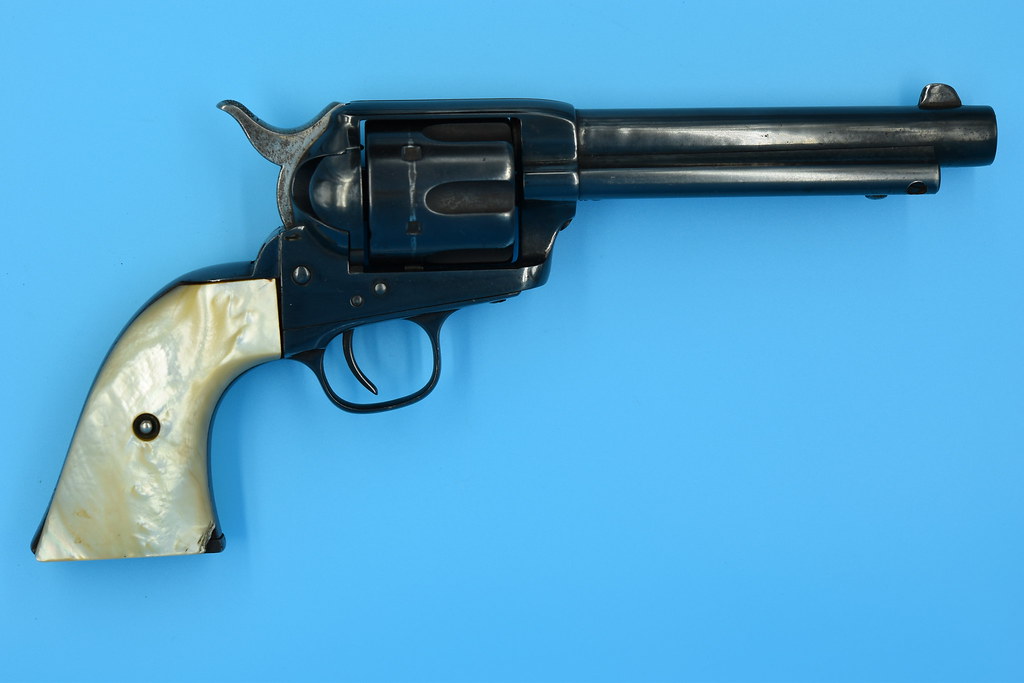
4. Colt Single Action Army of 1873
The Single Action Army became iconic in American culture, but its Army importance started with engineering rather than myth. Earlier Colt revolver designs had raised durability concerns, and the 1873 model’s stronger top strap frame addressed that weakness directly.
Its official reception was blunt. Capt. John R. Edie wrote, “I have no hesitation in declaring the Colt revolver superior in all aspects, and much better adapted to the wants of the Army than the Smith & Wesson.” The design also fit the period’s practical needs: it was sturdy, understandable, and comparatively easy to keep in service in an era when field maintenance had to be straightforward.
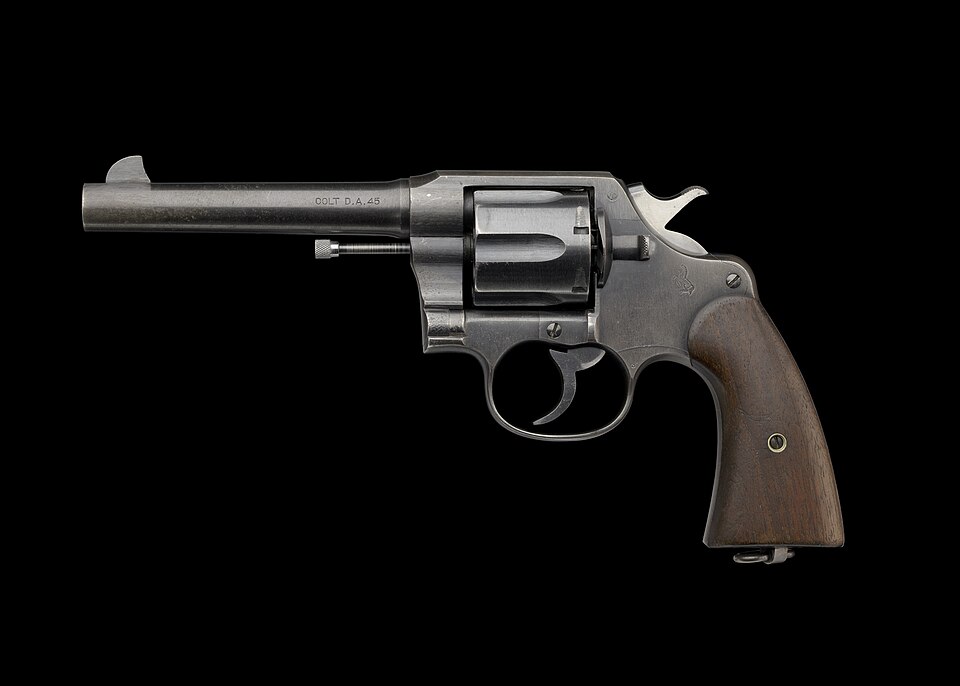
5. Colt and Smith & Wesson M1917 Revolvers
The M1917 revolvers existed because wartime demand moved faster than pistol production. When the Army needed more .45-caliber handguns during World War I and could not get enough M1911s, it adapted existing revolver designs to fire .45 ACP with half-moon clips.
That workaround was more than an emergency patch. It preserved ammunition commonality while scaling handgun issue quickly, and the production totals were substantial, with well over 150,000 examples from each manufacturer. The M1917 showed that Army sidearm history is not only about ideal designs; it is also about flexible engineering under procurement pressure.
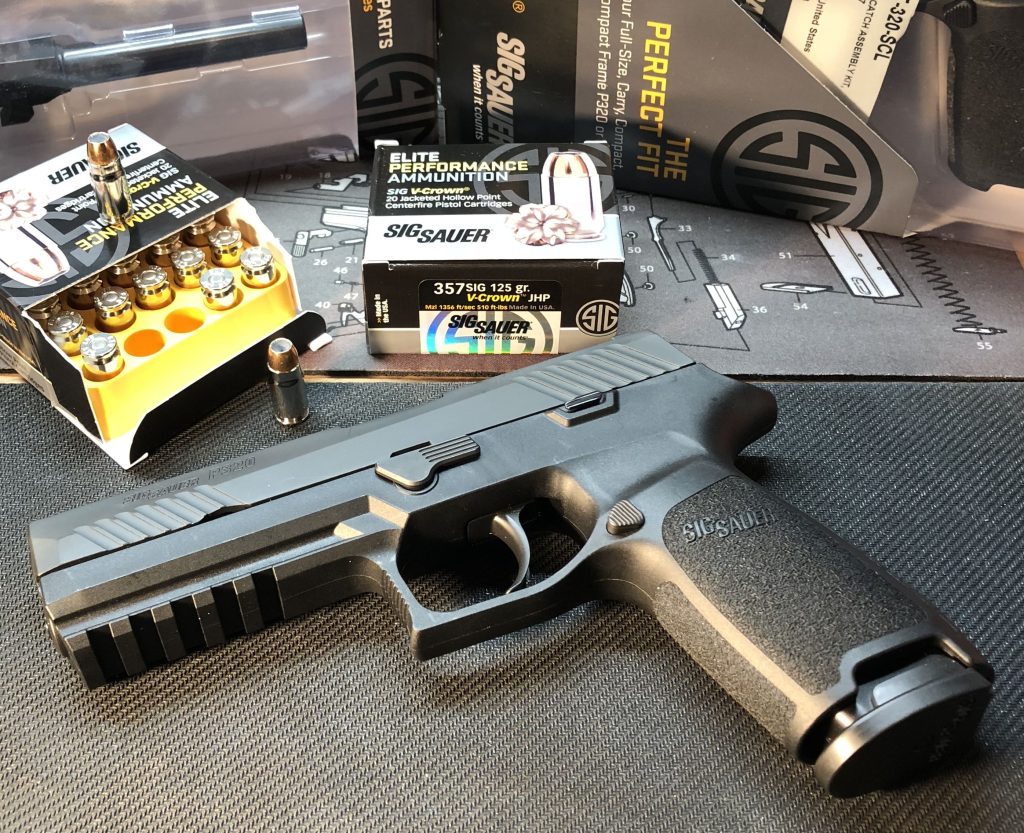
6. SIG Sauer P320 Based M17 and M18
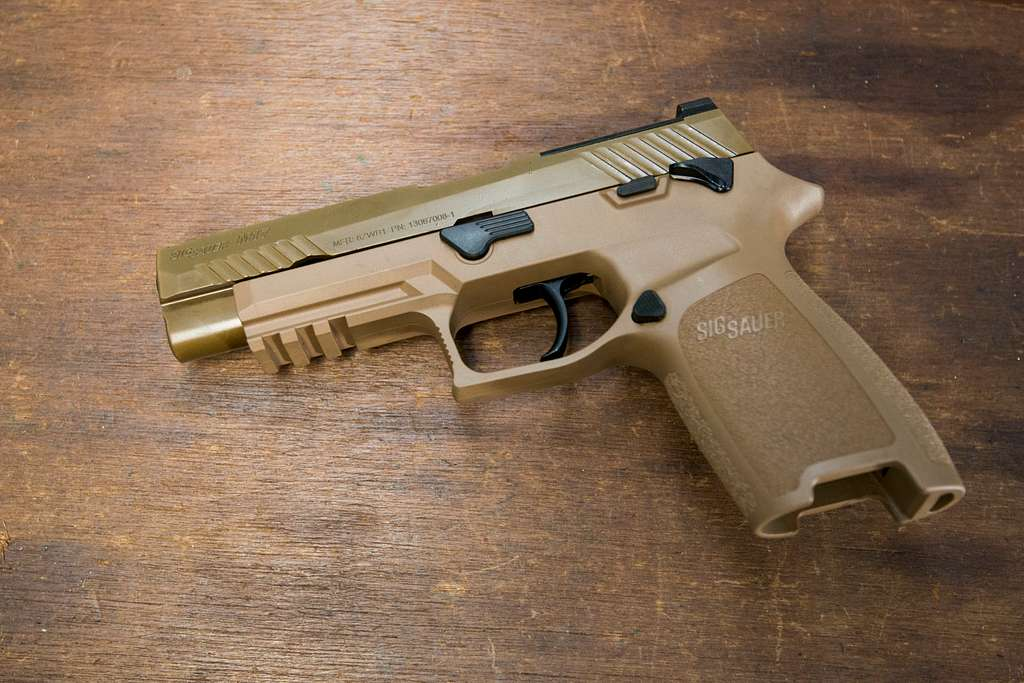
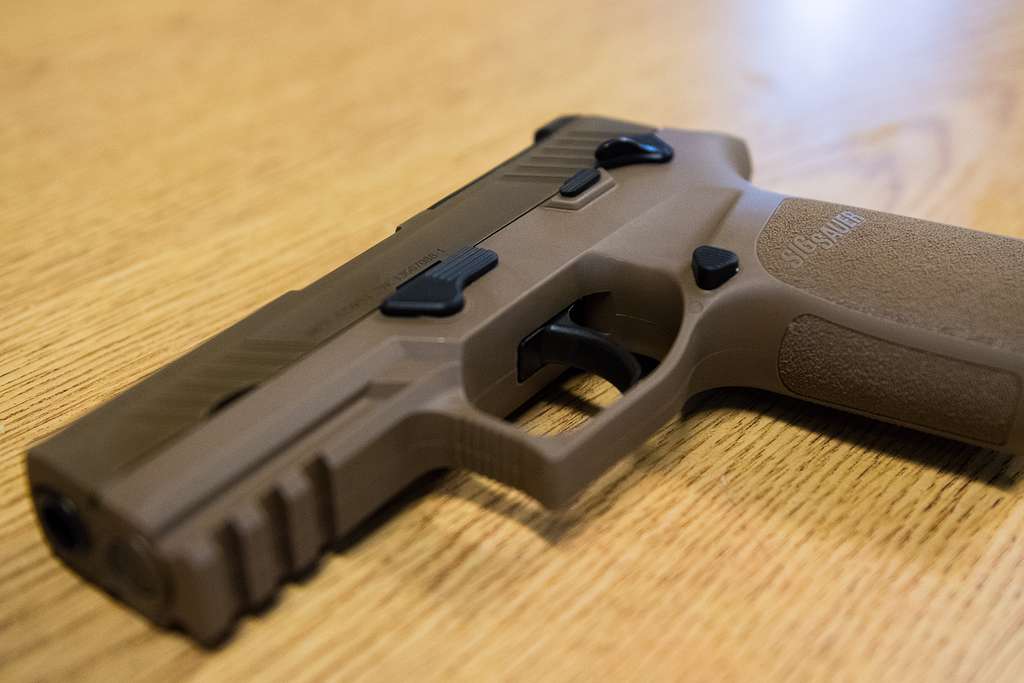
The M17 and M18 signaled a different philosophy from earlier Army pistols. Rather than choosing one fixed handgun pattern, the Army selected a modular system built around a removable fire-control unit, allowing the same core mechanism to support different grip sizes, slide lengths, and mission profiles. That approach aligned with the XM17 Modular Handgun System competition and the Army’s wider requirement for lights, ambidextrous controls, suppressor compatibility, and improved fit across a broader user base.
The shift was not only about replacing worn M9 frames. It was about redefining the handgun as a system. The Army’s requirement covered the pistol, ammunition, holster, and support gear as an integrated package, while official program material identifies the M17 as the full-size model and the M18 as the compact counterpart. The standard M17 configuration uses a 17-round magazine, and the system was built to support lifecycle updates rather than forcing an all-or-nothing redesign every few decades. The Army’s own program office notes the M18 identified as the M11’s replacement, showing how modularity absorbed the older split between full-size and compact issue pistols.
7. The Army’s Compact-Handgun Requirement
One of the clearest patterns in Army sidearm history is that compact pistols keep returning, even when doctrine appears centered on a single standard handgun. The Army has repeatedly carved out space for smaller sidearms because cockpit use, discreet carry, vehicle work, and specialist duties put different demands on the person carrying the weapon.
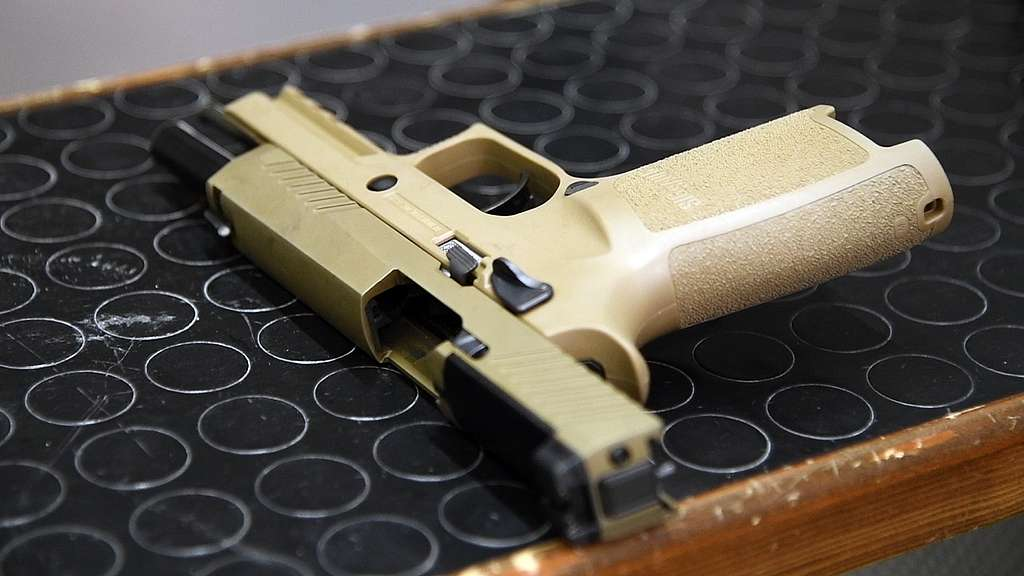
That requirement began showing up clearly in the M11 era and is now formalized inside the M17/M18 family. Reference material on the Army’s replacement process shows the new program was never intended as a simple pistol swap; it was designed around a broader range of troops, accessory needs, and ergonomic demands. In that sense, the compact sidearm is not a side note in Army history. It is one of the Army’s most consistent design signals.
The Army’s iconic handguns were not remembered just because they were widely issued. They lasted in memory because each one solved a problem the institution could not ignore, whether that problem was stopping power, durability, logistics, magazine performance, or the need to fit very different users with one sidearm family. That pattern still defines Army handgun development. The sidearm that changes doctrine is usually the one that fixes more than the trigger pull.


