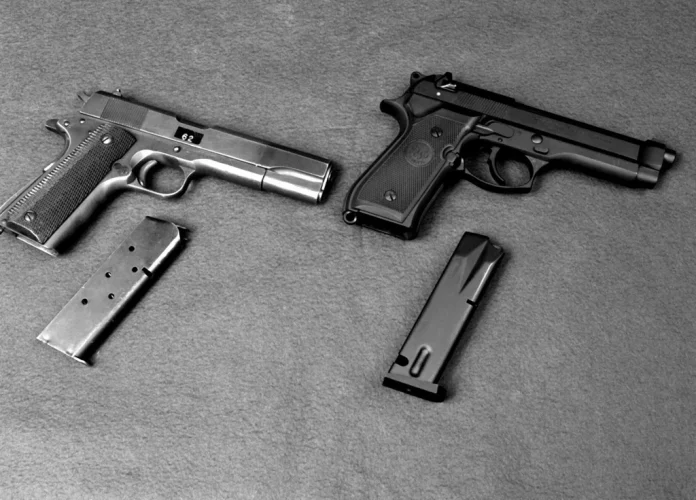
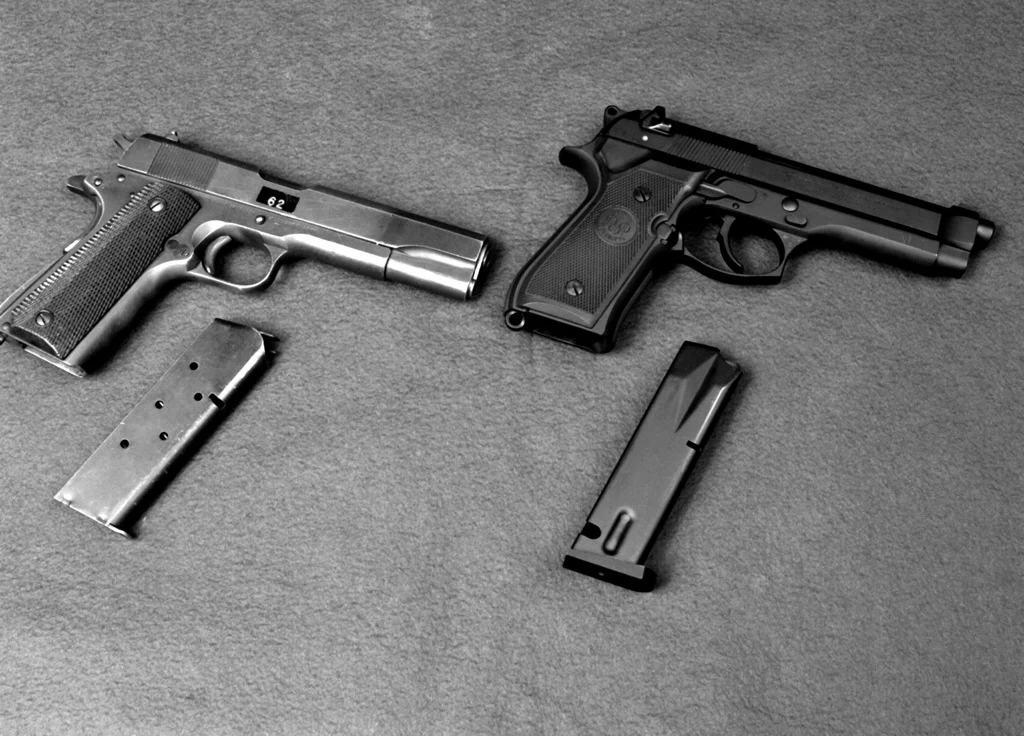
Army sidearms have rarely been just backup weapons. In different eras, they solved very different problems: cavalry use, close-quarters defense, compact carry for investigators and aircrews, and the need for a sidearm that could survive mud, dust, and hard institutional use. What changed over time was not only caliber or capacity, but the Army’s idea of what a handgun needed to do. These seven sidearms mark those turning points.
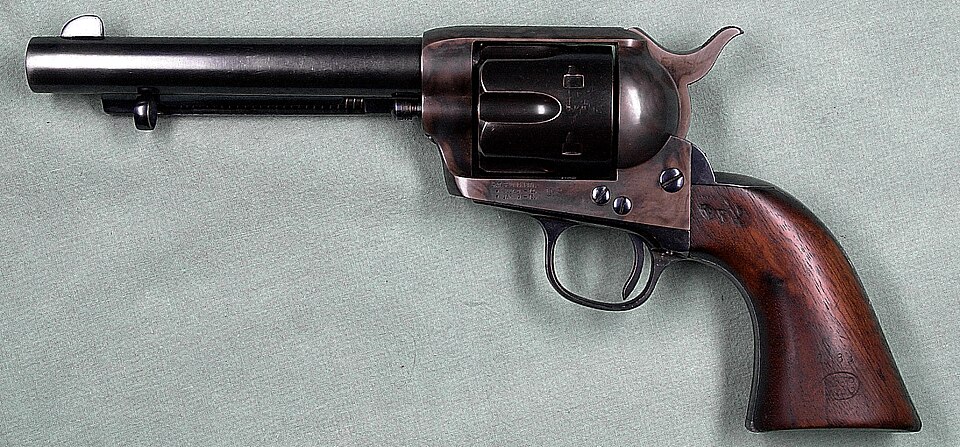
1. Colt Single Action Army
The Colt Single Action Army established the Army’s first truly iconic metallic-cartridge service revolver. After the Army’s 1872 revolver testing, Capt. John R. Edie concluded, “I have no hesitation in declaring the Colt revolver superior in all aspects, and much better adapted to the wants of the Army than the Smith & Wesson.” That verdict helped clear the way for the revolver’s adoption, and the first order of 8,000 revolvers went out in 1873.
Its influence came from simplicity and field durability. The topstrap frame was stronger than earlier open-top Colt designs, and the .45 Colt cartridge gave mounted troops a much harder-hitting handgun than the Army had previously fielded. It also shaped carry habits for generations, because the fixed firing pin effectively made it a five-shot revolver in normal use. For late 19th-century soldiers, the sidearm became a serious fighting tool rather than a badge of rank.
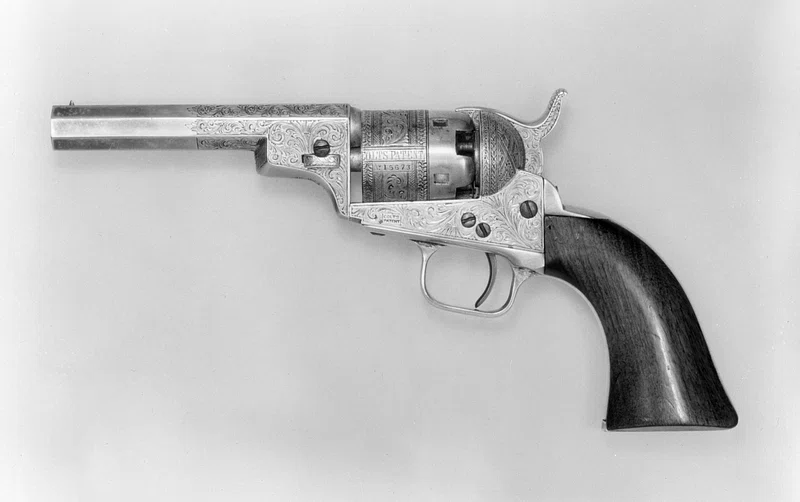
2. Colt Model 1892 Army & Navy
The Model 1892 represented a mechanical shift as important as any change in ammunition. By replacing the Single Action Army, it brought the Army into the double-action era, allowing a revolver to be fired without manually cocking the hammer for every shot.
That mattered because it sped up close-range response and reflected a broader institutional move toward faster handgun handling. Yet its service also exposed the limits of the Army’s thinking at the time. Chambered in .38 Long Colt, it lacked the stopping performance many troops expected, and that shortcoming became part of the Army’s long argument over caliber, lethality, and combat effectiveness. In that sense, the Model 1892 changed how soldiers fought by proving what they did not want in a service sidearm.
3. Colt M1909 Revolver
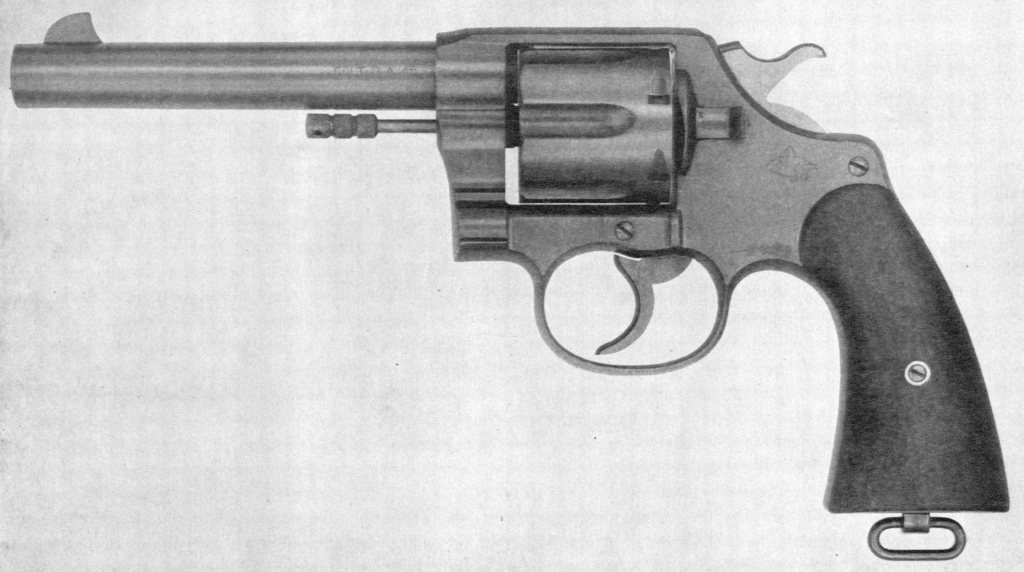
The M1909 is often overshadowed by the pistol that followed it, but it played an important bridging role. Built around a larger .45-caliber cartridge, it reflected the Army’s return to heavier handgun rounds after dissatisfaction with .38 Long Colt service revolvers.
Its significance lies in timing. During the pistol trials that led to the M1911, a .45 caliber Colt Revolver Model 1909 was used as a control arm, a reminder that revolvers still set the reliability benchmark. It recorded only two malfunctions in 6,000 rounds during that test program. The M1909 did not define the future, but it helped frame the Army’s demand for power and dependability just before self-loading pistols took over.
4. Colt M1911
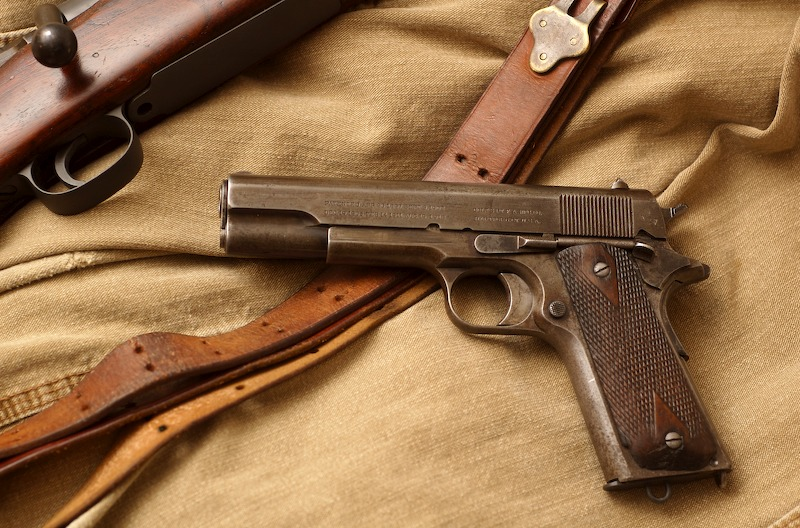
No Army sidearm changed handgun doctrine more than the M1911. When the final trials concluded in 1911, the board found the Colt superior because it was “the more reliable, the more enduring, the more easily disassembled when there are broken parts to be replaced, and the more accurate.”
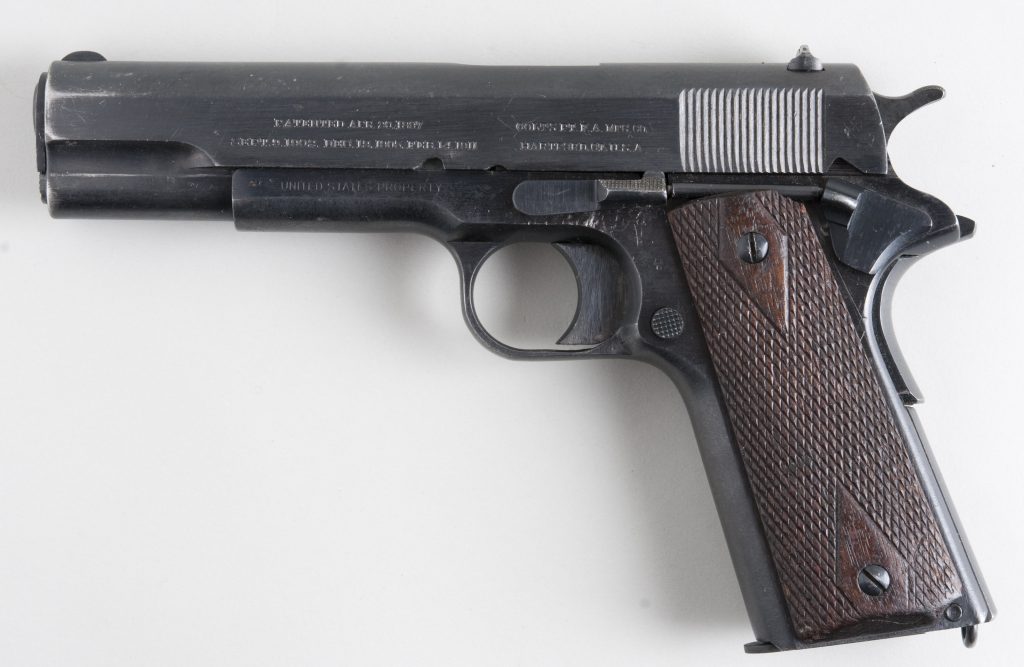
That judgment was rooted in hard testing. In the decisive endurance phase, 6,000 rounds were fired from each pistol under demanding conditions, and the Colt finished with a markedly stronger record than its Savage competitor. The M1911 gave soldiers a semiautomatic sidearm with a larger ammunition reserve than most revolvers, faster reloading through detachable magazines, and a .45 ACP cartridge that the Army considered combat-worthy. More than any earlier handgun, it turned the service pistol into a modern fighting system instead of a cavalry-era holdover.
5. Beretta M9
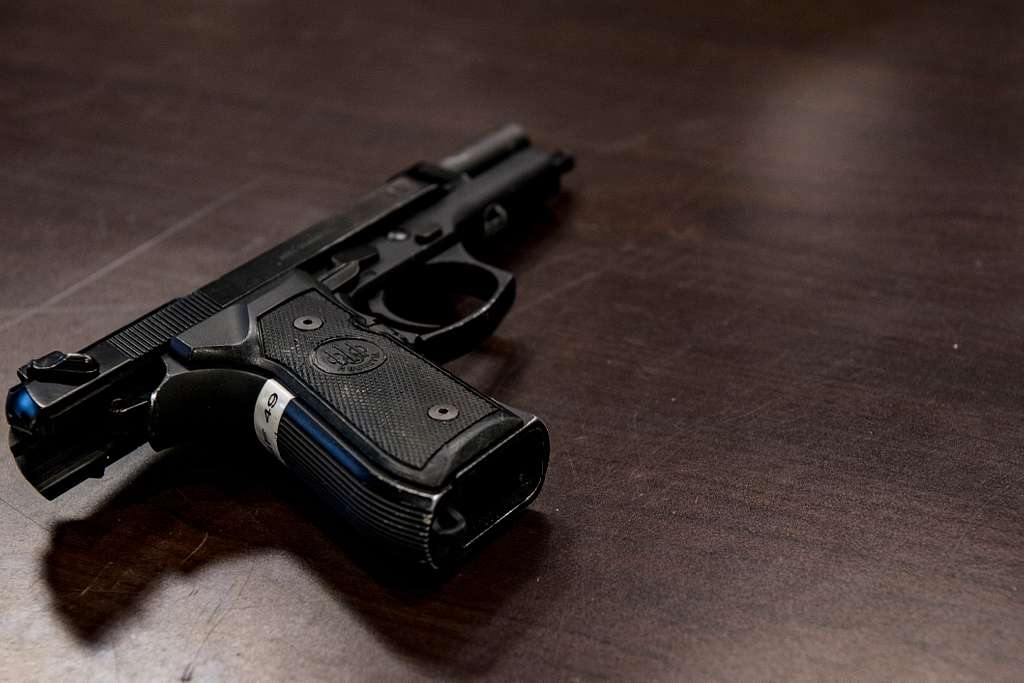
The M9 marked a wholesale break from the Army’s long attachment to the M1911 and .45 ACP. Adopted in the 1980s, it brought a 9mm chambering, a high-capacity magazine, and a double/single-action operating system that reflected NATO standardization and the Army’s preference for greater onboard ammunition.
Its arrival changed training as much as equipment. Soldiers now had to master a transition from a heavier first-shot double-action pull to lighter single-action follow-ups, and units were issued a sidearm with substantially more rounds on tap than the M1911. The pistol also symbolized a new procurement era in which standardization, lifecycle support, and large-scale testing mattered as much as pure nostalgia for older designs. Whether admired or criticized, the M9 reset expectations for what an Army sidearm should look like.
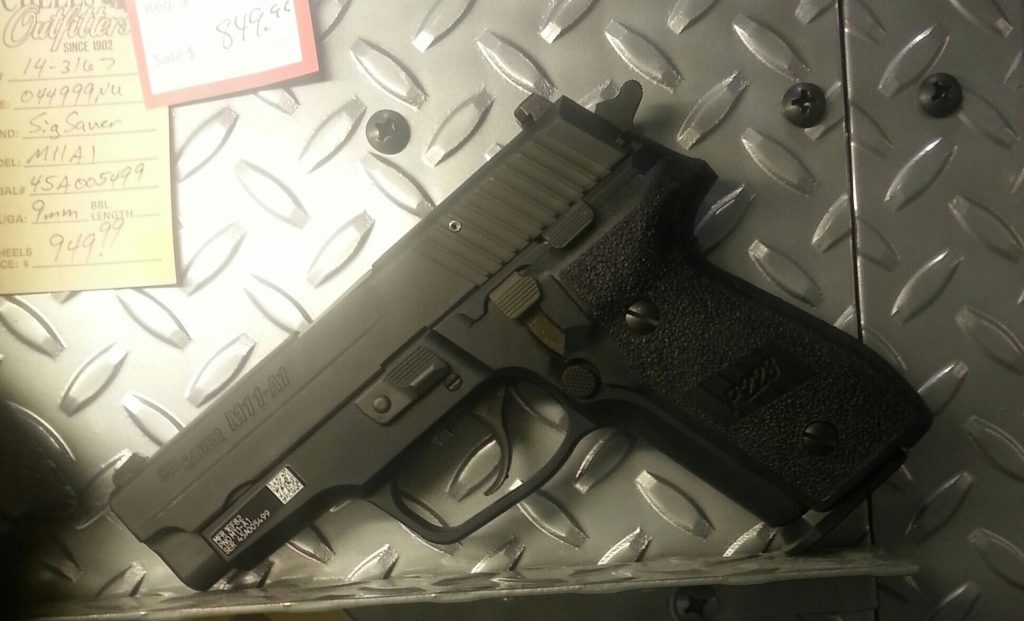
6. SIG Sauer M11
The M11 showed that the Army did not only need a standard sidearm; it also needed a compact one. Based on the SIG Sauer P228, it answered the requirement for a pistol that was easier to conceal and handier for investigators, protective details, and personnel who did not want the bulk of the M9.
Its test performance explains why it mattered. During Army reliability trials at Aberdeen Proving Ground, only a single malfunction was experienced in 15,000 rounds across three submitted pistols. That level of reliability, combined with a 13-round magazine and a more compact grip, changed how the Army approached sidearms for specialized users. The M11 was not about replacing the M9 everywhere; it was about matching the handgun to the mission.
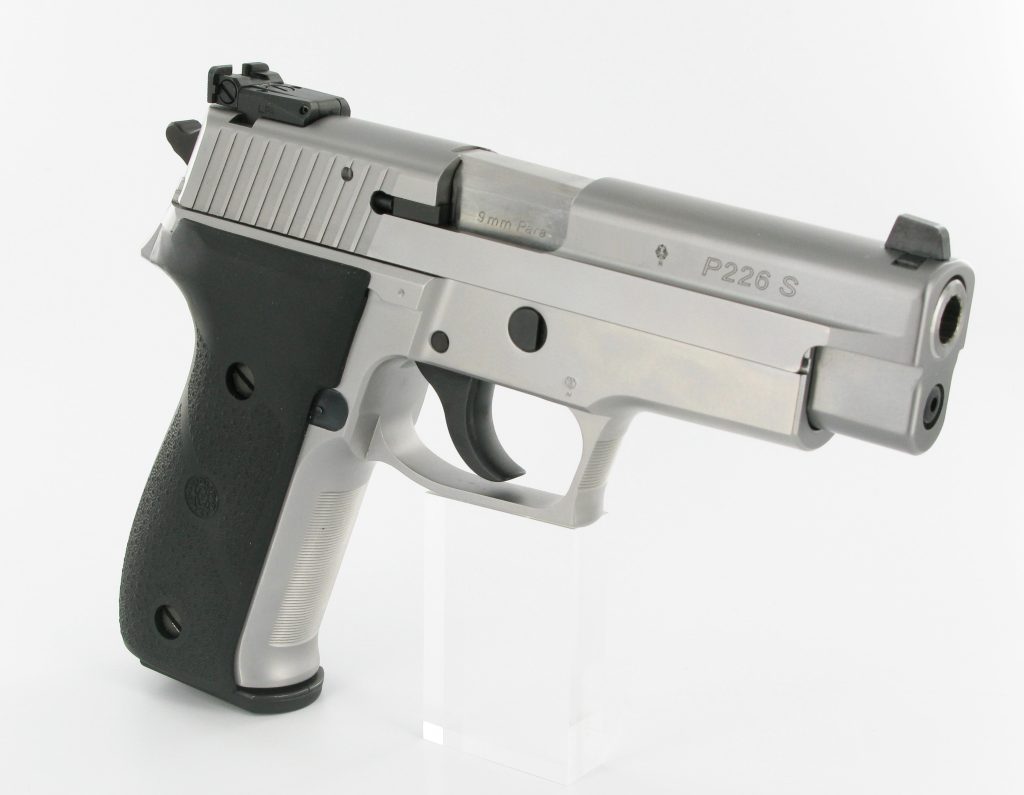
7. SIG Sauer P226
The P226 never became the Army’s standard sidearm, but it still changed the Army’s sidearm story because it pushed the service-pistol competition into a different technical class. In the XM9 trials, the SIG was the only pistol that seriously challenged the Beretta and, by several measures, outperformed it in reliability testing.
One widely cited summary of the trials notes that the P226 achieved 2,877 mean rounds between failures, compared with 1,750 for the Beretta in the same program. Even though procurement ultimately went another way, the P226 demonstrated that the Army’s future sidearm would need to be a high-capacity 9mm built for harsh environmental testing and institutional durability. In that sense, it influenced the standard even without winning the broad Army contract.
Taken together, these handguns trace the Army’s changing priorities from mounted service and blackpowder era ruggedness to semiautomatic endurance, compact concealability, and modern reliability standards. Some were long-serving issue pistols, while others were transitional or competitive designs that redirected the Army’s thinking. All seven left a mark on how soldiers carried, trained with, and depended on a sidearm when the primary weapon was not enough.


