
Artificial intelligence has moved past the stage of curiosity and into basic infrastructure. The clearest sign is scale: ChatGPT alone reached 800 million weekly active users, a figure that places AI tools inside everyday workflows for coding, writing, research, and customer support. That expansion has sharpened three overlapping concerns.
Work is being reorganized faster than many career ladders can adapt. Electricity systems are being strained by the hardware behind AI services. And the ability to set rules, shape interfaces, and control access is concentrating in a small number of companies building the dominant models and platforms.

1. Routine work is being automated faster than organizations can redesign jobs
Much of the public debate treats AI as a substitute for entire professions, but the more immediate shift is narrower and more disruptive: specific tasks are being absorbed at high speed. Coding assistants can generate boilerplate, draft tests, translate between languages, and fix isolated bugs. Studies cited in industry and academic research have found meaningful productivity gains on routine tasks, including developers completing tasks 55% faster in one GitHub study and roughly 26% in MIT-Stanford research on routine coding work. That does not remove the need for engineers, analysts, or writers. It does change which parts of their jobs remain distinctly human.

2. Entry-level roles are under the greatest pressure
Junior work has traditionally included repetitive but formative assignments: drafting, cleaning data, fixing small defects, summarizing research, and handling operational overflow. Those are precisely the tasks that generative AI can often perform quickly. Harvard Business Impact argues that eliminating these roles outright would be “dangerously short-sighted,” because entry-level positions are also where people develop judgment, resilience, and pattern recognition. The longer-term issue is not only youth employment. It is the health of the talent pipeline. If companies strip away the low-stakes environments where early-career workers learn how systems fail, future managers and technical leads inherit responsibility without the grounding that earlier generations gained on the front lines.

3. Software engineering is changing, not disappearing
Predictions that AI will write most code have fueled anxiety, but software engineering is broader than code generation. Engineers spend substantial time defining requirements, reviewing trade-offs, debugging across services, handling security concerns, and coordinating with stakeholders. Current AI tools perform best when the task is standard, scoped, and well specified. Their reliability drops when requirements are ambiguous, systems are large, or success depends on institutional context that lives outside the prompt. This distinction matters because it shifts the value of the role upward. Architecture, verification, domain expertise, and accountability become more important as implementation gets cheaper.

4. AI is compressing the distance between idea and deployment
One reason AI feels destabilizing is speed. A small team can now move from concept to prototype with far less manual effort than was required even a few years ago. That lowers barriers for startups and internal product teams, but it also increases the volume of software, experiments, and automated decisions entering the world. Jevons-style dynamics may follow: when production gets cheaper, demand expands rather than simply shrinking the workforce. The result is not a clean story of replacement. It is a story of acceleration, where more systems get built, but fewer traditional apprenticeship tasks survive in their old form.
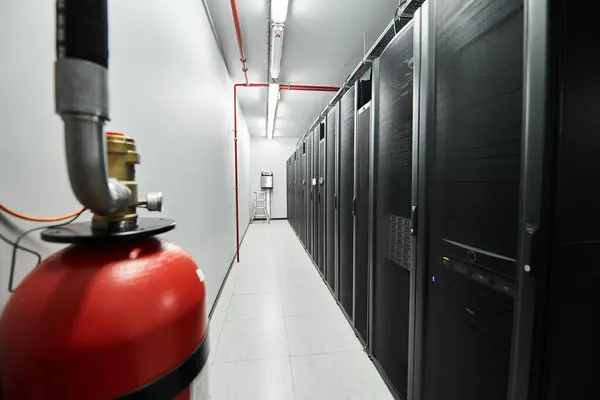
5. The power bill behind AI is becoming a national-scale issue
The glamour of AI products sits on top of a physical system of chips, cooling equipment, transmission constraints, and round-the-clock power demand. A DOE-backed Lawrence Berkeley National Laboratory report found that data centers consumed about 4.4% of total U.S. electricity in 2023 and could rise to 6.7% to 12% by 2028. Reuters also reported projections that U.S. data-center power use could nearly triple over that period. This is where AI stops looking like pure software. It becomes an industrial system with grid implications, local infrastructure consequences, and a direct connection to semiconductor supply and cooling technology.

6. Control is concentrating in companies with chips, data centers, and distribution
Scale in AI does not come only from better models. It comes from access to training data, specialized chips, cloud capacity, developer ecosystems, and large consumer surfaces. A service with hundreds of millions of users can improve faster, attract more developers, and justify larger infrastructure investments. That creates reinforcing loops in which usage, capital expenditure, and platform influence strengthen one another. Control, in this sense, is technical before it is philosophical. The firms that own the compute, the APIs, and the default interfaces shape what can be built, who can build it, and under what constraints.

7. Human oversight is becoming more important, not less
AI systems can generate fluent output without accurately judging whether that output is correct. In software, that means plausible code that still breaks hidden assumptions. In knowledge work, it means polished drafts that may contain errors, gaps, or false confidence. Human labor does not vanish in this setup; it moves into checking, testing, interpreting, and taking responsibility when things go wrong.This is especially visible in complex environments. Production outages, security incidents, ambiguous user needs, and high-stakes trade-offs still require people who can absorb context and own outcomes under pressure.

8. The real struggle is over how AI gets integrated into institutions
The deepest alarm is not that AI exists. It is that institutions may adopt it in the fastest, thinnest way possible: using it first to cut headcount, flatten training, and centralize decision-making. Harvard’s argument for redesigning entry-level work points toward a different model, where AI handles repetitive execution while humans spend more time on framing, skepticism, collaboration, and domain judgment. That choice will shape the labor market more than any headline prediction. If organizations redesign jobs around learning and accountability, AI can become a force multiplier.

If they treat automation as a shortcut around human development, they may save labor in the short term while weakening the expertise and trust they need later. AI’s rapid rise has made the stakes unusually concrete. Jobs are being reorganized at the task level, electricity demand is climbing with the build-out of model infrastructure, and strategic control is consolidating around a few powerful platforms. The central question is no longer whether AI is arriving. It is how much human judgment, institutional memory, and public infrastructure will be bent around its growth.


