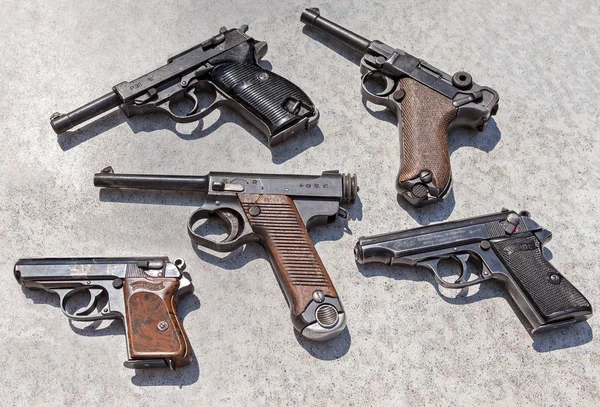
Army sidearms rarely dominate official histories. Rifles, machine guns, and artillery usually carry the strategic narrative, while pistols are treated as secondary tools. Yet several Army handguns did something more consequential than fill holsters: they pushed doctrine toward new ideas about stopping power, standardization, training, logistics, and mechanical reliability.
That influence often appeared indirectly. A pistol failed in one environment, and the Army rethought caliber. A wartime shortage forced an ammunition workaround, and doctrine absorbed a new lesson in interchangeability. A replacement seemed modern on paper, and the service discovered that alliance standards and user confidence do not always move in the same direction.
1. Colt Single Action Army
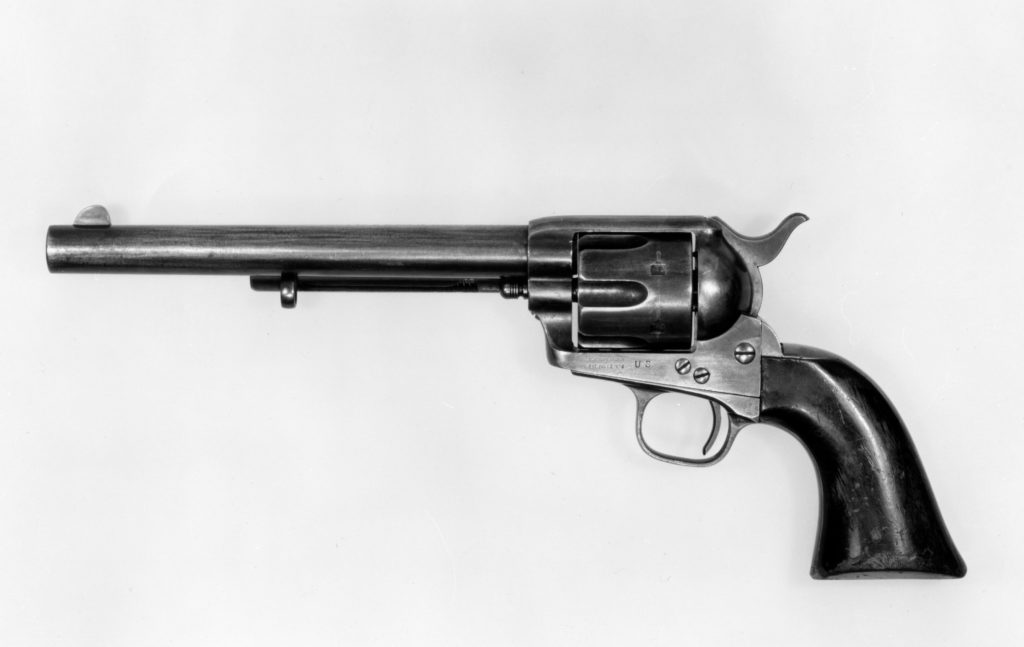
The Colt Single Action Army established an early Army expectation that a sidearm had to deliver decisive close-range force. Adopted in 1873 as the standard-issued revolver of the U.S. Army, the big .45-caliber revolver arrived at a moment when the service was still defining what a metallic-cartridge handgun should be in field use. Its topstrap frame, robust lockwork, and powerful chambering gave the Army a benchmark for ruggedness and authority on horseback and on foot.
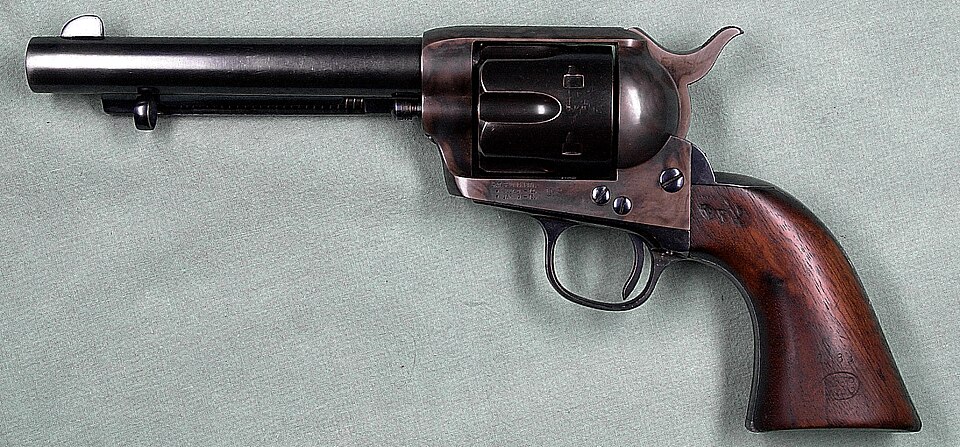
Its doctrinal impact lasted well beyond its formal service life. When the Army replaced it in the 1890s with a lighter double-action .38 revolver, the move suggested a shift toward easier handling and modern mechanism over raw cartridge effect. That tradeoff did not hold. During fighting in the Philippines, dissatisfaction with .38-caliber performance revived Army interest in heavier handgun bullets, and older .45 revolvers were brought back into service. The Single Action Army therefore shaped doctrine twice: first by defining the original standard for sidearm power, and later by serving as the reference point the Army returned to when smaller-caliber assumptions broke down.
2. Colt M1911 / M1911A1
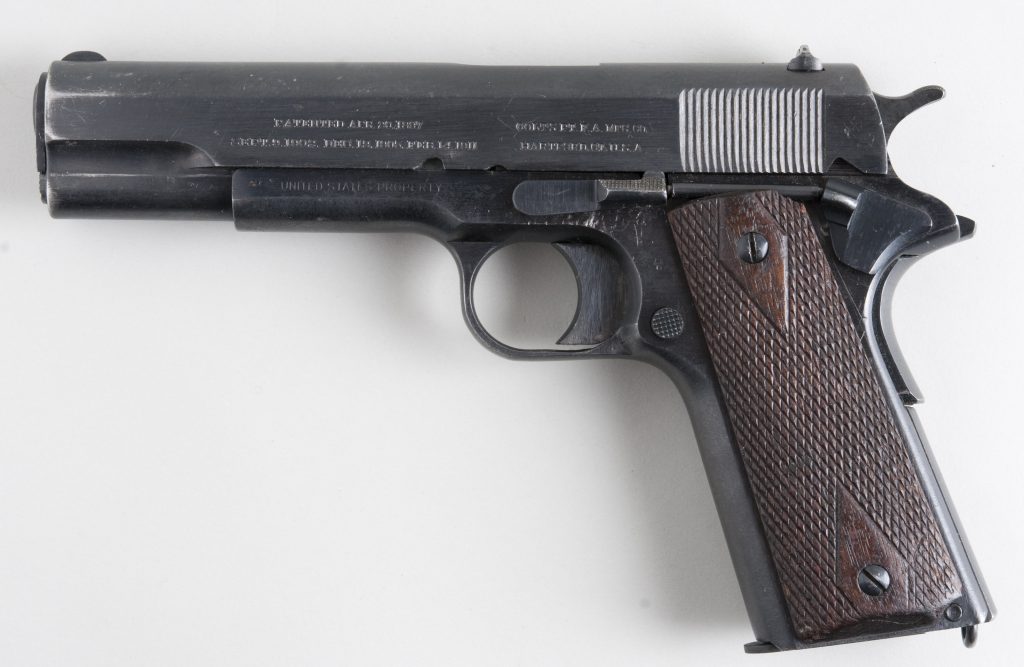
No American military pistol had a longer doctrinal shadow than the M1911. It was adopted after Army testing that emphasized durability and function, including Browning’s prototype firing 6,000 rounds over two days. That trial mattered because it elevated reliability from a desirable trait to a near-foundational requirement in service pistol thinking. The pistol also locked in the Army’s renewed commitment to .45 caliber after the .38 experience in the Philippines. Its seven-round magazine, self-loading operation, and layered safety features moved doctrine away from the revolver era and into the age of modern military pistols.
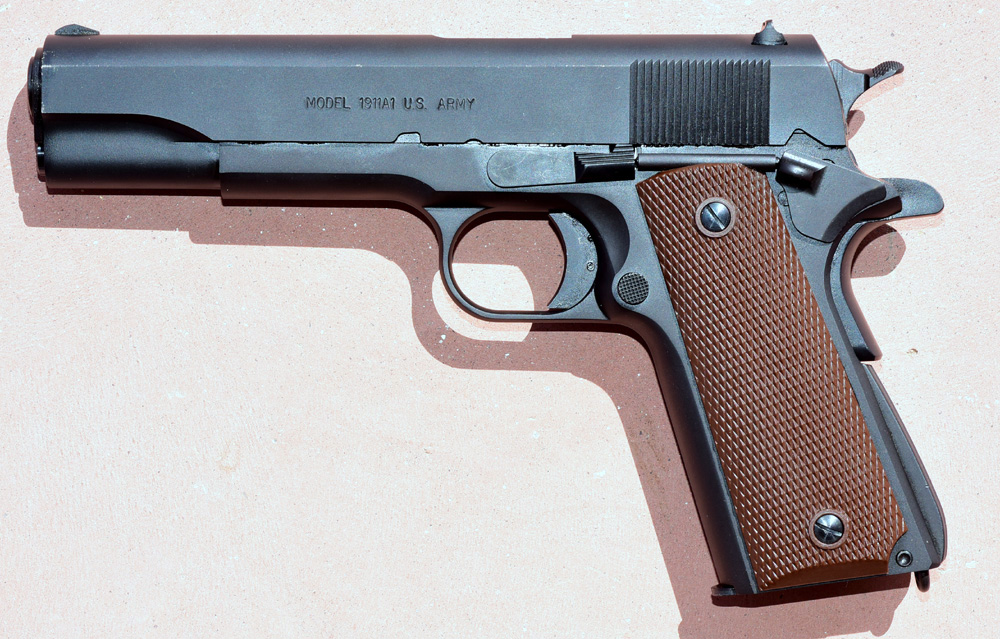
The M1911A1 refinement later standardized ergonomic changes without abandoning the core system, reinforcing a distinctly American preference for continuity when a design still met battlefield needs. The weapon remained the basic U.S. military sidearm from 1911 to 1984, an extraordinary span that influenced generations of training, maintenance, and close-quarters expectations. Its long service created more than nostalgia; it normalized the idea that a sidearm should inspire user confidence as much as it satisfies a specification sheet. That became important when the Army eventually changed caliber and platform.
3. U.S. Model 1917 Revolver
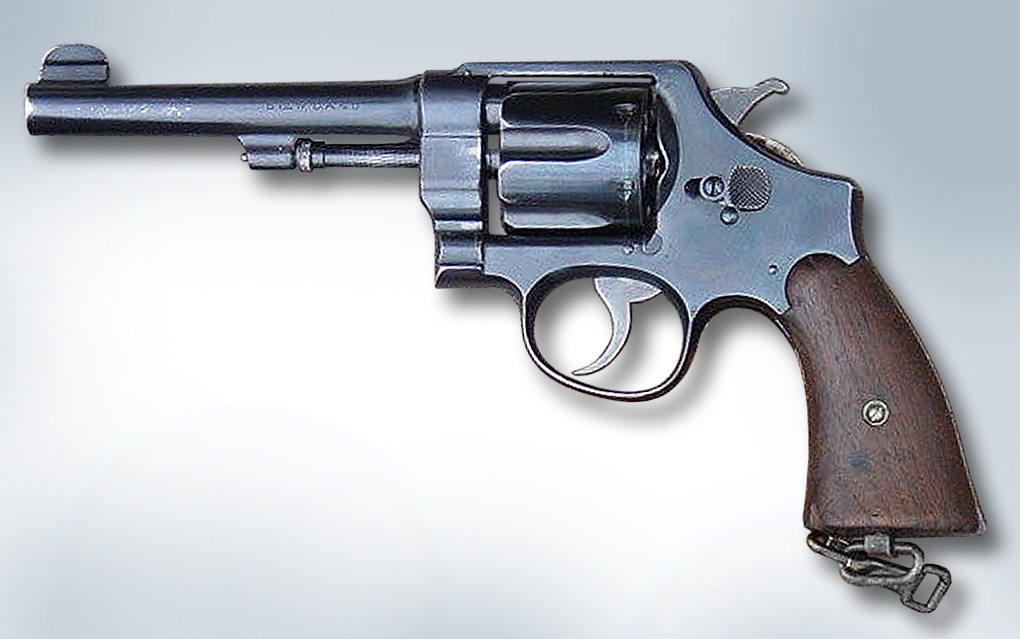
The Model 1917 is often treated as a wartime expedient, but its real importance lies in what it taught the Army about emergency adaptation. When U.S. entry into World War I created a handgun shortfall, Colt and Smith & Wesson both produced revolvers chambered for .45 ACP. The solution worked because half-moon clips made rimless .45 ACP cartridges usable in revolvers, turning an ammunition problem into a practical field system. That was a quiet doctrinal shift. The Army was no longer thinking only in terms of a pistol as a self-contained design; it was also thinking in terms of ammunition commonality across different handgun types.
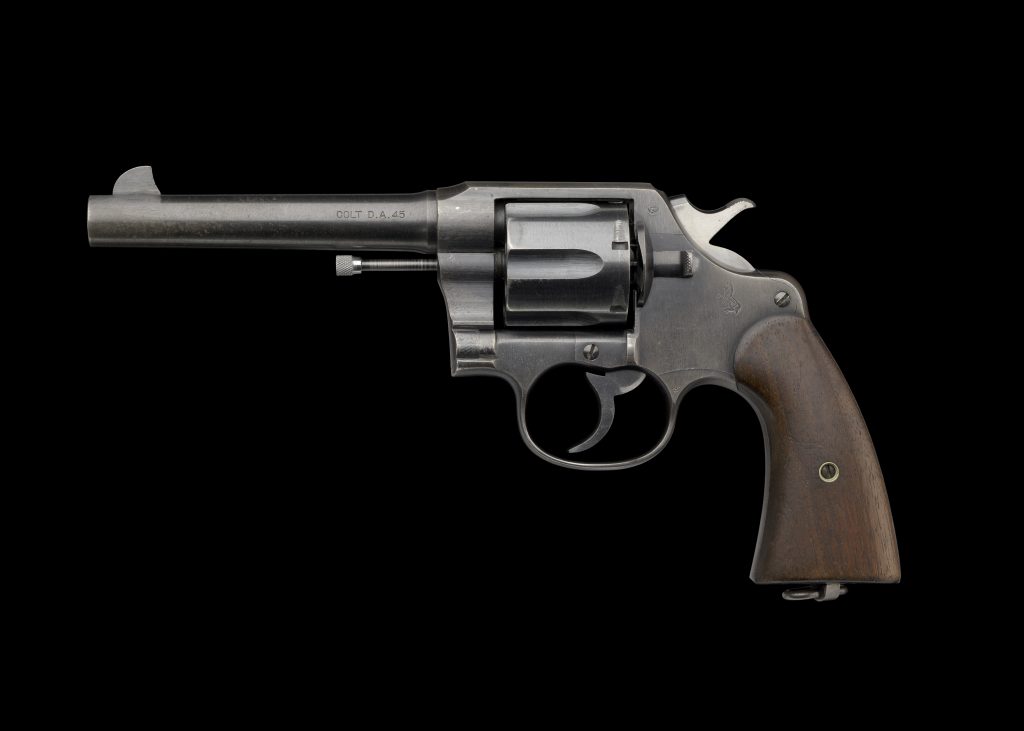
More than 300,000 Model 1917 revolvers were produced between 1917 and 1919, showing how industrial flexibility could preserve combat capability without waiting for ideal procurement conditions. The revolver also underscored the importance of extraction, ignition consistency, and speed of reload under stress, all wrapped into one deceptively simple steel clip. Later generations would see moon clips as a niche revolver accessory. In Army terms, they were an early lesson that doctrine could be altered by a small component rather than a whole new weapon.
4. Beretta M9
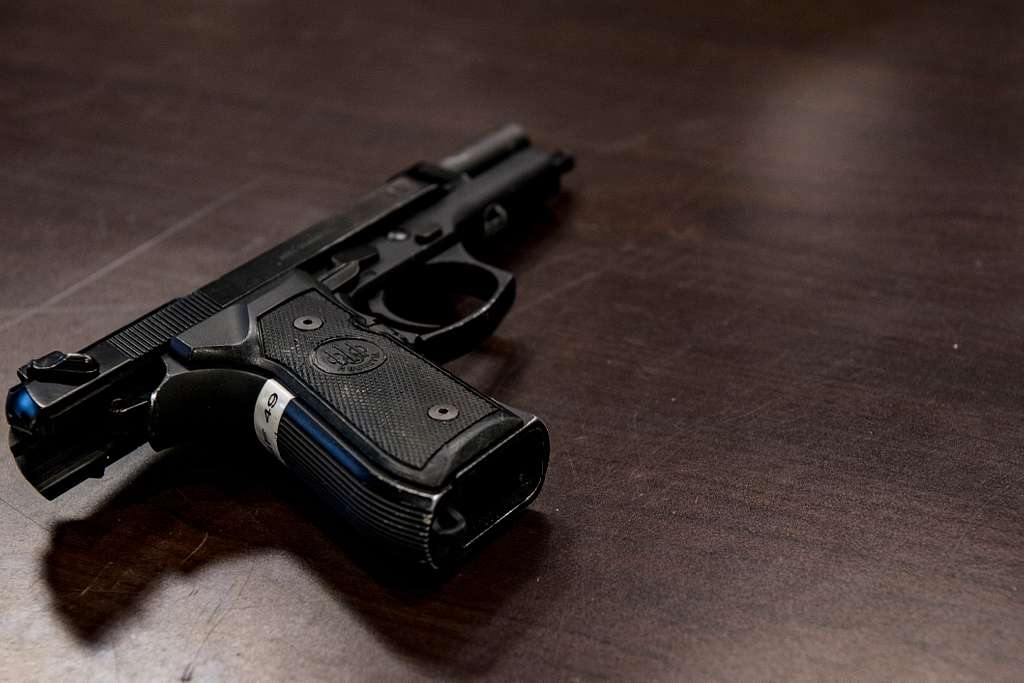
The M9 changed doctrine by forcing the Army to think less like a national arsenal and more like a NATO member. Adopted in 1985 as the M1911’s successor, the 9 mm Beretta represented a turn toward alliance standardization, larger magazine capacity, and easier qualification for a wider pool of personnel. In practical terms, it moved the Army away from the old .45-centric model and toward a pistol doctrine built around interoperability and general-issue usability.
Its early service life also exposed the limits of procurement logic divorced from user trust. A 1988 GAO review documented frame cracks and 14 slide failures before engineering changes addressed the issue. Those problems mattered beyond the hardware itself. They reinforced a recurring Army lesson that a sidearm must survive not only controlled trials but also institutional scrutiny, fleet-wide maintenance realities, and the confidence of the people carrying it.
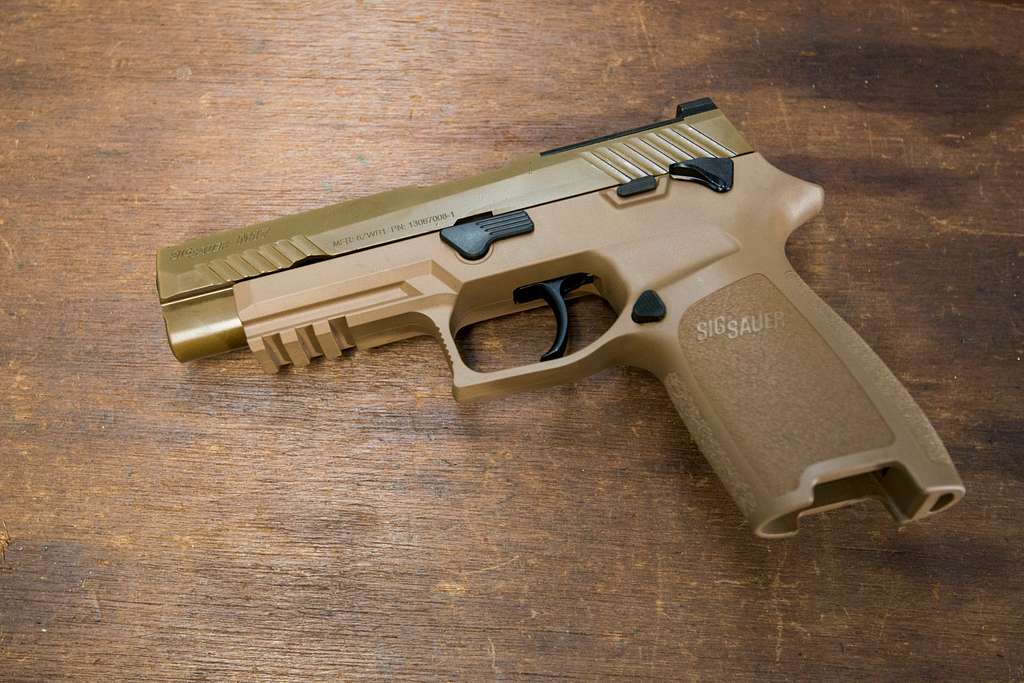
5. SIG Sauer M17
The M17 marked a different kind of doctrinal change: the Army no longer wanted a fixed-answer pistol. It wanted a system. Selected under the Modular Handgun System program, the M17 reflected a procurement philosophy centered on adaptability, with a serialized fire-control unit supporting different grip modules and configurations. That approach treated the sidearm less as a single immutable model and more as a platform that could be adjusted around users, missions, and sustainment needs.
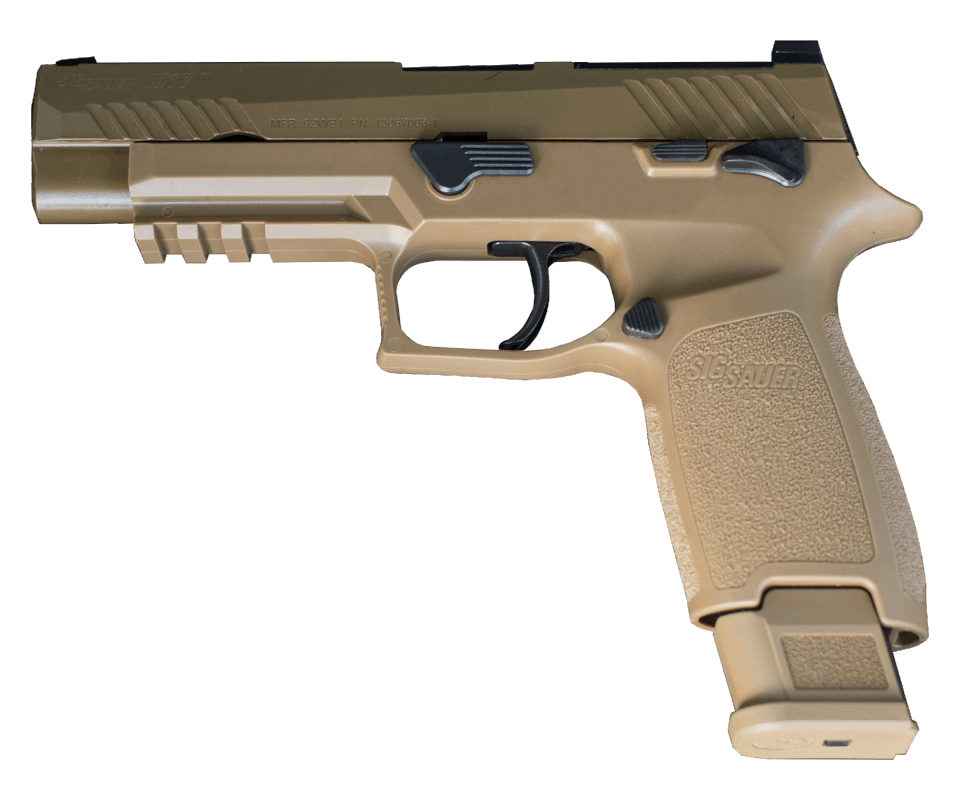
In doctrinal terms, that is a major break from the M1911 and even from the M9. Earlier pistols taught the Army what caliber, action type, or magazine capacity it preferred. The M17 taught the Army to prioritize modularity, lifecycle management, and common architecture. The sidearm became part of a broader systems mindset that now shapes how the service evaluates small arms in general.
These five pistols did more than accompany soldiers. Each one nudged the Army toward a different answer to the same persistent question: what should a military sidearm actually do? Across a century and a half, the answers changed from horseback stopping power, to self-loading reliability, to wartime ammunition flexibility, to alliance standardization, and finally to modular procurement. That is why these pistols matter. Their real legacy is not only mechanical. It is doctrinal.


