Military sidearms rarely earn their reputations through mystique alone. They shape trust by surviving hard use, matching doctrine, and proving that a handgun can be drawn under stress and still do its job without surprises.
Across more than a century, a few U.S. Army-issued pistols and revolvers helped define what service members came to expect from a sidearm: authority, durability, controllability, and mechanical simplicity. These five stand out not just for how long they served, but for the standards they left behind.
1. Colt Single Action Army
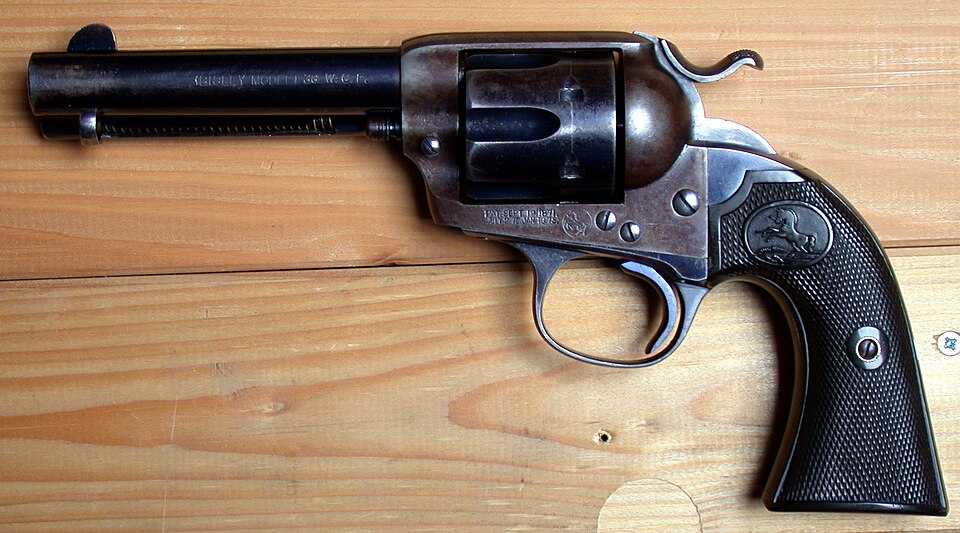
The Colt Single Action Army established the earliest Army template for a dependable issued handgun. Adopted after the service revolver trials of 1872, it brought a sturdier topstrap frame, a removable cylinder base pin, and the new .45 Colt cartridge into one package that the Army considered more suitable than rival designs. Its reputation was built around ruggedness and authority.
The revolver’s 7.5-inch “Cavalry” configuration gave mounted troops a substantial sidearm with strong black-powder ballistics, and the design’s balance made it point naturally despite its size. In the official test board conclusions quoted by American Rifleman, Capt. John R. Edie wrote, “I have no hesitation in declaring the Colt revolver superior in all aspects, and much better adapted to the wants of the Army than the Smith & Wesson.”
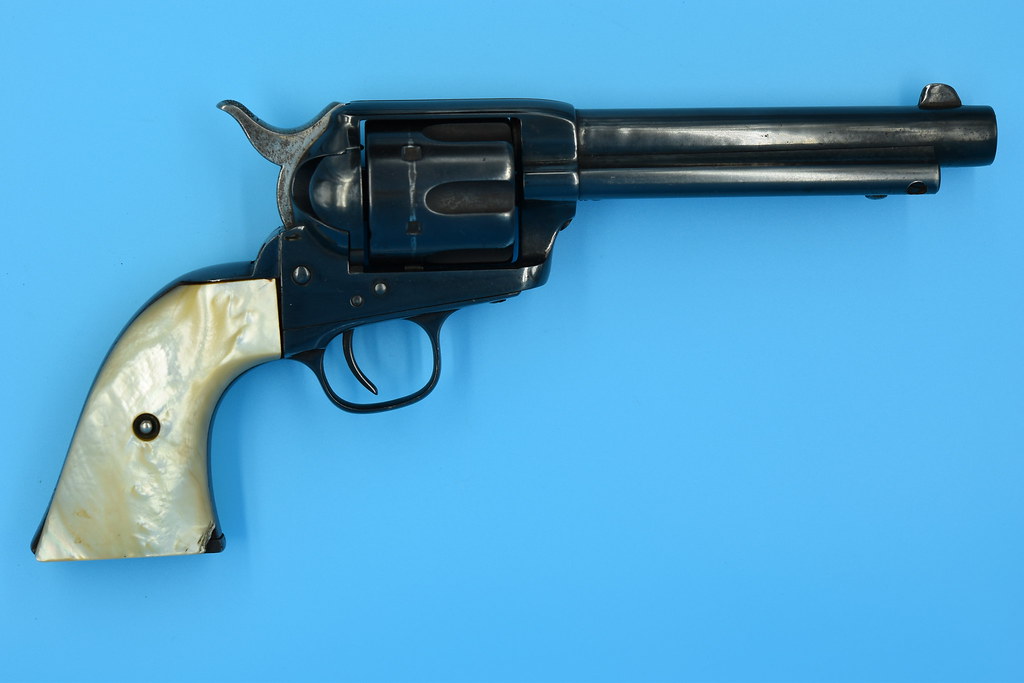
Just as important, the Single Action Army taught generations of soldiers that confidence in a sidearm begins with a gun that can tolerate field conditions and still remain predictable. Even after its formal replacement, older .45 SAAs returned to service when later revolvers in .38 Long Colt failed to inspire the same confidence. That alone explains why the Peacemaker remained part of the Army’s sidearm story long after its first issue period ended.
2. Colt Model 1911
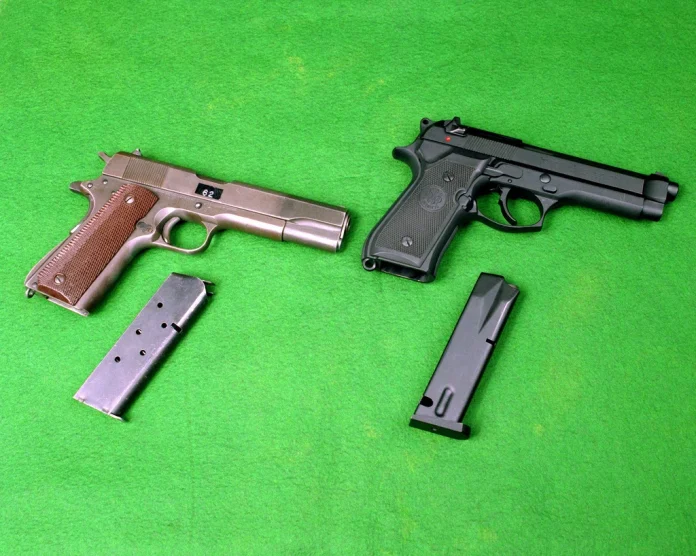
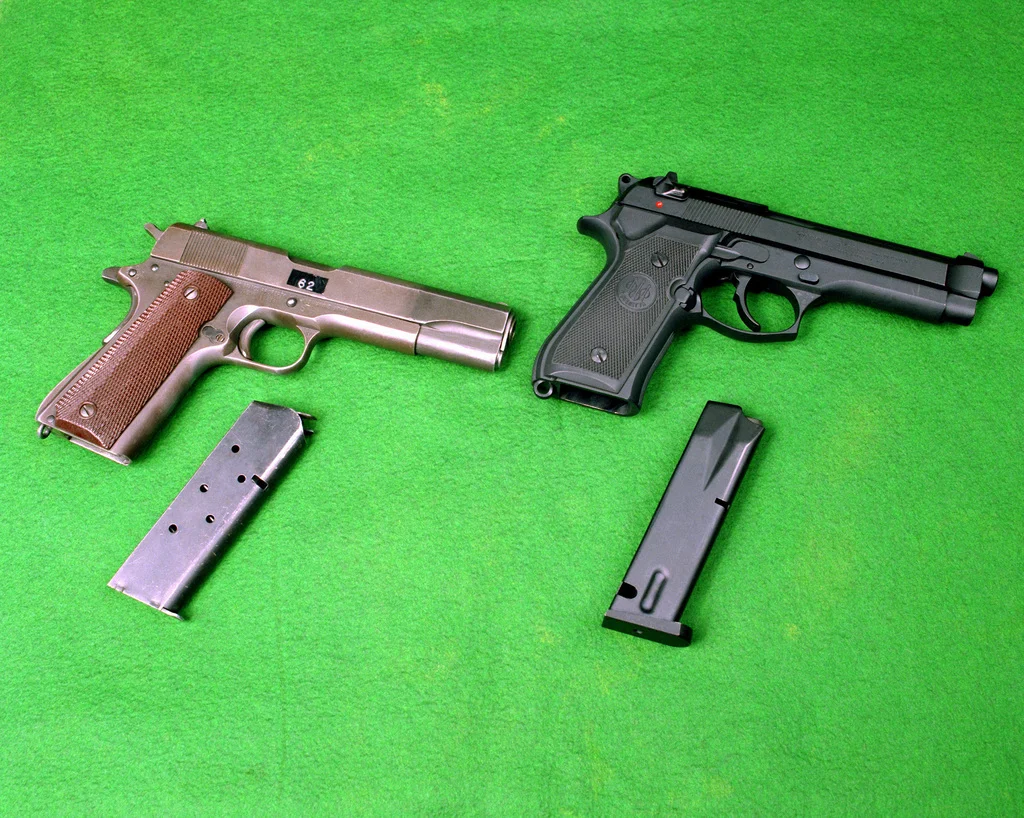
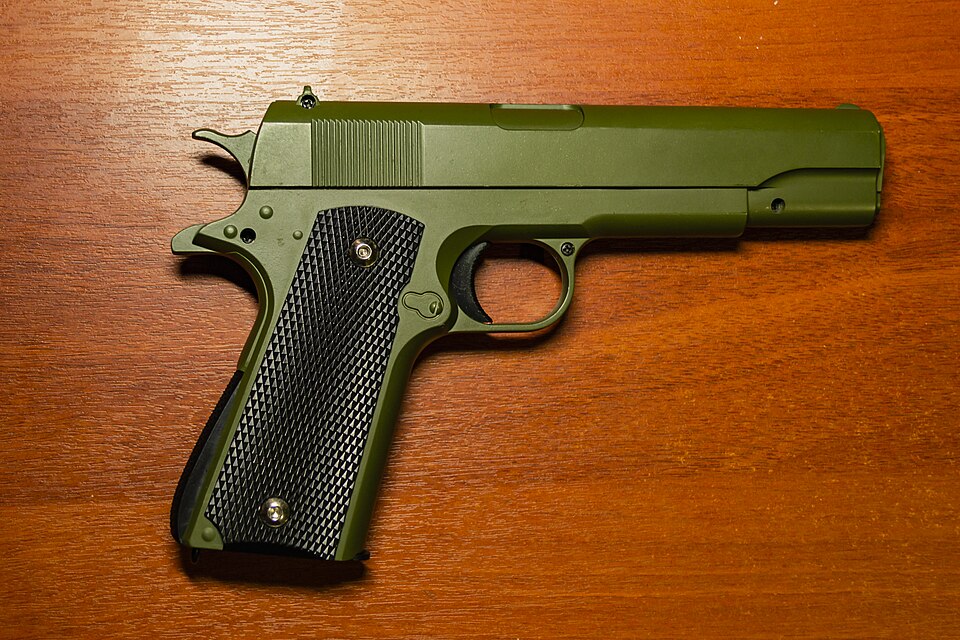
If the Single Action Army taught soldiers to trust power and toughness, the M1911 taught them to trust a self-loading pistol. Its development followed an Army search for a more effective automatic sidearm after dissatisfaction with smaller-caliber service handguns, and the final design emerged from years of trials, revisions, and mechanical refinement.
The pistol’s strongest legacy is that it did not enter service as an unproven theory. In the decisive March 1911 automatic pistol test, the Colt delivered 6,000 rounds without a failure. That result mattered because it linked trust to endurance, not novelty. Soldiers were being asked to move from revolvers to a semi-automatic pistol, and the Army needed evidence that complexity would not come at the expense of dependability.
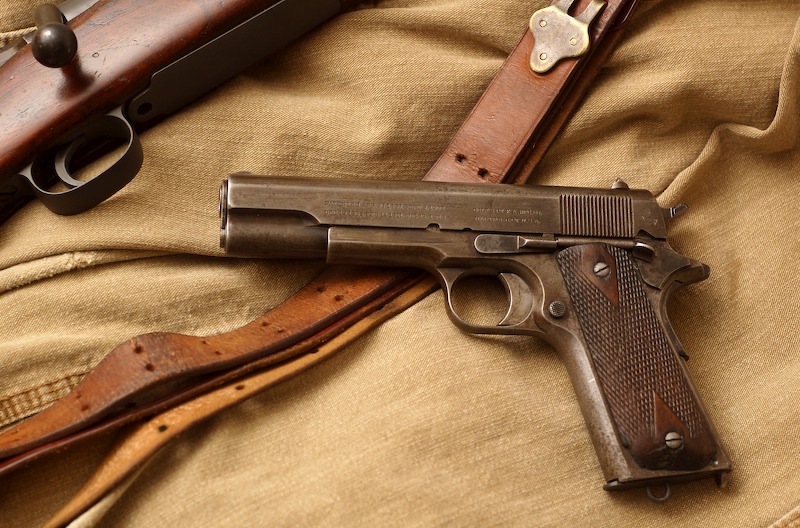
The M1911 also normalized features that later became central to service-pistol expectations: a substantial service cartridge, a controllable grip angle, positive safeties, and a manual of arms that could be repeated consistently. Its single-action trigger and slim profile gave it a shootable character that many later pistols would be measured against. For decades, trust in a military pistol meant trusting something built on the M1911 pattern, or at least something that could equal its record.
3. Colt Model 1892 Army & Navy Revolver
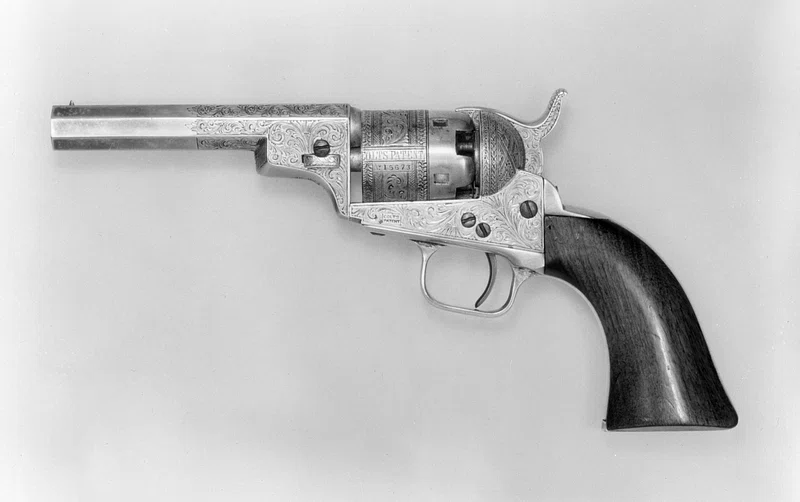
The Colt Model 1892 occupies a more complicated place in Army history, but that is exactly why it mattered. It introduced a double-action, swing-out-cylinder revolver format that represented a major step toward faster reloading and quicker practical handling than the old gate-loaded single-actions.
Mechanically, it pointed toward the future. In service experience, though, it also showed that ease of operation alone does not create trust. The Army’s move to .38 Long Colt came with a reduction in striking power compared with the .45 Colt revolvers it replaced, and later combat experience damaged confidence in the cartridge. That shortfall became one of the forces behind the Army’s renewed insistence on larger-caliber sidearms.
This revolver’s legacy is not glamour. It is the lesson that soldiers judge pistols as systems, not as isolated mechanisms. Faster reloading and double-action capability were genuine advances, but they could not fully compensate for a cartridge that did not produce the desired battlefield effect. Later Army handgun choices repeatedly reflected that lesson.
4. Beretta M9
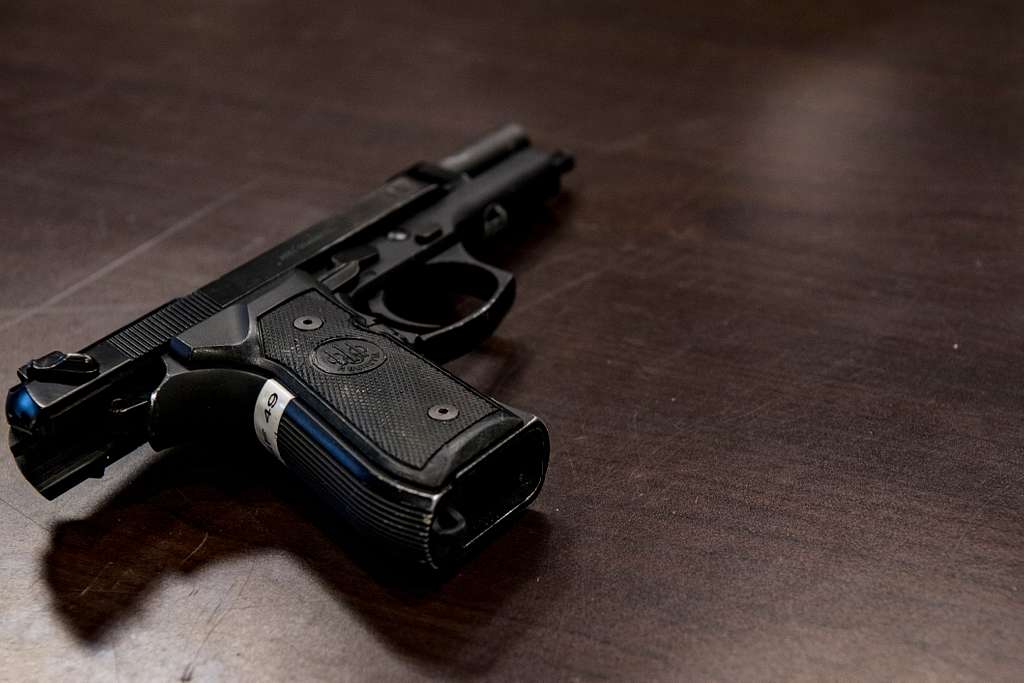
The Beretta M9 changed what Army personnel expected from a standard-issue pistol in the late 20th century. Here was a high-capacity 9 mm, double-action/single-action service handgun with an open-slide design, ambidextrous safety-decocker arrangement, and magazine capacity that looked very different from the seven-round .45 that had dominated Army sidearm culture for generations.
Its influence was broader than its critics and defenders sometimes admit. The M9 helped make reliability over high round counts, softer recoil, and faster follow-up shots central to service-pistol thinking. It also familiarized generations of troops with a transition trigger system, where the first shot differed from the ones that followed. That training burden became part of the pistol’s legacy as much as its size or capacity.
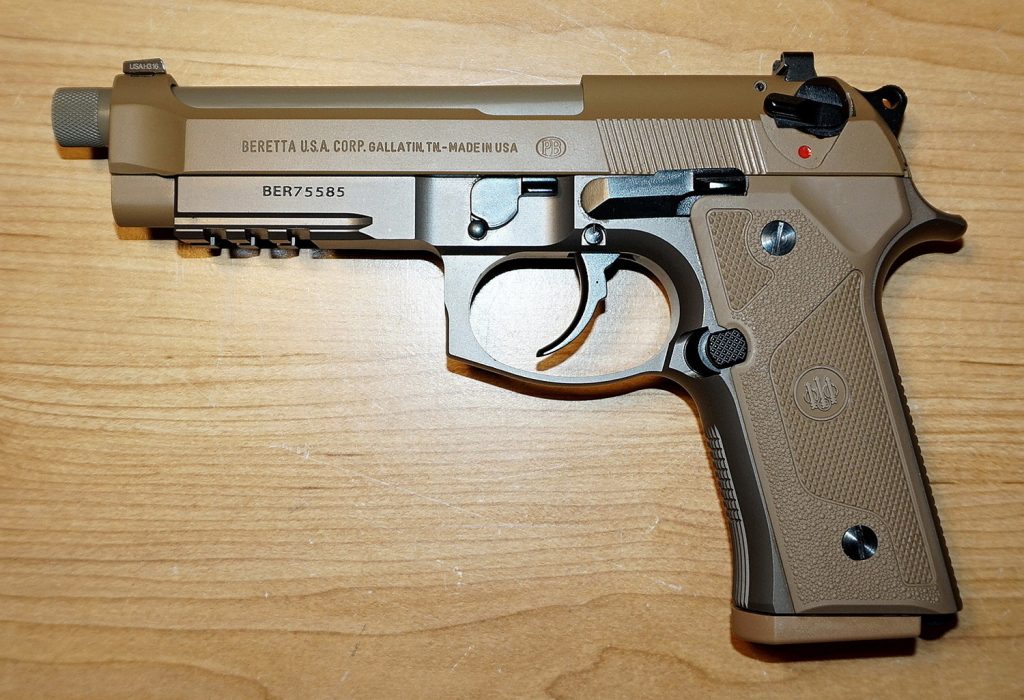
At the same time, the M9 reinforced another enduring rule: a military sidearm earns or loses trust through maintenance culture as much as design. Locking block wear and institutional maintenance issues followed the pistol throughout its service life. Even so, its long Army tenure established that controllability, magazine capacity, and repeatable qualification performance had become non-negotiable parts of what soldiers wanted from a sidearm.
5. SIG Sauer M11
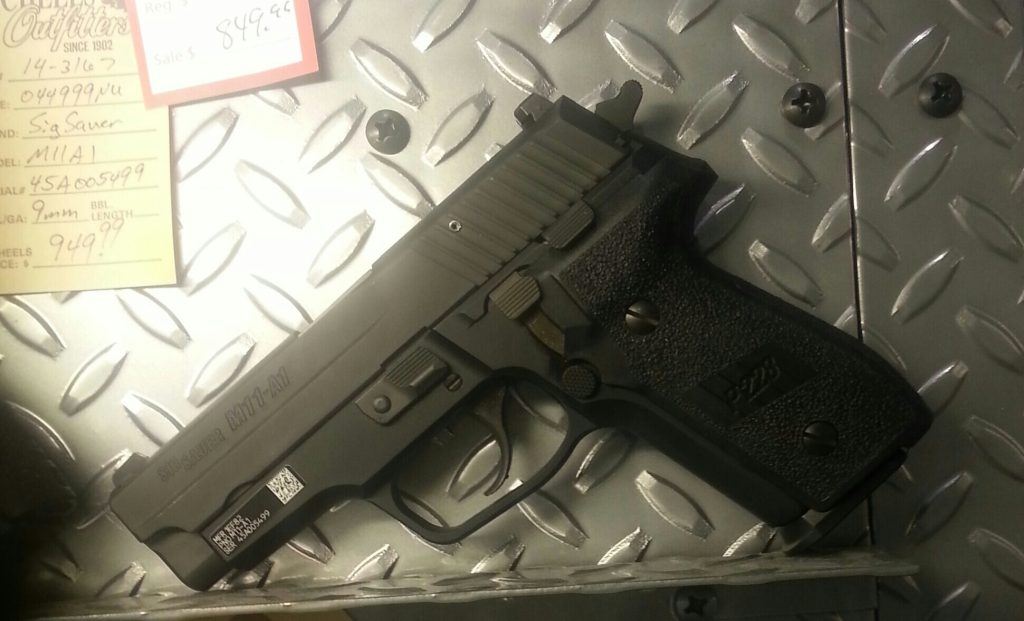
The SIG Sauer M11, based on the P228, represented a different kind of Army trust. It was more compact than a full-size service pistol, yet it retained duty-grade controls, metal-frame durability, and enough shootability to avoid the usual compromises associated with smaller handguns. Its reputation came from balance. The P228 pattern used an alloy frame, a compact slide, and a 13-round 9 mm magazine, producing the configuration that earned its place as the U.S. military’s M11 sidearm.
For aviators, investigators, and specialized personnel, that mattered because trust in a pistol is partly about whether it can be carried constantly without being left behind. The M11 helped define modern expectations for a compact military handgun: no dramatic sacrifice in reliability, no awkward controls, and no loss of practical accuracy simply because the pistol is shorter. It showed that an issued sidearm did not have to be full-size to feel serious, and that confidence could come from refinement as much as raw heft.
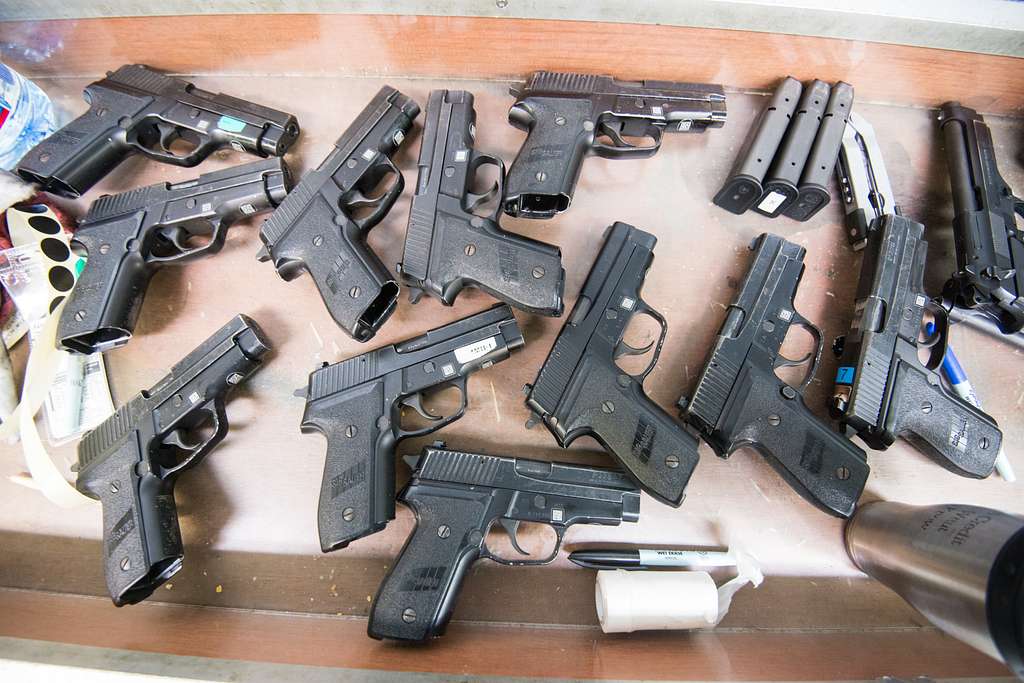
Together, these five handguns reveal a consistent pattern in Army sidearm history. Soldiers tend to trust pistols that combine power appropriate to the mission, straightforward handling, and mechanical behavior that stays predictable under use. The shape of that trust changed from single-action revolvers to big-bore automatics, then to high-capacity 9 mms and compact service pistols. The standard kept evolving, but the core requirement did not: an issued sidearm had to feel ready before the trigger was ever pressed.


