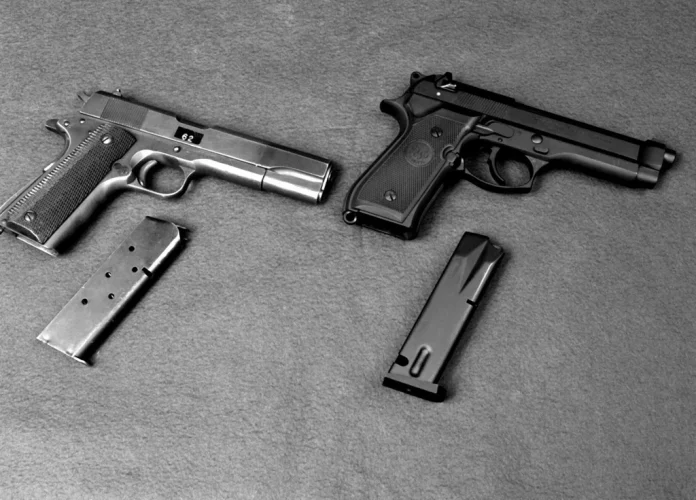
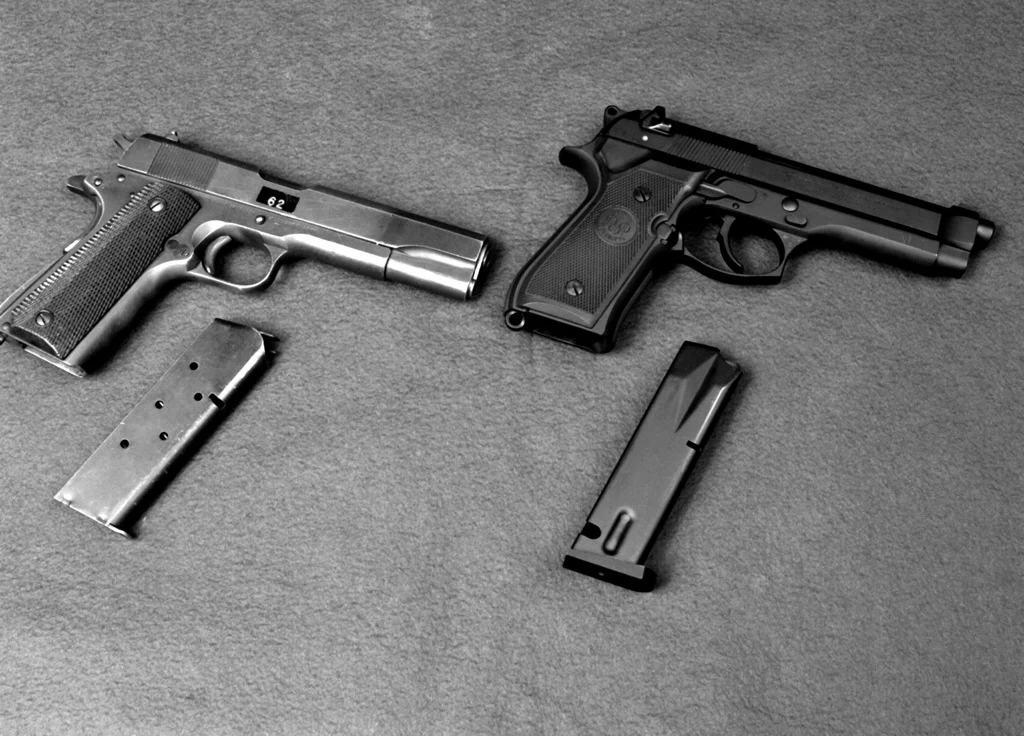
A U.S. Army sidearm has rarely been just a backup weapon. Across different eras, pistols and revolvers have filled the gap when rifles were empty, primary weapons were out of reach, or close quarters made a smaller firearm the only practical option. The most important Army handguns were not always the most advanced for their day. The ones that lasted usually solved a specific problem: poor stopping power, slow reloading, limited capacity, worn-out inventory, or the need to fit a much broader range of troops. That is what turned a sidearm from issue gear into doctrine.
1. Colt Single Action Army
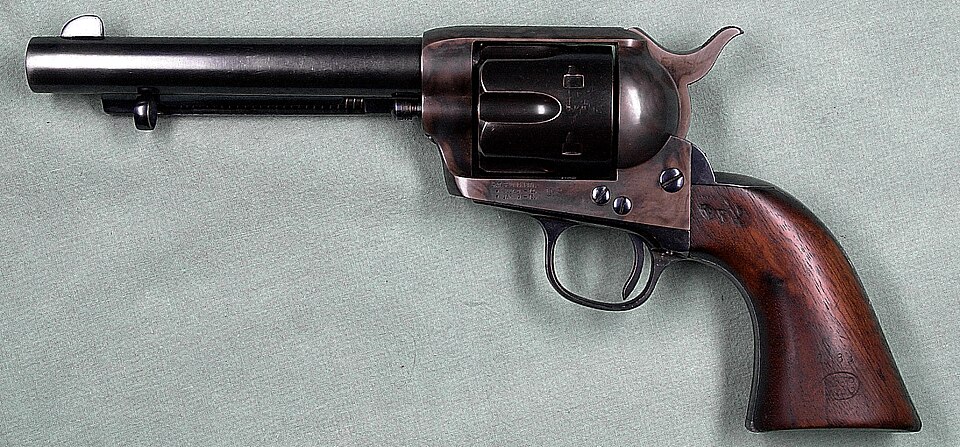
The Colt Single Action Army marked the Army’s transition into the metallic-cartridge revolver age after the Civil War. Adopted in 1873 and chambered in .45 Colt, it brought a rugged topstrap frame, strong field durability, and the kind of straightforward handling that cavalry service demanded on the frontier.
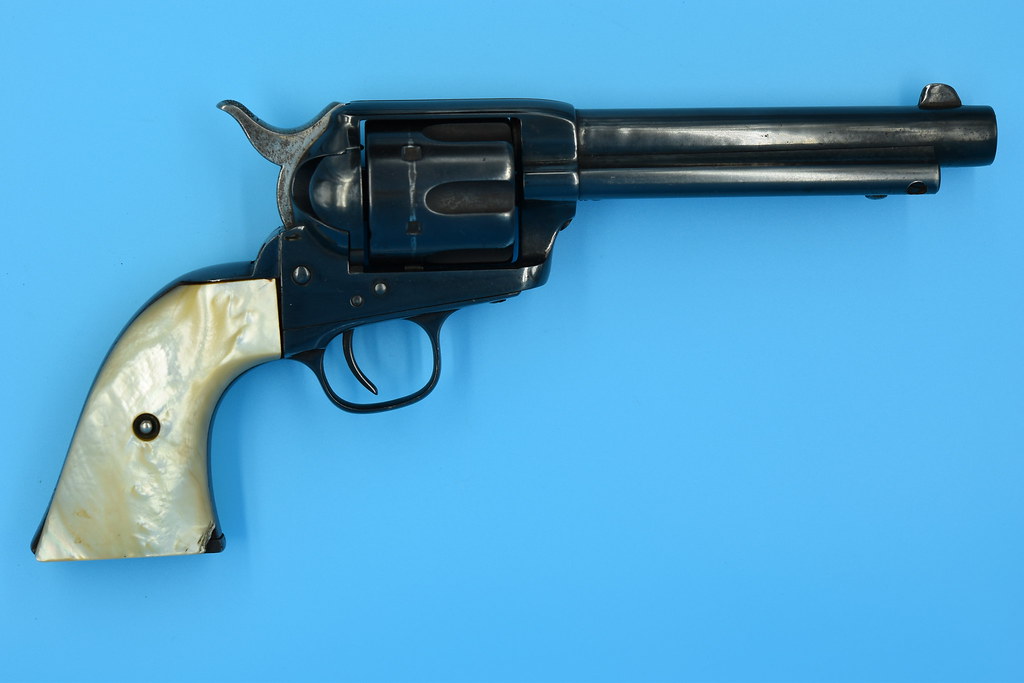
Its Army career ended in the 1890s, but its influence did not. The revolver became one of the clearest examples of how a service sidearm could become larger than its military role, moving from Army holsters into the wider culture as a symbol of the frontier soldier. Historical accounts also tie it to later well-known officers, including George Patton, reinforcing how long its image outlived its standard-issue years.
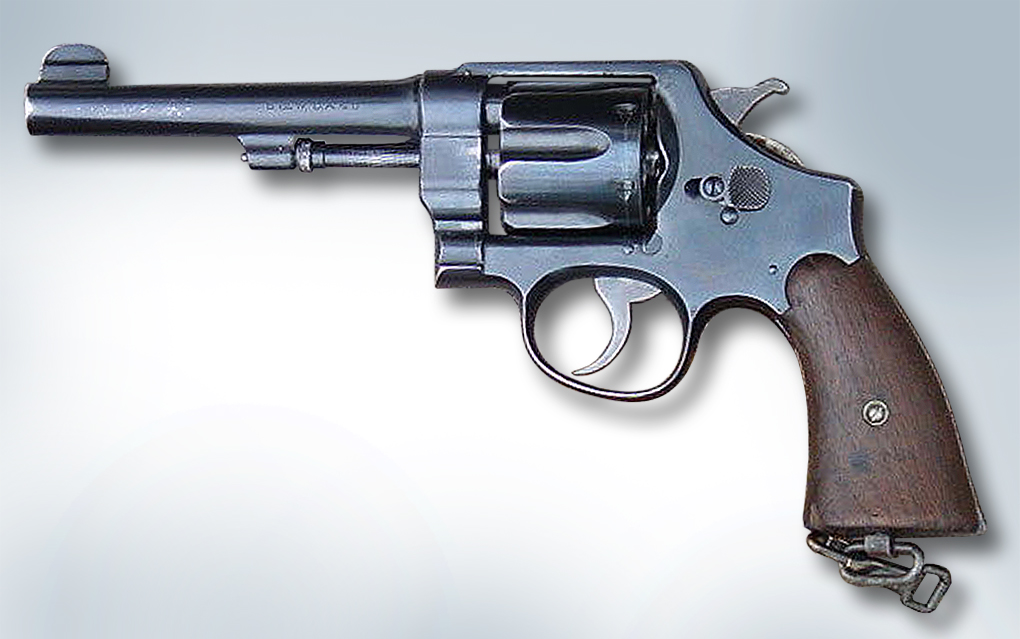
2. Colt & Smith & Wesson M1917 Revolvers
The M1917 revolvers were emergency answers to a production problem, and that is exactly why they matter. When World War I mobilization outpaced M1911 output, the Army turned to large-frame revolvers from Colt and Smith & Wesson modified to fire .45 ACP with half-moon clips. That adaptation let a revolver use rimless pistol ammunition efficiently, which was a major logistical and engineering workaround for the time.
More than 150,000 Colt Model 1917 revolvers and a similar number from Smith & Wesson entered service, proving that a stopgap could still become a durable military tool. They remained useful well beyond the First World War, especially in support and police roles during World War II. Their real legacy was flexibility: the Army showed it could bridge a procurement shortfall without abandoning ballistic commonality.
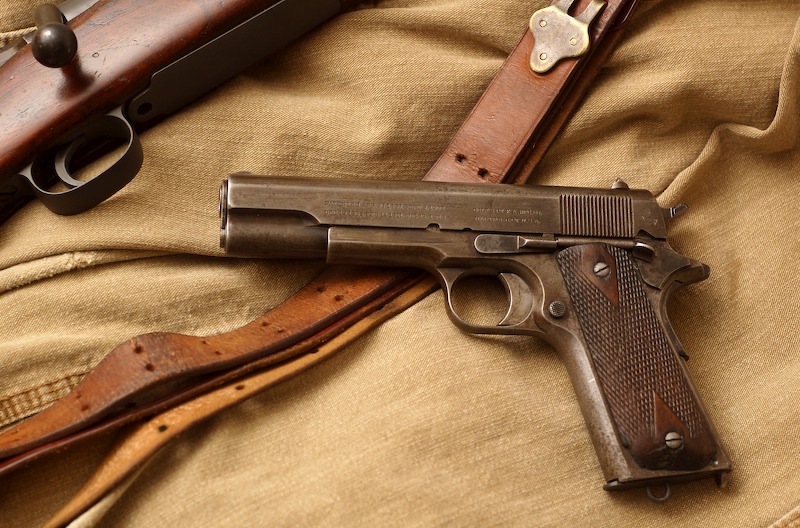
3. M1911 and M1911A1
No Army sidearm shaped American expectations more deeply than the M1911. It was born from hard lessons after .38-caliber revolvers disappointed in close combat, and the Army’s search for a more decisive handgun led directly to Browning’s .45 ACP pistol. In final trials, the Colt design famously completed a 6,000-round endurance test without any jams or malfunctions, a result that effectively defined its reputation before mass service even began.

Adopted in 1911 and refined into the M1911A1 in the 1920s, the pistol stayed relevant through World War I, World War II, Korea, and Vietnam. That longevity was not accidental. The design combined a powerful cartridge, a slim single-stack profile, strong reliability under abuse, and a trigger system that many later combat pistols were still measured against. The A1 updates, including a shorter trigger and arched mainspring housing, showed the Army was already learning that ergonomics mattered almost as much as caliber. For decades, the M1911 was not merely a sidearm; it was the Army’s answer to the question of what a fighting pistol should feel like in the hand.
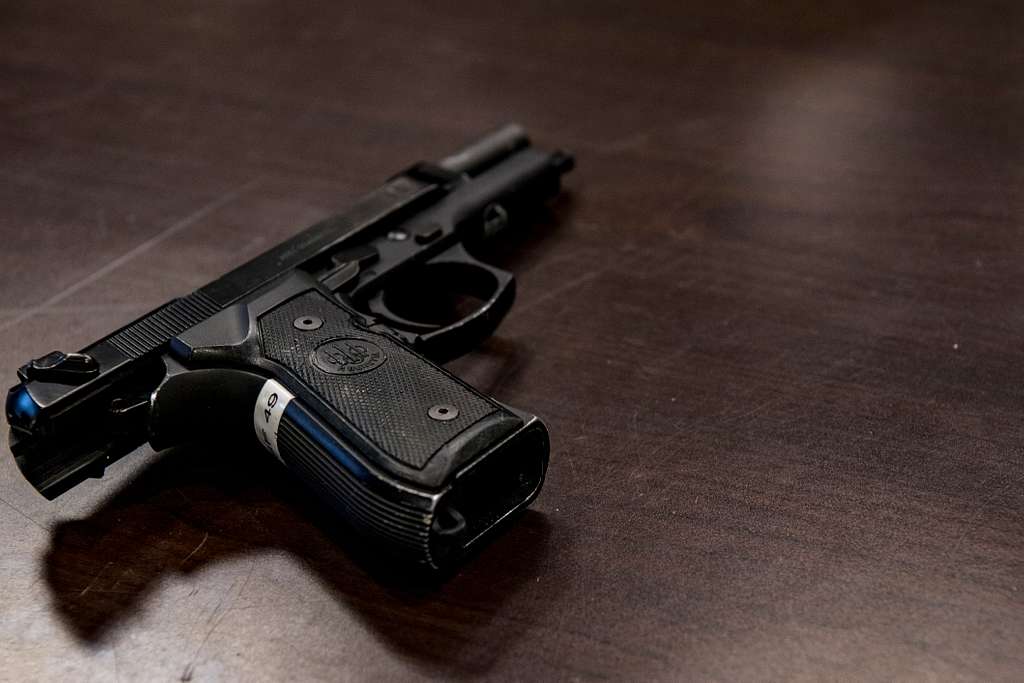
4. Beretta M9
The M9 represented a sharp break from the 1911 era. Adopted in 1985, it reflected NATO standardization, higher on-board ammunition capacity, and a new service-pistol philosophy built around a double-action/single-action trigger and 9mm chambering. With a 15-round magazine and lighter recoil than the .45 it replaced, the Beretta gave many troops faster follow-up shots and a very different manual of arms. Its reputation was more contested than the 1911’s, but that tension is part of its importance.
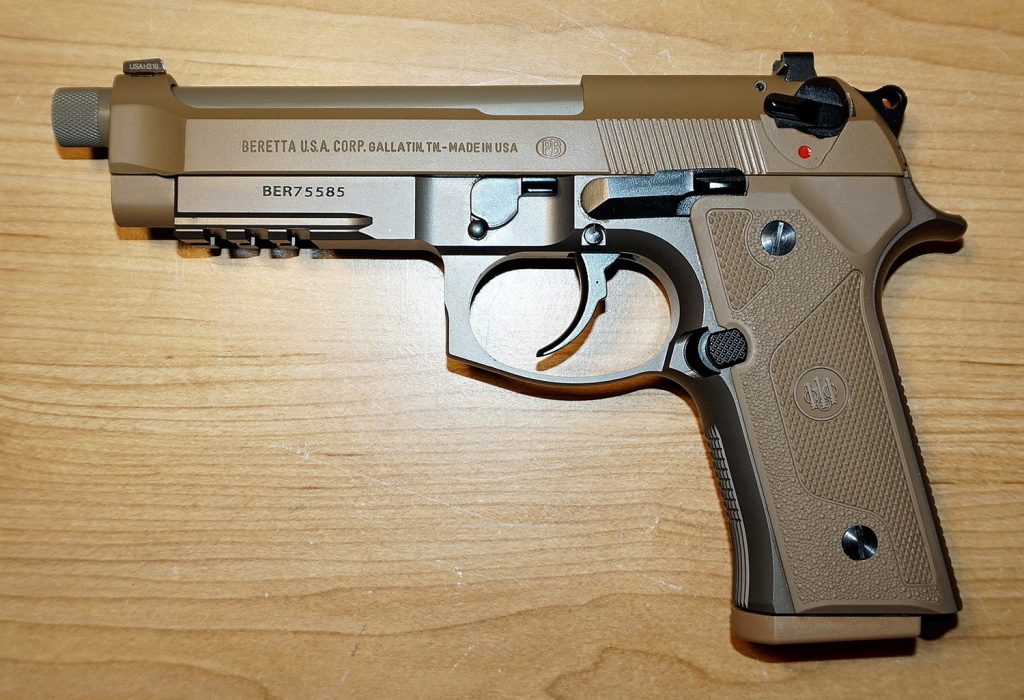
The M9 bridged the Cold War and the post-9/11 era, serving in Panama, Iraq, and Afghanistan while later variants added features like rails and improved magazines for sandy environments. At the same time, its limitations became increasingly visible as military expectations changed. The Army ultimately moved on because the M9 fleet was showing age after decades of service and because the older design brief no longer matched modern requirements for lights, suppressors, and adaptable fit.

5. SIG M17 and M18
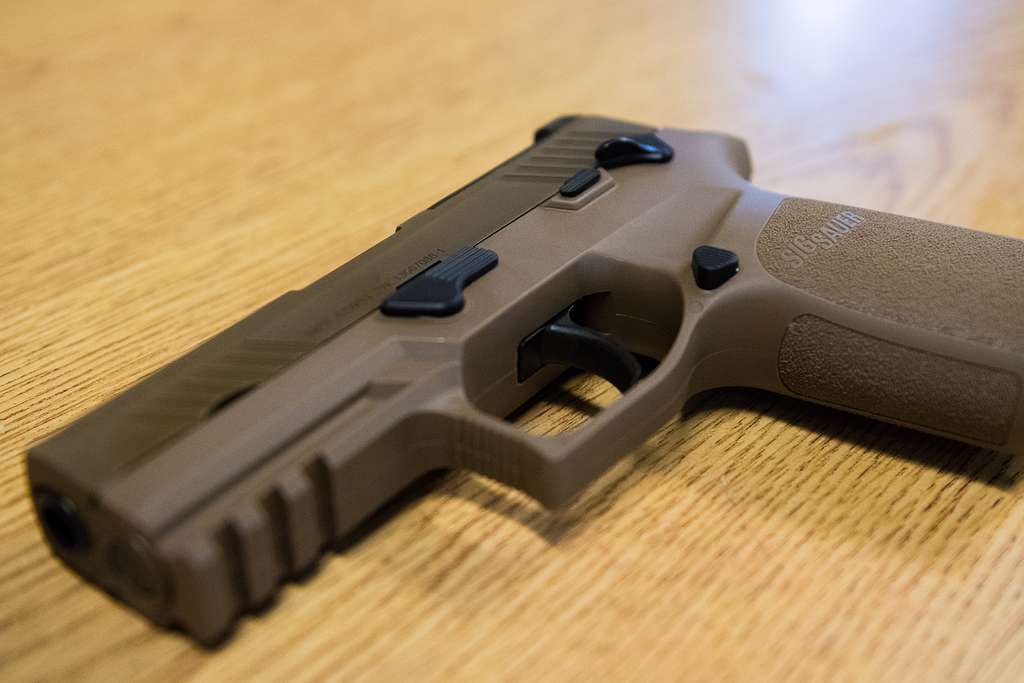
The M17 and M18 matter because they changed what the Army was buying, not just what it was carrying. Chosen in 2017 through the Modular Handgun System program, the new pistols replaced the M9 with a striker-fired platform built around modern accessory use, ambidextrous handling, and modular ergonomics. The key technical shift was the P320-based system’s removable serialized fire-control unit, which allowed grip modules and slide assemblies to be changed without replacing the core regulated component.
That was a deeper form of adaptability than earlier service pistols offered. The Army was no longer asking for a fixed handgun with a long service tail; it wanted a sidearm system that could fit different hands, missions, and accessory packages. The M17 and compact M18 also preserved 9mm commonality while moving into optics-ready, rail-equipped, modern military packaging. Early testing exposed issues that required correction, but the broader point remained: the Army had shifted from choosing a pistol to choosing an architecture.
Taken together, these five sidearms show how Army handgun history moved in clear stages. First came rugged revolvers built for mounted service, then wartime improvisation, then the long dominance of the .45 automatic, then the high-capacity NATO pistol, and finally the modular sidearm system. The hardware changed, but the recurring requirement did not. Army sidearms endured when they solved the immediate problem in front of the institution and quietly prepared it for the next one.


