Army sidearms rarely get the attention given to rifles or machine guns, yet they often reveal exactly what the service feared, needed, or was trying to fix in a given era. A handgun adopted in desperation looks different from one adopted for alliance logistics, concealment, or modularity.
That is what makes the Army’s most influential pistols and revolvers worth revisiting. Some earned their place through extraordinary longevity, some through technical workarounds, and some because they exposed hard tradeoffs between power, capacity, reliability, and doctrine.
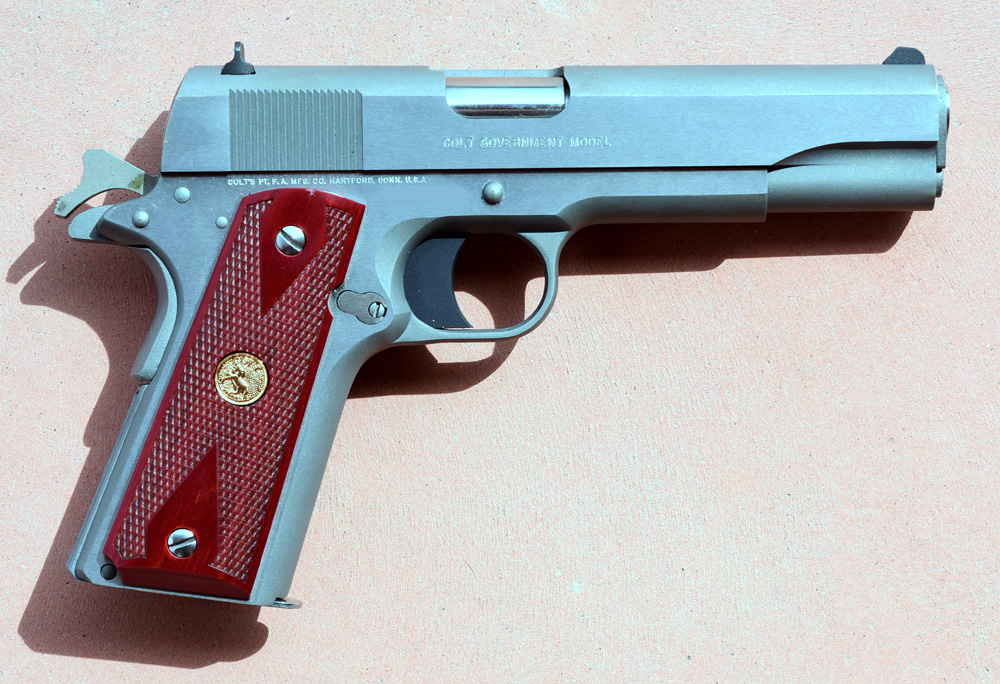
1. Colt M1911 and M1911A1
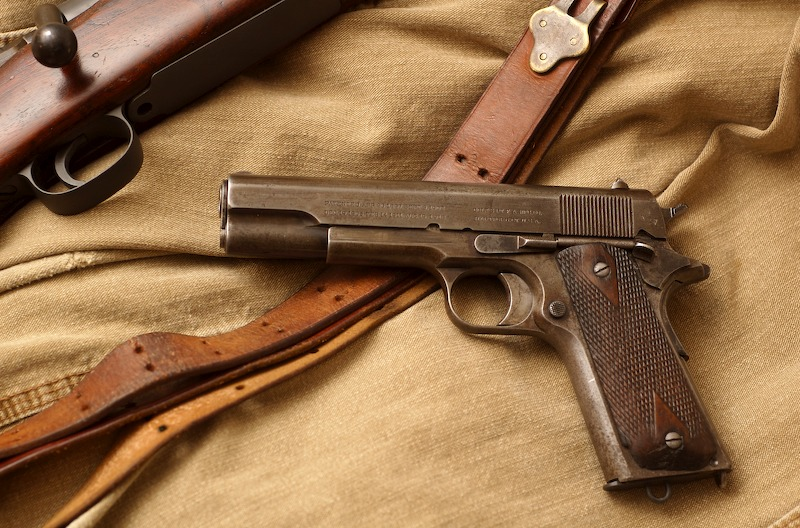
No U.S. Army sidearm casts a longer shadow than the M1911. It emerged after the Army’s bad experience with .38 Long Colt revolvers in the Philippines, where a heavier bullet was seen as necessary for close-range fighting. John Moses Browning’s design answered that demand with .45 ACP power, a single-action trigger, and a rugged short-recoil system that became one of the defining handgun layouts of the 20th century.
The pistol’s reputation was cemented by its 6,000-round Army torture test, where Browning’s submission finished without the failures that plagued competitors. Adopted in 1911 and refined into the M1911A1 in the interwar years, it stayed in broad U.S. service until 1985. It also remained in selective military use long after formal replacement, which says as much about user confidence as it does about nostalgia. Retired Marine colonel Dave Dotterrer summed up the appeal in plain terms: “It’s a great weapon because of its stopping power.”
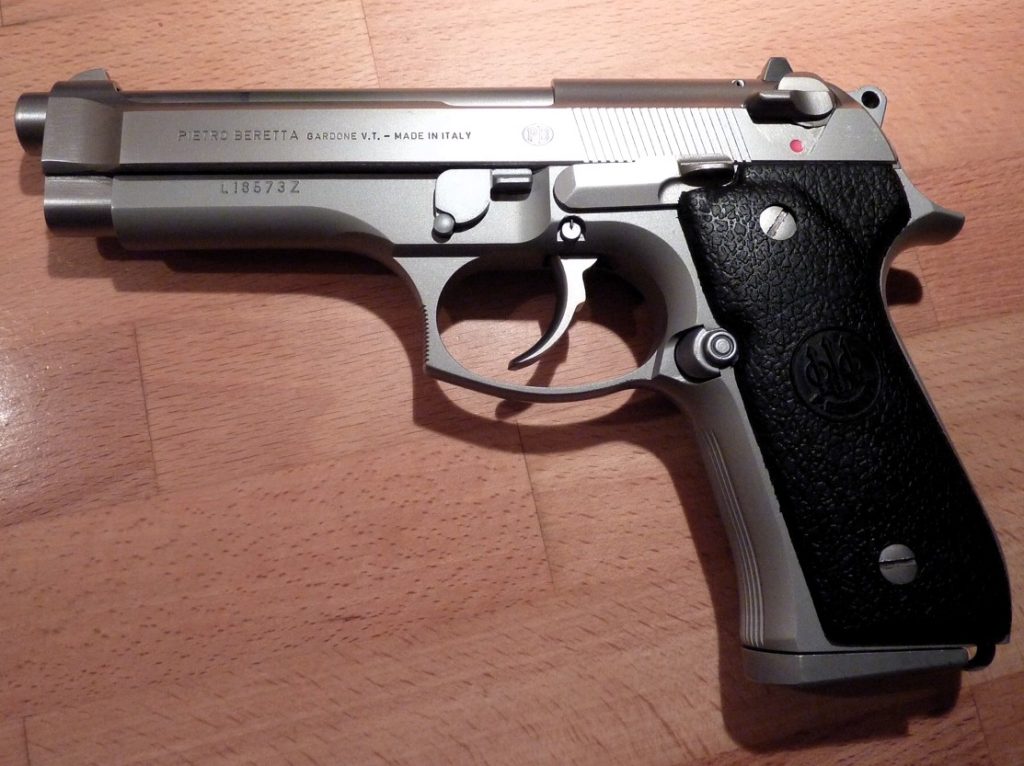
2. Beretta M9
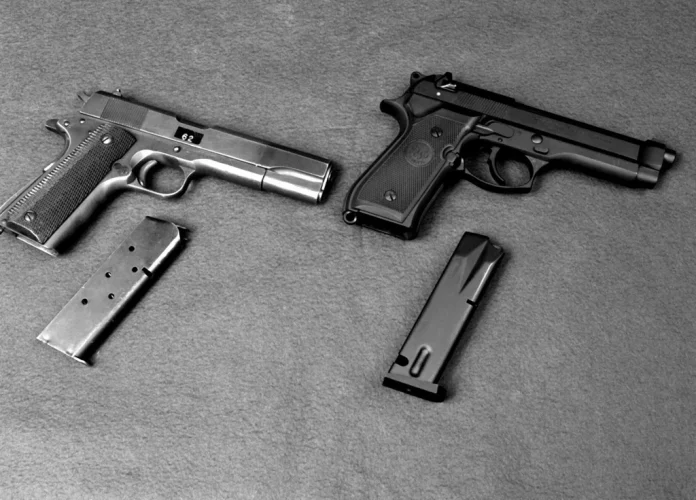
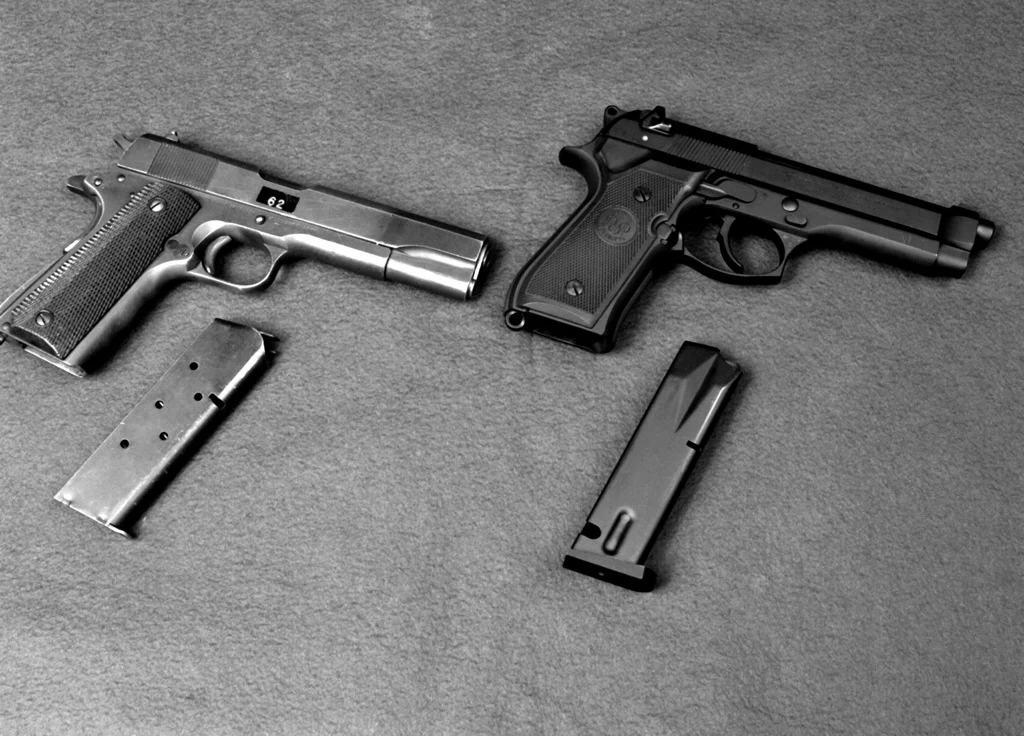
The M9 was more than a new pistol. It marked a doctrinal shift away from the .45 era and toward NATO standardization, higher magazine capacity, ambidextrous-friendly controls, and double-action operation. When it was adopted in 1985, the Beretta brought a 15-round magazine and a very different handling philosophy from the seven-round M1911A1 it replaced.
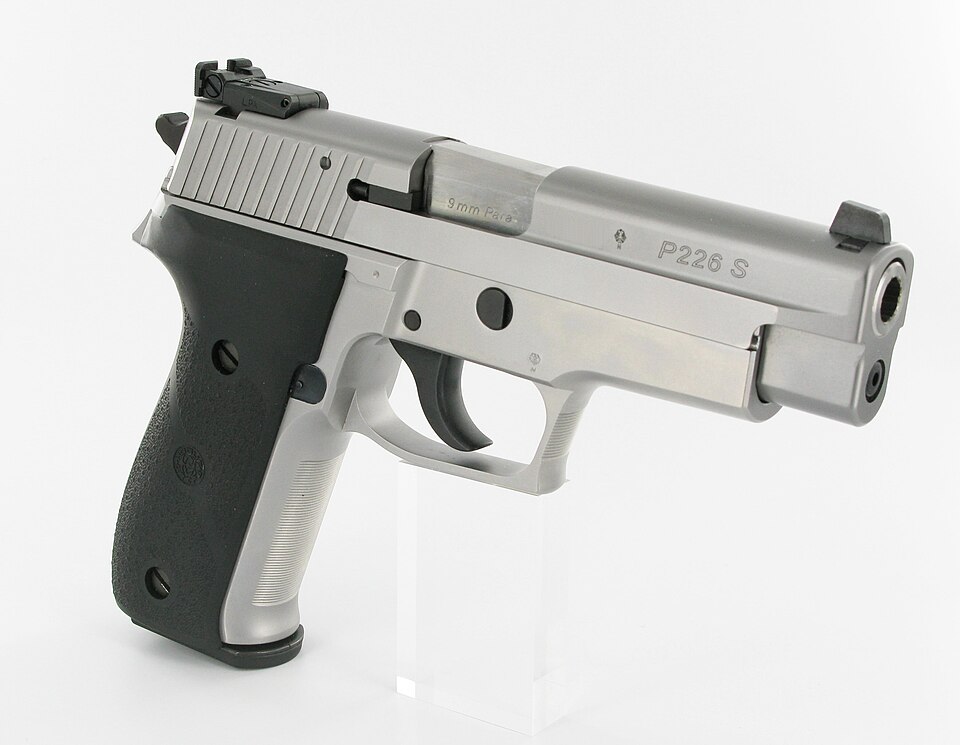
Its path into service was anything but simple. The pistol survived years of repeated trials, legal disputes, and technical scrutiny before narrowly beating the SIG P226 on cost. Later controversy over slide failures led to the 92FS-style retention fix, while desert service exposed magazine issues tied to poor specifications rather than the pistol alone. Even so, the design kept evolving, and the M9A1 update in 2006 added a rail, improved grip texture, and sand-resistant magazines. The M9’s long run showed how much the Army valued capacity, interoperability, and modernization, even when many users still preferred the old .45.
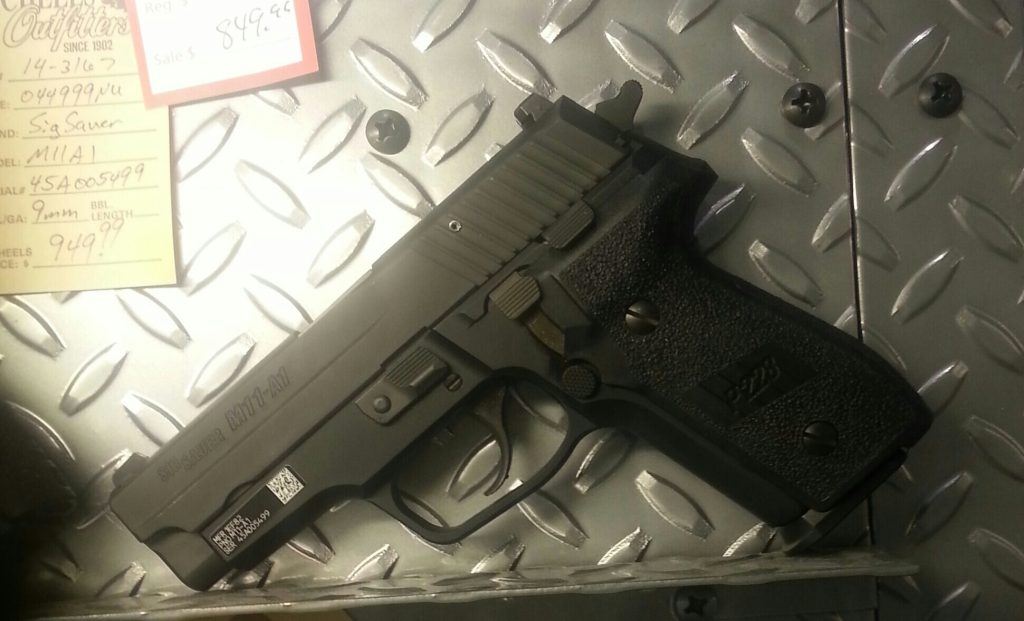
3. SIG Sauer M11/P228
The M11 never became the standard Army sidearm, but it solved a problem the full-size M9 could not. For investigators, protective details, aviators, and other personnel who needed a smaller handgun, the compact SIG offered a lighter footprint without giving up serious service-grade performance.
That mattered because Army handgun doctrine was no longer one-size-fits-all. The M11 reflected a more specialized approach, where concealability and portability had become just as important as raw durability for some users. Its testing record gave it credibility, including reports that the M11 was later slated for replacement alongside the M9 under the Modular Handgun System effort. In practical terms, the pistol helped normalize the idea that the Army needed both a general-issue sidearm and mission-tailored alternatives.
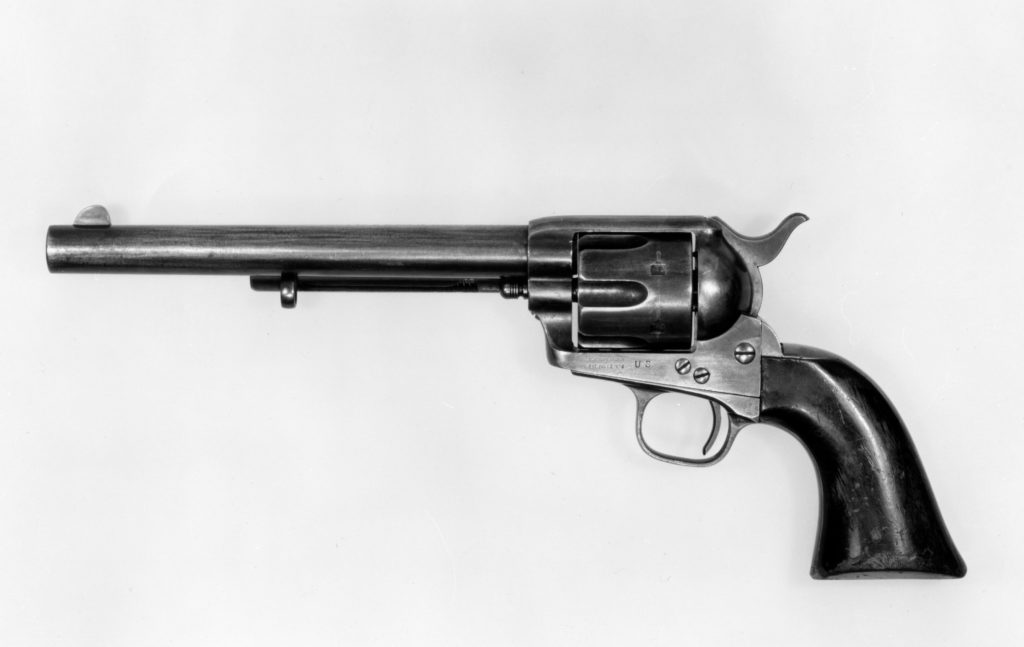
4. Colt Single Action Army
The Colt Single Action Army belongs to an older Army, but its influence lasted far beyond the frontier. Adopted in 1873, chambered in .45 Colt, and built around a strong topstrap frame, it gave mounted troops and soldiers on the expanding frontier a robust revolver with authority and mechanical simplicity.
Its legacy is larger than its service dates. The Peacemaker became a cultural symbol, but its real military importance lies in the standard it set for cartridge power and sidearm durability. When later .38-caliber service revolvers disappointed the Army, institutional memory of the old .45 never fully disappeared. That helps explain why the Army was willing to return to a larger-caliber handgun philosophy in the years that led to the M1911.
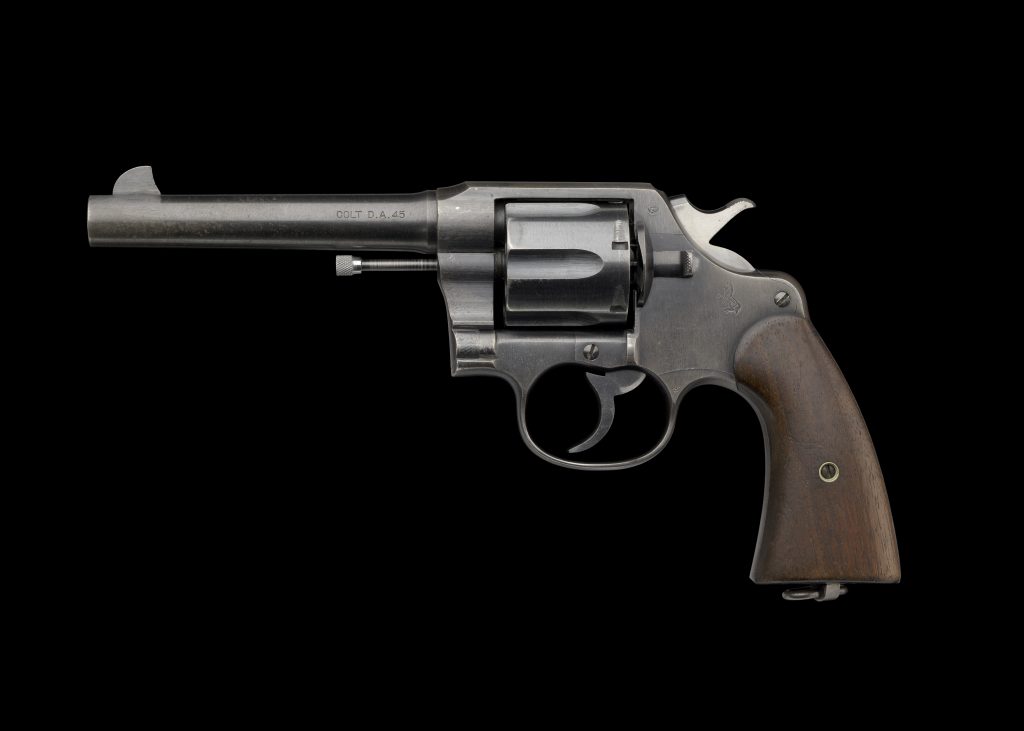
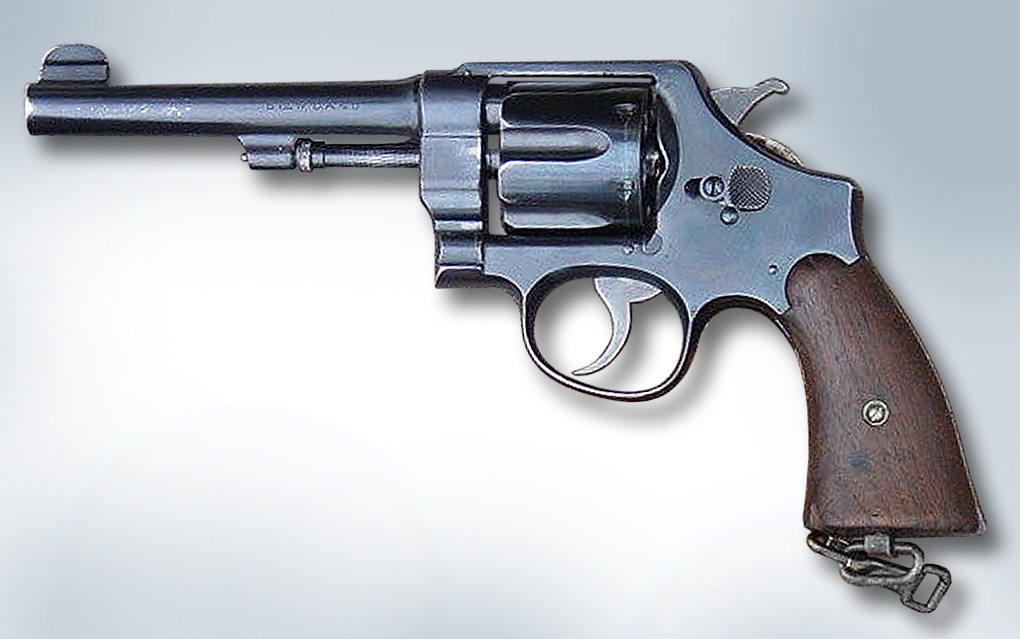
5. Colt and Smith & Wesson M1917 Revolvers
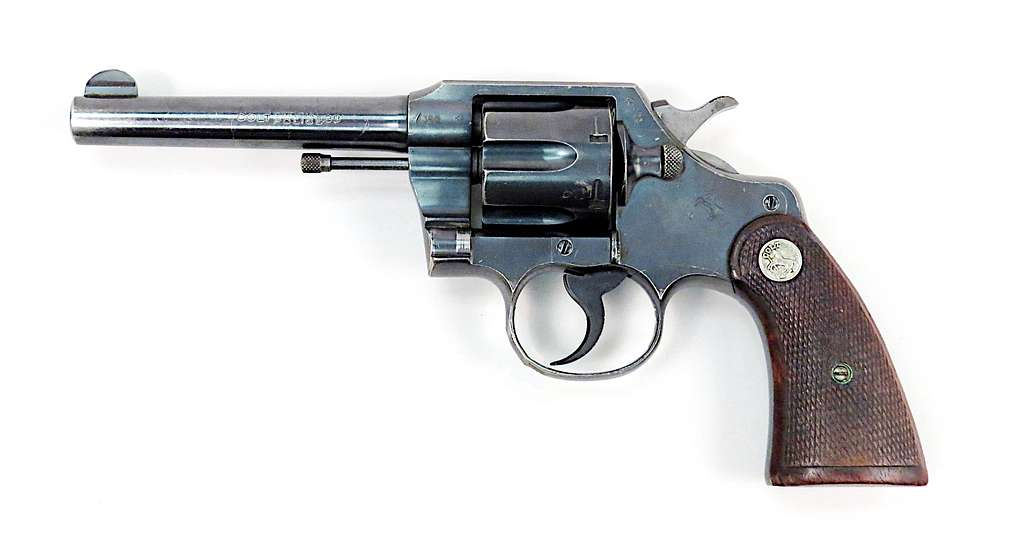
Few Army sidearms better illustrate wartime adaptation than the M1917 revolvers. When U.S. entry into World War I created more demand than M1911 production could satisfy, the Army turned to large-frame revolvers from Colt and Smith & Wesson chambered for .45 ACP.
The clever part was the use of half-moon clips, which let rimless pistol cartridges function in a revolver cylinder. It was an expedient fix, but not a crude one. More than 300,000 M1917 revolvers were produced, and they remained useful well beyond their stopgap origin, including later service roles in World War II. The M1917 proved that Army sidearm history is not just a story of perfect designs winning cleanly. Sometimes the enduring guns are the ones that solved an urgent problem fast and well.
Taken together, these five handguns track the Army’s changing priorities more clearly than any single weapon can. Big-bore stopping power, alliance standardization, compact carry, frontier durability, and wartime improvisation all left distinct marks on what soldiers carried at their hips. That is why these sidearms still matter. They were not just issued; they forced the Army to define what a service pistol was supposed to do.


