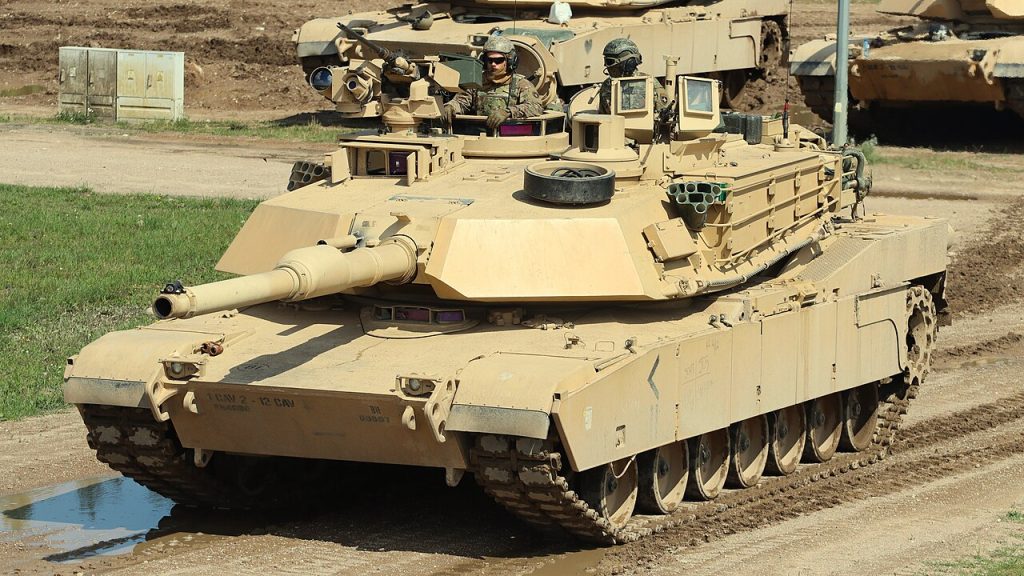
The Abrams still delivers what tanks have always promised: protected firepower, shock effect, and the ability to smash apart strongpoints. What has changed is the battlefield around it.
Ukraine’s use of M1A1 Abrams tanks near Pokrovsk has sharpened a wider debate across armored warfare. Heavy tanks have not disappeared, but their role now depends on drones, jamming, concealment, logistics, and close infantry coordination in ways that older doctrine only partly anticipated.
1. Urban combat still gives tanks a job to do
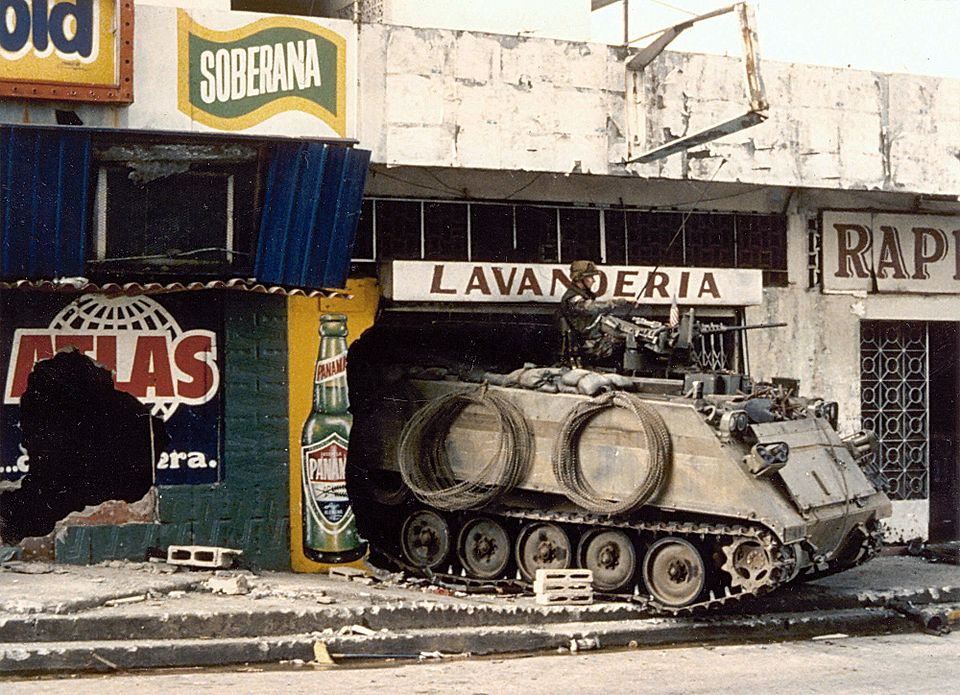
Dense terrain remains one of the few places where a main battle tank can still matter immediately and decisively. In city fighting, armor can shield infantry, suppress fortified positions, and deliver direct fire against buildings or intersections that would otherwise slow an assault. That logic appears in both current combat and in Army thinking on tanks in urban operations, where armor is treated less as a solo breakthrough tool and more as part of a tightly integrated combined-arms team. The key point is not that cities are safe for tanks. They are not. It is that urban terrain can still justify the risk when armor is used to create short windows of overmatch for infantry and engineers.
2. Cheap drone threats have rewritten the tank’s role
The classic image of tanks charging across open ground has been eroded by FPV drones, loitering munitions, and constant overhead surveillance. Across Ukraine, armor movement has been pushed into narrower time windows, shorter dashes, and more covered routes as drones dominate the battlefield. Tanks that once spearheaded attacks now often act as protected fire-support assets from concealed or semi-static positions. This is the real doctrinal shift. A tank can still be decisive, but only after drones, reconnaissance, and electronic warfare have reduced the chance that it will be spotted and swarmed almost immediately.
3. Improvised armor has become part of the modern tank package
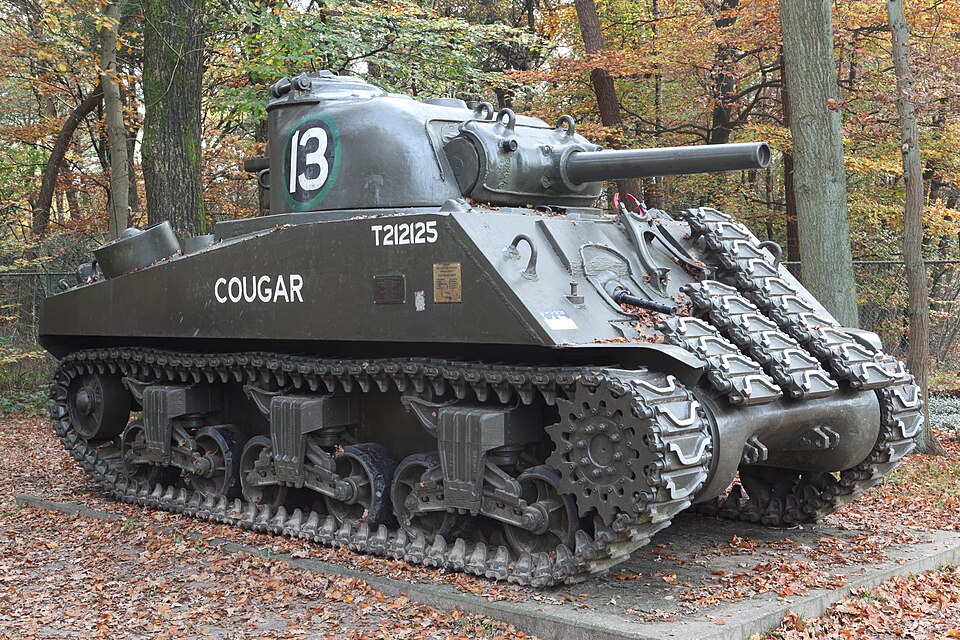
One of the most striking changes is how quickly crews have accepted ad hoc protection as standard practice. Cage structures, roof screens, side netting, reactive armor blocks, and rubber skirting all reflect the same blunt reality: the original protection scheme was not built for persistent top-attack drone threats from every direction.
These measures are awkward, heavy, and often unattractive. They are also increasingly normal. France’s ongoing Leclerc survivability review includes anti-drone structures and work on active defenses, showing that battlefield improvisation is already feeding into formal modernization programs across NATO armies.
4. Tanks now need a full protective ecosystem
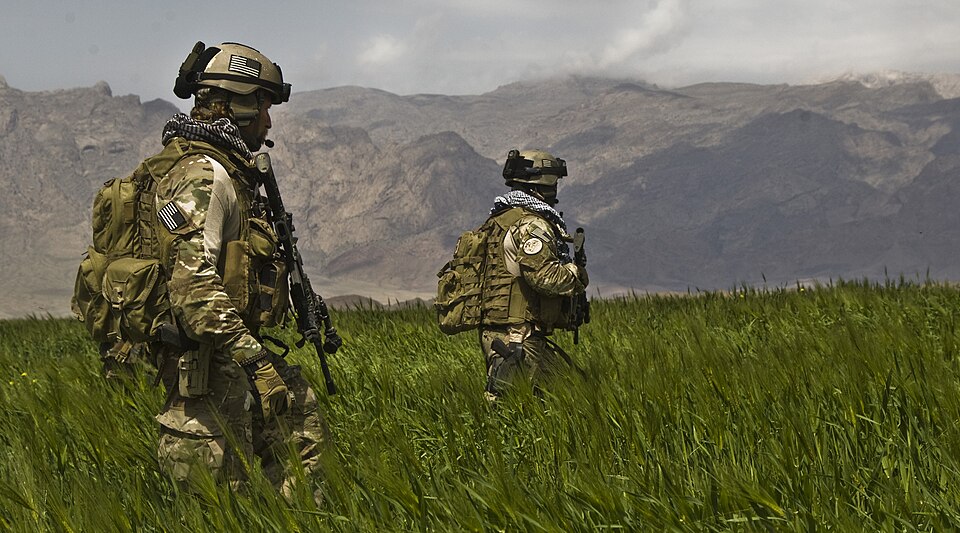
An Abrams in isolation is no longer the centerpiece of the fight. It is a vulnerable node. Successful use now depends on what surrounds the tank: forward drones, artillery suppression, route security, electronic attack, camouflage, and infantry close enough to identify threats in dead space and upper stories.
That broader model aligns with the U.S. Army’s interest in modular defenses and top-attack protection, including work around vehicle survivability against drones. The emerging lesson is simple enough to state and difficult enough to execute: armor survives when it fights inside a layered system, not when it tries to overpower the battlefield on its own.
5. The Abrams’ logistics burden never stopped mattering
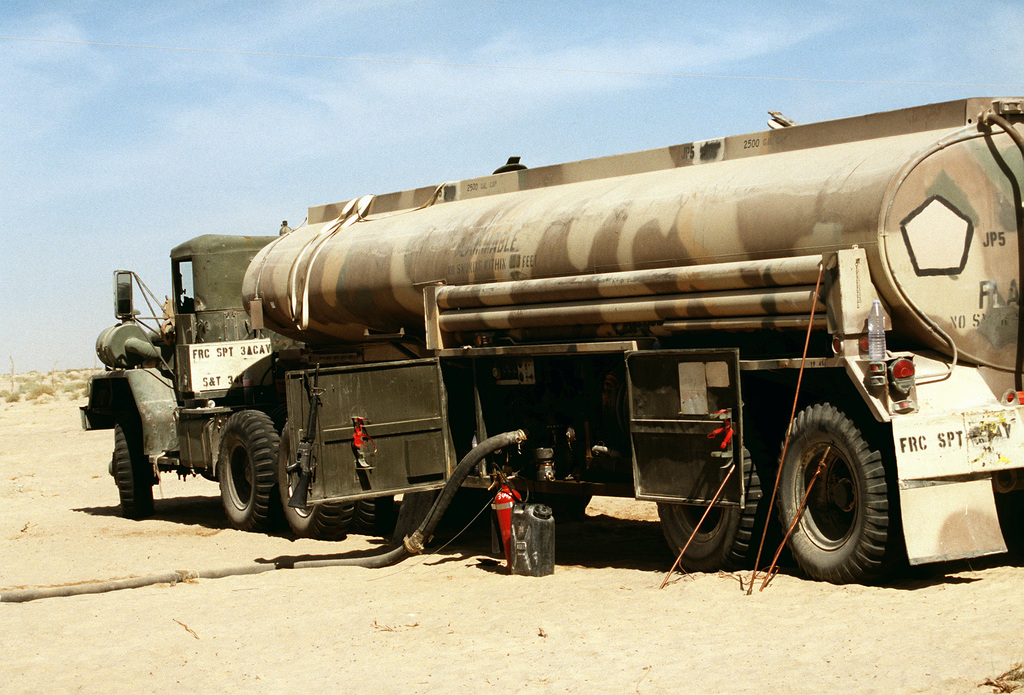
The drone era has not erased old mechanical truths. The Abrams still brings weight, maintenance demands, and a heavy appetite for fuel. Its gas turbine engine gives the platform acceleration and power, but it also creates a supply challenge that becomes sharper when roads, depots, and transport routes are under observation.
That burden was recognized long before the tank entered Ukraine, with repeated warnings about the Abrams as a fuel-intensive platform. In practical terms, survivability is not only about armor thickness or drone screens. A tank that cannot be refueled, recovered, or repaired under pressure becomes a static liability no matter how capable its gun and armor remain.
6. Active protection is moving from luxury to requirement
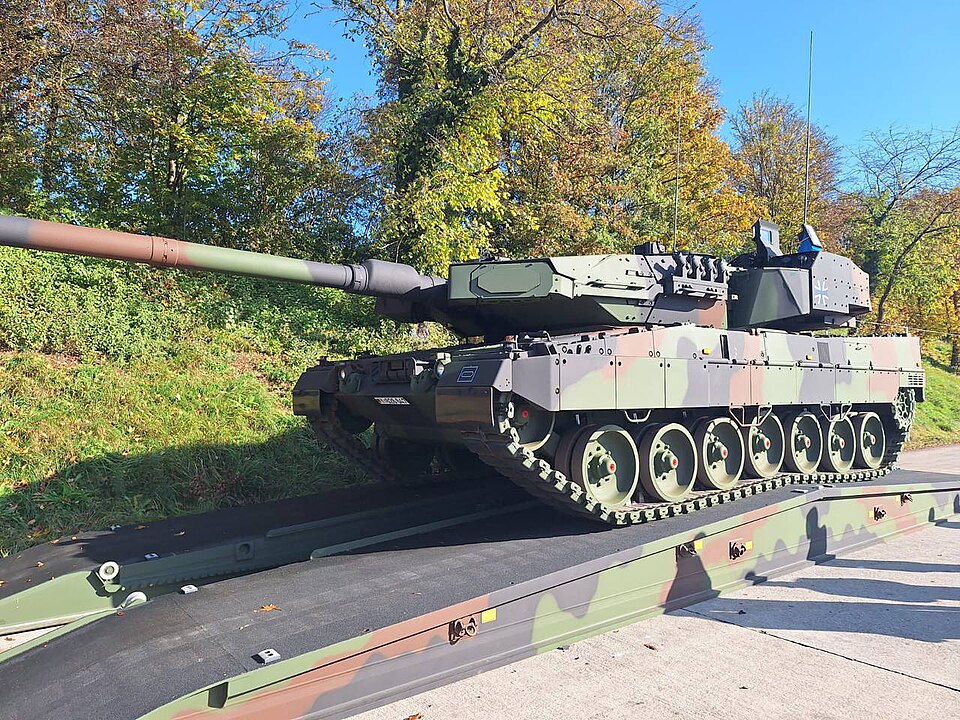
Passive armor and cages can help, but they cannot solve everything. That is why active protection systems have become central to the next generation of tank survivability planning. Hard-kill and soft-kill systems promise a way to detect, confuse, or physically intercept incoming threats before impact, especially as top-attack profiles become more common.
Trophy, Iron Fist, and newer European efforts all point in the same direction: future tanks will need radar, sensors, countermeasures, and software-driven defensive architecture as much as they need steel. The pressure is especially strong because modern threats combine missiles, drones, and repeated saturation attacks that can exhaust simple bolt-on fixes.
7. The battlefield is now too transparent for old assault habits
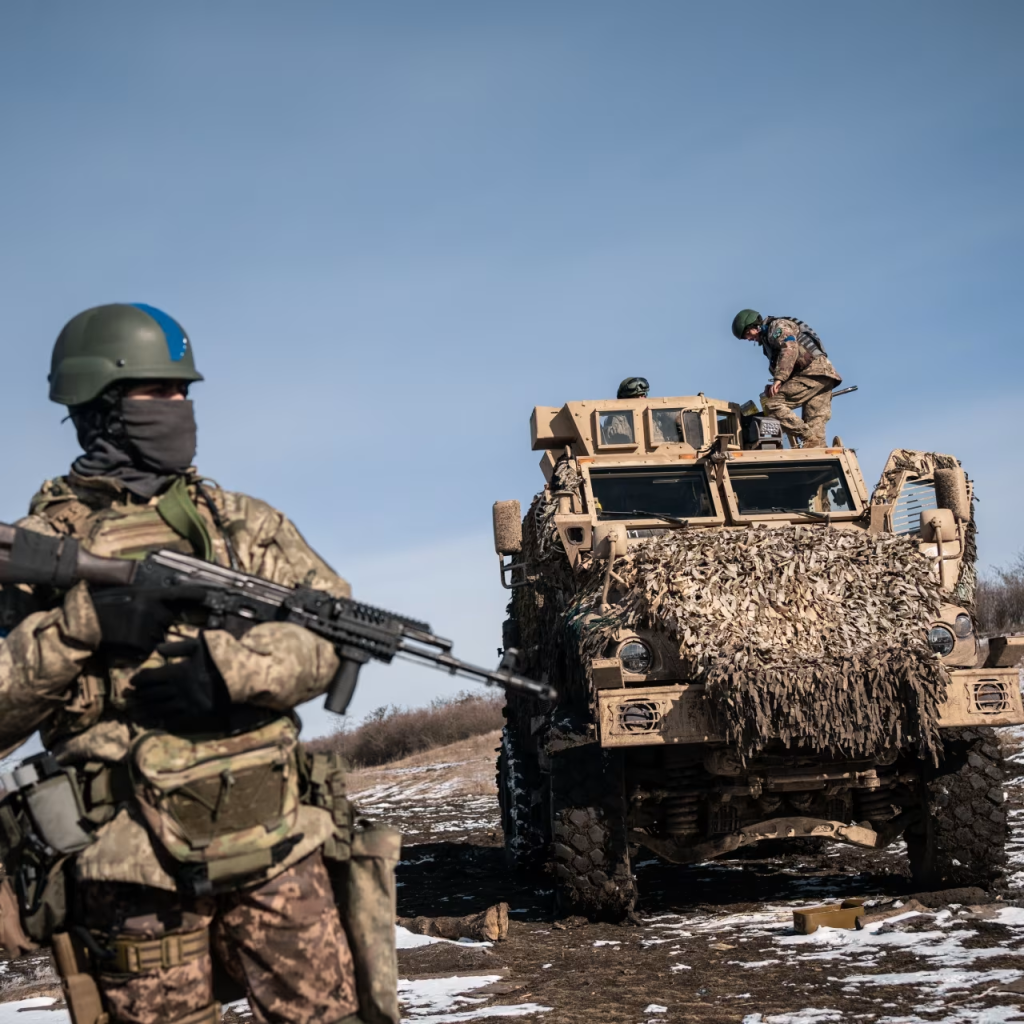
Persistent airborne observation has made concealment, deception, and movement discipline far more important than older armored doctrine assumed. A tank that fires, moves, or idles carelessly can reveal itself to a kill chain that links reconnaissance drones to FPV teams or artillery in minutes. That transparency affects far more than tanks. It slows reinforcement, casualty evacuation, resupply, and even basic repositioning. For armored crews, the consequence is severe: success is increasingly determined before contact, by route preparation, camouflage, emissions discipline, and how well the unit avoids becoming a visible target set.
8. The next Abrams will be shaped by these battlefield lessons
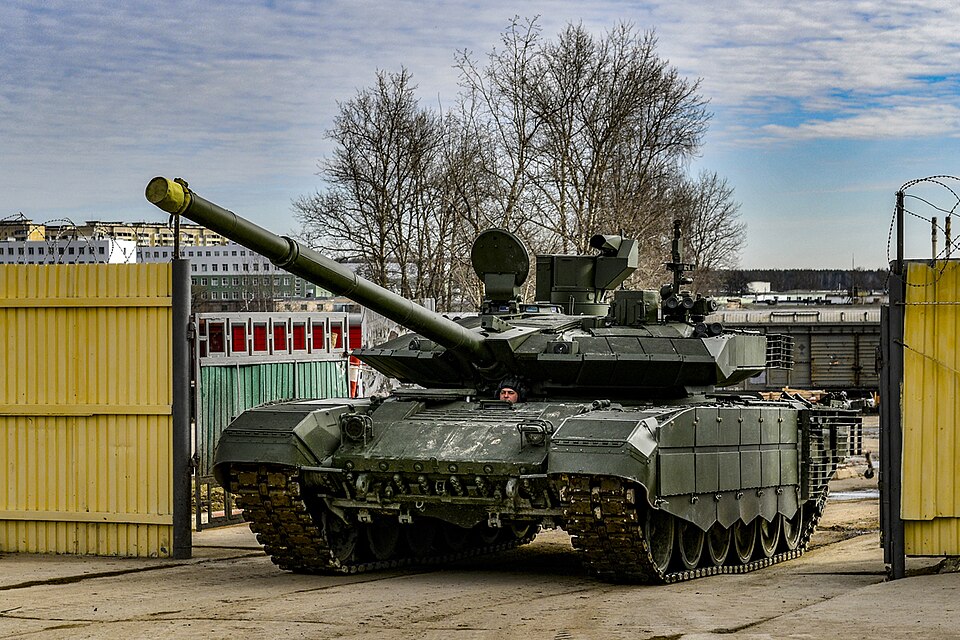
Ukraine’s battlefield experience is influencing Western design choices. U.S. plans for the M1E3 emphasize reduced weight, open architecture, better efficiency, and improved protection against top-attack threats rather than another cycle of simply adding mass. That is a meaningful departure from the long habit of solving every problem with another layer of armor.
It also suggests a broader engineering conclusion. The successful tank of the 2030s and 2040s will not just be harder to penetrate. It will need to be easier to hide, easier to update, easier to power, and better integrated with sensors, jammers, and autonomous systems.
9. The tank is not obsolete, but it is no longer dominant by itself
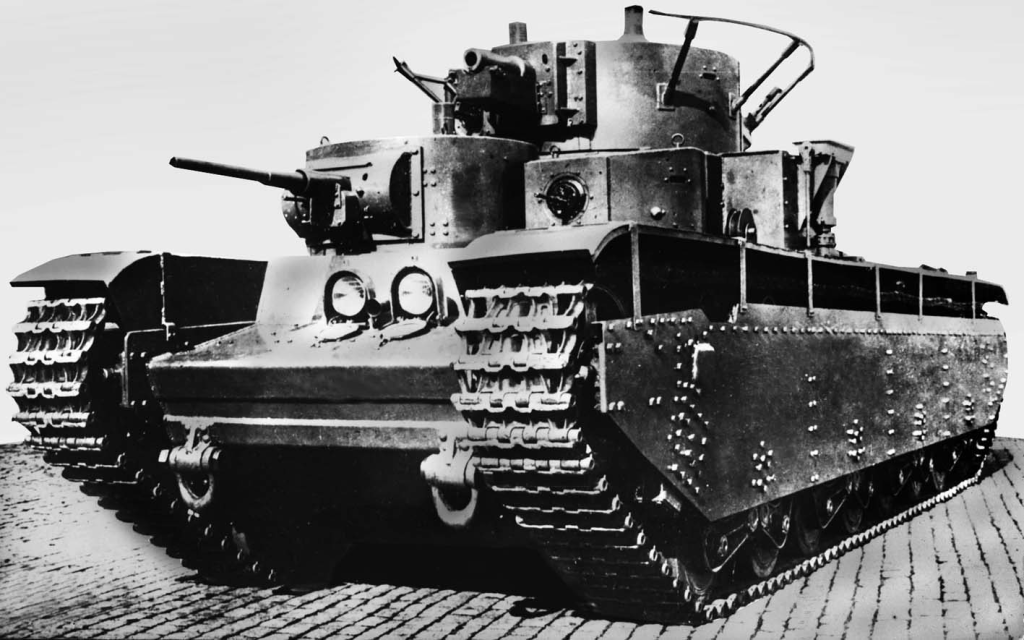
The strongest lesson from Pokrovsk is not that the Abrams proved every skeptic wrong. It is that modern armor still has value when commanders accept its limits and build around them. Heavy tanks can still help take ground, support infantry, and break defended positions, especially in cities and other complex terrain. But the age of the independent armored spearhead has narrowed dramatically. Modern tanks remain dangerous, but only inside a system that includes drones, counter-drone tools, mobility discipline, and constant adaptation.
On today’s battlefield, the tank is still powerful. It is just no longer enough by itself. The wider consequence reaches beyond one operation or one vehicle type. Every army that plans to keep heavy armor now faces the same engineering and doctrinal question: how to preserve the tank’s firepower without feeding it into a battlefield where cheap sensors and cheap drones can hunt it from above. Pokrovsk did not settle that argument. It clarified it.


