
Duty pistols are usually discussed in terms of sights, grip texture, trigger feel, or magazine capacity. This redesign debate is different. It centers on whether a service handgun can be made materially harder to convert with a tiny illegal device that alters the firing cycle.
That question has moved from court filings and legislative text into product engineering. Glock’s newer V-series approach, described as adding a steel barrier at the rear of the slide where conversion devices are commonly fitted, points to a broader shift in how police sidearms may be evaluated in the years ahead.
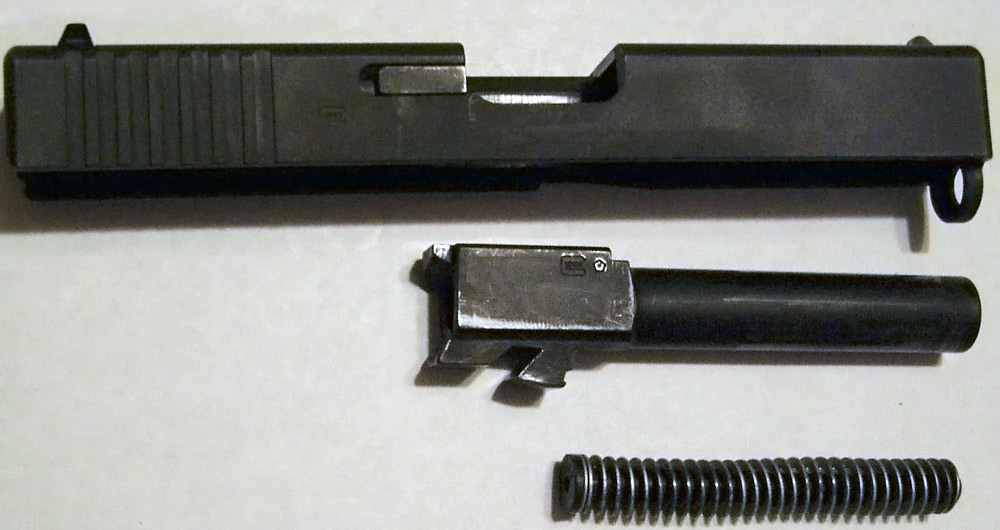
1. Rear-slide geometry is becoming a design priority
The most visible signal is simple: the back of the pistol is no longer just a closure point for the slide assembly. According to the reported V-series layout, Glock added a short steel rail in the area where illegal switches are typically attached. That is a notable change because earlier configurations were described as relying on a plastic feature that could be removed with basic hand tools.
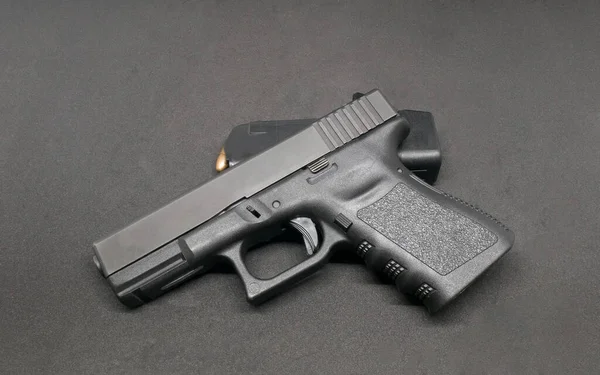
For duty-pistol engineering, that means rear-slide geometry is now part of the security conversation. Designers may increasingly treat that zone as a hardened interface rather than a passive cover, especially for pistols expected to remain in long service cycles with large agency fleets.

2. Trigger-bar architecture is no longer an obscure internal detail
The conversion problem is tied to how the pistol resets between shots. Reference material describing these illegal devices explains that they interfere with the trigger mechanism by holding the trigger bar down or bypassing normal reset behavior, allowing repeated firing while the trigger remains depressed. In Glock-specific discussions, lawmakers have focused on cruciform trigger bars because that component shape is central to the platform’s operating layout.
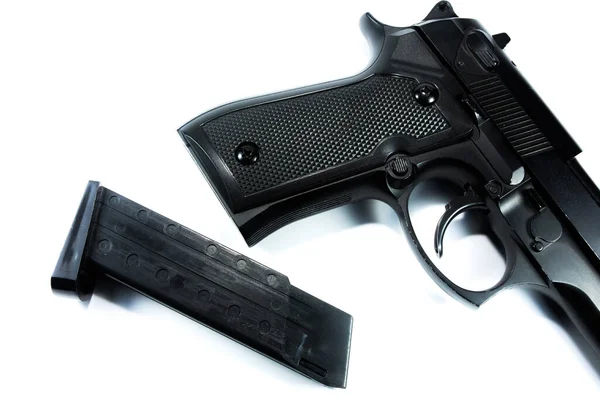
That puts unusual pressure on a part most buyers never see. In the duty market, agencies and armorers may begin asking not only how reliable a trigger group is, but also how resistant its geometry is to unauthorized interference. That is a different procurement lens than the one that dominated service-pistol selection for decades.
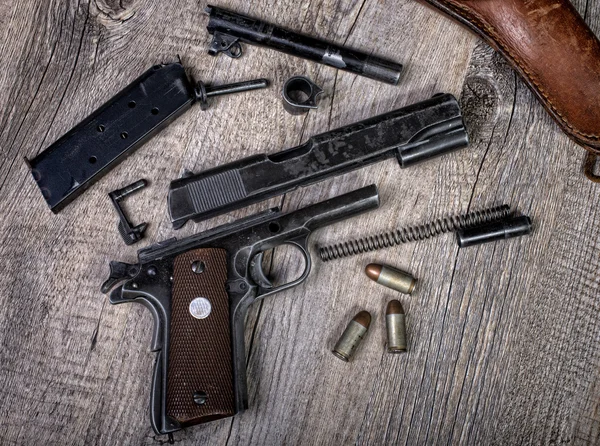
3. “Tool-free enough” vulnerability now matters as much as durability
One of the strongest long-term implications is that ease of illicit modification has become a measurable design concern. California’s law targets pistols that can be converted using ordinary tools, and similar proposals have circulated in other states. That standard shifts attention from whether a gun can be modified at all to how readily it can be altered by a non-specialist.
For duty pistols, that distinction matters. A service sidearm can be rugged, accurate, and dependable, yet still face scrutiny if its core design allows an illegal conversion with a screwdriver and a small aftermarket part. Once that threshold enters statutes and lawsuits, manufacturers serving law-enforcement and commercial markets alike have reason to build in more mechanical resistance.

4. Duty-pistol selection may absorb legal risk as a technical factor
The redesign did not emerge in a vacuum. It followed a wave of lawsuits and state-level legislation arguing that some pistols are unusually susceptible to illegal conversion. Whether one looks at municipal litigation, attorney-general actions, or market restrictions, the pattern is clear: product design is being examined not only for intended performance, but for abuse potential.
That changes the duty-pistol landscape because public agencies tend to avoid equipment that carries unresolved liability questions. Even when a conversion device is illegal on its own, the host weapon’s design can become part of the institutional risk calculation. Procurement officials, legal departments, and insurers all operate downstream from that reality.
5. The redesign sets a benchmark even if it is not absolute
The most important engineering lesson is not that one revision solved the entire problem forever. It is that the industry has now seen a major handgun maker alter the product itself after years of claiming such change was impractical or unnecessary. That alone establishes a benchmark. There is also evidence that the benchmark is limited rather than total. The V-series has been described as harder to modify with simple tools, while images and videos cited in reporting suggest more involved machining can still defeat the barrier.
In other words, the design appears to raise the difficulty, not eliminate the possibility. For duty pistols, that still matters. Engineering often works by reducing accessible failure modes, extending the time, skill, and equipment needed to compromise a system. A sidearm that resists casual alteration is not the same thing as one that is immune to a determined machinist, but those are very different real-world threat profiles.

6. Agencies may start valuing conversion resistance like any other safety feature
Illegal conversion devices have grown from a niche enforcement issue into a broader product-design concern. Federal trafficking data cited by advocacy and research groups show sharp growth in recovered auto sears over recent years, with Glock-pattern devices repeatedly mentioned in those counts. That kind of trend pushes technical countermeasures higher on the agenda. The likely result is a wider definition of handgun safety in the duty segment. Drop safety, striker-block systems, and passive safeties will remain essential, but resistance to unlawful conversion may join that list as a distinct category.

Once that happens, redesigns aimed at the backplate, slide interface, and fire-control geometry stop looking like a one-company response and start looking like an industry template. The strongest signal in Glock’s anti-switch redesign is not the steel rail by itself. It is the admission, in physical form, that anti-tamper engineering has become part of the modern duty-pistol brief. That shift is larger than one product line. If agencies, lawmakers, and manufacturers continue treating convertibility as a design variable rather than an external misuse issue, future service handguns will be shaped as much by resistance to unauthorized modification as by recoil control or magazine capacity.


