
Glock’s latest portfolio reset is larger than a routine catalog cleanup. A broad swath of legacy pistols has been dropped, and the replacement strategy points to a narrower, more controlled product family built around resistance to illegal conversion devices. That matters because this is not just a branding exercise. The company’s own language about streamlining sits alongside mounting legal pressure, design scrutiny, and a market that now expects optics-ready handguns to coexist with tighter internal engineering.

1. The discontinued-model wave is too broad to dismiss as normal lifecycle pruning
Glock has publicly described a strategic reduction of its commercial portfolio, and the affected lineup spans multiple generations and calibers. Reference reports describe more than 30 discontinued variants, including well-known G17, G19, G22, G34, and several specialty chamberings. That kind of breadth signals a platform reset rather than a few underperforming SKUs being retired. The move also leaves intact a smaller, more deliberate baseline. Glock’s statement that the V Series is meant to “establish a baseline of products while simplifying our processes” frames the change as structural, not temporary.

2. Anti-conversion engineering appears to be the central technical shift
The strongest throughline in the source material is the effort to make pistols harder to convert with illegal auto sears, commonly called switches. According to the Gen V rear rail change, the revised design adds steel at the rear of the pistol where conversion devices typically interfere with the firing mechanism. That detail is significant because older designs were described as relying on a plastic protrusion that could be altered more easily. A small internal geometry change is not visually dramatic, but in handgun engineering it can redraw the limits of what aftermarket interference can accomplish with basic tools.

3. California’s convertibility standard has turned design choices into compliance questions
The policy pressure is not abstract. Reference reporting ties Glock’s redesign effort to California’s law banning pistols convertible with household tools. That raises the bar for manufacturers in a way that reaches beyond one state, because a major commercial market can force engineering decisions across an entire catalog. Even where the new pistols may not satisfy every interpretation of that standard, the direction is unmistakable: future Glock development is being shaped by how difficult a handgun is to modify illegally, not just by durability, shootability, or manufacturing cost.

4. The lawsuits changed the backdrop for product planning
Several government lawsuits alleged that Glock pistols were too easily converted with illegal devices, and judges allowed some of those cases to continue. That matters less as courtroom drama than as an industrial signal. When litigation survives early dismissal efforts, product teams have to account for discovery, internal documentation, and the cost of defending a legacy design architecture. Sources connect the model shift to suits from Chicago, New Jersey, Minnesota, Baltimore, and Seattle, with additional pressure from state attorneys general. In that environment, a cleaned-up product family with revised internals offers a more manageable footing than defending dozens of overlapping legacy configurations.
5. Streamlining production and reducing legal exposure now point in the same direction
Manufacturing simplification has been part of the explanation from the start, and it makes practical sense. Glock had accumulated a dense web of generations, MOS and non-MOS trims, duty models, competition models, and lower-volume calibers. Reducing that complexity lowers inventory friction, narrows parts variation, and makes quality control easier to standardize. What changed is that compliance pressure now rewards the same decision. A slimmer lineup does not just save production effort; it allows Glock to bake anti-conversion features into a common baseline instead of retrofitting around a sprawling legacy family. This is where business efficiency and engineering risk management converge.

6. Optics-ready handguns remain important, but they are no longer the whole modernization story
For years, “modern Glock” often meant MOS cuts and red-dot compatibility. Glock’s own Modular Optic System configuration reflects how thoroughly pistol optics have moved into the mainstream. But the current reset suggests optics alone are no longer enough to define a next-generation model. Now the hidden architecture matters just as much as the slide cut. The future-facing handgun is expected to support optics, preserve core Glock familiarity, and resist illegal conversion more effectively. That is a different engineering brief than simply adding an adapter plate ecosystem.
7. Parts compatibility has become the quiet question hanging over the V-family transition
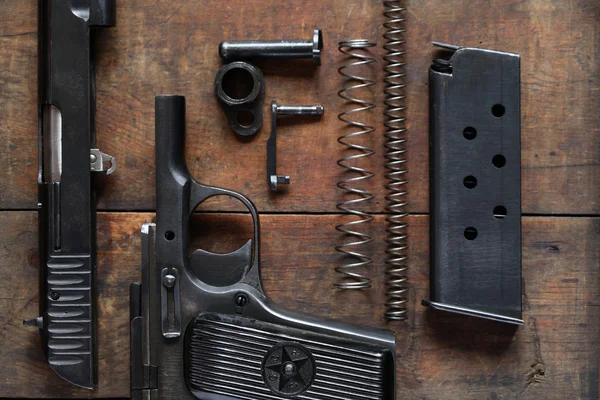
Early descriptions of the V Series portray familiar pistols with purposeful updates rather than a ground-up reinvention. That keeps external handling and brand continuity intact, but it raises a more technical issue: what happens to compatibility between older Gen 4 or Gen 5 components and the newer internal layout? Reference material repeatedly points to uncertainty around trigger bars, rear plates, and other internal parts that may have been altered to reduce convertibility. For armorers, agencies, and enthusiasts with deep parts bins, that may be one of the most consequential outcomes of the purge.
8. The switch problem forced a public reversal on what design can and cannot do
One of the more striking elements in the source material is the change in posture. Reporting notes that Glock had long resisted the idea that it could, or should, make pistols resistant to switches. The emergence of a redesigned line aimed at doing exactly that amounts to a visible reversal. That shift carries industry-wide weight. It suggests that “impossible to engineer around” has become “necessary to engineer against” once the legal, reputational, and regulatory costs become large enough.
9. The real significance is architectural, not cosmetic
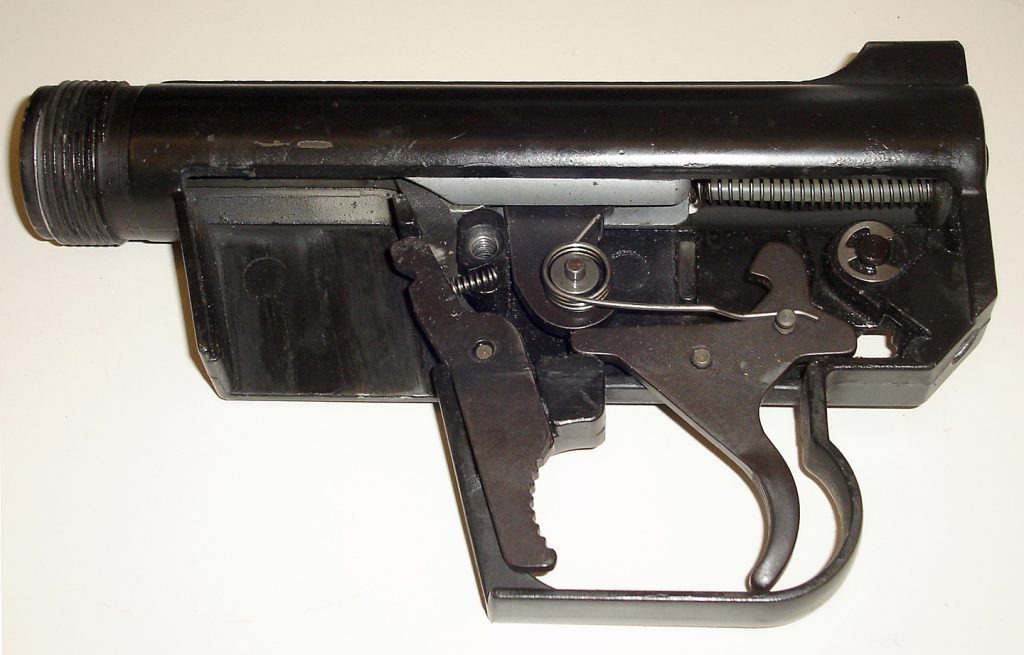
Externally, the incoming models appear close to what Glock users already know. Internally, the strategy is more ambitious. The company is moving toward a handgun family defined by constrained variation, clearer baseline specs, and mechanical barriers aimed at illegal conversion. That is why the discontinued-model list matters. It is less about nostalgia for outgoing generations and more about Glock deciding that the next era of striker-fired pistols will be shaped by anti-conversion design from the inside out.
The purge does not read like a temporary shuffle. It reads like a manufacturing and engineering reset built for a market where convertibility, compatibility, and compliance now sit beside reliability as first-order design requirements. For the broader firearms industry, that may be the more durable takeaway than any one model name. The modern service pistol is no longer judged only by what it does on the range, but also by how effectively it resists becoming something it was never meant to be.


