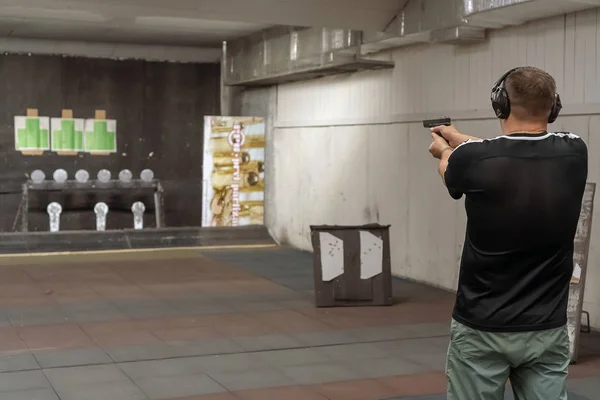
Accuracy problems rarely begin with the trigger press. They usually start much earlier, in the habits built on square ranges, qualification courses, and repetitive drills that reward convenience more than performance under stress. That gap matters. A systematic review of 17 studies found that shooting accuracy dropped in high-pressure conditions, with a pooled mean reduction of 14.8%. The same research also showed that training designed around realistic pressure improved performance by 10.6%, which makes one point hard to ignore: when training builds the wrong reflexes, those reflexes tend to show up when precision matters most.
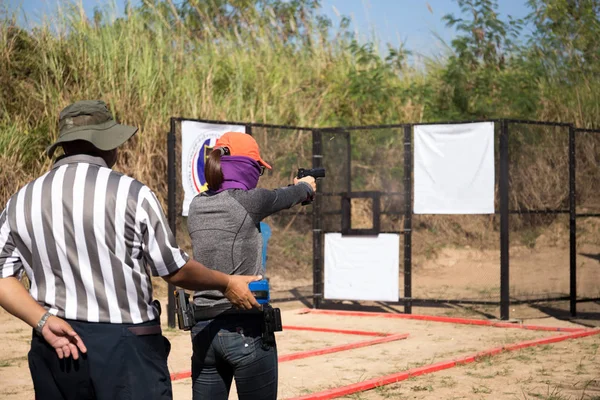
1. Starting from a gun position that outruns perception
Some shooters begin every repetition already aimed in, or with the pistol held so high that visual confirmation and decision-making get compressed into one rushed movement. That can speed the first shot on a timer, but it narrows the margin for correcting a bad read. Research involving 313 active law enforcement officers found that a low ready position cut misdiagnosis shooting errors by more than half, and the time cost was only 0.11 second. The mechanical lesson is simple: a slightly lower presentation can buy just enough time to process what is actually in front of the shooter before the gun dominates the decision.
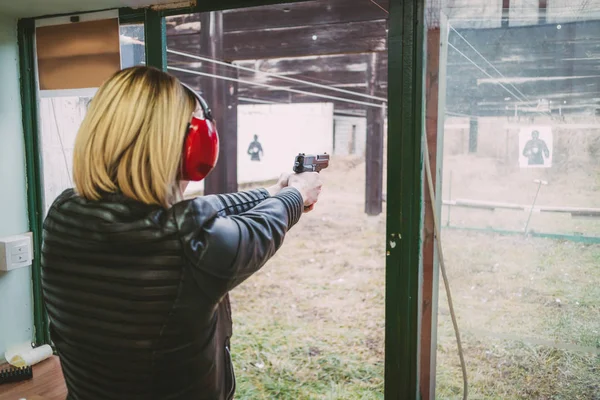
2. Practicing only in calm conditions
Range accuracy often looks solid because the environment is clean, predictable, and emotionally flat. The target does not move, there is no incoming pressure, and the shooter knows exactly when the drill begins. Under pressure, that polished skill set can thin out fast. The broader research base showed that elevated stress changes gaze behavior, reaction time, and decision accuracy, not just group size. In several studies reviewed in the meta-analysis, participants shifted attention toward threat cues and away from marksmanship-specific visual focus, which helps explain why tidy range performance does not always transfer when the pace, noise, and consequences rise.
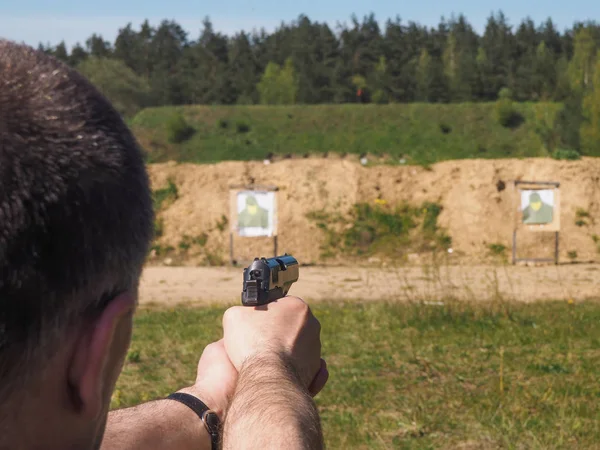
3. Firing a preprogrammed number of rounds
One of the oldest training scars is teaching the shooter to fire a fixed string and stop because the drill says so. Two shots, scan, holster. Five shots, stop. Repeat that long enough and the brain starts treating the round count as the problem to solve. That habit disconnects firing from effect. Greg Ellifritz described how shooters can unconsciously default to prescribed strings because qualification formats condition them to do exactly that. When accuracy matters, the shooter needs to process sights, target response, and whether another shot is required. A rigid shot quota turns that assessment into an afterthought.
4. Standing flat-footed through every drill
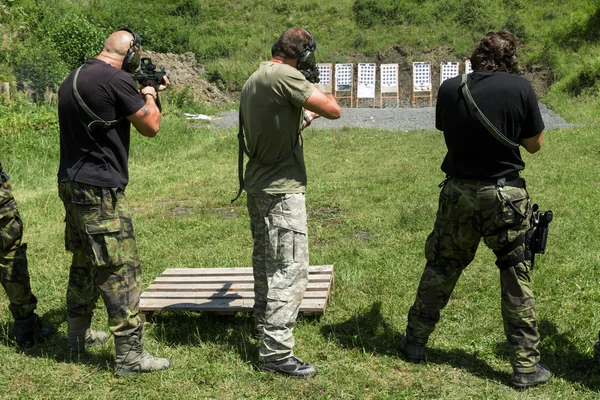
Many shooters build accuracy almost entirely from static positions because the range demands it. The result is often impressive paper performance and weak adaptability. Ellifritz identified this as a common training scar: if thousands of repetitions happen without movement, the shooter becomes more likely to stay planted when movement would improve angles, visibility, or access to better cover. Accuracy is not only about how well the muzzle tracks. It is also about whether the shooter can create a position that makes a clean hit easier in the first place.
5. Treating cover like a prop instead of a geometry problem
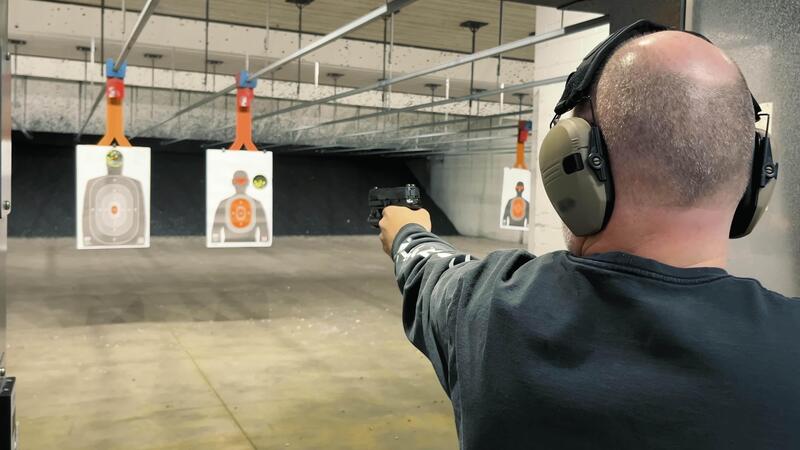
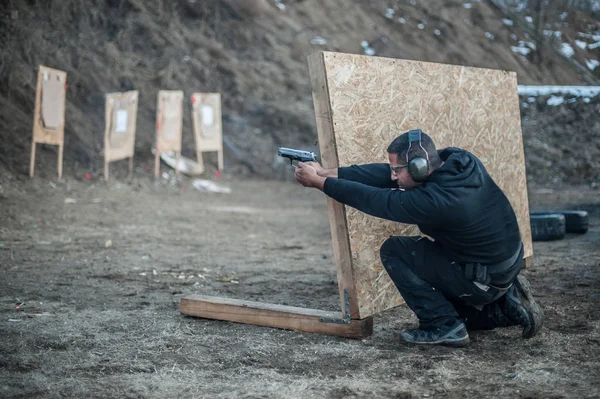
Poor use of cover shows up when shooters lean too far out, expose too much body, or crowd barricades in ways that make the gun awkward to manage. Competition habits can contribute to this when stage efficiency matters more than minimizing exposure. That has an accuracy cost as well as a survivability cost. Exposure changes posture, posture changes sight behavior, and rushed peeking tends to produce rushed shots. In pressure-based studies, participants altered body position significantly under threat, which reinforces the point that cover use is not decorative technique. It is part of the shooting problem.
6. Building no habit for solving malfunctions under pressure
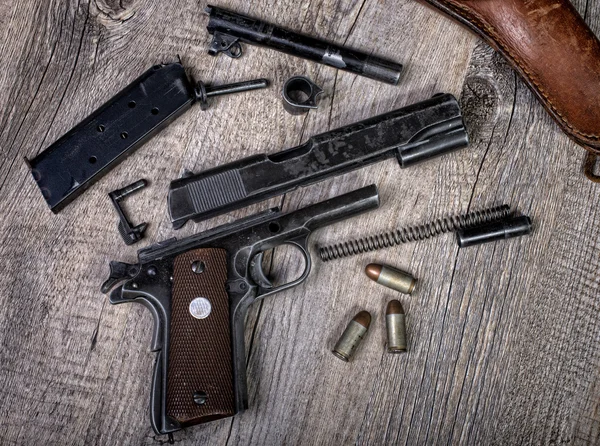
A shooter who pauses at every malfunction waiting for outside help may be safe on a controlled line, but that pause can become a learned response. Habits formed for administrative safety can turn into hesitation when the gun stops working at the worst possible moment. This is one of the clearest examples of a training scar described in the firearms instruction literature.
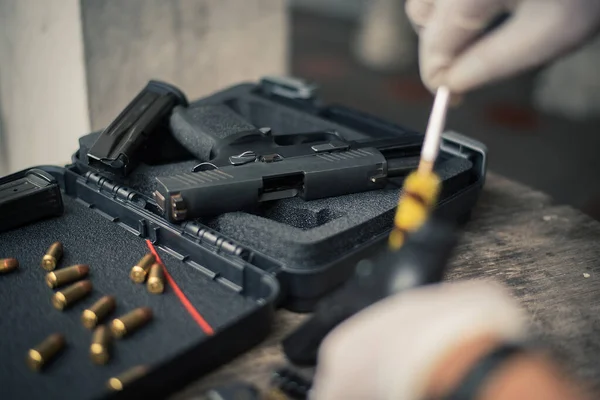
If a shooter never owns the sequence of recognizing, diagnosing, and clearing a stoppage, then marksmanship skill becomes irrelevant the instant the pistol falls silent. Accuracy depends on a functioning gun, and a functioning gun often depends on practiced recovery rather than surprise.
7. Separating shooting from decision-making
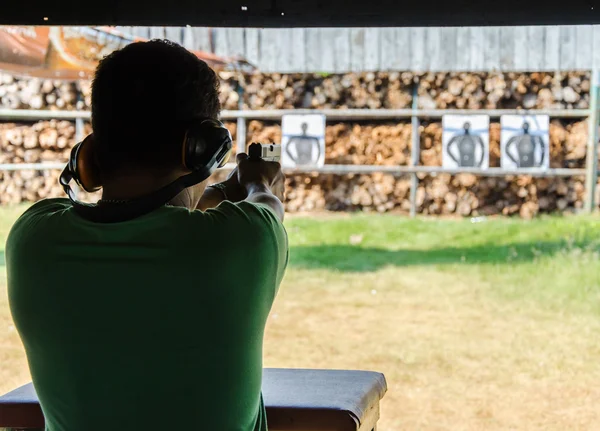
Some training treats marksmanship as a pure mechanics test: draw, align, press, repeat. Real performance is messier. The shooter has to identify, discriminate, and decide before the shot is worth anything. The same meta-analysis found a small but measurable reduction in decision accuracy under pressure, alongside declines in shooting performance and reaction time. Experience helped, with accuracy improving by about 1.1% per year of service in high-pressure conditions, but the larger lesson is that accuracy is tied to cognition. A shooter who only trains the hands and eyes, while neglecting identification and context, is not training the full task.
Bad shooting habits are rarely dramatic in practice. They look efficient, familiar, and harmless right up until conditions change. The evidence across simulator work, reality-based scenarios, and long-observed training scars points in the same direction: accuracy holds up better when habits include perception, movement, decision-making, and realistic pressure. The shooter does not simply rise to the occasion. The shooter tends to default to whatever has been repeated the most.


