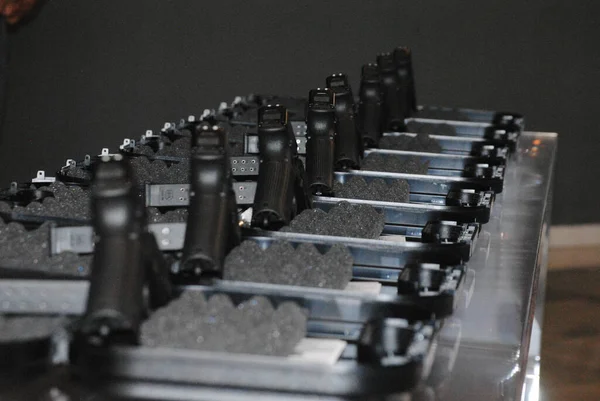
Glock built its reputation on sameness in the best possible way. A duty gun bought years apart usually felt familiar, parts planning stayed predictable, and departments, dealers, and private owners could treat the catalog like stable terrain.
That is why the company’s decision to cut a large swath of commercial variants stands out. The move looks less like a routine cleanup and more like a factory-wide reset shaped by production realities, optics-ready expectations, legal pressure around illegal conversion devices, and a new “V” family meant to simplify what comes next.
1. Too many overlapping models were eating up factory capacity
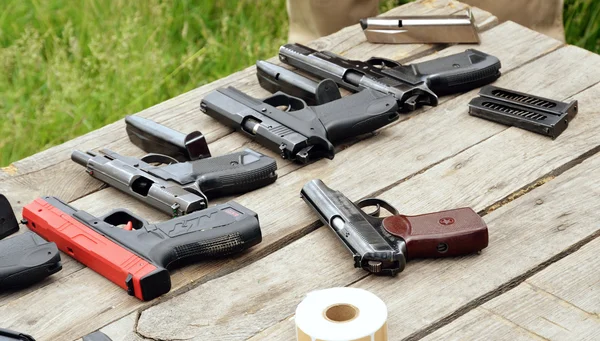
Long-running handgun families tend to accumulate baggage: older generations that still sell, niche chamberings with loyal followings, and special configurations that move unevenly. Glock’s lineup had reached that point. Trimming dozens of commercial variants reduces scheduling complexity, lowers the number of slow-moving combinations sitting in inventory, and frees up machine time for higher-volume models.

The logic is especially clear in lower-demand chamberings such as .357 SIG and .45 GAP, where enthusiasm has never translated into mainstream turnover. A narrower catalog also simplifies spare-parts planning, because support resources can be concentrated on the pistols that move consistently instead of being spread across a long tail of uncommon variants.

2. Optics-ready slides are no longer a specialty feature
Red-dot capability has shifted from enthusiast upgrade to baseline expectation. Glock’s own evolution reflects that transition. The Modular Optic System expanded across the lineup as pistol optics became common, and the company now has far less reason to keep older non-optics-ready configurations in full production.
That shift mirrors the broader changes between Glock generations. Gen 4 introduced MOS options late in its run, while Gen 5 folded in more modern handling features such as ambidextrous slide stops, a slightly flared magwell, and the removal of finger grooves, as outlined in the progression from Gen 1 through Gen 5. Once buyers begin to expect an optic cut the way they expect an accessory rail, older slides start looking like production overhead.
3. Illegal conversion devices changed the compliance picture
One of the strongest pressures on Glock has little to do with traditional product demand. Illegal add-on conversion devices, often called “switches,” have pushed the platform into a harsher legal and regulatory environment. The policy question is no longer limited to criminal misuse of the device itself; it increasingly centers on whether a pistol is considered readily convertible.
California’s AB 1127 added a state-level compliance dimension to that debate, while civil complaints in places such as New Jersey and Minnesota intensified scrutiny. The numbers often cited in that discussion are hard to ignore, including a 570% increase in recovered conversion parts during one five-year comparison period and claims that converted pistols can reach 1,200 rounds per minute. For manufacturers, conversion resistance is now part engineering issue, part legal risk-management issue.
4. The new “V” line creates a cleaner baseline
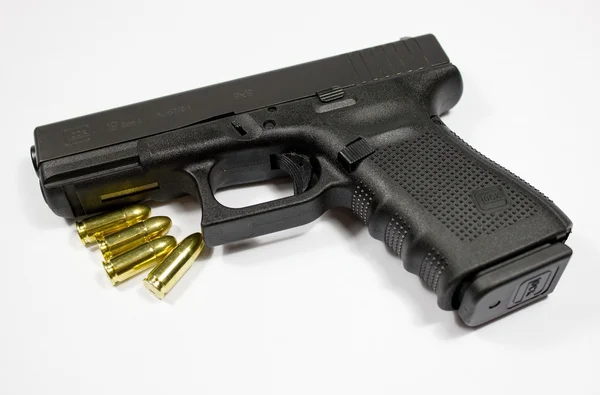
Glock’s replacement strategy matters as much as the discontinuations themselves. Company statements described the incoming V line as a way to “establish a baseline of products while simplifying our processes,” and early model lists show familiar names with a new suffix rather than a radical clean-sheet redesign.
According to the announced V-series rollout, the initial group includes models such as the G17 V, G19 V, G45 V, G26 V, G20 V MOS, G23 V, G21 V MOS, and G44 V, plus several distributor exclusives. That lineup suggests a deliberate reset: keep the core names, narrow the options, and make the updated family the new manufacturing center of gravity.

5. Internal revisions appear aimed at blocking switch installation
The V-series conversation has centered on what changed at the rear of the slide and in related internal geometry. Reports have repeatedly pointed to revised components intended to interfere with the attachment of illegal conversion devices, shifting the anti-conversion effort from aftermarket workaround to factory-level design requirement.
Just as important, Glock has indicated that externally the pistols retain “the same trusted look and performance you already know.” That matters because it preserves training familiarity while allowing meaningful internal divergence. In practical terms, it also explains why maintaining many older variants at full production makes less sense once the new baseline includes anti-conversion design work.

6. The aftermarket is heading toward a generation split
Glock’s dominance has always extended beyond the factory. Holsters, slides, barrels, recoil systems, triggers, sights, and small parts turned the platform into an ecosystem. Large-scale discontinuations complicate that ecosystem because compatibility already varies by generation, and every new internal revision makes “drop-in” assumptions less reliable.
Gen 3, Gen 4, and Gen 5 already differ in meaningful ways, including recoil assemblies, frame dimensions, and control layouts. A new baseline family adds another layer. That does not erase support for older pistols, and Glock has stated that discontinued models will still be serviced, but it does push armorers, custom builders, and parts makers toward a more segmented market where exact generation matching becomes increasingly important.

7. Dealer shelves and collector behavior change almost immediately
Discontinuations always do two things at once. They compress dealer inventory into a final run, and they change how buyers think about ordinary models. Long-slides, niche calibers, and late-generation variants that once felt routine can become more interesting the moment they stop being replenished. That does not mean older pistols become obsolete. Glock has said support continues for discontinued models, and agency users with established training and inventory still have reason to stay with existing guns.
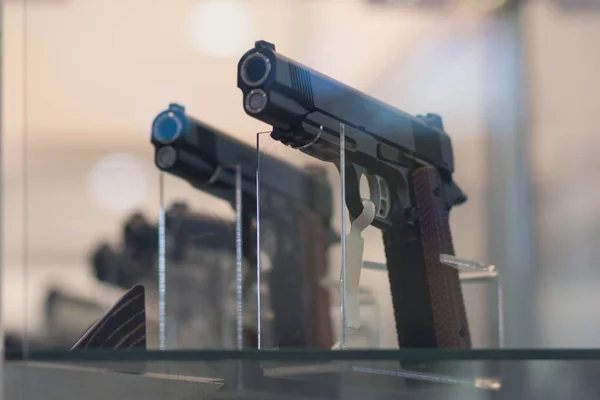
The bigger shift is psychological: a brand once defined by continuity has shown that continuity now has clear limits. Seen as a whole, Glock’s lineup reset is not just a story about guns leaving a catalog. It is a case study in how a major firearms manufacturer adapts when manufacturing efficiency, optics-ready design, compliance risk, and platform standardization all start pulling in the same direction.


