The 9mm pistol category did not become dominant by accident. Its defining designs reshaped military sidearms, police holsters, and concealed-carry expectations through a mix of capacity, durability, shootability, and manufacturing change.
Some earned icon status through wartime service. Others changed the market by proving a new material, a new magazine format, or a new size class could become the standard. Together, they show how the 9mm moved from specialist cartridge to global baseline.
1. Browning Hi-Power
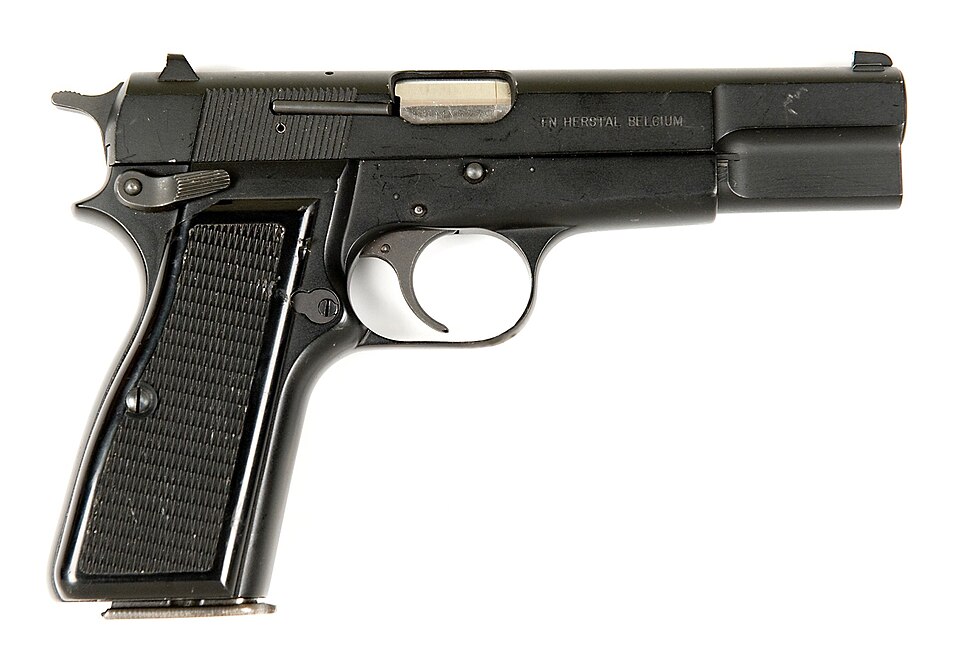
The Browning Hi-Power remains one of the clearest turning points in handgun design. Completed by Dieudonné Saive after John Browning’s death, it brought the double-column magazine into the mainstream and settled on a practical 13-round capacity that influenced decades of later service pistols. Its importance was never limited to one country or one conflict.
The design went on to serve with more than 50 armies and saw military or police use in 93 nations. It was also one of the rare sidearms fielded by both Allied and Axis forces during World War II. That unusual combat history, combined with its slim feel and enduring magazine layout, helps explain why many later “wonder nines” owe it an obvious debt.
2. Glock 17
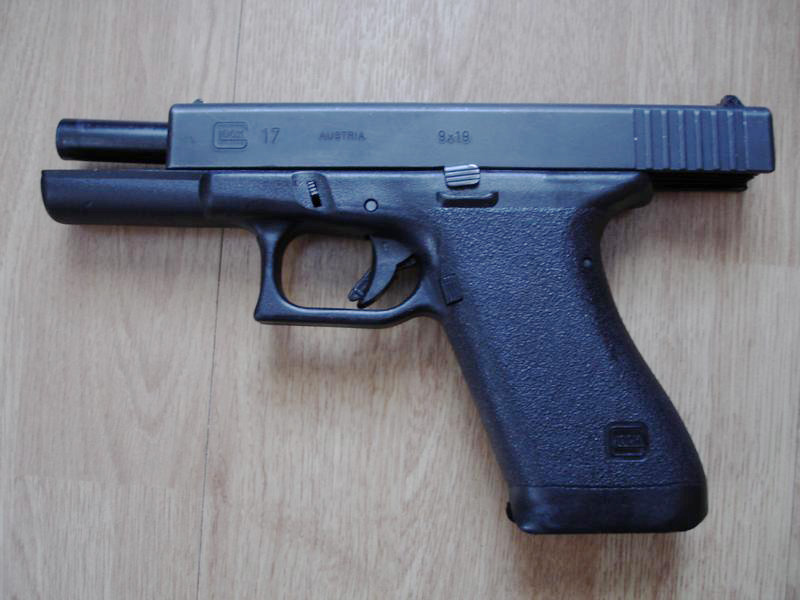
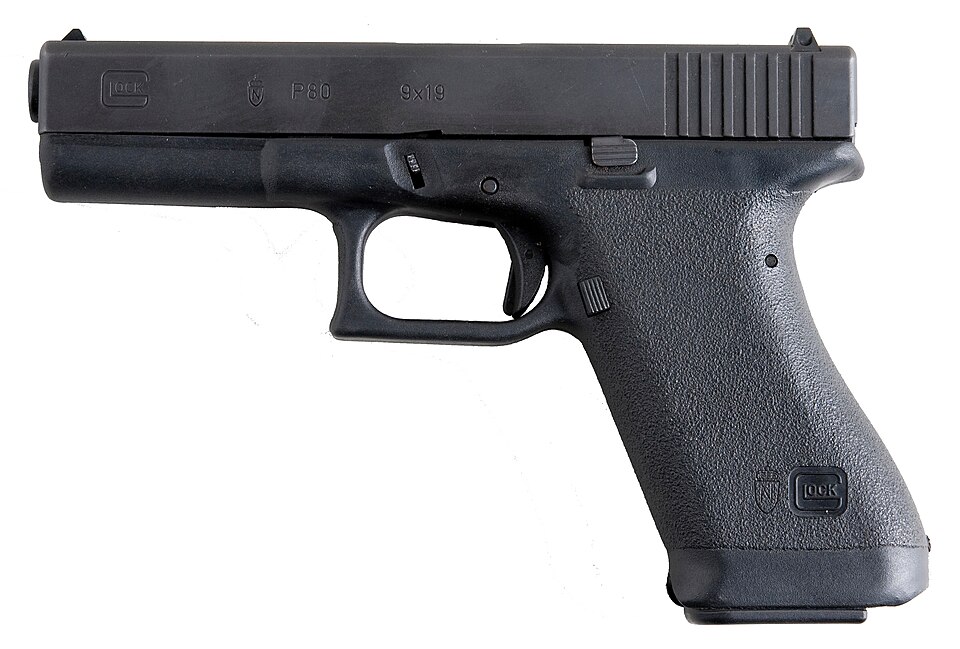
The Glock 17 did more than succeed as a service pistol. It changed what a service pistol was allowed to be. When Gaston Glock’s team delivered the design in the early 1980s, the pistol paired a polymer frame with striker-fired simplicity and a 17-round magazine in a package that looked radically different from the steel-and-alloy handguns that dominated the era.
Its appeal was not just novelty. The pistol used just 34 separate parts, helping cement a reputation for mechanical simplicity and ease of support. Endurance testing built the legend, and adoption spread quickly after Austria accepted it as the P80. Later generations added rails, interchangeable backstraps, optics-ready variants, and ambidextrous controls, but the original formula never really changed: light weight, high capacity, and a manual of arms that pushed the entire handgun market toward polymer.
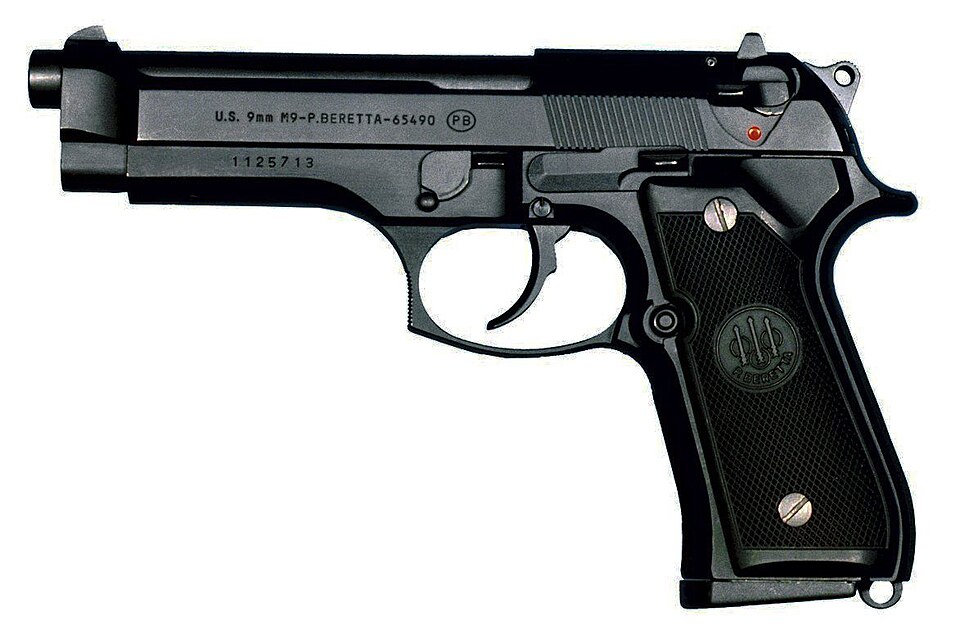
3. Beretta 92FS/M9
The Beretta 92 family became iconic because it merged large-scale service use with a distinctive operating system. Its open-slide layout, alloy frame, and double-action/single-action trigger gave it a profile that stood apart from competitors, while U.S. adoption as the M9 made it one of the best-known sidearms of the late 20th century.
The American service story was complicated. The platform entered U.S. military use in 1985 and remained a standard sidearm for decades, with the last M9 rolling off the assembly line in 2021. Early controversy over slide failures and later magazine issues in desert conditions affected its reputation, but both problems were traced to fixable causes rather than a simple design collapse. In service, the pistol also proved accurate, soft recoiling, and durable when maintained properly, which is why the 92 pattern survived long after many critics expected it to fade.
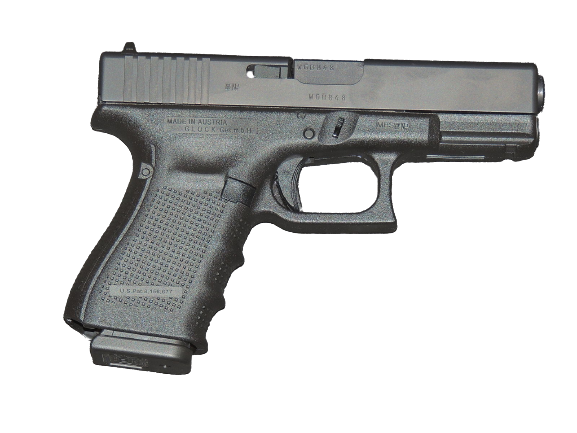
4. Glock 19
The Glock 19 took the Glock 17 formula and put it into the size class that came to dominate the modern market. Introduced in 1988, it became the practical center point between duty pistol and concealed-carry handgun, with enough capacity for service use and compact enough dimensions for daily carry.
That balance is why the model became so widely copied in concept even when not in exact form. It works across roles: uniformed carry, plainclothes work, home defense, and private ownership. Few handguns have done more to define the “one pistol for everything” idea.
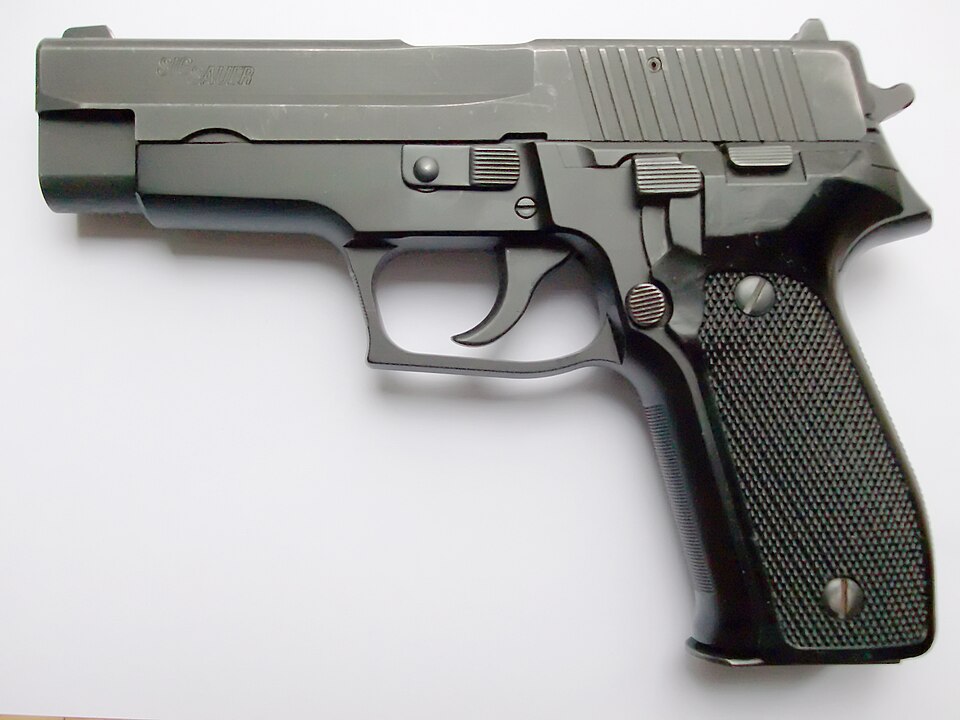
5. SIG Sauer P226
The P226 built its status on endurance and institutional trust. Its strongest association came from the XM9 trials and from later use by elite units that valued reliability under hard training cycles. Even though it did not win the U.S. military’s full-size standard contract, its final-trial performance established it as a top-tier service pistol.
The pistol’s metal frame, DA/SA system, and reputation for accuracy gave it a different personality from the polymer guns that later took over. For many shooters and armorers, it represented the mature form of the late Cold War service handgun.
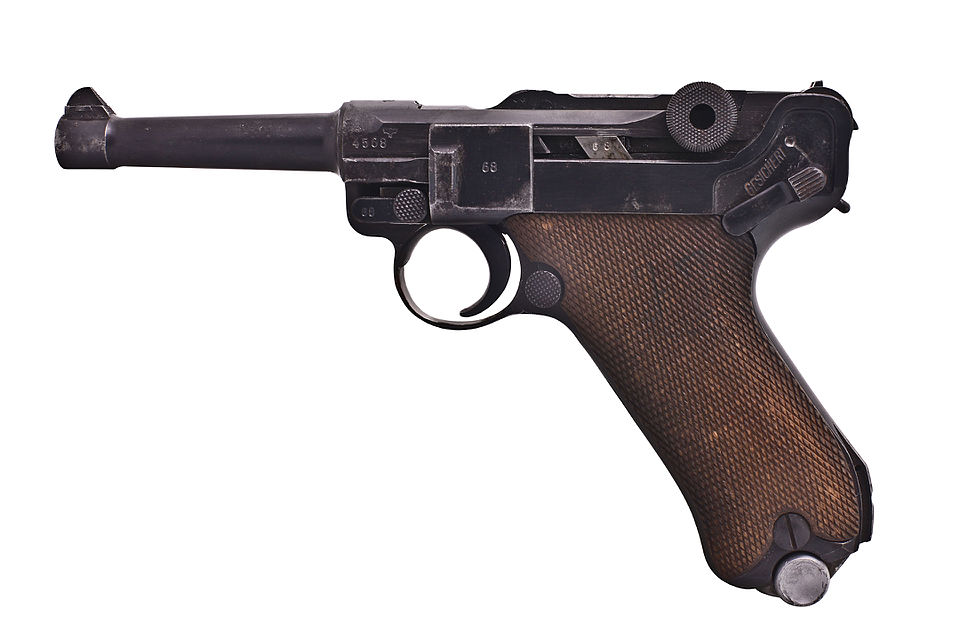
6. Luger P08
The Luger P08 is impossible to ignore in any discussion of iconic 9mm handguns because the cartridge itself is tied to the pistol’s identity. Its silhouette remains one of the most recognizable in firearms history, and the phrase “9mm Luger” preserves that link every time the cartridge is named.
Its toggle-lock mechanism was mechanically distinctive and never became the lasting standard, but icon status does not depend only on long-term practicality. In the Luger’s case, visual identity, historical reach, and cartridge lineage make it foundational.
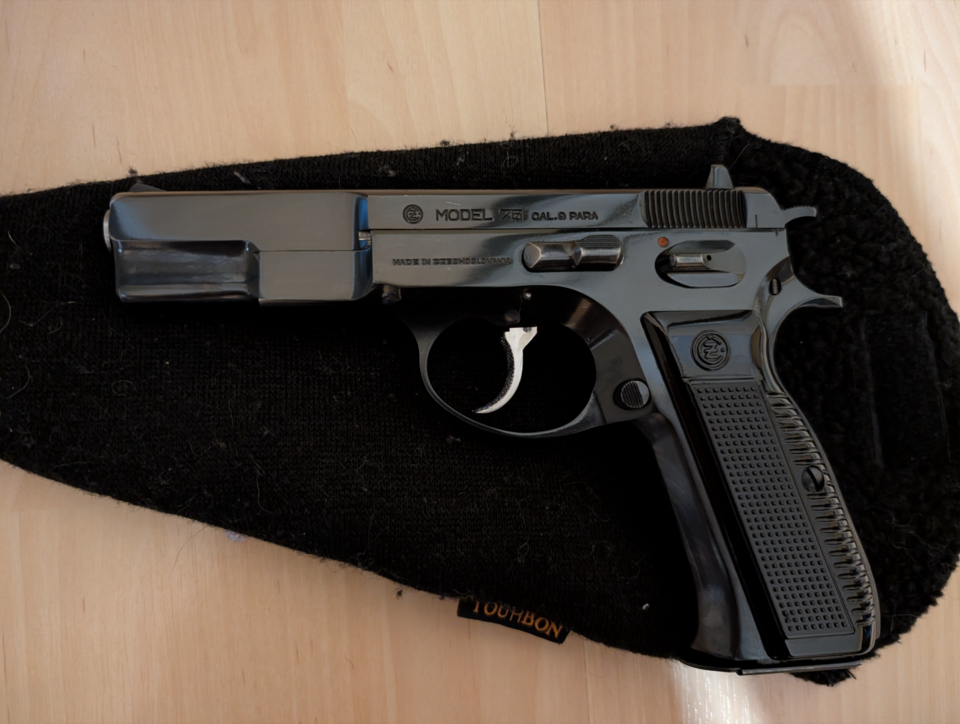
7. CZ 75
The CZ 75 earned its standing by refining familiar ideas into an unusually well-balanced whole. Its slide-in-frame arrangement, ergonomic grip shape, and high-capacity magazine gave it a combination of control and comfort that made the design influential far beyond its country of origin.
It also arrived with broad appeal. Competitive shooters, service users, and enthusiasts all found reasons to adopt it, and countless later pistols borrowed from its profile or internal logic. Few metal-framed 9mms have had such a long second life through clones and derivatives.
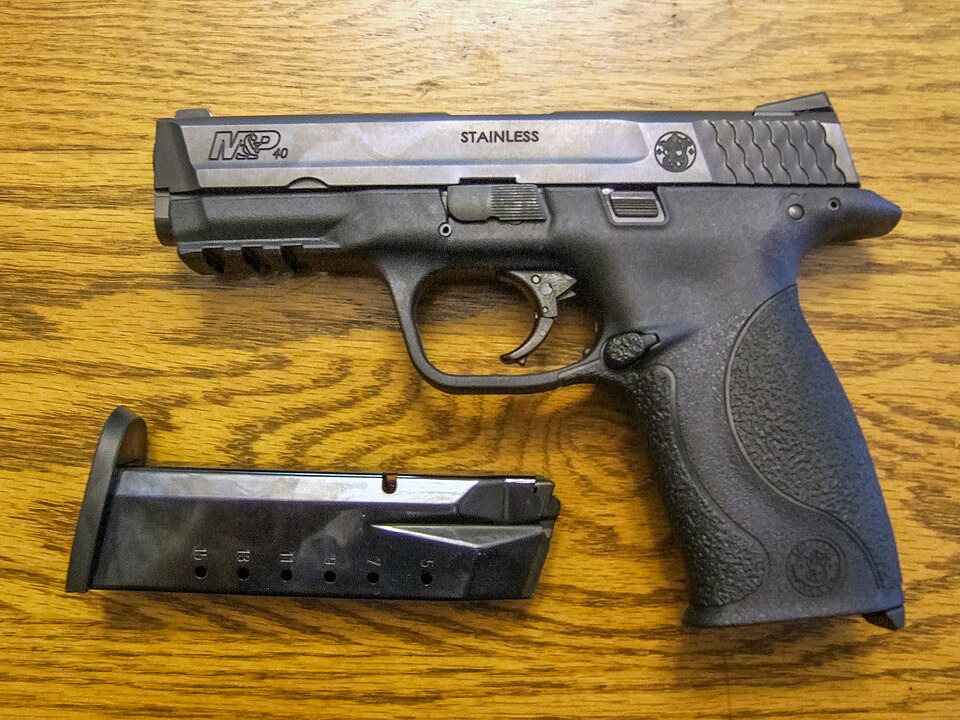
8. Smith & Wesson M&P Shield
The M&P Shield represents a different kind of icon: the pistol that helped lock in the single-stack and slimline concealed-carry era. It was not a battlefield sidearm or a Cold War standard, but it became deeply influential by showing how manageable a compact 9mm could be for routine carry.
Its thin dimensions and accessible recoil characteristics helped normalize the idea that everyday carry did not require a compromise down to tiny calibers. In practical market terms, that made it one of the important 9mm handguns of the 21st century.
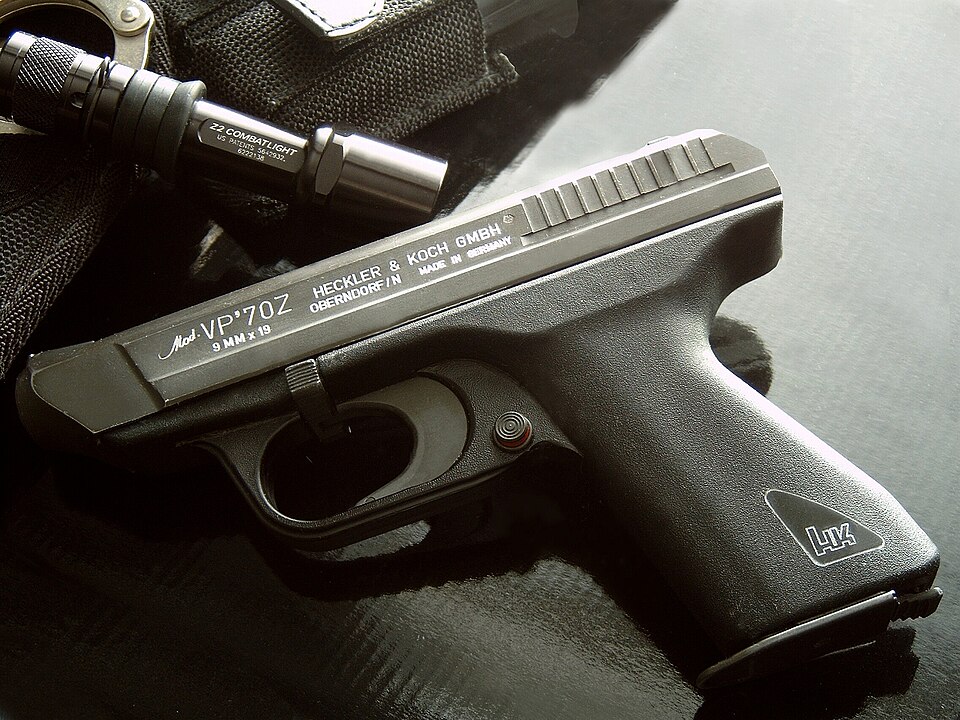
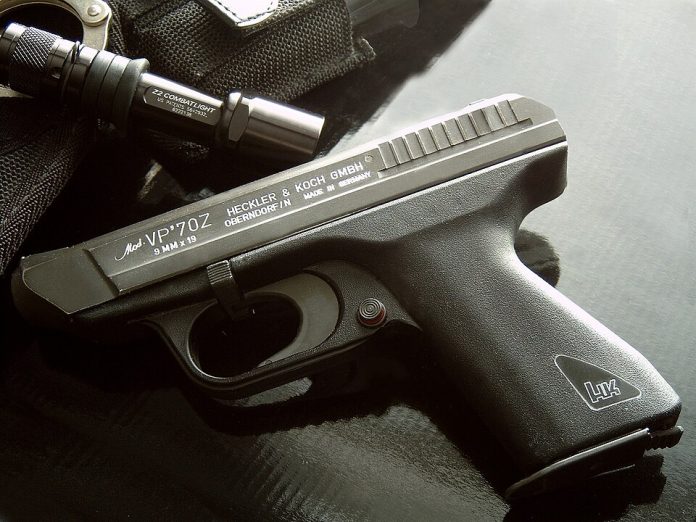
9. Heckler & Koch VP70
The VP70 rarely tops popularity lists, but its historical importance is real. Long before polymer pistols became the industry norm, this handgun showed that a synthetic frame could be used in a serious service-oriented design. Its trigger and ergonomics made it divisive, yet the concept arrived well ahead of the market.
That makes the VP70 less a dead end than an early signal. It proved that materials innovation in handguns was not limited to steel and alloy, even if another company would later turn that idea into the dominant commercial formula.
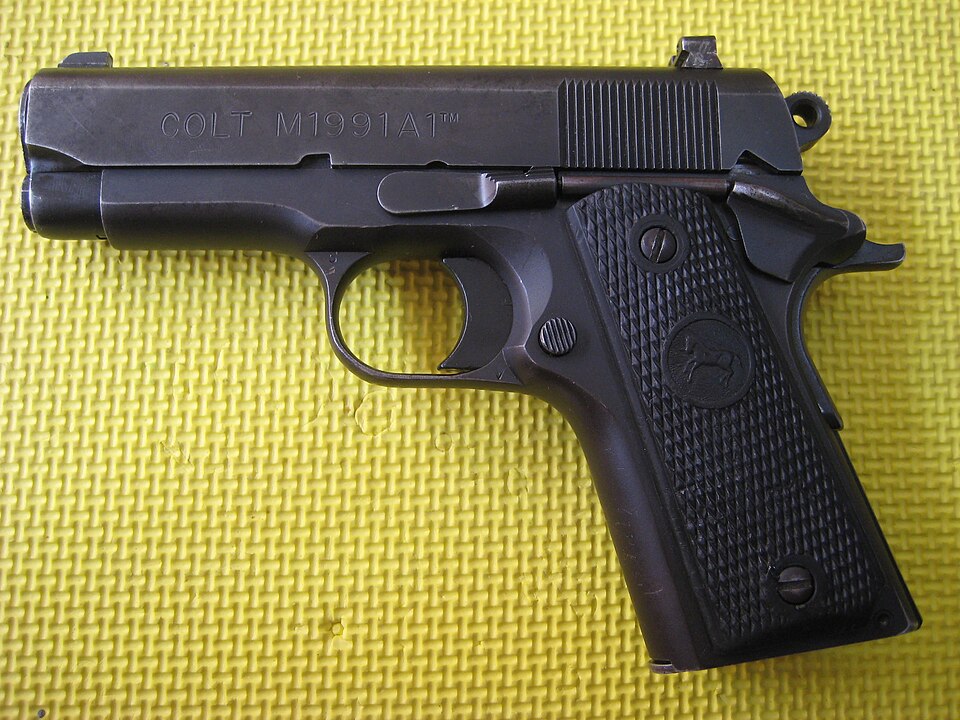
10. Colt 1911 in 9mm
The 1911 is culturally inseparable from .45 ACP, but the 9mm version deserves notice for showing how durable classic ergonomics can be when adapted to a modern cartridge preference. It carried the familiar slim frame, crisp single-action feel, and established manual controls into a chambering that offered lower recoil and greater practical flexibility.
Its icon status comes less from original 9mm service history than from adaptation. The platform demonstrated that legacy pistol architecture could remain relevant in a market increasingly built around 9mm.
These pistols did not all shape history in the same way. Some introduced new engineering directions, some validated a doctrine shift toward higher capacity, and some proved that size and carry role could redefine what shooters expected from a 9mm.
The common thread is lasting influence. Whether the benchmark was 13 rounds, polymer construction, or decades of service use, each handgun left a mark that later designs had to answer.


