Glock’s decision to retire a large block of commercial pistol models is bigger than a routine catalog trim. For a company long associated with stable product lines and slow, iterative change, the move points to a broader reset in how pistols are designed, sold, and updated for a market that now expects optics compatibility, cleaner SKU lists, and faster platform evolution.
What matters here is not a rolling news timeline, but the engineering and industry logic behind the shift. Across generations, Glock built its reputation on consistency; now the company appears to be narrowing that consistency into fewer, more adaptable platforms.

1. A crowded catalog finally became a liability
Over the years, Glock accumulated a vast lineup spanning multiple generations, frame sizes, and calibers. That breadth helped the brand reach agencies, concealed-carry users, competition shooters, and longtime owners who preferred legacy configurations. It also created manufacturing drag, distributor complexity, and overlapping products that competed for the same shelf space.
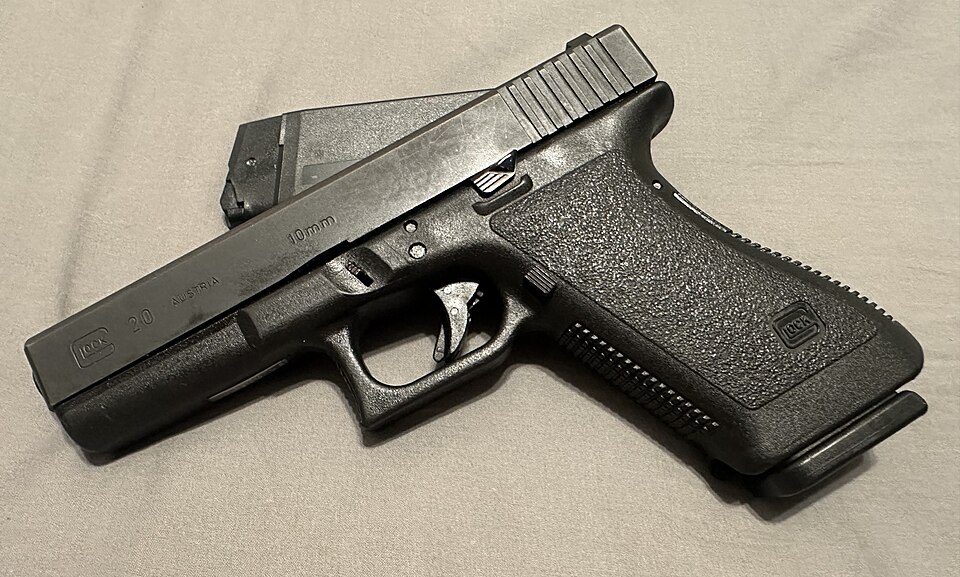
Low-volume chamberings and aging variants were especially vulnerable. Once a product family grows large enough, keeping every version alive can start working against efficiency. Glock’s own explanation cited a strategic portfolio reduction aimed at future growth, and that makes practical sense for a company trying to concentrate resources on the models that move fastest.

2. Optics-ready pistols are now the center of gravity
Modern handgun development increasingly assumes red-dot adoption rather than treating it as a niche add-on. Older slides and frames that were built before optics became mainstream are harder to justify when agencies, competitors, and civilian shooters all expect simpler mounting solutions and factory support.
That pressure helps explain why legacy configurations are fading while newer optics-oriented systems take priority. Glock’s broader transition toward MOS and other direct-mount approaches aligns with an industry that no longer sees slide-mounted optics as optional on flagship handguns. In that context, discontinuing older non-optics-friendly variants looks less like retreat and more like platform consolidation.
3. Generation turnover has accelerated
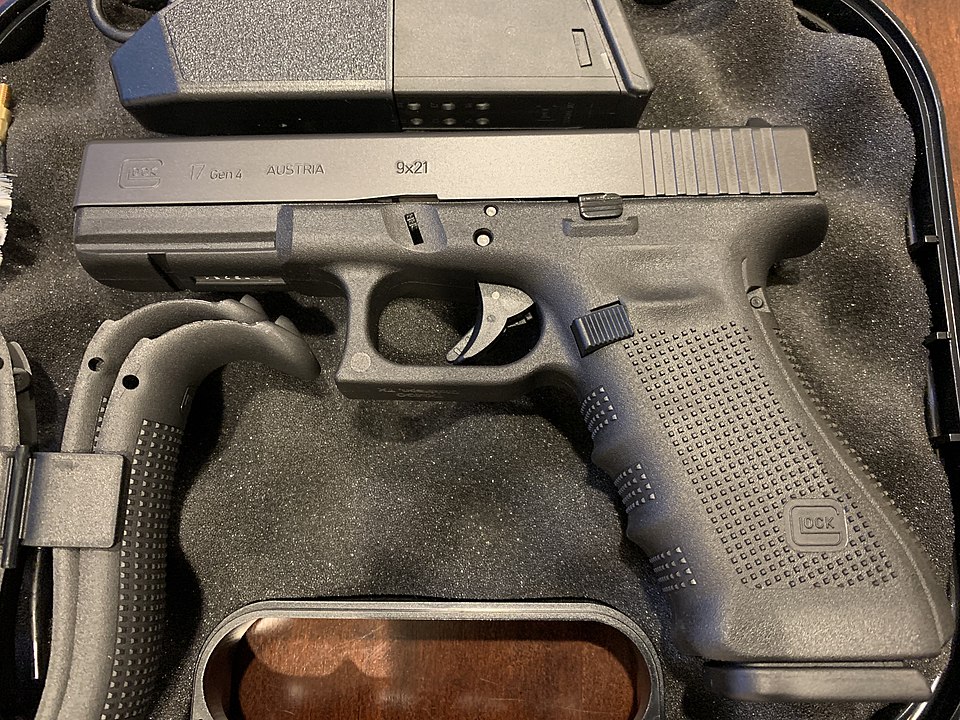
Glock historically evolved in measured steps, but each generation left behind a distinct technical footprint. Gen 3 introduced the accessory rail and the third locking block pin. Gen 4 added interchangeable backstraps and a redesigned recoil spring assembly. Gen 5 brought the Marksman Barrel, ambidextrous controls, and removal of finger grooves on core models.
By late 2025, even Gen 5 commercial models were being cleared from the mainstream lineup, while Gen 6 was limited to the G17, G19, and G45. That matters because it shows the company is no longer treating older generations as long-tail staples in the same way. Gen 3, Gen 4, and Gen 5 are now part of a sharper handoff cycle than Glock owners had come to expect.
4. Conversion-device pressure changed the design conversation
One of the strongest undercurrents in the overhaul is the scrutiny around illegal conversion devices commonly called Glock switches. These small parts have pushed a long-running engineering question into the open: how much anti-tamper resistance should be built into a pistol platform from the factory?
That issue is no longer confined to enforcement actions alone. According to ATF recovery data cited for 2019 to 2023, authorities recovered 11,088 machine gun conversion devices, including 5,816 in 2023. Numbers like that put design architecture, backplate geometry, and trigger-system layout under a different kind of spotlight. For a brand whose pistols are cloned, modified, and heavily aftermarket-supported, even internal geometry becomes part of the public conversation.

5. The rumored V models reflect compliance-minded engineering
Retail and distributor reports described replacement pistols marked as V models, with internal revisions intended to make illegal conversion more difficult. Those reports consistently pointed to redesigned slide and trigger-area components rather than dramatic external changes, suggesting a familiar pistol with altered internals.
Reference material describing the V pattern says Glock changed the internal layout by adding raised channels around the striker assembly and redesigning the backplate. That is an important clue because it frames the transition as an engineering response, not a cosmetic refresh. It also explains why some observers see the V line as a bridge generation: familiar enough for continuity, but shaped by a legal and design problem Glock could no longer ignore.
6. Law-enforcement demand still favors the newer duty format
Even while the commercial catalog shifts, Glock’s law-enforcement position has remained relatively stable. That continuity matters because agency adoption often rewards durability, training consistency, and proven maintenance pipelines over nostalgia for older commercial variants.
Gen 5, in particular, gained traction with agencies because its changes were functional rather than ornamental. Glock highlighted more than twenty design enhancements in the platform, while departments such as Baltimore County Police and others moved to Gen 5 duty guns. The G45 also stood out as a crossover format that paired a compact-length slide with a full-size frame, reinforcing the idea that Glock’s future lineup would be built around fewer, broadly useful configurations rather than a sprawling historical menu.
7. The aftermarket and collector worlds will feel the aftershock
Discontinued Glock models rarely disappear quietly. They move into a different phase of the market, where parts compatibility, clone ecosystems, and collector interest start to matter as much as factory production. Gen 3 is the clearest example, because expired patents and years of third-party support turned it into one of the deepest handgun aftermarket platforms in the business.
That makes this shake-up consequential beyond Glock’s own factory floor. Some older models will remain attractive because they share huge parts pools; others may gain attention precisely because they do not. Long-slide variants, uncommon calibers, and late-run generation crossovers tend to become more visible once production stops.

Support and service remain available, but the center of gravity shifts from factory-new sales to inventory, parts bins, and enthusiast demand. Viewed as a whole, Glock’s lineup reset is really a story about platform discipline. The company appears to be narrowing its catalog around optics-ready designs, current-duty ergonomics, and internals that better reflect today’s legal and technical pressures. For the handgun industry, that is the larger takeaway. A pistol line once defined by slow change is now being shaped by modularity, compliance, and the expectation that even a mature design must keep adapting.


