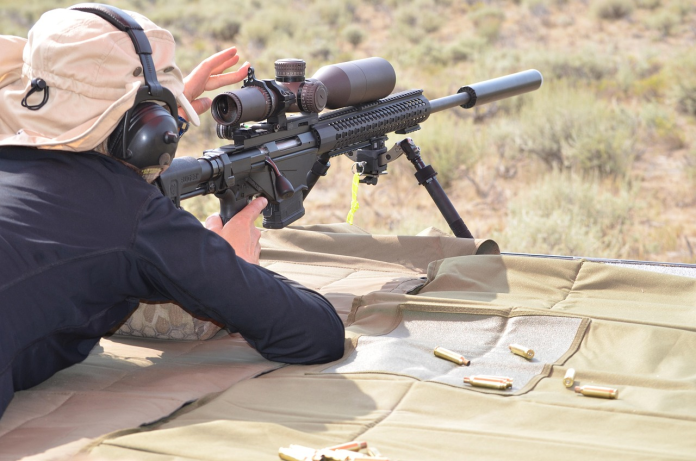
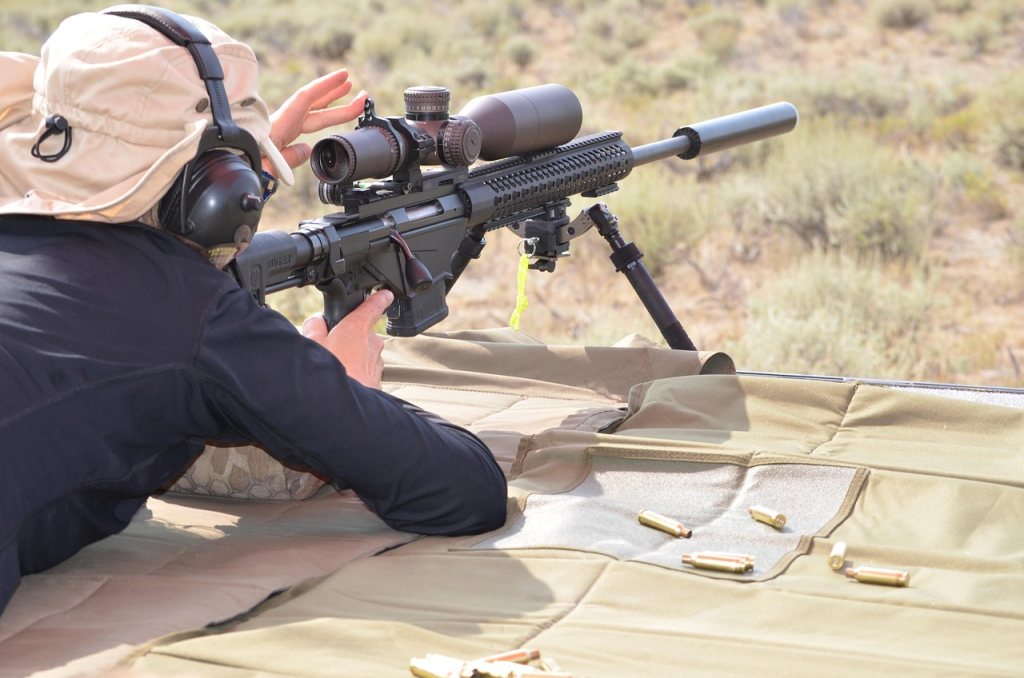
Long-range shooters often blame misses on wind calls, load selection, or magnification. Just as often, the problem starts much closer to the body. A rifle that does not recoil straight back rarely leaves enough feedback to confirm a clean shot, and that missing feedback quietly erodes precision.
The common mistake is not simply “too much recoil.” It is poor recoil management that lets the rifle move differently from shot to shot. That inconsistency shows up as drifting reticles, disappearing targets in the scope, and groups that open for reasons that seem hard to diagnose.
1. Letting the Rifle Recoil Into the Shoulder Instead of the Core
One of the clearest signs of poor recoil control is a sight picture that jumps off target in a predictable direction. In a long-range discussion about a rifle moving up and left after the shot, experienced shooters pointed to the same root issue: the rifle was not being anchored in a way that let recoil travel straight into the body.
When the buttstock sits loosely in the shoulder pocket, the shooter’s body becomes a hinge instead of a support structure. The rifle can slide, roll, or dip under recoil, especially with magnified optics that make every movement look dramatic. Pulling the rifle in consistently and positioning it closer to the centerline of the body helps reduce sideways movement and makes the return to target more repeatable.
2. Pressing the Cheek Too Hard Into the Stock
Cheek weld is essential, but pressure is not the same as consistency. Excess downward or lateral pressure from the face can steer the rifle during recoil, especially on stocks with geometry that already encourages movement.
This is the kind of mistake that hides in plain sight. The shooter feels “locked in,” yet the rifle is being pushed off its natural recoil path. A lighter, repeatable cheek weld gives the optic the same eye alignment without adding extra force that shoves the rifle away from neutral tracking.
3. Breaking the Shot Without True Follow-Through
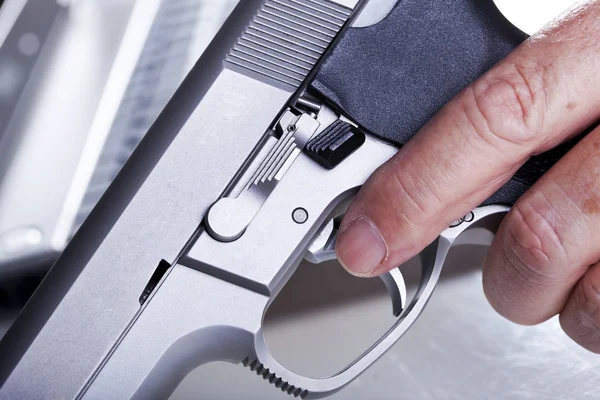
Many shooters treat recoil as something that happens after the important part. In reality, the shot is not finished when the trigger breaks. It is finished when the rifle settles and the shooter can confirm where the sights return.
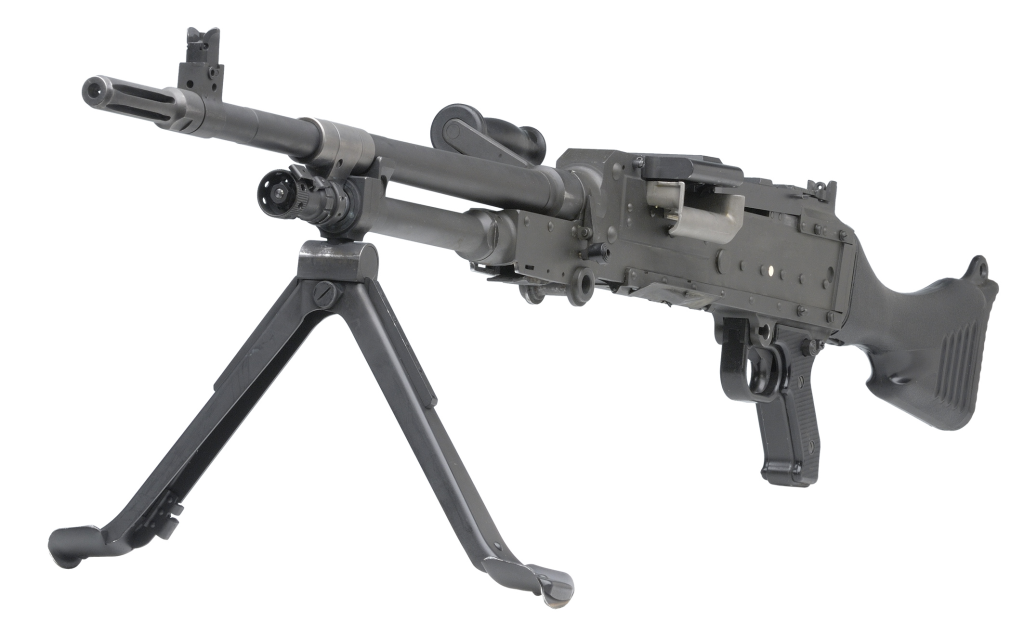
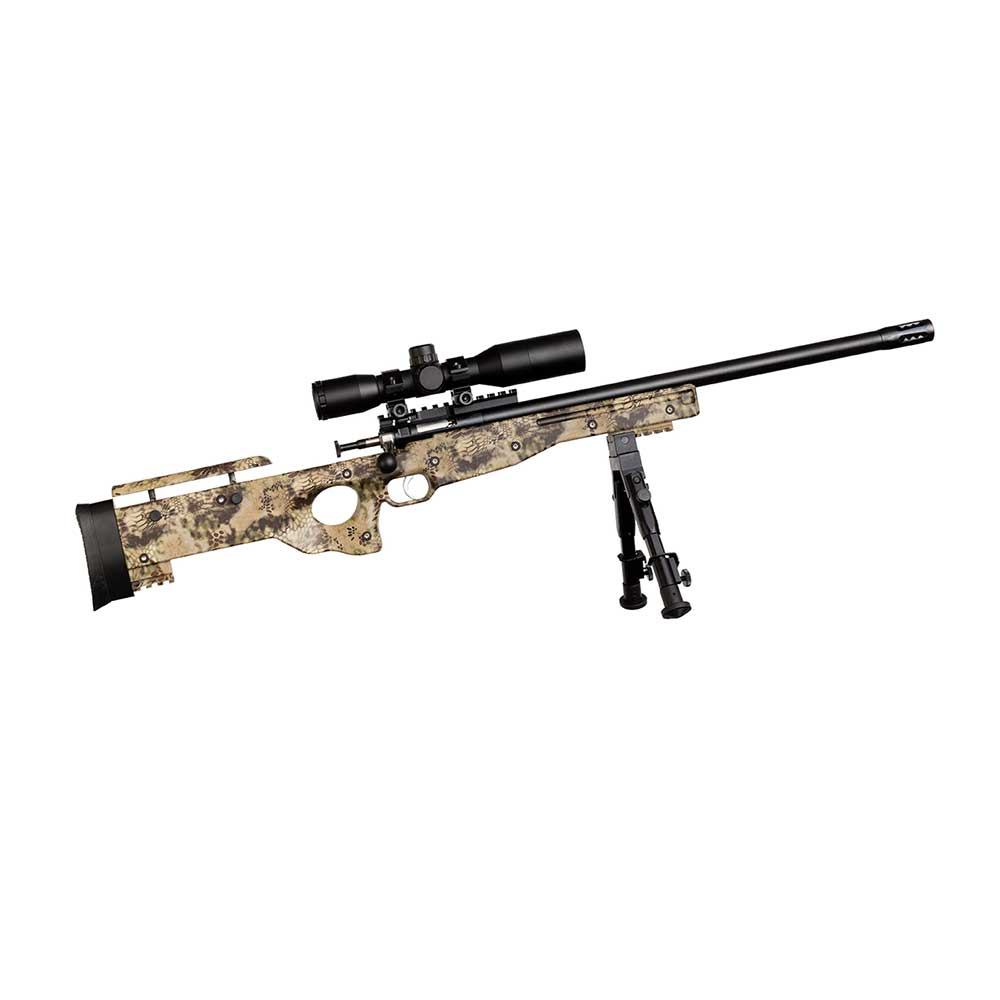
That is why follow-through matters so much with rear bags, bipods, and field supports. In the same forum discussion, one practical fix was to keep the bag squeezed until the rifle settled after the shot. That habit preserves rear support tension and prevents the rifle from changing shape under recoil. At distance, that small discipline helps the reticle return to the same place instead of wandering to a new one.
4. Ignoring What the Sight Picture Does During Recoil
Recoil control is not only physical. It is visual. The shooter who cannot observe the rifle’s movement gives away one of the best diagnostic tools on the firing line. The NRA’s discussion of recoil mechanics emphasizes seeing a “before” picture and an “after” picture for every shot. That concept applies neatly to precision rifles. A stable shooter can watch the reticle lift, track, and return. A shooter with poor recoil control often loses the target entirely, which makes it harder to call shots, spot impacts, and separate trigger error from position error.
5. Using Bench Practice That Hides Real Recoil Problems
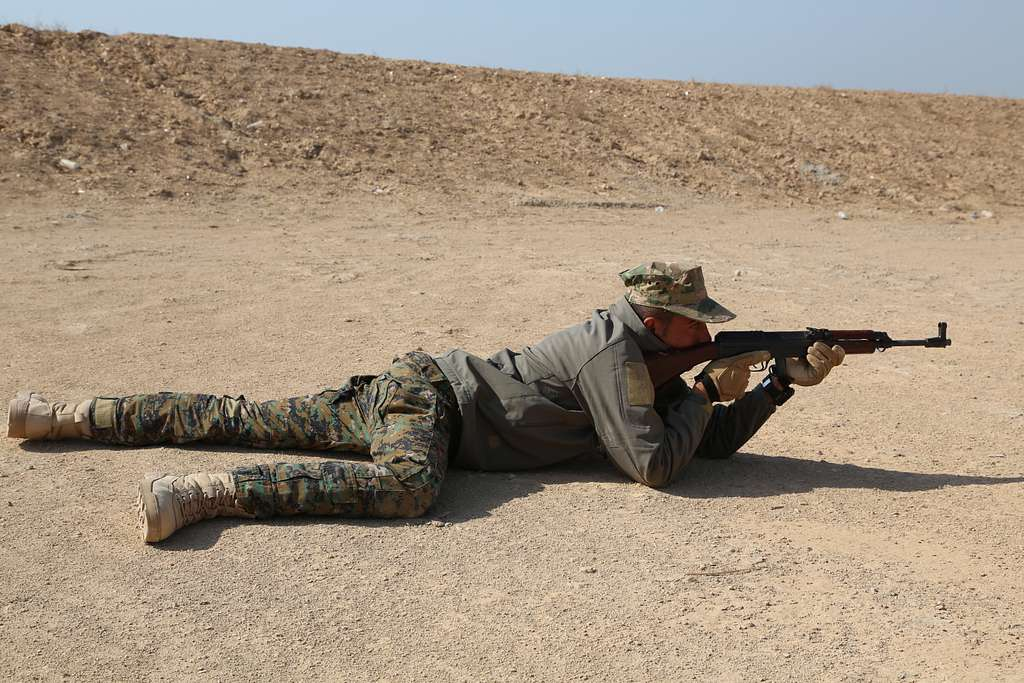
Benches are useful, but they can mask flaws. A comfortable front rest and heavy support bags can make a position feel solid while still allowing inconsistent body pressure behind the rifle. That disconnect becomes obvious when the same shooter moves to prone, kneeling, or improvised field support. As one rifle training piece noted, shooting from positions likely to be encountered in the field is critical to skill development. Recoil management learned only from the bench often falls apart once support gets less perfect and body alignment matters more.
6. Choosing More Cartridge Than the Shooter Can Manage Well
Long-range performance is often discussed in terms of ballistics, but precision begins with the ability to fire without disruption. A harder-kicking cartridge can be accurate on paper and still be a poor fit for a shooter who cannot maintain position, sight picture, and trigger control through recoil.
The problem is not raw power by itself. It is what that power does to behavior. Shooters begin to brace, snatch, or lift their heads slightly before the shot. According to the MDT article, misses tend to rise with cartridge size and power level when fundamentals are not equally developed. That makes recoil management a system issue, not just a caliber issue.
7. Treating Recoil Control as a Grip Problem Instead of a Whole-Body Problem
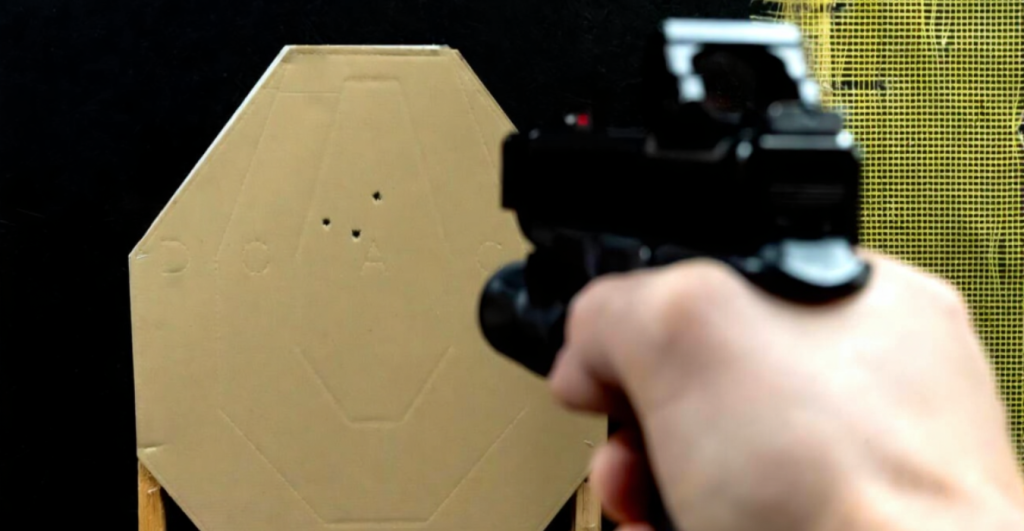
Some of the best recoil advice in handgun training still applies in principle to rifles: control starts from the ground, not the hands alone. The body has to be balanced, stable, and directed into the shot. The handgun reference described an “athletic” stance built on balance and forward intent. For rifle shooters, the equivalent is body alignment behind the gun, steady rear support, and enough forward commitment to let the rifle recoil in a straight line. When that foundation is missing, no amount of hand pressure on the stock will rescue the shot.
The quiet damage of poor recoil control is that it often looks like something else. It can resemble bad load tuning, erratic wind calls, or a scope problem. In practice, the rifle is simply not being allowed to behave the same way twice. Long-range accuracy depends on a rifle that tracks predictably and a shooter who can see it happen. When recoil comes straight back, the target stays in view longer, impacts are easier to call, and groups begin to reflect the rifle’s capability instead of the shooter’s hidden inconsistency.


