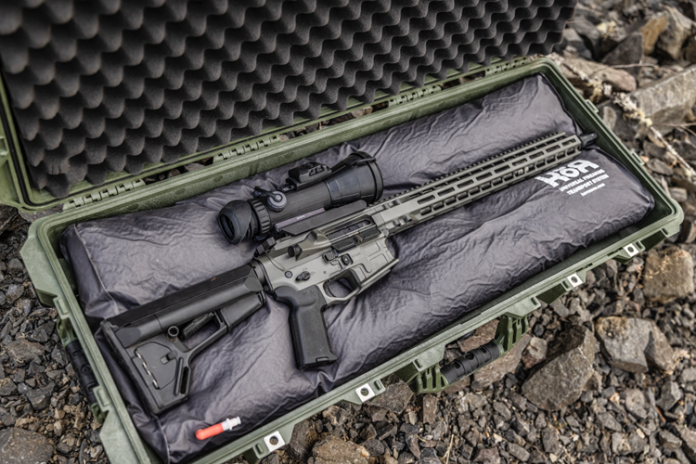
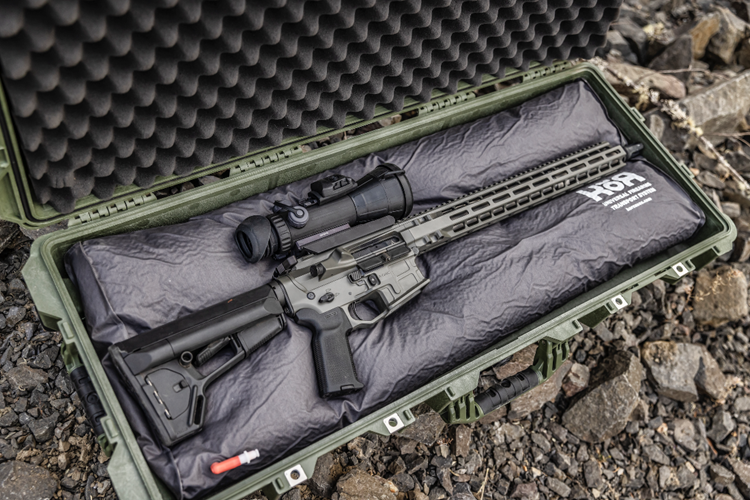
The AR-15 may be the most argued-over rifle platform in America, yet many of the loudest claims about it collapse under basic mechanical detail. For owners, shooters, and builders, that matters because misunderstandings around function, ballistics, and legal status can turn a simple equipment choice into a bad assumption.
What keeps the confusion alive is that the AR-15 sits at the intersection of military lineage, civilian customization, and endless secondhand advice. The result is a platform surrounded by folklore. Here are seven claims that continue to mislead people who should know better.
1. “AR” means “assault rifle”
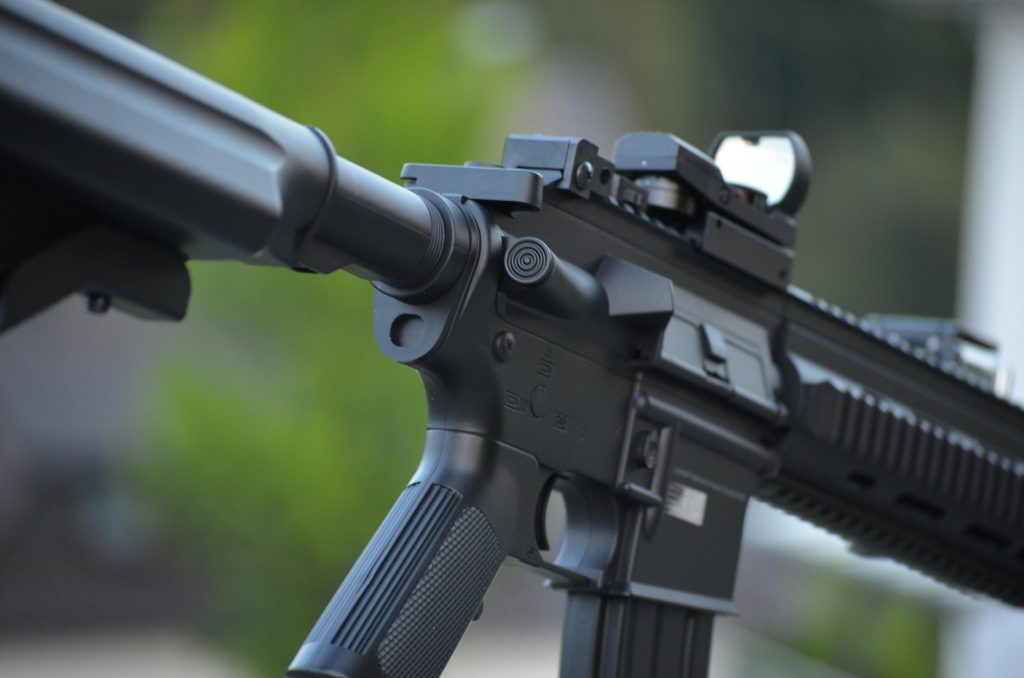
It does not. The “AR” in AR-15 refers to ArmaLite Rifle, the original company designation tied to Eugene Stoner’s design work. That naming history carried over even after ArmaLite sold the rights and the platform evolved into later military and civilian branches. The confusion usually comes from appearance. Civilian AR-15s can resemble service rifles, but name and technical category are different things. The M16 and M4 families follow military specifications, while the civilian AR-15 is a semi-automatic platform with broad variation in parts, barrel lengths, rails, and furniture. A useful baseline is the distinction between the civilian platform and the military-standard M4.
2. Civilian AR-15s are basically machine guns
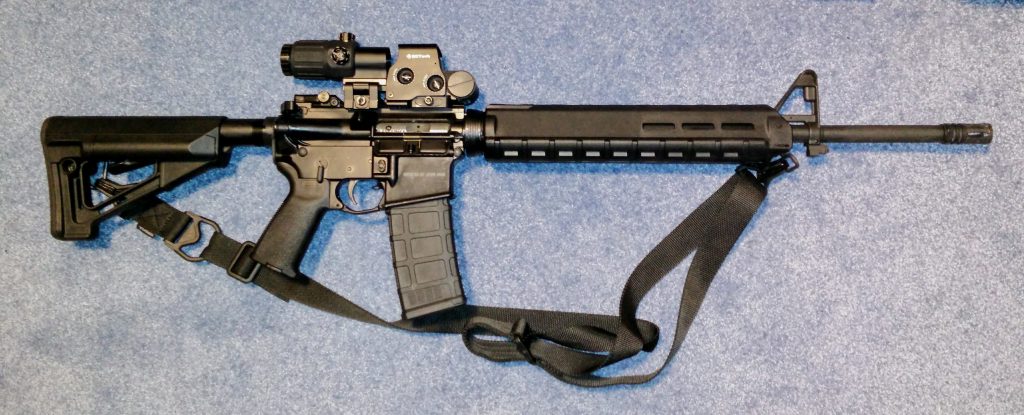
A standard civilian AR-15 fires one round per trigger press. That is the defining operating reality. The selective-fire capability associated with military carbines depends on a different fire-control setup, along with regulated parts and legal restrictions that do not apply to ordinary off-the-shelf semi-automatic rifles. This is more than a paperwork difference. The internal design that allows automatic fire is not simply “already there” in a typical commercial rifle. The gap between a civilian semi-auto and a military M4A1 starts with the fire-control group and extends to how the entire system is built and regulated.
3. The AR-15 is just a military rifle sold to civilians
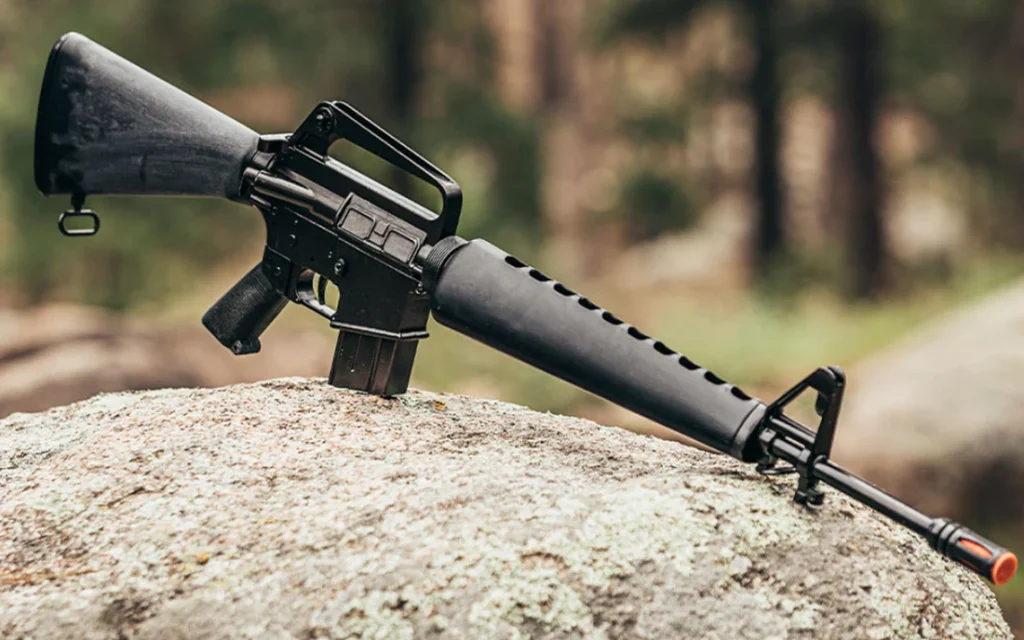
The AR-15 and the M4 share family resemblance, but they are not the same thing. Military rifles follow formal standards, technical data packages, and contract requirements. Civilian AR-15s do not answer to one universal specification, which is why the platform can range from plain 16-inch carbines to specialized competition, hunting, and precision setups. That flexibility is a major reason the platform became so widespread outside military circles. It is used for target shooting, competition, predator control, and general-purpose range work. The same modularity that lets one owner swap optics also lets another change uppers, barrel profiles, handguards, or gas-system setups for a very different role.
4. The AR-15 is too powerful for ordinary sporting use
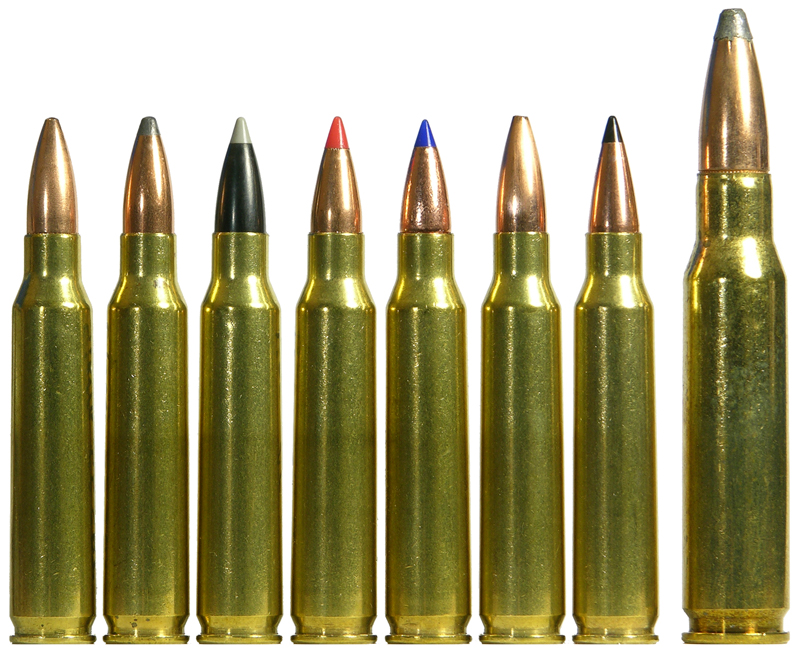
This claim often ignores the cartridge class involved. The usual AR-15 chamberings, .223 Remington and 5.56 NATO, are intermediate rounds, not full-power hunting cartridges. In muzzle energy, they commonly sit well below rifles such as .308 Winchester or .30-06 Springfield. That lower recoil is one reason the platform is so manageable. It is easier for many shooters to control, easier to shoot accurately over repeated strings, and less punishing than larger calibers. Barrel length and setup still matter, but longer barrels are not “more accurate” by default. What they mainly offer is more velocity, and that can stretch usable distance. Military reference points place maximum effective range for point targets at roughly 500 meters for 14.5-inch carbines and 550 meters for 20-inch rifles.

5. An AR-15 is a poor choice for home defense because it over-penetrates everything
This is one of the most persistent myths, and it survives because people assume “rifle” automatically means worse interior-wall penetration than a handgun. In reality, some .223 and 5.56 loads can shed energy quickly after striking barriers, and in certain tests they penetrate drywall less dangerously than common handgun rounds. That does not make any firearm harmless indoors. It does mean the conversation is more complicated than caliber labels. Load selection, hit probability, room layout, and planning matter more than clichés. In home-defense discussions, expanding .223 loads have been shown in drywall penetration testing to behave differently from many pistol rounds and buckshot loads. The platform’s light recoil and shoulder-fired stability also help many shooters place rounds more accurately under stress.
6. Building an AR-15 is simple because the platform is modular
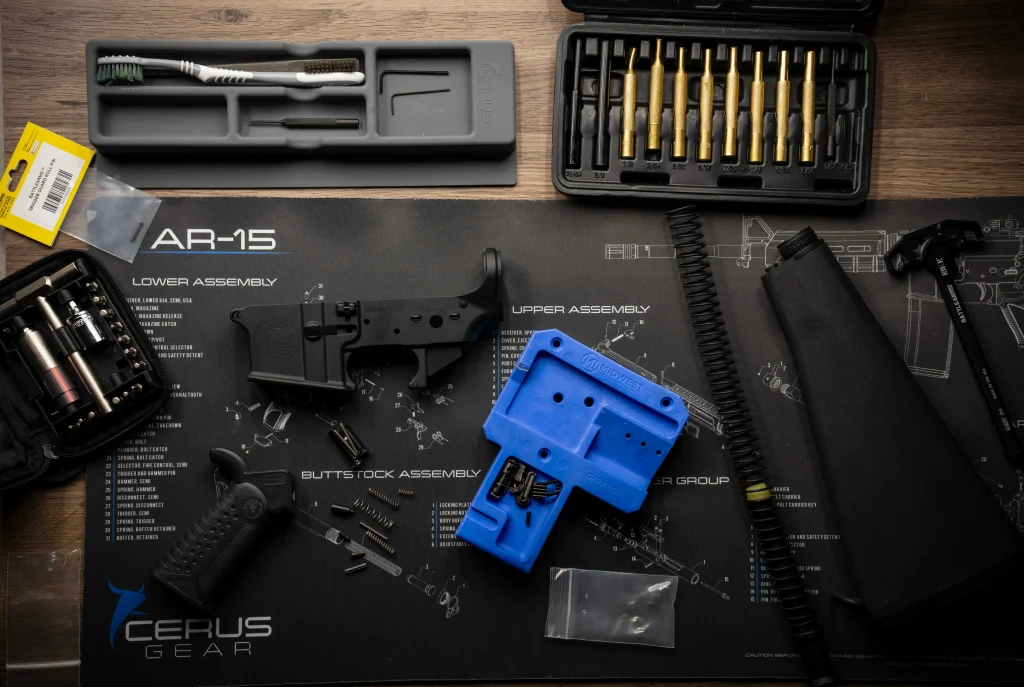
Modular does not mean foolproof. The AR-15 is easier to configure than many rifle designs, but safe assembly still demands the right tools, correct torque values, proper alignment, and attention to chamber and gas-system details. This is where bad internet advice causes trouble. Barrel choice alone pulls in profile, lining, gas length, chamber spec, and twist rate.
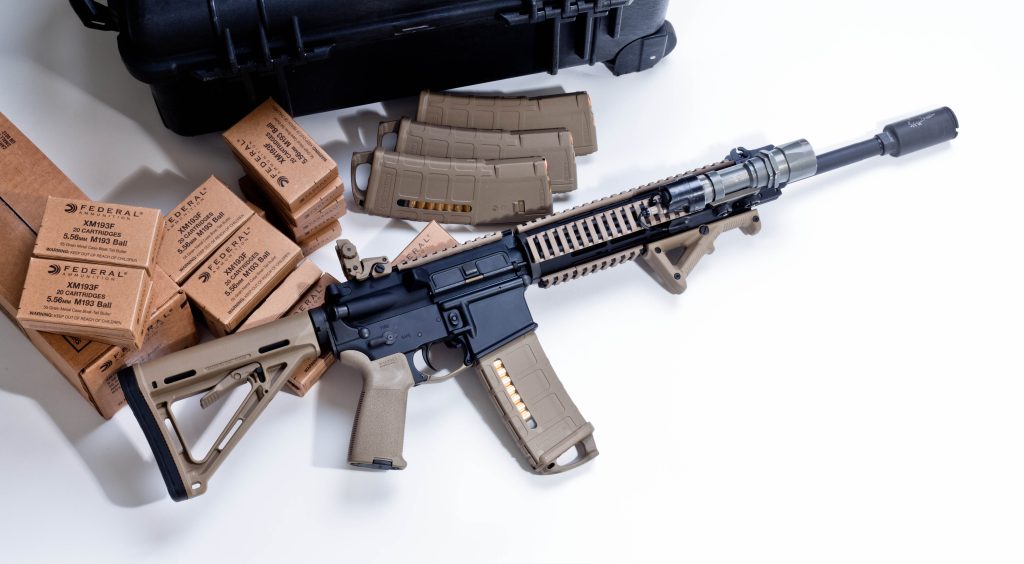
A 16-inch mid-length setup behaves differently from a short carbine-gas build, and very short barrels operate at notably higher pressure and wear. The barrel is not just a tube; it drives reliability, recoil feel, and service life. Serious builders benefit from understanding barrel length and gas-system balance before they start mixing parts.
7. AR-15 ownership is either banned everywhere or legal everywhere
Neither is true. Federal law does not impose a blanket nationwide ban on AR-15 ownership, but state and local rules vary sharply. Some jurisdictions regulate features such as adjustable stocks, flash suppressors, threaded barrels, or magazine capacity. Others apply registration rules or configuration requirements that can make a legal rifle in one state unlawful in another. That uneven legal map is why owners cannot rely on broad claims from forums or social media. “It’s legal” is incomplete without location, configuration, and transport context.

The AR-15 remains one of the most adaptable rifle platforms in civilian use, which is exactly why myths keep attaching themselves to it. A rifle that can look military, shoot softly, swap parts easily, and fill several roles invites oversimplified claims from every direction. For shooters who actually use the platform, the useful starting point is plain mechanical reality: what it is, how it operates, what its cartridges really do, and how the law treats a specific configuration. On the AR-15, details settle arguments faster than slogans.


